Nikola Tesla’s Extreme (and Strange) Habits. But They Made Him a Genius
People made fun of his habits. But those same habits helped him create 300 inventions.
Nikola Tesla’s Extreme (and Strange) Habits. But They Made Him a Genius
People made fun of his habits. But those same habits helped him create 300 inventions.
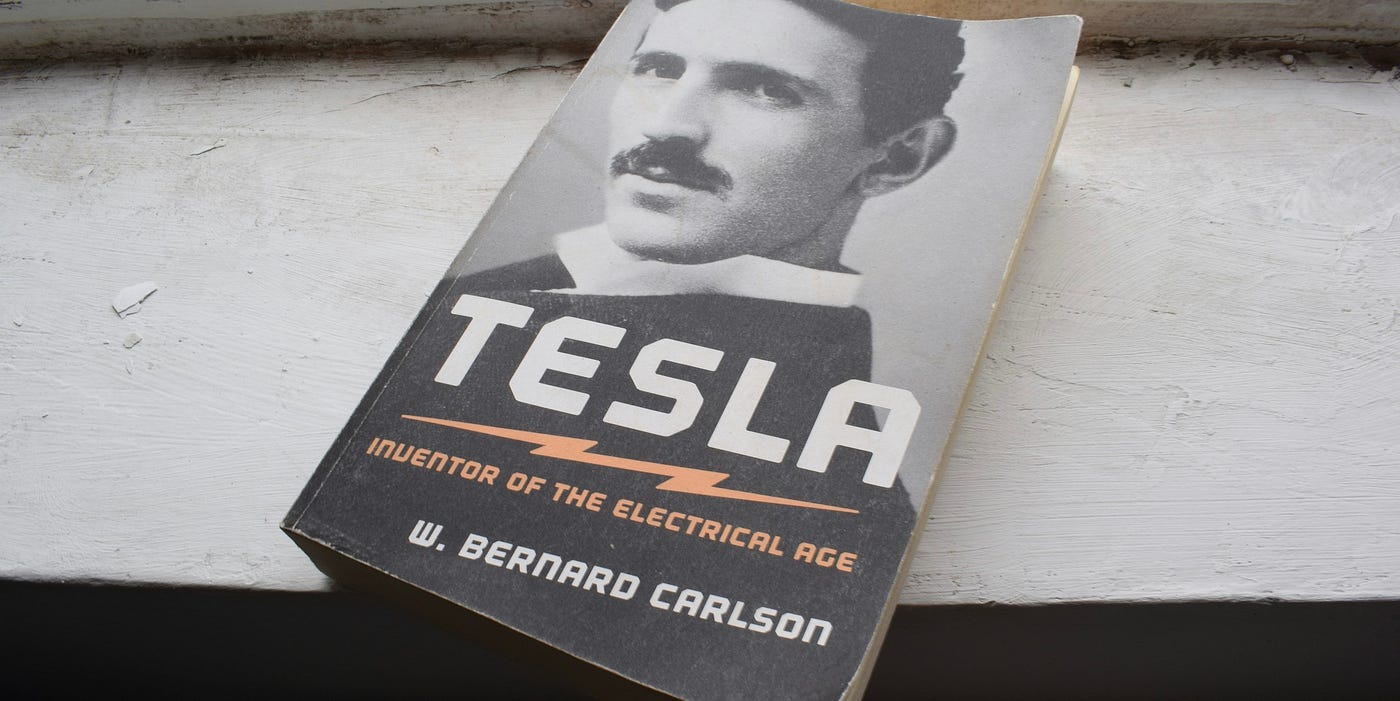
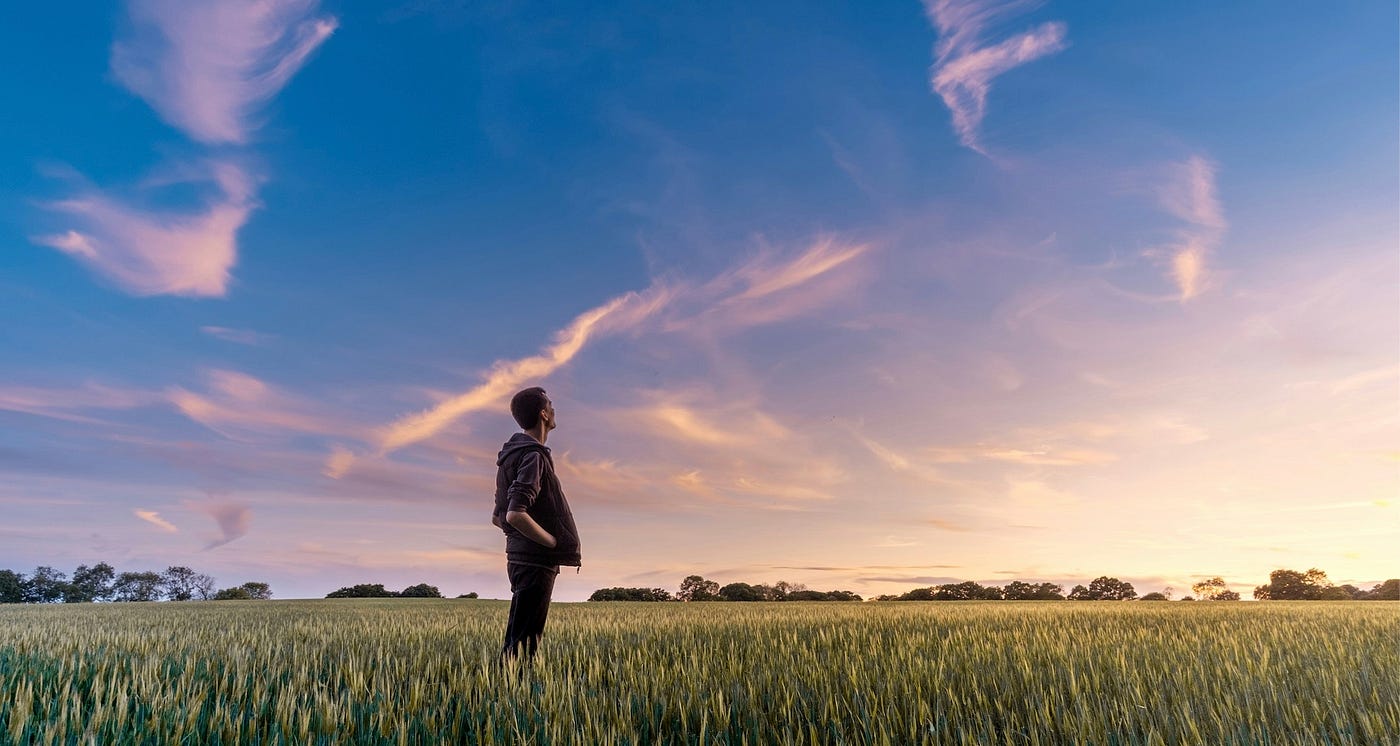
Photo by Marija Zaric on Unsplash
Brace yourself. By any normal measure, the engineer and futurist Nikola Tesla was a strange man. He didn’t sleep much. He ate alone. He fell in love with a pigeon. But his strangeness had a pattern. Every odd habit, obsessive ritual or his self-imposed constraint pointed toward extreme focus. Toward a mind with almost no interference between thinking and creating. “My brain is only a receiver, in the Universe there is a core from which we obtain knowledge, strength and inspiration. I have not penetrated into the secrets of this core, but I know that it exists,” he said.
There’s no right way to the genius path.
I like what philosopher Friedrich Nietzsche once said, “You have your way. I have my way. As for the right way, the correct way, and the only way, it does not exist.”
“My method is different. I do not rush into actual work. When I get a new idea, I start at once building it up in my imagination and make improvements and operate the device in my mind.” — Tesla
Tesla was insanely committed to his way.
He claimed he slept as little as two hours a night during his most productive periods. He would work through the night in his laboratory, break for a short rest. And then return immediately to the problem he was solving. Was this a health disaster? Sometimes it was. Tesla collapsed multiple times from tiredness. His body regularly failed him. But what drove the behaviour was urgency. Tesla experienced ideas the way most people experience emergencies.
He couldn’t not work on them.
Remember when philosopher Seneca said, “We suffer more in imagination than in reality.” Tesla inverted that. He lived more in imagination than in reality. Sleep meant leaving his inner world. For him, that was the sacrifice. Most people treat sleep deprivation like a productivity hack. It’s the wrong lesson. The practical lesson here is that Tesla’s relationship to his work was so total that rest felt like an interruption. When you find something that absorbs you that completely, the question of how many hours you need almost answers itself.
Tesla almost never built a prototype first.
He built it in his head.
He described being able to run mental simulations of his machines, setting them in motion, letting them run for weeks in his imagination, then inspecting them for wear. He once said he could visualise a completed invention, turn it around in his mind, take it apart, and reassemble it before a single piece of metal was cut.
No, he wasn’t joking.
When he finally did build something physical, it worked immediately. The real engineering had already happened invisibly in his head. The ancient stoics practiced premeditatio malorum, the premeditation of obstacles, to visualise what could go wrong before it does. Tesla applied it to creation rather than adversity. He pre-lived his inventions. The best thinking happens before your hands touch anything. The notebook, prototype or theories are just the byproduct of mental simulations. The real work is invisible. And it happens before you think you’ve started. Einstein practised “thought experiments” before he wrote any of his theories.
Tesla worked in bursts of intense focus, then nothing.
He didn’t distribute his energy evenly across a workday. He concentrated it. He would work with terrifying intensity for long stretches. Sometimes forgetting the time. Or that other people existed. Then collapse into complete stillness. For him, this was a biological necessity. People who think or feel very intensely need a lot of time to rest and recover.
Tesla didn’t schedule his rest.
He crashed into it.
But he always gained clarity from it.
Our productivity culture pushes for obsessive output. Tesla ran the opposite system. Long stillness, then creative eruption. He treated his attention like a finite fuel. As something to spend completely on what mattered, then replenish before spending again.
Tesla was incredibly sensitive to the world around him. Even tiny things bothered him. A fly landing on a table distracted him. A watch ticking in another room was almost unbearable. Bright sunlight reflecting off surfaces hurt his eyes. To avoid touching other people’s skin, he always wore gloves. He said these problems got worse as he aged, especially during periods of intense mental work.
He didn’t try to eliminate the sensitivity.
He just chose where he worked carefully. He ate alone, partly for this reason. There’s a counterintuitive lesson here. Tesla’s hypersensitivity forced him into extreme environmental discipline. He had no choice. Every workspace had to be quiet. Every routine had to minimise sensory overload. And that discipline, which started as coping, became one of the conditions that made his thinking possible. You might not be as sensitive as he is. But the principle still applies. Your environment affects how you think. Most people have no idea, because they’ve never tried controlling it.
Tesla never married.
He chose that on purpose.
He had opportunities. But he chose celibacy. He believed relationships took too much focus away from his career. He thought they would consume the mental energy he needed for his work. In 1924, Nikola Tesla was asked why he never married. “I had always thought of woman as possessing those delicate qualities of mind and soul that made her in her respects far superior to man.” But he chose science. He made it consciously, with full awareness of what he was trading. But his capacity for attachment was real. It simply wasn’t directed at people, most of the time.
He was attached to a pigeon, though.
“I loved that pigeon as a man loves a women, and she loved me. As long as I had her, there was a purpose to my life,” he said.
Away from the pigeon, he thought and worked in private. This made him difficult to work with. Tesla was dismissive of assistants, impatient with engineers who couldn’t keep up. He worked through problems entirely by himself. He lived in New York hotels. And owned almost nothing. Part of this was financial. He was bad with money and had no interest in managing a house or organising possessions.
“The mind is sharper and keener in seclusion and uninterrupted solitude. Originality thrives in seclusion free of outside influences beating upon us to cripple the creative mind.” — Tesla
Tesla’s life was, by design or accident, stripped of most of the logistical overhead that consumes ordinary lives. The philosopher Diogenes lived in a barrel and called it freedom. Philosopher Henry David Thoreau lived alone in the woods near Walden Pond for two years. Tesla lived in a hotel and called it efficiency. They all simplified life down to the activity that matters. “Simplicity, simplicity, simplicity! I say, let your affairs be as two or three, and not a hundred or a thousand; instead of a million count half a dozen, and keep your accounts on your thumb nail,” says Thoreau.
In his later years, Tesla ate very little, but he was incredibly precise about it. He stopped eating meat, cut back on solid foods, and lived mostly on honey, warm milk, and vegetable juice. He believed that digesting food wasted energy that he could have used for thinking. While that idea is highly debatable, Tesla’s behaviour made sense according to his own logic. What is interesting is how carefully he tracked it. He weighed his food and took notes on how different meals changed his ability to think clearly.
In short, he treated his own body like an experiment.
This is the Feynman principle applied to eating. Don’t just do something, understand why you’re doing it. Don’t just eat less, observe how eating affects your thinking, test different inputs and make your own judgment. Tesla ran continuous self-experiments and updated his behaviour based on results. Whilst doing that, he walked thousands of steps daily. Every day, in long, deliberate sessions, through parks and city streets. This was thinking time. He worked out problems while walking. Moving helps you think in ways that sitting still just can’t. Science backs this up.
Walking pumps more blood to the front of your brain, which is the exact area that helps you solve problems and come up with creative ideas.
Many of history’s greatest minds did their best thinking while walking. Charles Darwin walked a specific path in his garden just to think. Ludwig van Beethoven spent hours walking around Vienna, writing down ideas along the way. Jean-Jacques Rousseau thought walking and thinking were exactly the same thing. And Friedrich Nietzsche said, ‘all truly great thoughts are conceived while walking.’
Tesla lived that literally.
The takeaway is that your best ideas rarely come to you while sitting at a desk. They happen when you are moving, taking a break, or transitioning between tasks. Tesla intentionally built these walking breaks into his daily routine for that exact reason.
Every strange Tesla behaviour served the same function. Protect the inner life. Reduce interference. Keep the channel clear between the thinking mind and the work. Most people do the opposite. They protect their comfort, social calendar, daily habits. And fit their life’s work into whatever space is left. Tesla left no space. He consumed all of it.
He paid for this, though.
He died poor, lonely, and ignored by the scientists who used to praise him. However, he left the world incredible inventions like alternating current (AC) electricity, the radio, and the basics of wireless technology. He also had a specific way of focusing his mind that no other inventor in history has ever matched. You don’t have to like him.
You couldn’t, fully, even if you tried.
But what are you protecting? And is it the right thing?
Tesla surrendered his life to his work. Everything else, sleep, comfort, relationships, money, reputation had to work around it. Most people ask what they need, then try to fit the work in. Tesla reversed the order. The work came first. He came second. That was his philosophy. You don’t have to live in a hotel or fall in love with a pigeon. But you do have to decide what you are living for. What takes away most of your life or time?
And is it worth it?
메타데이터
- post_id
- 12c5e88e009d
- slug
- nikola-teslas-extreme-and-strange-habits-but-they-made-him-a-genius-12c5e88e009d
- url
- https://medium.com/personal-growth/nikola-teslas-extreme-and-strange-habits-but-they-made-him-a-genius-12c5e88e009d
- canonical_url
- https://medium.com/personal-growth/nikola-teslas-extreme-and-strange-habits-but-they-made-him-a-genius-12c5e88e009d
- author_url
- https://medium.com/@thomas-oppong
- status
- ok
- fetched_at
- 2026-06-09 15:37:30