Rain.fi Explained — Leverage, NFT Loans, and How It Actually Works
If you’ve been exploring DeFi on Solana, you’ve probably come across Rain.fi. At first glance, it looks like just another lending platform…
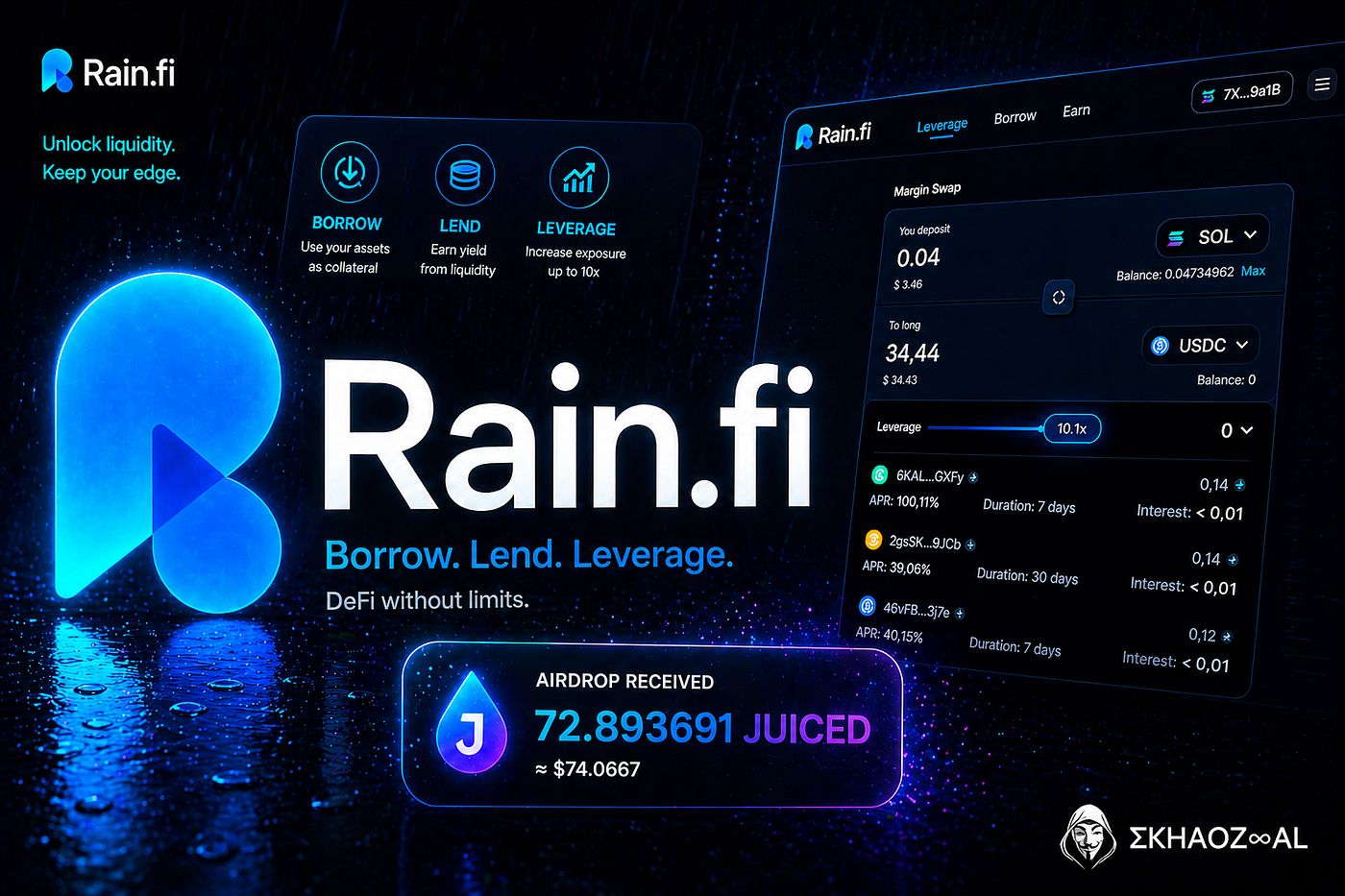
Rain.fi Explained — Leverage, NFT Loans, and How It Actually Works
If you’ve been exploring DeFi on Solana, you’ve probably come across Rain.fi. At first glance, it looks like just another lending platform — but once you dig a bit deeper, it’s doing a few things differently, especially around NFTs and leverage.
Here’s a breakdown based on actually using it.
What Rain.fi Is
At its core, Rain.fi is a lending protocol where you can:
- borrow assets using crypto or NFTs as collateral
- lend assets and earn yield
- open leveraged positions
Nothing revolutionary on paper — but the way it handles NFTs and loan structures makes it stand out a bit.
The idea is simple: instead of selling your assets, you put them to work.
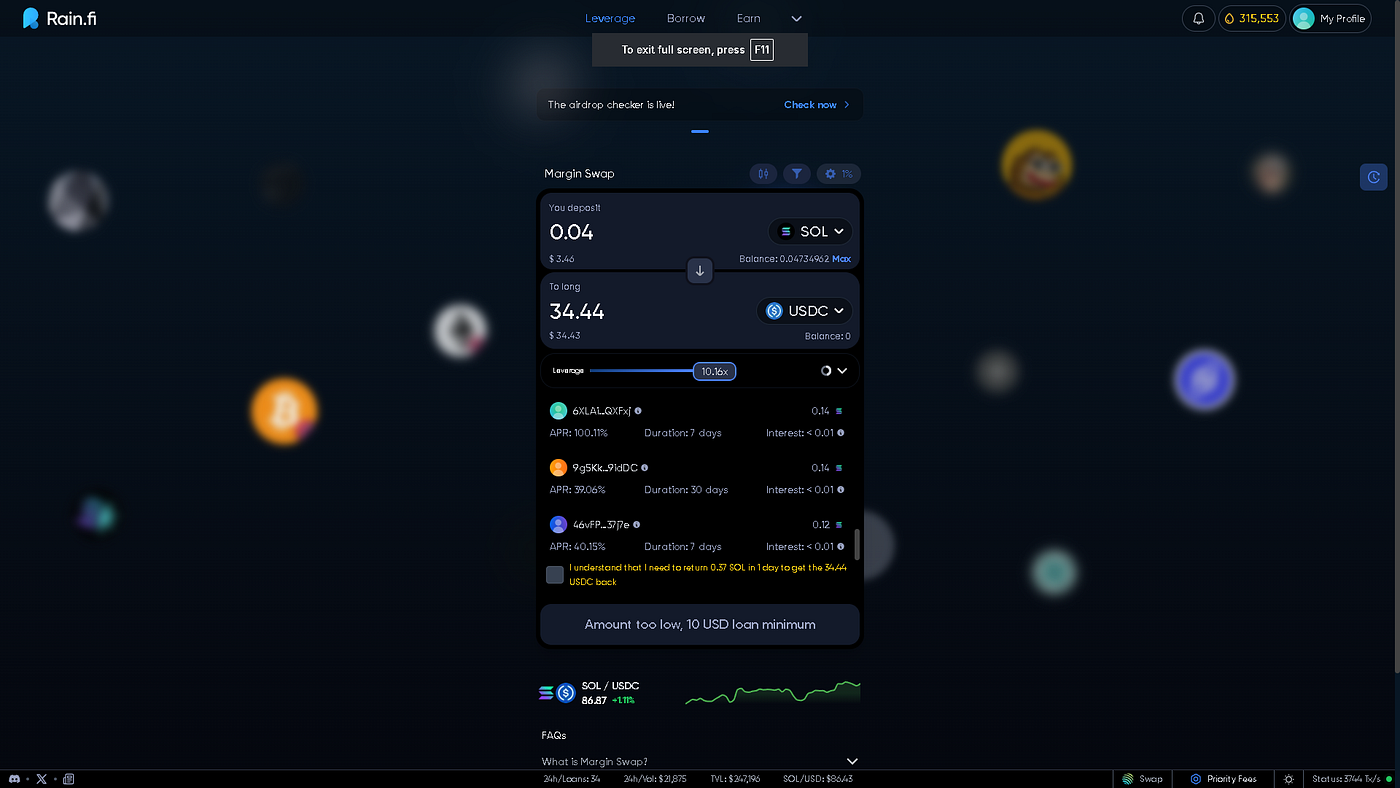
Leverage (Margin Swap)
This is where things get interesting — and honestly, where most people get wrecked.
You deposit a small amount, borrow more, and increase your exposure.
Example:
- Deposit: 0.04 SOL
- Position size: ~34 USDC
- Leverage: ~10x
So yeah, you’re basically trading with 10x your actual capital — which sounds great until it moves against you.
At that point:
- gains are amplified
- losses are amplified just as fast
And liquidation? It can happen faster than you’d expect. Definitely not something to use casually.
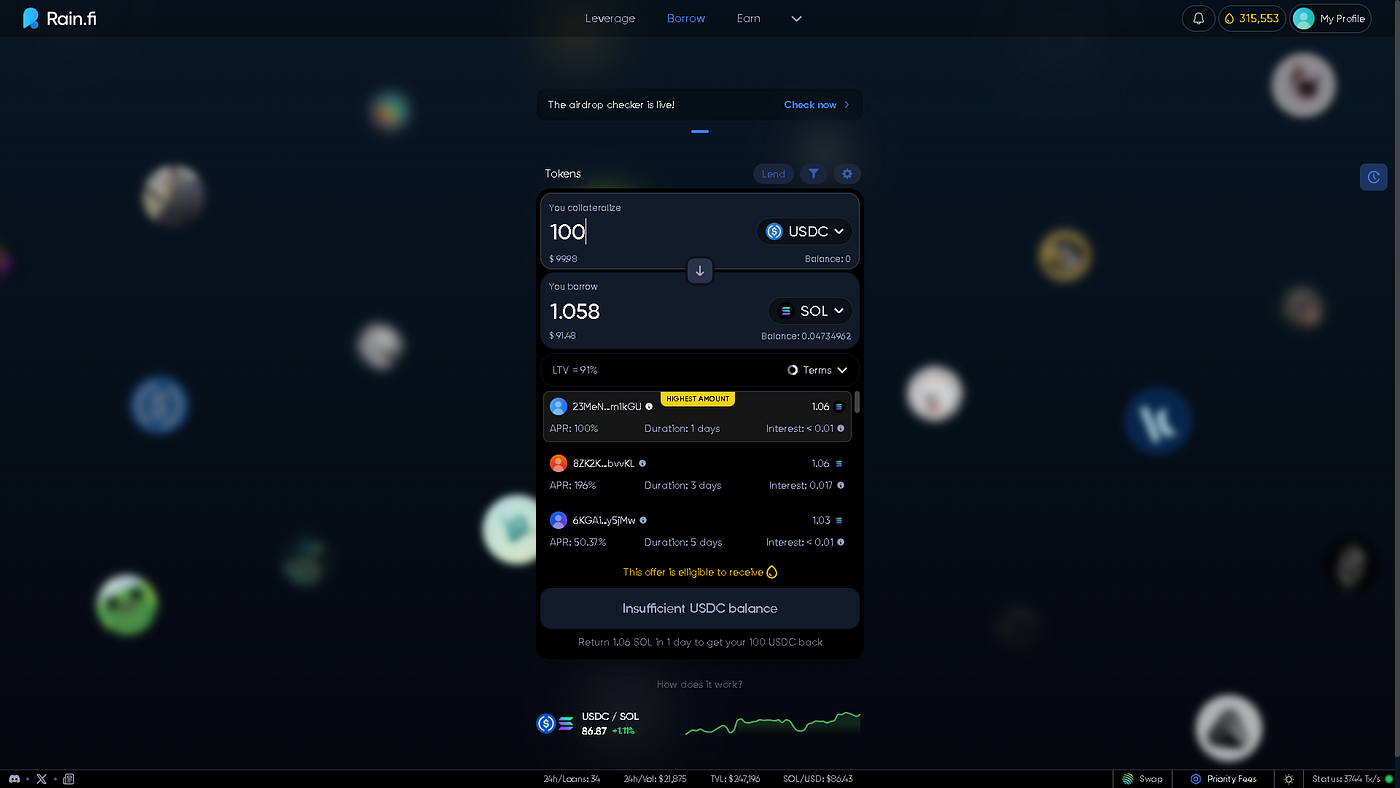
Borrowing Against Collateral
The basic lending flow is pretty straightforward — nothing too fancy here.
You deposit something (like USDC) and borrow another asset (like SOL).
The key metric is LTV (Loan-to-Value).
In my case, it was around 9%, which is very conservative.
- Lower LTV = more breathing room
- Higher LTV = getting closer to liquidation
If your collateral drops too much in value, the protocol doesn’t care — you’ll get liquidated.
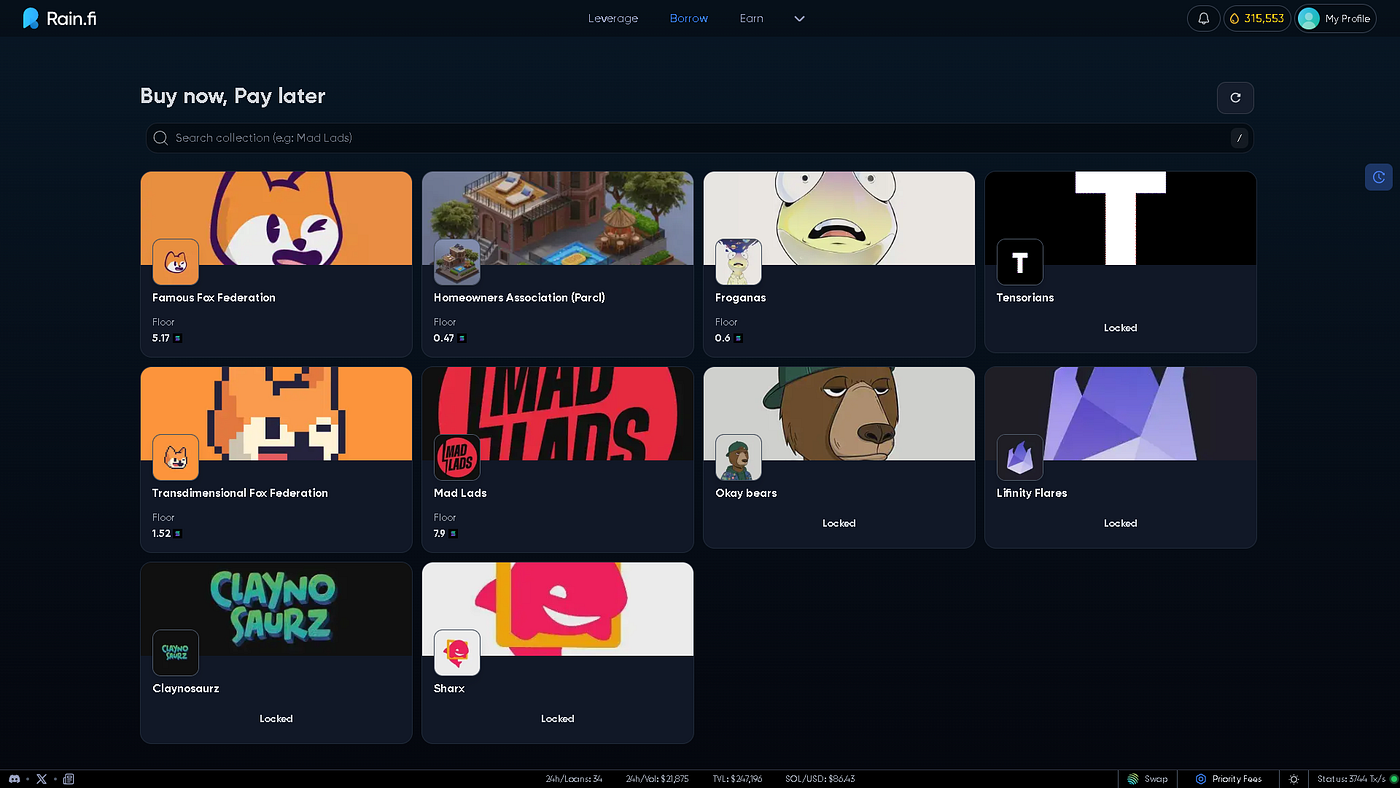
NFT-Backed Loans
This is where Rain.fi starts to feel different.
Instead of just fungible tokens, you can use NFTs as collateral.
Here’s how it works in practice:
- You deposit an NFT
- Lenders make offers (APR + duration)
- You pick one and get liquidity
Example:
- NFT worth ~1 SOL
- Borrow ~0.6–0.7 SOL
- Repay later with interest
If you don’t repay, the lender keeps the NFT. Simple as that.
It’s basically a peer-to-peer loan market, just using NFTs instead of tokens.
Earning Yield (Lending Side)
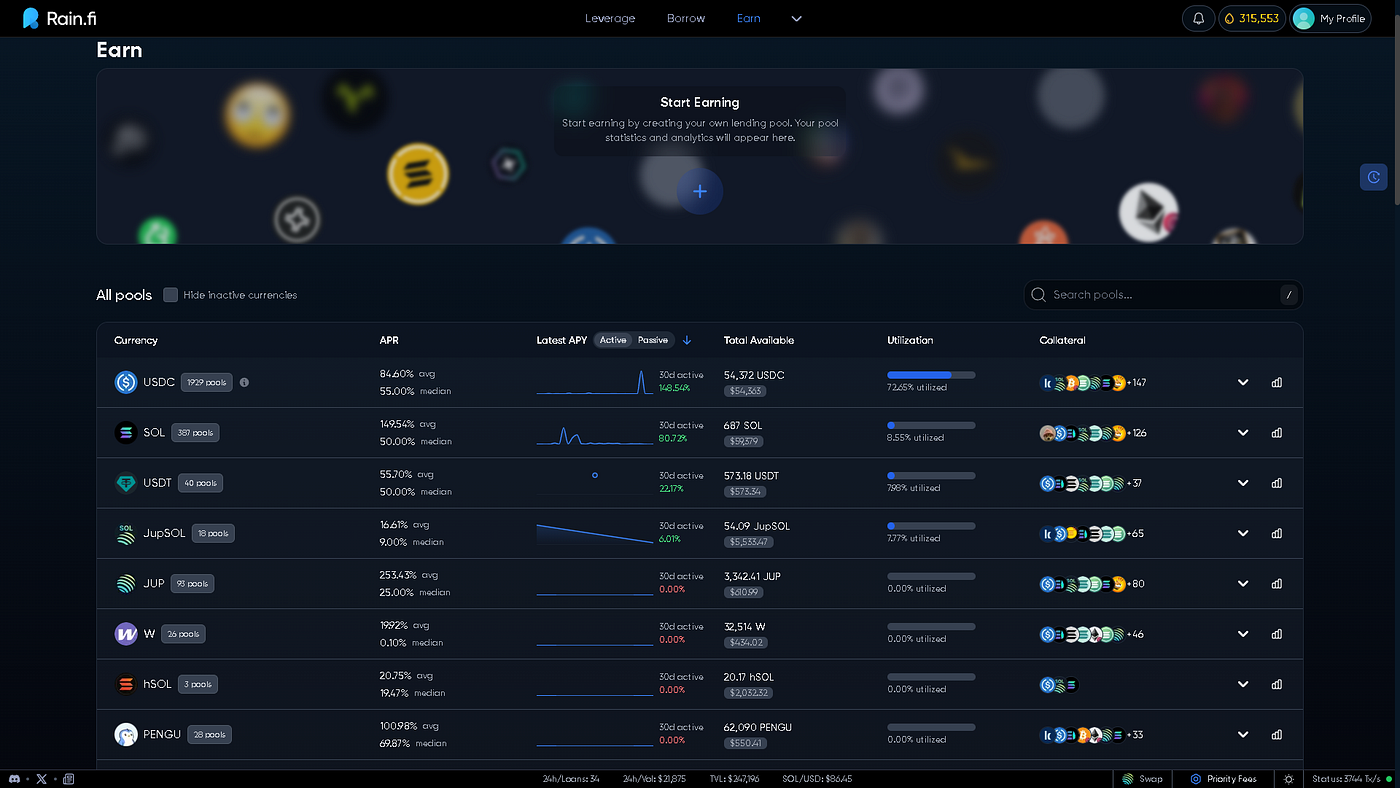
You don’t have to be the borrower — you can also be the one providing liquidity.
You lend assets and earn interest from people borrowing.
Returns can vary a lot:
- sometimes stable and predictable
- sometimes surprisingly high (especially with NFT loans)
It really depends on demand.
Using LSTs (Liquid Staking Tokens)
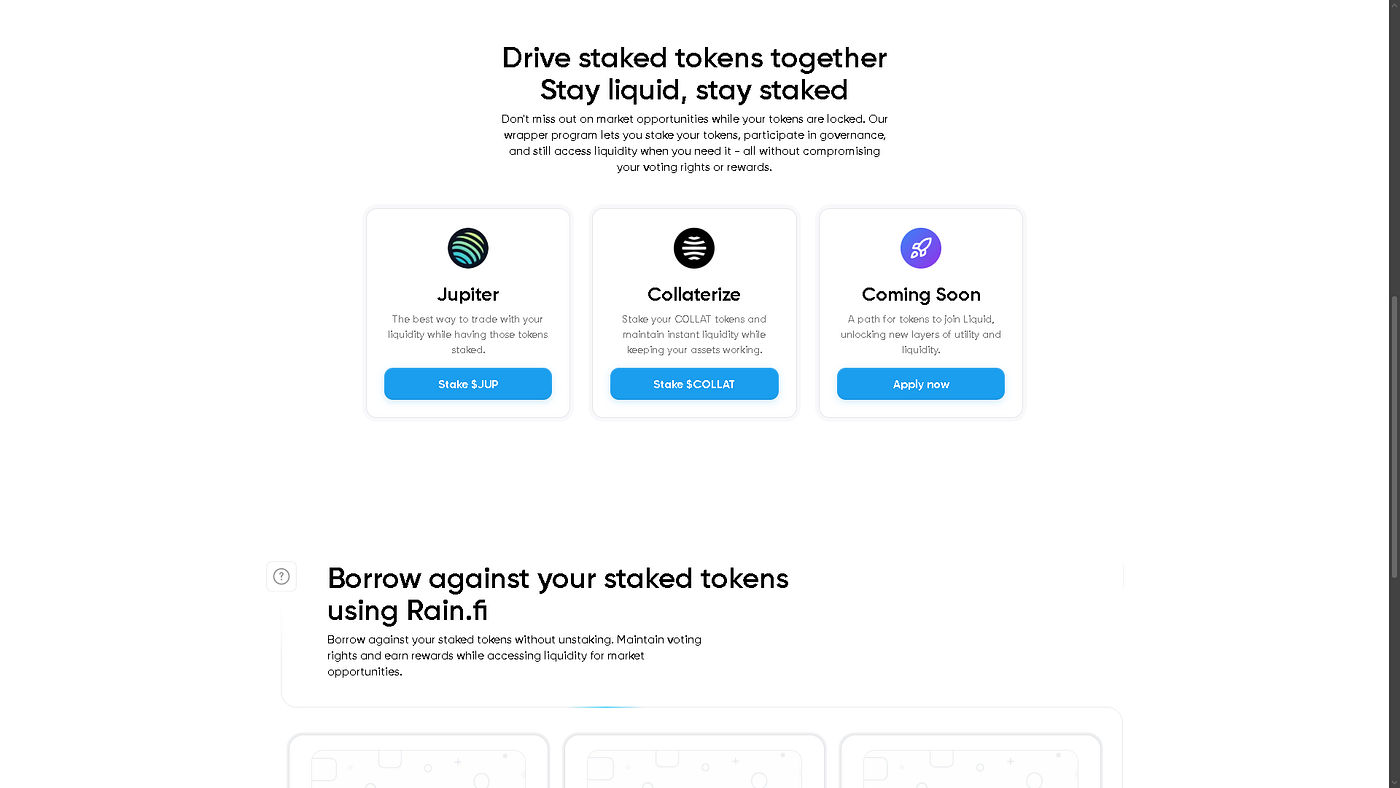
Yes, you can use LSTs as collateral in some cases.
Examples:
- mSOL
- stSOL
- jitoSOL
These represent staked SOL, which means:
- you’re still earning staking rewards
- while also using the asset as collateral
That’s one of the more efficient setups if you’re trying to optimize capital.
Common Issues You Might See
- “Insufficient balance” → not enough collateral
- “Amount too low” → below platform minimum
Nothing unusual — just standard limits.
Strategy Perspective
There are a few ways to approach Rain.fi, depending on how much risk you’re willing to take.
Low risk:
- use stablecoins (USDC)
- keep LTV low
- avoid leverage
Moderate:
- use LSTs
- borrow conservatively
- redeploy capital
High risk:
- leverage
- NFT lending
- short-term plays
Final Thoughts
Rain.fi is a powerful tool, but it’s not exactly beginner-friendly if you don’t understand the risks.
The NFT lending side is genuinely interesting. Leverage, on the other hand, can go wrong fast.
Used properly, it lets you unlock liquidity without selling your assets. Used carelessly… it does the opposite.
That’s the trade-off.
My Approach (and What Happened)
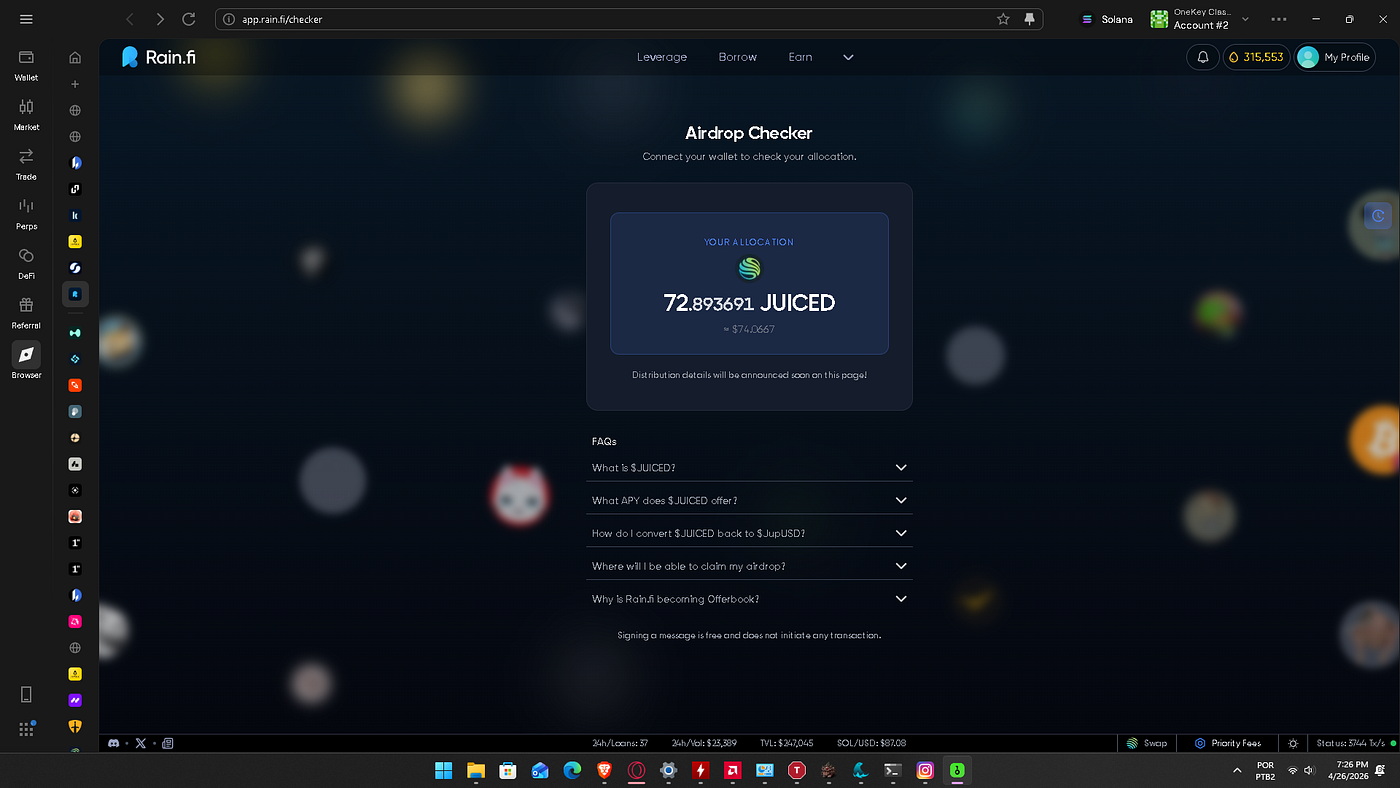
I ended up getting an airdrop by using my staked JUP a bit differently.
Instead of looping it on Kamino and taking on liquidation risk during a potential market crash, I used a liquid staking position on Rain.fi.
I didn’t want to sell my position, so I borrowed against it — but never pushed it beyond ~50% LTV.
It’s also worth noting: Rain’s model isn’t exactly the same as traditional lending. Duration plays a bigger role (especially in NFT loans), but price exposure still matters depending on what you’re using as collateral.
By keeping things conservative and avoiding aggressive leverage, I was able to farm droplets over time without taking on too much risk.
In the end, that translated into about 72.89 JUICED (~$74).
Not life-changing — but a solid example of how playing it safer in DeFi can still pay off.
메타데이터
- post_id
- 185b6967bf7a
- slug
- rain-fi-explained-leverage-nft-loans-and-how-it-actually-works-185b6967bf7a
- url
- https://medium.com/@KHAOZAL/rain-fi-explained-leverage-nft-loans-and-how-it-actually-works-185b6967bf7a
- canonical_url
- https://medium.com/@KHAOZAL/rain-fi-explained-leverage-nft-loans-and-how-it-actually-works-185b6967bf7a
- author_url
- https://medium.com/@KHAOZAL
- status
- ok
- fetched_at
- 2026-06-17 08:20:12