Masonic Cloud Over Serbia: From Tragic Obituaries to Ministerial Aprons
In Serbia, there is an unwritten rule: whenever the authorities cannot explain a corpse, a robbery, or a political debacle, they pull a…
Masonic Cloud Over Serbia: From Tragic Obituaries to Ministerial Aprons
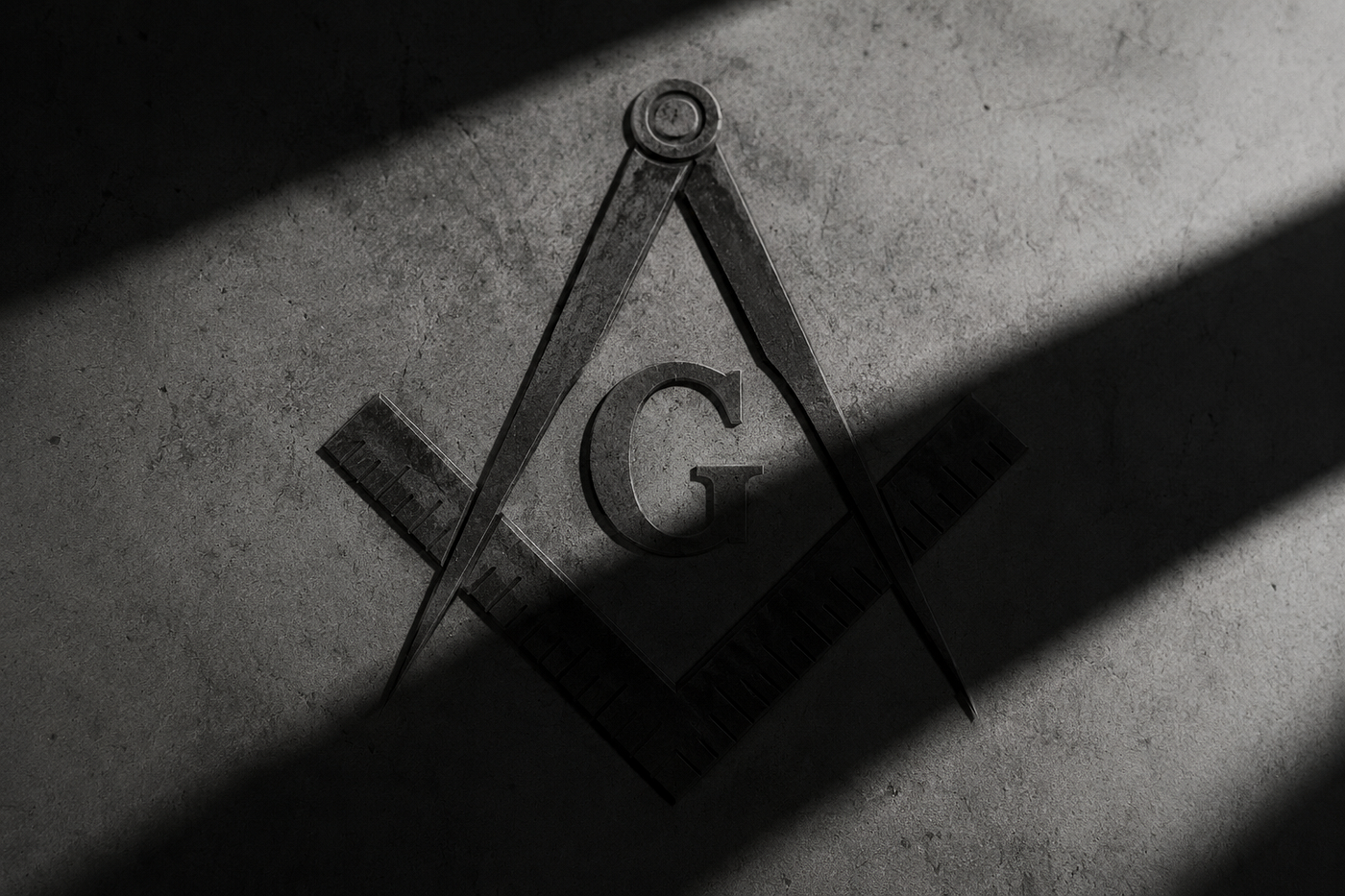
Pod senkom ali ne od sveća
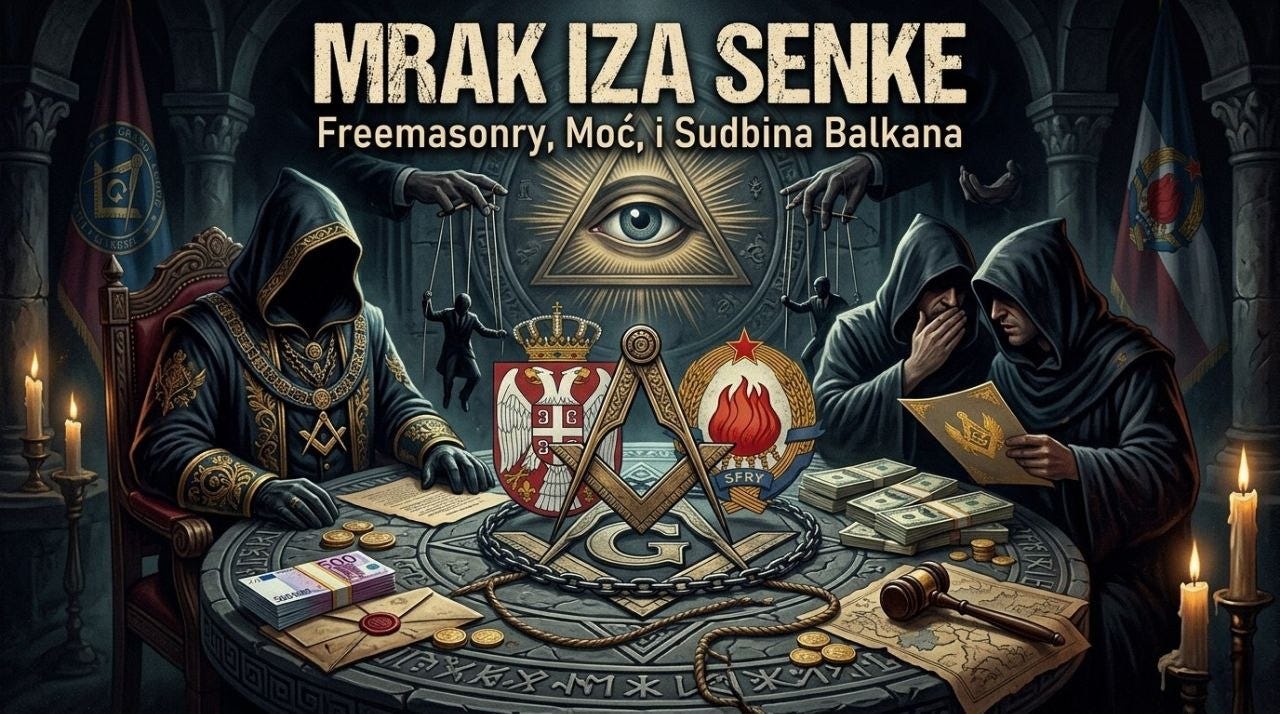
In Serbia, there is an unwritten rule: whenever the authorities cannot explain a corpse, a robbery, or a political debacle, they pull a “Masonic conspiracy” out of the mothballs. It is the perfect recurring theme — mysterious enough to keep the public guessing, yet vague enough to hide the real actors with their hands in the treasury.
The latest episode of this Balkan soap opera began tragically and bizarrely: with the death of the painter D. M. T. in a police station. A man who built his public persona on mysticism, secret services, and unsolved murders, he was laid to rest with candles, Orthodox rites, and — Masonic regalia.
For the average observer, it was a red flag. For V. Š., it was a political open goal that couldn’t be missed.
Politics, Police, and the “Clash of Two Lodges”
While the then-Minister of Police, D. M., was busy at press conferences explaining a “foiled terrorist plot,” V. Š. — acting as the self-appointed guardian of national interests — instantly delivered his verdict: the blame lay in a conflict between two Belgrade lodges under malevolent foreign influence.
The freshly published obituary for the “Sovereign Grand Commander” D. M. T., a holder of the 33rd degree, only confirmed what everyone had been whispering — Freemasonry here had become a playground for political bartering. But let’s be realistic: in Serbia, Masonry is cyclically dragged into the spotlight only when there is a need to obscure more pressing political or criminal processes. If you can’t solve a crime, offer the people “the Freemasons.”
History Repeats Itself: From Secret Police Serials to “Austrian Agents”
This pattern is not new.
- In 1982, as Yugoslavia wobbled in the post-Tito era, a former member of the secret police (Udba), B. M., published a widely read serial about surviving Masons. The goal? To test the public’s reaction to the alleged links between local “reactionaries” and their “imperialist” enemies.
- The late 19th century: As soon as the “Nemanja” lodge was founded in Niš — counting the famous writer S. S. among its members — it was immediately attacked by the press as an “Austrian mission” working against Serbian interests.
The method is always the same: accuse them of a lack of patriotism and an excess of cosmopolitanism. As a certain M. M. wrote in his 1894 pamphlet: “Freemasonry is harmful to us because its embrace is cosmic, while we are only at the beginning of our national phase.”
Who is in the Lodge? (And who isn’t, but wishes they were)
Historically, Serbian Ministers of the Interior seem to be the only ones officially “in charge” of overseeing Masons. When N. Č. demanded that the names of politicians sitting in lodges be made public, a stampede of denials followed. S. V. said he wasn’t a member; V. S. Č. said the same.
Yet, what did the analyses of that era show? According to reports from the 1990s, the list of “brethren” (whether real or projected) looked like a directory of the then-establishment:
- The Political Top: From those close to S. M. and D. Ć., to prominent academics like M. M. and Lj. R.
- Party Infrastructure: High-ranking officials of the ruling party like R. B. were mentioned, alongside opposition leaders like D. M., Lj. T., and Z. Đ.
- The Financial Lobby: Names like Đ. Z., the K. brothers, and even security chiefs like J. S. rotated through the lists.
Rimini and the “Invasion of Politics into the Temple”
There is something almost touching about the report filed by V. M. (then a Grand Secretary, later a Minister), in which he complained that “politics had entered the lodge” following the admission of D. M. Imagine the shock — politics finding its way into an organization that gathers the very people who run the state!
While some grumbled about “grey balloting” (blackballing candidates) for brethren from the provinces, others, like the Italy-based dentist S. Ć., resigned in bitterness, claiming that “the ambitions of those who build through extended arms” had brought nothing but unrest and mistrust.
Conclusion: Rebranding as Salvation
To calm the public and secure international recognition, the leadership — through intermediaries like M. P. (who lobbied in Paris) and S. Đ. (a link to Prince A. K.) — sought a “quick fix.” The solution? Rebranding the lodge as the RGL of Serbia and Montenegro to dispel any suspicion of “hegemonic intentions.”
In the Serbian Masonic constellation, the stars have always been political, and “the Light” has most often come from the flashlights of a police interrogation. Everything else is just high-quality propaganda for the masses, who love to believe that someone, somewhere, actually knows what they are doing — while in reality, they are just arguing over whose initials carry more weight on a secret list.
Serbian language edition below
Masonski oblak nad Srbijom: Od tragične umrlice do ministarskih kecelja
U Srbiji postoji nepisano pravilo: kad god vlast ne zna kako da objasni neki leš, pljačku ili politički debakl, iz naftalina se vadi „masonska zavera“. To je savršena dežurna tema — dovoljno misteriozna da narod nagađa, a dovoljno maglovita da sakrije stvarne aktere koji drže prste u medu.
Najnovija epizoda ove balkanske sapunice počela je tragično i bizarno: smrću slikara D. M. T. u policijskoj stanici. Čovek koji je javne nastupe gradio na mistici, tajnim službama i nerasvetljenim ubistvima, ispraćen je na groblje uz sveće, pravoslavni obred i — masonske regalije.
Za prosečnog posmatrača, to je bio signal za uzbunu. Za V. Š., to je bio penal koji se ne promašuje.
Politika, policija i „sukob dve lože“
Dok je tadašnji ministar policije D. M. pokušavao da na konferencijama za novinare objasni „osujećenu terorističku zaveru“, V. Š. je, kao dežurni zaštitnik nacionalnih interesa, momentalno presudio: kriv je sukob dveju prestoničkih loža sa neumerenim stranim uticajem.
Sveže objavljena umrlica za „Suverenog Generalnog Komandera“ D. M. T., nosioca 33. stepena, samo je potvrdila ono što su svi šaputali — masonerija je ovde postala poligon za politička potkusurivanja. Ali, budimo realni: masonerija u Srbiji se ciklično poteže samo onda kada treba zamagliti aktuelnije procese. Ako ne možeš da rešiš kriminal, ponudi narodu „farmasone“.
Istorija se ponavlja: Od Udbinih feljtona do „austrijskih agenata“
Ovaj šablon nije od juče.
- 1982. godine, dok se Jugoslavija ljuljala u post-titovskoj eri, bivši pripadnik Udbe B. M. objavljuje feljton o preživelim masonima. Cilj? Testiranje javnosti na temu „imperijalističkih agenata“ i njihove veze sa domaćim „reakcionarima“.
- Kraj 19. veka: Čim je osnovana loža „Nemanja“ u Nišu, čiji je član bio i pisac S. S., lokalni listovi su je odmah proglasili za „austrijsku misiju“ koja radi protiv srpstva.
Metoda je uvek ista: optuži ih za manjak patriotizma i višak kosmopolitizma. Kako je još 1894. pisao izvesni M. M. u svom pamfletu: „Farmazonstvo je za nas štetno jer nas grli kosmički, a mi smo tek u početku nacionalne faze.“
Ko je u loži? (I ko nije, a voleo bi da bude)
Interesantno je da su kod nas ministri policije istorijski „glavni i odgovorni“ za masone. Kada je N. Č. zatražio da se obelodani koji političari sede u ložama, nastao je stampedo demantija. S. V. je rekao da nije, V. S. Č. je rekao da nije.
A šta kažu analize iz tog vremena? Prema izveštajima agencija iz devedesetih, spisak „braće“ (stvarni ili projektovani) izgledao je kao telefonski imenik tadašnjeg establišmenta:
- Politički vrh: Od onih bliskih S. M. i D. Ć., do akademika poput M. M. i Lj. R.
- Partijska infrastruktura: Pominjani su visoki funkcioneri vladajuće partije poput R. B., ali i lideri opozicije poput D. M., Lj. T. i Z. Đ.
- Finansijski lobi: Na spiskovima su se rotirala imena poput Đ. Z., braće K., pa čak i imena iz sektora bezbednosti poput J. S.
Rimini i „ulazak politike u hram“
Posebno je dirljiv izveštaj koji je sačinio V. M. (tadašnji veliki sekretar jedne od loža), u kojem se jada kako je „politika ušla u ložu“ nakon prijema D. M. Zamislite taj šok — politika u organizaciji koja okuplja ljude koji upravljaju državom!
Dok su se jedni žalili na „sive balotaže“ (odbijanje kandidata) za braću iz provincije, drugi su, poput stomatologa iz Italije S. Ć., ogorčeno podnosili ostavke jer su „ambicije onih koji zidaju preko produženih ruku“ postale nepodnošljive.
Zaključak: Rebranding kao spas
Da bi se umirile strasti i dobilo priznanje u svetu, tadašnji veliki sekretar je preko posrednika poput M. P. (koji je lobirao u Parizu) i S. Đ. (veze sa princem A. K.) tražio način za „brzo priznanje“. Rešenje? Promena imena u RVL Srbije i Crne Gore, kako bi se otklonila svaka sumnja u „hegemone namere“.
U srpskom masonskom sazvežđu, zvezde su uvek bile političke, a „Svetlost“ je najčešće dolazila iz reflektora policijskih ispitivanja. Sve ostalo je samo — dobra propaganda za mase koje vole da veruju da neko, negde, stvarno zna šta radi, dok se zapravo samo prepiru oko toga čiji je inicijal na moćnijem spisku.
Ovo je tekst Z.N. iz ugla onoga ko ne mora da opipava zidove da bi znao da su krivi. Moja vinkla ne prašta, a vaša ‘velika arhitektura’ se pod mojim merenjem pretvara u običnu scenografiju.
Crni Brat — Onaj koji vidi kroz povez
메타데이터
- post_id
- 2167894de169
- slug
- masonic-cloud-over-serbia-from-tragic-obituaries-to-ministerial-aprons-2167894de169
- url
- https://medium.com/@sov.ins/masonic-cloud-over-serbia-from-tragic-obituaries-to-ministerial-aprons-2167894de169
- canonical_url
- https://medium.com/@sov.ins/masonic-cloud-over-serbia-from-tragic-obituaries-to-ministerial-aprons-2167894de169
- author_url
- https://medium.com/@sov.ins
- status
- ok
- fetched_at
- 2026-06-09 15:37:30