B-Team Basketball
Adventures in Middle School Coaching
B-Team Basketball
Adventures in Middle School Coaching
I hoped to substitute teach in Frankfurt, but it hasn’t worked out. I interviewed at one school, and they were eager to have me, but my wife’s job requires me to get permission from the German government for any work, and they rejected my request, saying the school “wasn’t paying me enough.” I wrote the school asking if they could raise the hourly rate or if I could work fewer hours, and never heard back. A friend at church with kids at the same school as ours found out I played basketball, and told me they were desparate for coaches this season.
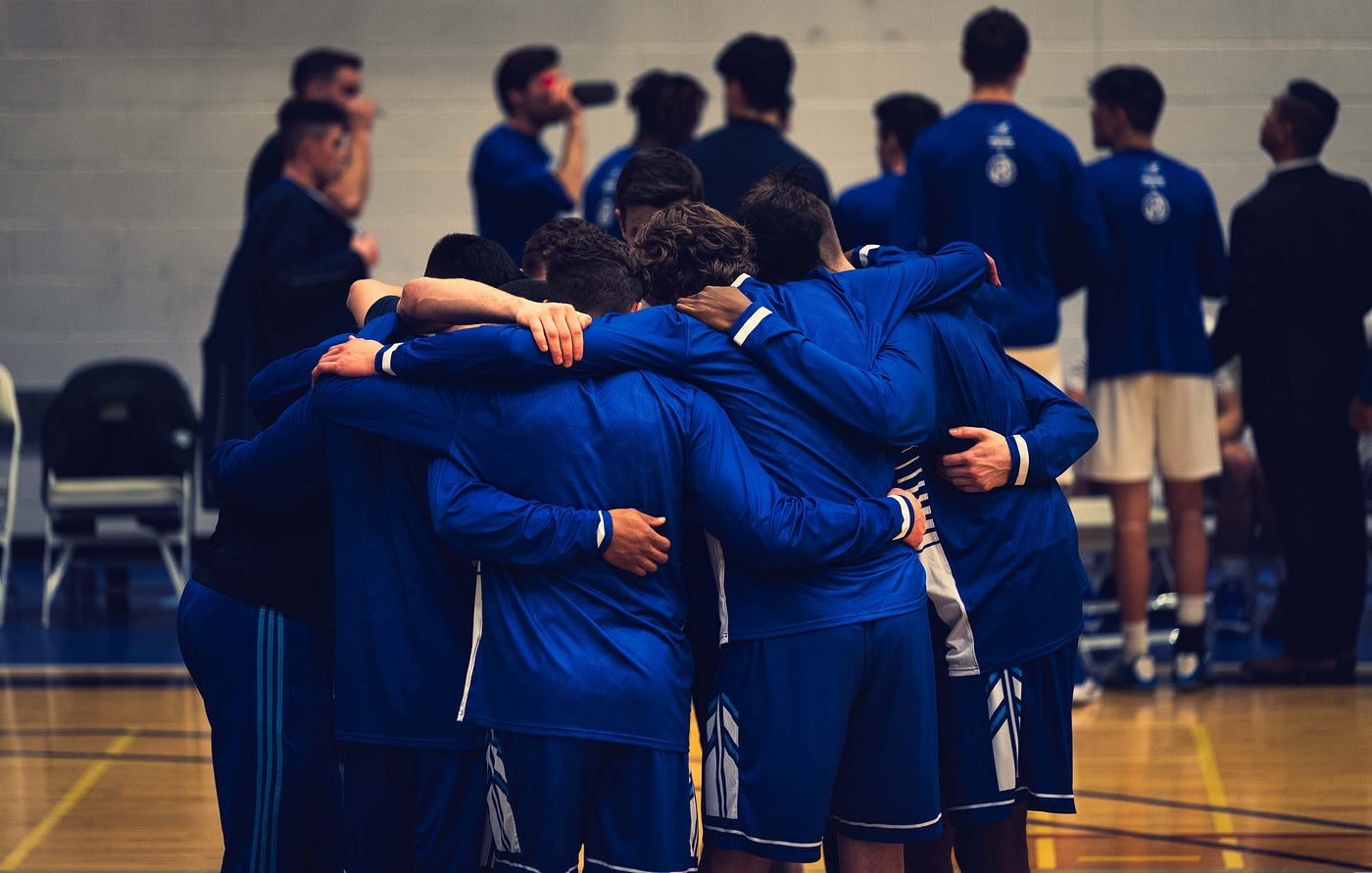
I’ve coached basketball for years, but it’s been more than ten years since I led my last squad. Sports is a different monster now, and I didn’t know what I was getting myself into. More than 90 boys tried out for the team. We cut it down to 14 on both the A and B teams. I would be the B team coach. Practice Mondays and Wednesdays. Games on the weekends.
Over the course of the season, we traveled to Brussels, Luxembourg, Zurich, and Düsseldorf on chartered buses wearing branded team gear. We slept in hotels for tournaments and double-headers. Mind you, this was for sixth and seventh grade. A lot has changed since I was a kid.
We were a squad of 14, but traveled with 12. I had to cut two players from the squad every week, which I hated. I told the boys I put their names into a random name generator each week, but that was a lie. Oddly, our best players’ names never came up. No one ever questioned me about it. The boys were a mix of American, Chinese, Korean, and German kids in sixth and seventh grades. All good kids who gelled quickly and became a solid team. The B team was a feeder program to get them into A team next year and then onto JV their freshman year of high school. We went 18–3 for the season, overall quite competitive. Our only losses came against A teams in tournaments filled with larger and faster eighth graders.
It’s difficult to capture the breadth of the season in one sitting, so I’ll just highlight a few experiences. I was a demanding coach. Our first practice was rough. Almost half of my team had never played organized basketball before. They were all athletic, which is why they made the team in the first place, but some boys couldn’t do a layup properly. We had about five kids who’d played and were good, so it was an odd mix of skill. At the end of the two-hour practice, I called all the boys to the free-throw line and lined them up along the key. They each shot twice. A miss meant one lap, a make eliminated one. I think we ran 21 laps that day. The boys all moaned as I yelled at a straggler from the sideline. It would become our ritual to close out practices through the season. They hated it but grew to love it. The free throws became the crucible that bonded them together as a team. The lowest we ever got was four laps. Not bad for 28 shots. I felt proud that by the end of the season, all of my boys went to the line with confidence, knowing they could make them. In one game, our point guard Conrad shot and made all nine of his free throws. Incredible for a seventh grader.
At that age, it’s challenging to predict player outcomes. The players grow so much over the season. Jaylen, a short Chinese seventh grader with glasses and long hair, missed two days of tryouts for a piano recital. I almost cut him because I questioned his dedication. Halfway through the season, he was our defensive stopper, guarding the opposing team’s best player and scoring meaningful buckets when he’d get a steal for a breakaway layup. He was quiet on the bench and never complained about playing time. I only noticed his ability because before and after practice, our best player, also a quiet Chinese kid, would ask to play one-on-one, and Jaylen gave him a hell of a time.
Kai from Shanghai was our MVP. He moved to Frankfurt a year ago and was still mastering English. He added “bro” onto most of his sentences, even when it didn’t fit. “Coach Dean, can I go get a drink of water, bro?” That’s one thing I had to keep telling the kids. “Don’t ask me if you can go get water, just go get water!” Here I am coaching an intense game from the bench, and some polite private-school Asian kid is tapping me on the shoulder asking if he can refill his water bottle. “Of course!” I’d yell without looking. Anyways, Kai was on the B-team the year before and was one of two repeat-B-teamers. I asked him what it was like last year, and he told me he rode the bench. This was his year, however, because Kai came to play. He was a scoring machine. He could dribble, had a fantastic spin move, and could actually hit a contested jump shot, which is rare at that age. Kids constantly asked me if they could take three-pointers in games. I always responded, “Sure, but if you miss, you’re immediately out of the game. If you make it, you can stay in.” It was meant to scare them away from shooting three because at that age most boys aren’t strong enough to shoot it accurately from distance. Kai jacked one up four games into our season and banked it in off the backboard, and jogged back on defense, shooting nervous glances at me with a huge smile on his face. Kai settled everyone on our team down and filled them with confidence when he was on the court. He knew when to pass and when we needed a bucket.
What I loved most about Kai was that his character shone through his play. He could have scored thirty points a game, but he passed the ball off to teammates when we had a large enough lead, and picked kids up off the ground after a whistle. He rebounded hard and played good defense. Again, never once asked about playing time. At the end of the season, we played a scrimmage against the eighth graders on the A team to help them prep for their final tournament. Of course, our B-teamers treated it like the NBA finals. Kai, put on a clinic. Early into the season, after a few games, the A-team coaches told me they’d probably made a mistake not picking him, but they knew it 100% now. He was just too quiet; it was easy to overlook him. I put my arm around him and told him it was probably for the best. He got to be the man this year, and now he knows what it feels like. You don’t always want your kid at the highest level. The right level is more important.
I had my issues as well. One of my sixth-grade boys was skills-wise one of my best players. But he was out of shape and had some attitude problems. He cared more about scoring than he did about winning the game, for example. If he played poorly, he’d sulk and become disruptive. He was also not in great shape, which almost kept him from the team just based on first impressions. It was almost the opposite of the Kai situation because it’s difficult to be lower on the rotation list than you think you should be. When you’re used to being the go-to option on the team, it’s a hard move to the far end of the bench. My rule for him was that as long as he was running and being productive, he’d stay in the game. When he was moving, good things happened, but too often he’d walk up on offense and stand near the point guard on the wing begging for the ball, a no-no for me. He’d eventually settle into his role as a spark off the bench, but it was up and down with him all season, especially because he was very sensitive. His emotions would get the best of him, so I was careful with my criticism.
Halfway through the season, I sat next to the school counselor on the bus, who was along on a road trip as a chaperone. She told me she met with him weekly for behavioral and academic support. Some kids need more attention than others, I suppose. It was odd because his family was one of the few who came to every game. He had the newest shoes and tons of cool basketball gear. Other kids at the school barely had parents, it seemed. Before the season, the school required me to take a safety course designed to spot signs of abuse and laid out the rules for interactions with our team. One section referred to something like “affluent negligence”. The gist was that rich kids at private schools often appear to have everything, but their home lives are a mess. On our first away weekend, I discovered that two of my German kids were only children, essentially living alone in seventh grade. Their parents were divorced and always gone. “How do you get ready for school?” I asked. “I just set my alarm and make some eggs. Then for dinner I’ll microwave some chicken nuggets or something. I can walk to school.” Hard to believe, I know. They were amazing kids, however. Their faces lit up anytime I said something good about them, and when their parents came to a game, I made sure to keep them in for much longer than usual. It’s always strange how kids turn out.
Almost midway through the season, I called a timeout in the fourth quarter of our eighth game. We were 7–0 and leading by about 15 points with four minutes to play. It was a sure victory. “Guys, this game is won. You’ve done your job. There is still something we gotta do.” I stood hunched over in the huddle looking and curious faces. “At this point, everyone on our team has scored, except James.” I looked at James, a tall, shy, scrawny Chinese kid who’d never played organized ball before and didn’t get much playing time. He was anxious at practice and shot the ball from his waist, something younger kids do when they’re not strong enough to hoist the ball up to the rim. It’s a hard habit to change, though, and I had him alone on a basket for part of every practice, trying to bring his shot up to his face. When he heard what I said, his face went dead serious as the team focused on him. “We have to get him some buckets. Make it happen.” We put our hands into the middle of the huddle and yelled, “1,2,3, Warriors!” I grabbed James by the back of his jersey as the team dispersed and pulled him close. “James, you are on the court for one reason: to score. You get the ball, you put it up.” He gave a slow nod and walked onto the court. The first play, after securing a rebound, our point guard dribbled down the court as players settled into half-court positions. He passed the ball over to Kai on the right wing. Usually, he’d drive or shoot, but he found James cutting back and forth near the free-throw line. James caught the ball and chucked up a shot so quickly the ball must’ve been on fire. It swished through the hoop without touching the rim, and our bench erupted. James shook his head, laughing, a miracle shot for him. Players on the court mobbed him and ran back on defense, jumping up and down in a tangled mess.
Not every kid is born with confidence. Some come with it pre-installed, for whatever reason, but others lack it, which is equally mysterious. One thing I loved telling my boys over and over throughout the season was, “You’re on the court for a reason!” whenever they’d pass up an open shot or hesitate on offense. I’d treat the game more consequentially than necessary. “This is not kiddie basketball anymore. If you’re in the game, it’s because I’ve decided we need you there. You earned it.” It was partially true. They made the cut from more than 90 kids. It was something they should be proud of and I wanted it to bleed into their play.
At the end of the season, I retold the James story to the players and their parents. I reminded them of how they felt in that moment, and what it will likely mean to James going forward, knowing his team came together for him and got him his first bucket in a basketball game. It was a memory I hope will last their lifetimes.
“Coach Dean” has a lovely ring to it. Even now, months after the season is done, I hear someone shout it every time I’m at the school to pick up one of my kids or meet with one of their teachers. I stop, ask them how their day is going, compliment their haircut, and ask if everything is ok. They love the attention, and I hope they can tell I mean it. “Will you coach again next year? Please!” I’m evasive in my response. At the end of the season, after three months of weekends away and 21 games, it was a lot. Certainly, it was more than I’d bargained for before volunteering to coach the middle school B team. Now, months removed from the winter season, I’m up for more weekends away and hard practices. We’ll see.
메타데이터
- post_id
- 25f63d152d9d
- slug
- b-team-basketball-25f63d152d9d
- url
- https://medium.com/@stuartdean/b-team-basketball-25f63d152d9d
- canonical_url
- https://medium.com/@stuartdean/b-team-basketball-25f63d152d9d
- author_url
- https://medium.com/@stuartdean
- status
- ok
- fetched_at
- 2026-07-20 23:38:49