Book Brief: The Book of Eastbay
Two Friends and the Catalog that Changed the Sneaker Business Forever
Book Brief: The Book of Eastbay
Two Friends and the Catalog that Changed the Sneaker Business Forever
Brief Summary
Title:** The Book of Eastbay: Two Friends and the Catalog That Changed the Sneaker Business Forever Authors: Art Juedes and Rick Gering with Brandon Sneed Published: 2026 by Harvard Business Review Press What it Teaches: The Book of Eastbay tells the fascinating story of two childhood friends who built a company from nothing in the middle of nowhere and sold it for $146 million. But it’s bigger than one company’s origin story. Woven through the Eastbay narrative is the broader saga of the sneaker wars — Nike’s rise to topple world-leader Adidas, and the accelerating cultural weight that athletic shoes and their brands accumulated through the 1980s, 1990s, and beyond. For those of us who were high school athletes, or who raised high school athletes during that era, the book doubles as something unexpectedly personal: the story of our own relationship with the shoes that helped us compete, win, and feel like we belonged to something larger than ourselves. When To Use It:* Like the best corporate biographies, The Book of Eastbay* is less about structured lessons you can immediately apply than about sitting at the feet of people who have gone before you — learning from their successes, their failures, and the moments when the difference between the two came down to a single decision. There’s a richness in that kind of storytelling that often transcends direct guidance and frameworks. Read this book when you have the space to enjoy a well-told story, not when you’re pressing against a specific business challenge and need an answer fast.

Brief Review
The publisher of The Book of Eastbay graciously provided an early copy for my review.
Few business books are genuinely hard to put down. The Book of Eastbay is one of them. My wife noticed it first: “You must really like that book — you keep reading the first few paragraphs of the next chapter before stopping.” She was right.
For those unfamiliar with Eastbay, the company became famous as a catalog retailer of athletic shoes, but that’s not where the story starts. Rick and Art were boyhood friends and competitive athletes who grew frustrated in the late 1970s as athletic footwear became increasingly engineered — and yet unavailable in their small Wisconsin town. So they did what entrepreneurs do: they solved their own problem. They loaded up a car and took shoes directly to coaches and teams within driving distance of home. A retail store followed. Phone orders followed. Coaches asked for a price list, which became a flyer, which became a stapled catalog with pictures, which eventually made them pioneers of catalog retail.
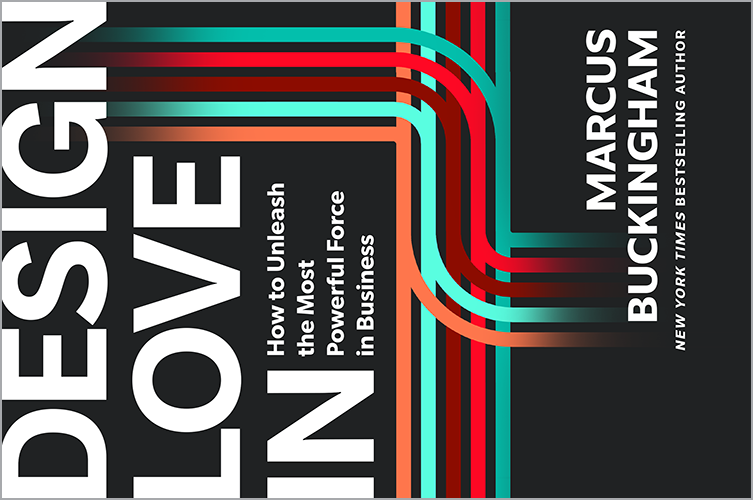
What differentiated Eastbay wasn’t logistics or merchandising — it was love. The founders genuinely cared about athletes: giving them access to products they’d been denied, taking their goals seriously, connecting them to a broader community of competitors and dreamers. I reviewed Design Love In last week, and the Eastbay story is a natural companion — a real-world demonstration of what it looks like when a business is built around serving people rather than extracting from them.
Reading the early chapters took me back to my own days as a competitive runner in high school and college; the later chapters reminded me of buying basketball shoes with my son. Even decades removed, the founders’ connection to athletes comes through on every page.
But the book’s most valuable contribution isn’t nostalgia — it’s the unflinching account of the crises that nearly killed the company. Time and again, Rick and Art faced decisions that could have ended everything. Most of the time they chose well. When they didn’t, they learned, adapted, and survived. The specific challenges they faced may not mirror what readers will encounter in their own businesses, but the pattern — pressure, decision, consequence, growth — is universal.
The defining test came in 1988, when Nike informed Eastbay it could no longer sell Air shoes through its catalogs. At the peak of Nike Air’s popularity, that product line represented roughly 40% of Eastbay’s revenue. It vanished overnight. They wouldn’t get it back until 1994. Rather than contracting into survival mode, the founders used the crisis as fuel. By the time they were named Wisconsin Entrepreneurs of the Year, they could trace a direct line from that loss to their greatest period of growth: from fewer than 100 employees and $17 million in revenue to more than 600 employees and a projected $80 million — all without Nike Air. As they put it, the loss had pushed them to new levels as entrepreneurs and as leaders.
In 1996, they sold Eastbay to Foot Locker for $146 million. The brand continued until 2021. But the final section of the book may be its most important — and its most honest. It’s about letting go. Many founders build companies that outlast them, then struggle to find purpose and identity on the other side of the exit. Rick and Art don’t flinch from that difficulty, and their hard-won perspective offers perhaps the most valuable lesson in the book: don’t let your business define you. Your purpose and your value extend far beyond what you’ve built.
Bottom Line
The Book of Eastbay is that rare entrepreneurial memoir that earns its length. It works on multiple levels simultaneously — as a nostalgic trip for anyone who grew up lacing up serious athletic shoes, as a masterclass in customer-centric culture, and most importantly, as an honest account of what it actually takes to build something that lasts. The Nike Air crisis alone is worth the price of admission: a case study in turning catastrophic loss into competitive advantage that belongs alongside the best business turnaround stories in print.
This book will resonate most with founders and operators who are in the messy middle of building something — people who know what it feels like to have a major customer or revenue source at risk, and who need evidence that survival and growth are possible on the other side. But the final chapters speak to a broader audience: anyone who has tied too much of their identity to their professional success will find something clarifying — and quietly urgent — in how Rick and Art reckon with life after Eastbay.
메타데이터
- post_id
- 2b7b36272b9b
- slug
- book-brief-the-book-of-eastbay-2b7b36272b9b
- url
- https://clearpurpose.media/book-brief-the-book-of-eastbay-2b7b36272b9b
- canonical_url
- https://clearpurpose.media/book-brief-the-book-of-eastbay-2b7b36272b9b
- author_url
- https://medium.com/@russ_13760
- status
- ok
- fetched_at
- 2026-06-09 15:37:30