D’Angelo’s Afro-Modernism Pt. 1 & The Torch He Carried for Us
On March 20th, 2000, during an electrifying live performance at Radio City Music Hall, we were swaying along with the ‘neo-soul’ music…
D’Angelo’s Afro-Modernism Pt. 1 & The Torch He Carried for Us
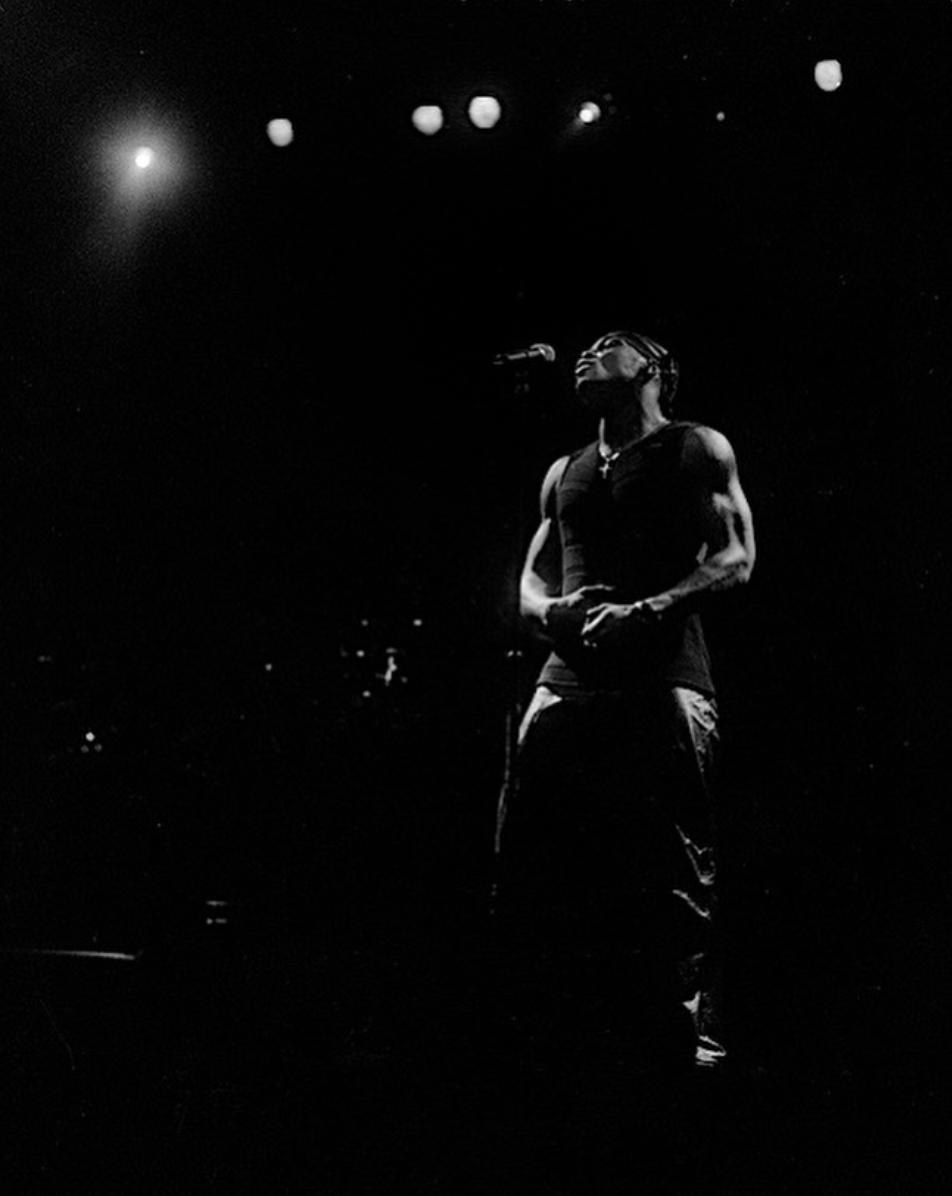
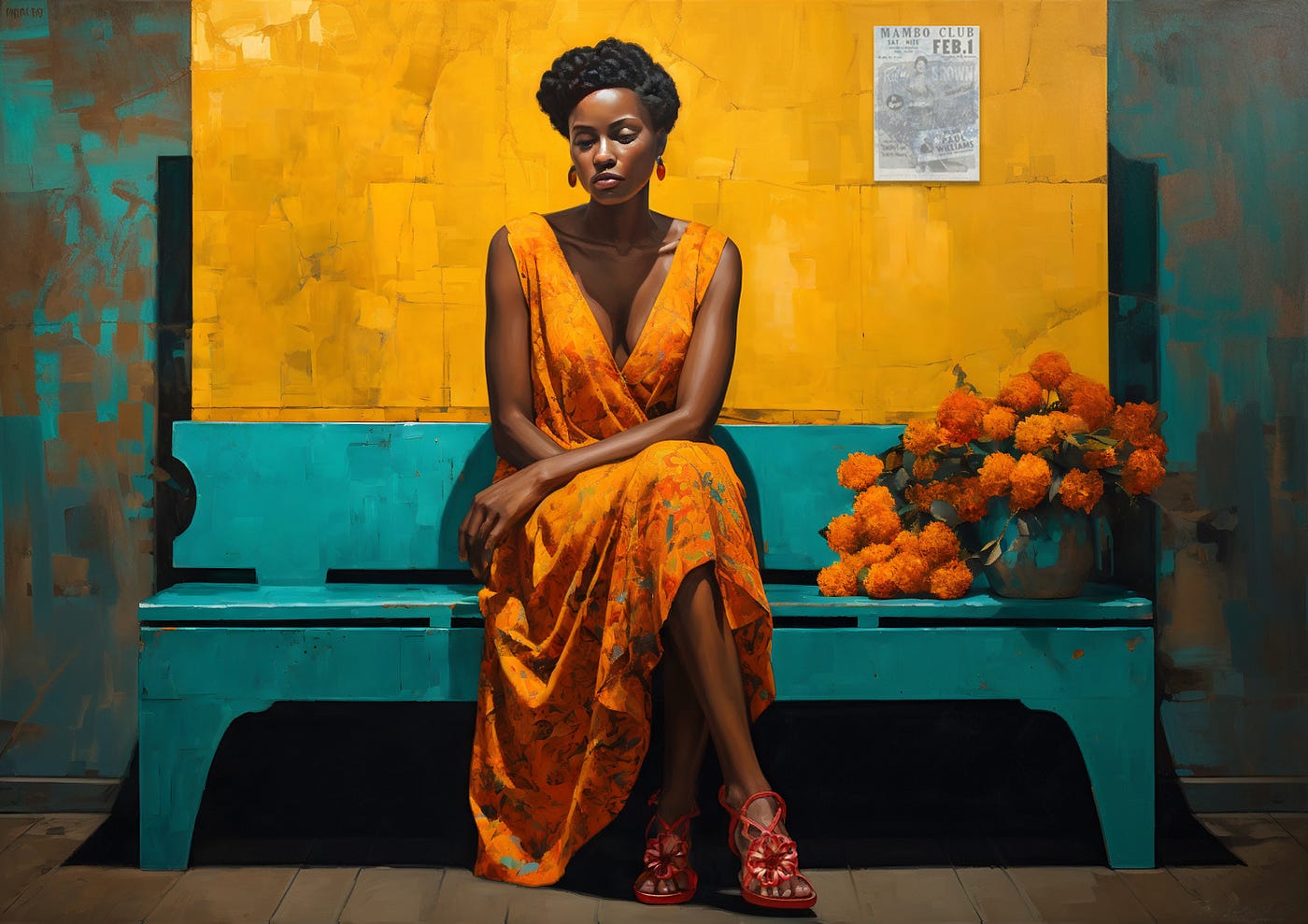
Left: D’Angelo at Radio City Music Hall (2000). Photo & copyright by Russell Frederick; Right: Voodoo Promotional Poster
On March 20th, 2000, during an electrifying live performance at Radio City Music Hall, we were swaying along with the ‘neo-soul’ music performed by D’Angelo & the Soultronics, when suddenly my mind picked up on an entailment that only musicians of their caliber could initiate: The phrase “free your mind and your ass will follow” (see Parliament-Funkadelic or P-Funk) means that by letting go of the need to conform, creativity and authentic self-expression can flow freely, leading to a more genuine and fulfilling life. Today, I remembered this concert that coincided with the release of Voodoo: it was one of three highly acclaimed albums and each one was a chapter in D’Angelo’s Afro-modernist, Black music manifesto.
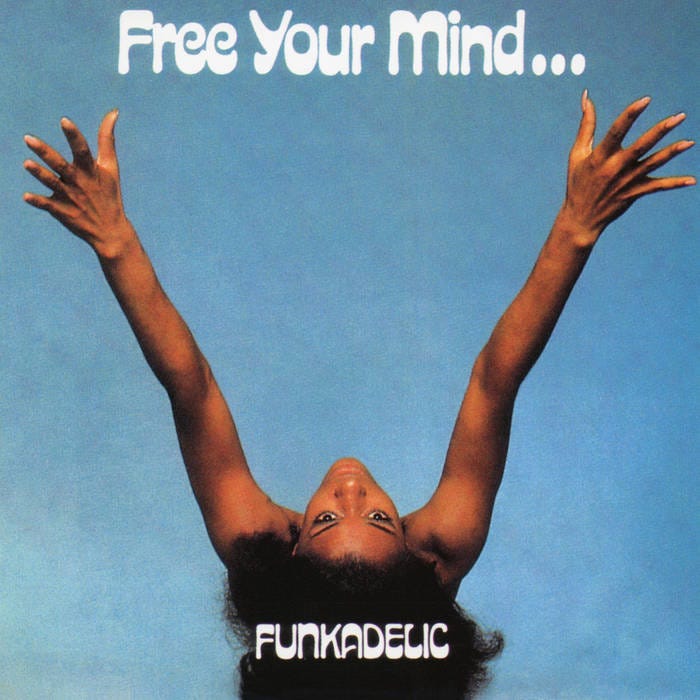
Album cover for Funkadelic’s “Free Your Mind…” (1970)
On October 14, 2025, D’Angelo passed away and left us with body of work that might be what Guthrie Ramsey refers to as Afro-modernism: the ideal of reconciling “southern agrarian and northern urban black culture, sacred and secular, gutbucket funkiness and Ebony magazine classiness.” Ramsey showed us the ways in which Black musicians moved beyond the rules, creating new musical genres of influence with songs of social justice and sociopolitical freedom, which undeniably shaped how modernism was understood, and, as he wrote in his book, “defined, for many, the aesthetic core of what was singular about American music culture.”
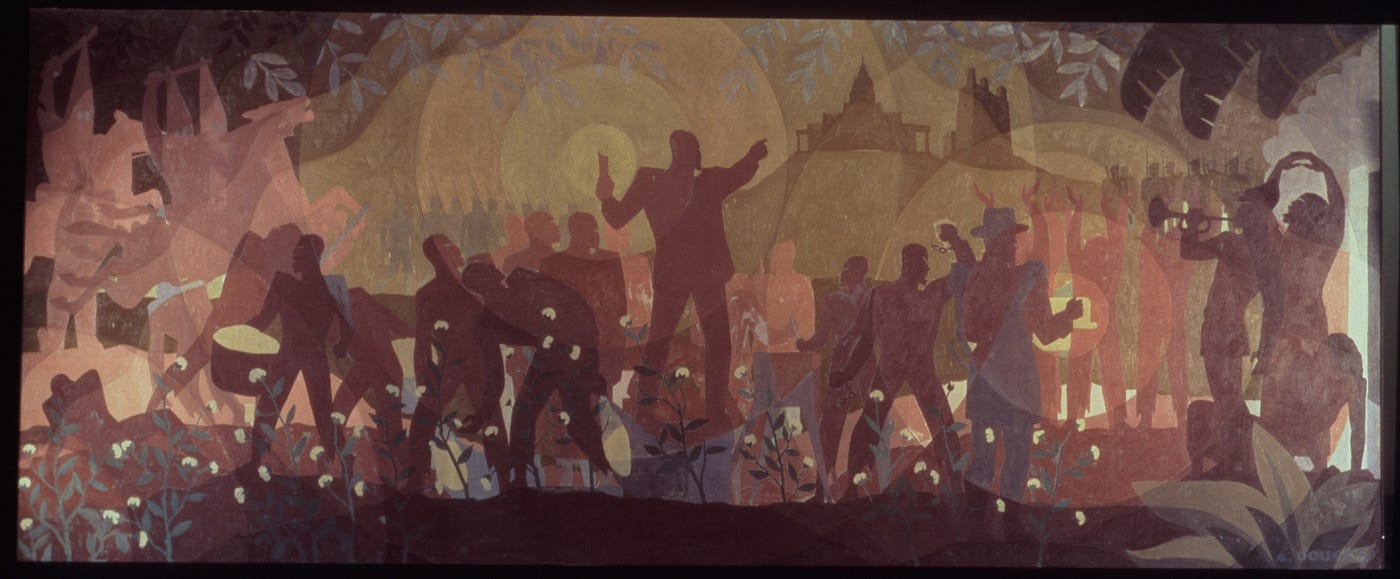
Aaron Douglas, Aspects of Negro Life: From Slavery to Reconstruction, 1934
When listening to D’Angelo’s music you can clearly hear the “North-South cultural dialog” Guthrie writes about, specifically:
[H]ow the troping, or repetitive use of various musical techniques, musicking activities, myths, canonical stories, cuisine, and so on, has signified for many not Africa per se but a southern-based cultural system.
Before D’Angelo released Brown Sugar in 1995, R&B music was largely cookie cutter, meaning that the genre in the late 1980s and early 1990s had become overly commercialized, formulaic, and dependent on electronic production. D’Angelo is widely credited with challenging this trend by reintroducing an organic, raw, and authentic sound rooted in classic soul, gospel, funk, and jazz, which helped launch the ‘neo-soul’ movement. However, for D’Angelo (simplified as D), this was just the start: D briefly joined the ‘Ummah’, a music production collective composed of members Q-Tip and Ali Shaheed Muhammad of A Tribe Called Quest, Raphael Saadiq, and the late Jay Dee (J Dilla). D also joined the Soultronics, an extension of the Soulquarians who collaborated on Voodoo. D’s website was hosted on okayplayer.com an online platform that was founded by Questlove (The Roots) and Angela Nissel.
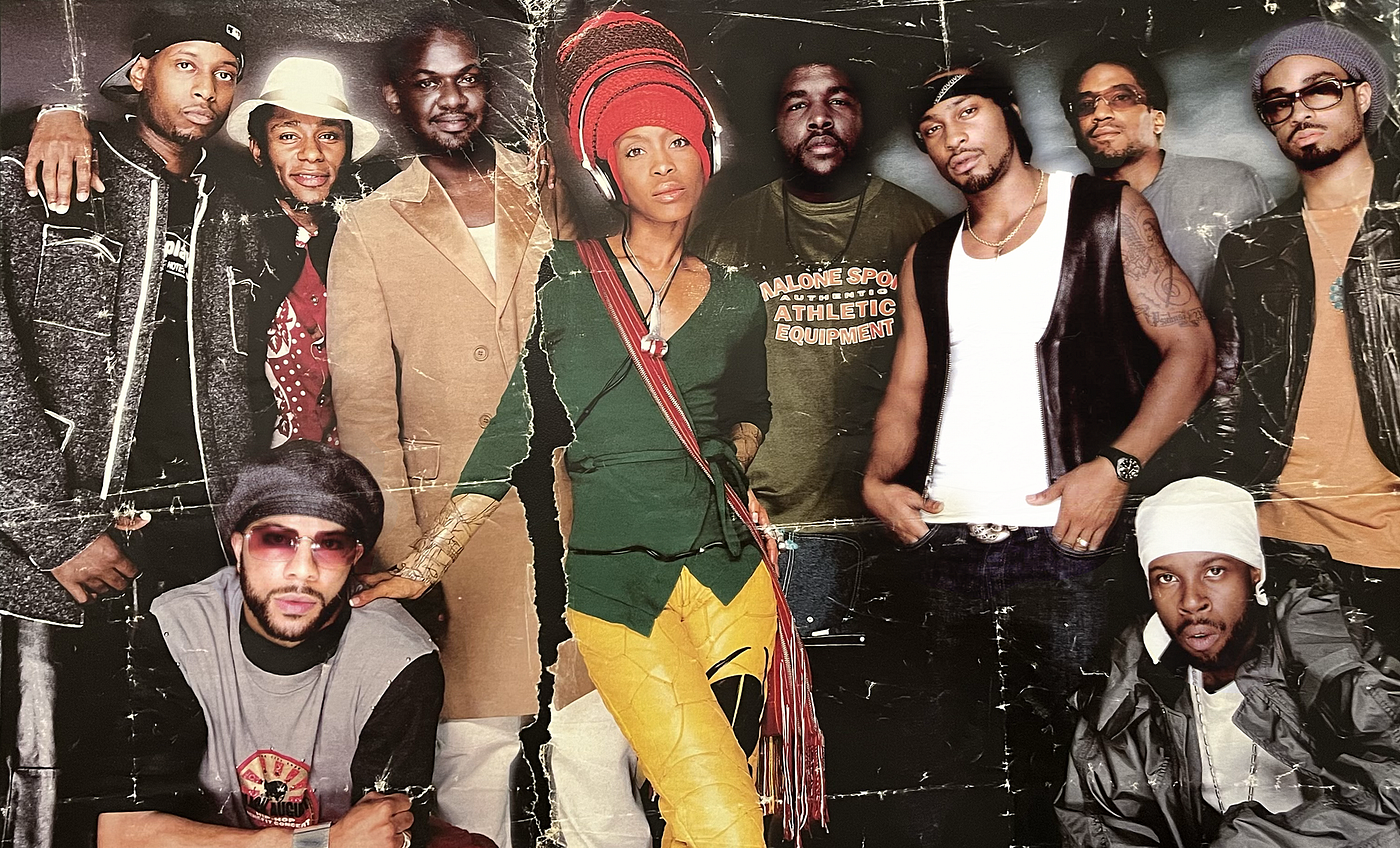
The Soulquarians in Vibe Magazine (circa 2000)
Rap and hip hop had emerged in the post-industrial era as a “source for youth of alternative identity formation and social status” (see Tricia Rose) and a space for reappropriation, remixing, and improvisation. D’Angelo discovered ‘sampled soul’ in 1990s rap music, which he then incorporated into his own music. James Brown, Prince, J Dilla (or Dilla), A Tribe Called Quest, and Gang Starr, a Brooklyn-based rapper-DJ duo, were stand out influences. In the early okayplayer.com discussion forum days Questlove posted a short clip of D’Angelo doing a James Brown-inspired ‘mashed potato’ foot slide to Gang Starr’s “Manifest”, which samples Brown’s “Bring It Up (Hipster’s Avenue)” (see below). This performance piqued my interest as a student of Afro-modernism.
[embed]
[embed]
Sampling a song, taking a portion of a sound from an audio track and processing it through a digital audio device like a drum machine allowed artists to create entirely new sounds. Alternatively, Prince was known for hacking the Linn LM-1 drum to manipulate its sounds, finger-drumming live patterns, and routing the output through effects pedals. The process is no different than a coder using open-source resources to produce an entirely new piece of software. This is a modality that these communities share by recycling creativity to generate new ideas. In the outtakes for the 2000 album Voodoo, D’Angelo was fully tapped into this method. In the following video you can hear him playing his keyboard while repurposing verses from “Speak Ya Clout” on Gang Starr’s 1994 Hard to Earn album:
[embed]
Also, listen to D’Angelo’s rendition of Gang Starr’s “Soliloquy of Chaos”:
[embed]
As technology became more sophisticated, DJs began to create stunning rhythm tracks by taking recorded “samples” from a variety of sources, mixing them in inventive ways over which rappers would perform dense, lyrical narratives.
The above clips are two of several Voodoo outtakes you can find on YouTube. You can also find a video from collaborator DJ Premeire (one-half of Gang Starr) talking about remixing “Lady” from D’Angelo’s 1995 album Brown Sugar. Premeire and D’Angelo later worked together on the song “Devil’s Pie,” which features rappers Redman and Method Man.
[embed]
According to Guthrie Ramsey, Dizzy Gillespie “privileges improvisation as the source of (Black music) composition” and points to the place of technology in establishing “modern” Black cultural art forms. Hip hop music producers such as the late J Dilla (James Yancey) provided the seed (time-feel) for what was grown in Voodoo, which pushes improvisation into a higher realm of creativity. In an interview with Nelson George and Red Bull Music Academy, D’Angelo talks about this process:
See that’s the thing. I’m basically trying to emulate the great hip-hop producers. So if you looking for a break, you look for a sample — and this was before you had I guess the technology to speed up or slow down a sample without fucking with the tempo of it, right? So you had a beat going and you would put a sample over top of that beat.
It wouldn’t align perfectly unless you kind of would put it behind. You had to kind of play it a little bit before the beat started so that by the time you got to the end of the four bars, it would align. And in that way, everything was the drunk thing, like you’re saying. I mean, that’s just me kind of trying to emulate Premier and Marley Marl, my favorite hip-hop producers.
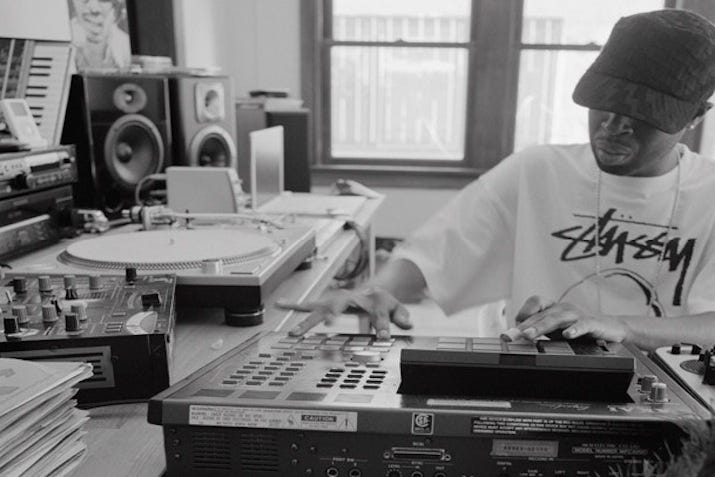
J Dilla in his studio. Photo courtesy of John Tashiro and the New York Time.
J Dilla, whose contributions are often unsung and obscured, served as inspiration for the creation of Voodoo. According to Dan Charnas, Dilla was in the Electric Lady Studios during the album’s production phase and you can hear his influence in the songs. More specifically, the musicians were inspired by Dilla’s ‘time-feel’ that was invented in response to the limitations of computer-driven sequencers, samplers, and drum machines. During the Red Bull Music Academy event, Questlove stated,
Whereas the only two human beings I know that never had the quantize option on was D’Angelo and Dilla.
[embed]
You can hear Dilla’s influence (‘time-feel’) in the above rehearsal clip posted by Questlove on Instagram. The song is D’Angelo’s rendition of Funkadelic’s 1975 No Head No Backstage Pass, which was performed at the 2014 Afropunk festival. Author Dan Charnas elaborates on this method in his book Dilla Time: The Life and Afterlife of J Dilla (pg. 242) where he writes,
The limitations of the older machines provoked the innovations of the producers who used them, and cultivated character, too — patience, perseverance, focus, risk-taking.
Questlove with oversight by D’Angelo merged his standard drum methods with ‘unquantized’ beat making to create a more natural, human-like rhythm with slight variations. J Dilla was the pioneer of this approach and D’Angelo embodied it (he didn’t need the computer) and produced an album that defined a movement, then…
Oh, yeah. Then we ended it with this interpretation, so it went into this Fishbone thing.
[embed]
Nearly fifteen years after the release of Voodoo D’Angelo channeled Fishbone’s “Properties of Propaganda” in a gospel song (see above). You can hear their rendition near the end of the performance. Fishbone is an American alternative rock band formed in 1979 in Los Angeles, which plays a fusion of ska, funk, reggae, soul and metal (rock) into their music. D’Angelo’s 2014’s Black Messiah album captured this alternative rock approach to making soul music. It brought to mind Jimi Hendrix and his Band of Gypsys. D’Angelo stated (via Red Bull Music),
Vanguard is definitely evolution. My last band being the Soultronics and the Soulquarians was, I guess, the collective of all of us. Yeah, the Vanguard is just the progression of all of that. We’re not the Soultronics, it’s a different band. I think it’s a louder band. It’s a harder band. It’s more guitars, definitely, so it’s definitely more rock, you know.
[embed]
When D’Angelo left us nearly three weeks ago, we had already cycled back to an era of Black music that was mostly overly commercialized, formulaic, and dependent on electronic production. On YouTube, The Company Man (Justin Hunte) posted a video titled “How Neo-Soul Died and Anti-Blackness Went Platinum”. In the video he honors D’Angelo and offers commentary on the state of things today (“Are you genuine or are you generally trying to gain market share?”):
[embed]
Once a person breaks free from mental constraints (fear, doubt, societal pressures, etc.), their physical actions, behaviors, and life circumstances will naturally change to match their new, free state of mind. D’Angelo is now free mentally, spiritually, and physically. And now it’s up to us (and it’s definitely the right time). D’Angelo carried the torch for us as long as he could. He also left us with blueprints.
메타데이터
- post_id
- 3066c3618e7c
- slug
- dangelo-s-afro-modernism-the-torch-he-carried-for-us-3066c3618e7c
- url
- https://medium.com/@nettricegaskins/dangelo-s-afro-modernism-the-torch-he-carried-for-us-3066c3618e7c
- canonical_url
- https://medium.com/@nettricegaskins/dangelo-s-afro-modernism-the-torch-he-carried-for-us-3066c3618e7c
- author_url
- https://medium.com/@nettricegaskins
- status
- ok
- fetched_at
- 2026-07-30 11:05:10