Why I Stopped Using the PARA Method
Organizing my notes became a chore that it led me to evaluate my system.
Why I Stopped Using the PARA Method
Organizing my notes became a chore that it led me to evaluate my system.
Photo by Vadim Bozhko on Unsplash
Note-taking is one of my passions. I’m not just about choosing the right tools; I’m also intentional about building my system.
As a minimalist, I’ve set a boundary: if something no longer adds value, I let it go. If I ever regret letting go, I let go of the regret.
Recently, I’ve felt overwhelmed by my mind, preoccupied with unwanted thoughts. This has happened before, and I suspect it’s coming from my uncleared notes inbox. Digital clutter is a challenge because the volume of data we can store is virtually limitless. With the rise of digital tools that sync faster than our thought processes, capturing and retrieving information has become effortless.
When I realize it’s time to clear my mind, I focus on clearing what needs to be done. After clearing my notes inbox, I realized my system used to work for me, but it’s become a chore. I decided to let go of the PARA method.
What is PARA?
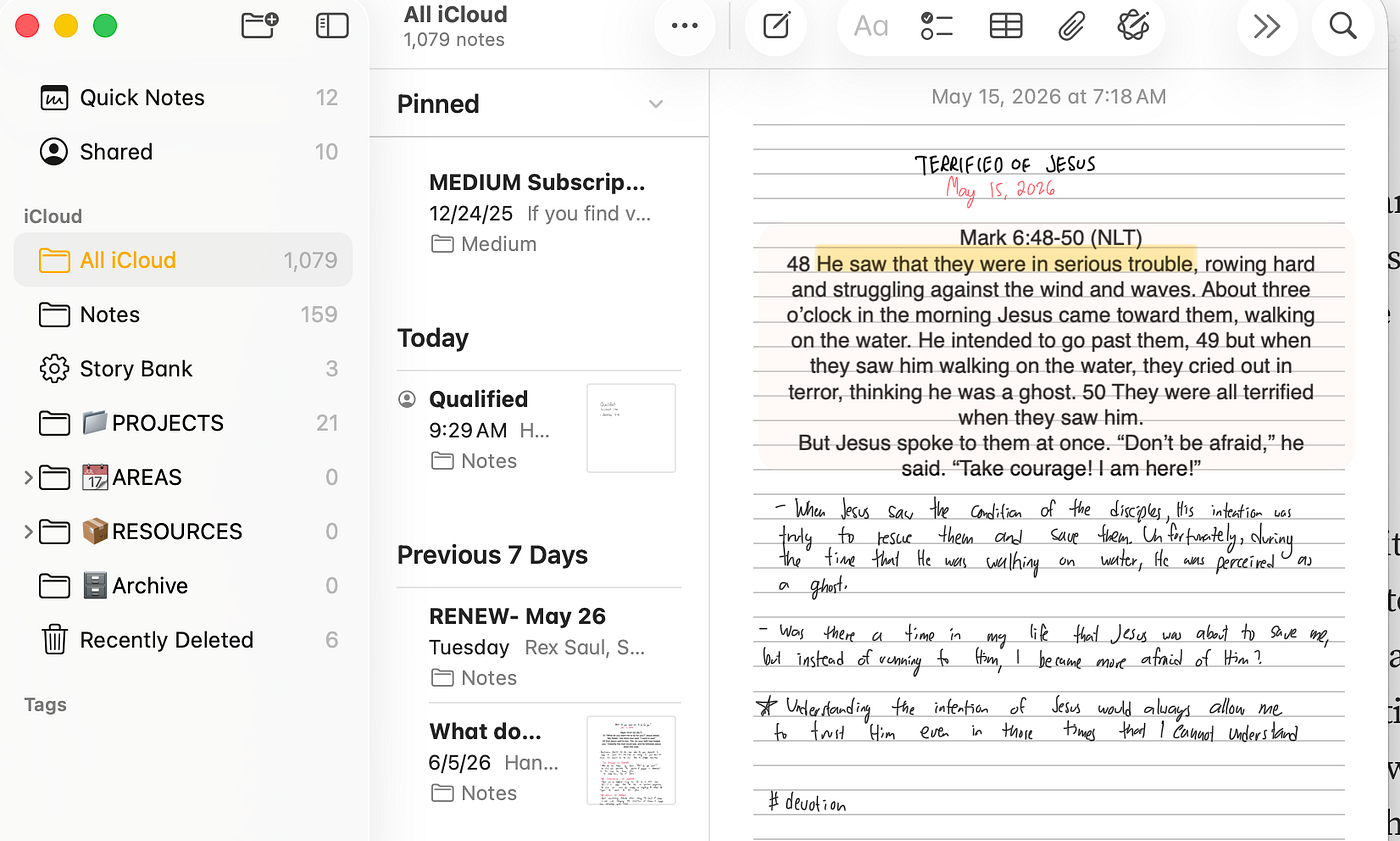
Image source: Author’s Screenshot
PARA is a four-category system: Projects (active work with deadlines), Areas (ongoing responsibilities), Resources (topics of interest), and Archives (inactive items). The idea is that organizing by actionability—rather than subject—reduces friction and supports creativity by ensuring relevant material is always at hand when you need it. It was developed by Tiago Forte, the author of Building a Second Brain which really caught a lot of attention in the productivity space.
Organizing my life into these buckets has been incredibly beneficial. Not only has it helped me consolidate information, but it has also enabled me to take actionable steps that are directly aligned with my goals and projects. This unique approach to note-taking has proven to be particularly helpful for knowledge workers, especially those who juggle multiple roles both at work and in their personal lives.
[embed]Using Apple Notes As My Second Brain Simplicity is beautydarwincruz20.medium.com
The Benefits I Experienced
I’ve been using PARA since 2016, even before Tiago Forte introduced his book on this system. Back then, I was juggling a full-time teaching job with graduate school studies. It was a challenging time in my life, as it coincided with my mom’s cancer diagnosis and my upcoming wedding preparations.
The PARA system felt like a lifeline, helping me stay organized and focused. By combining it with a task management system, I feel like I’m always on top of things and never missing a beat. This system has not only improved my productivity but has also helped me cultivate a sense of tranquility and expand my capacity for work beyond my job.
Why I Walked Away
While I was clearing my inbox for notes, I recently found myself struggling to decide where to place certain notes. One challenge I’ve faced in building a folder structure using PARA is determining which folder to place a specific note in.
My work involves working with numerous meetings, gathering information from various individuals, creating reports from counseling notes, and crafting sermon content for preaching. At one point, while clearing my inbox, I realized that some notes could fit into multiple categories. For instance, a note might be part of a project I’m currently working on but also relevant to a different program’s content.
The limitation of using PARA is that it can be time-consuming to decide which Area or Project to place a note in. This is why I’ve also started organizing notes by tags using Bear Notes. I understand that I can replicate a note or link a note to another note within a project. However, mimicking the PARA Folder structure using tags results in long #nested/tag strings on Bear Notes, which don’t look aesthetically pleasing. While nested tags are useful, it’s not ideal to add all these tags to a single note.
Another reason I stopped using PARA is that I have many “mini projects” that don’t require a dedicated folder. For example, I consider creating a sermon a project, but I do it weekly. All the resources I might need are just a single link away from the current note I’m working on. To avoid duplication of notes, I’ve also started moving my outlines from my notes to an Area after they’ve been completed as projects.
Lastly, my workflow has evolved since I started using a Bullet Journal as my primary capture device. I no longer just capture information or things I learn from the internet; I also log my mood, events, and emotions.
These days, I’ve shifted my approach to capturing and curating information. Instead of mindlessly collecting things that “resonates” but ultimately end up forgotten, I’ve incorporated the concept of analog productivity. This has enabled me to be more intentional in my information management, rather than relying solely on digital productivity apps.
Others who’ve abandoned PARA have shared similar frustrations. They’ve encountered challenges like classification paralysis, blurred boundaries between categories, and the tendency of their systems to become digital graveyards rather than effective thinking tools.
Final Thoughts
The PARA system is an excellent productivity framework designed for individuals who need to meticulously curate information that is directly actionable. It provides a structured approach to organizing tasks and information, making it particularly beneficial for those who thrive on a clear, action-oriented system. However, in the realm of knowledge work, this is not always the case. There are instances where the information we encounter is not immediately actionable but still holds value and is worth preserving. This includes inspirational quotes, compelling stories, and valuable insights shared by others. Such non-actionable items can enrich our understanding and provide inspiration or context for future projects.
For nearly a decade, the PARA system served me well, offering a reliable method to manage my tasks and information efficiently. However, as we grow and evolve, so too should the systems we rely on. When the process of organization becomes more of a chore than a catalyst for productivity, it becomes clear that it is time to adapt and find a system that better aligns with our current needs and lifestyle. Ultimately, the best system is the one that you will actually use consistently, as it is the one that will truly enhance your productivity and help you achieve your goals.
메타데이터
- post_id
- 43ceb5dcd7f3
- slug
- why-i-stopped-using-the-para-method-43ceb5dcd7f3
- url
- https://medium.com/@darwincruz20/why-i-stopped-using-the-para-method-43ceb5dcd7f3
- canonical_url
- https://medium.com/@darwincruz20/why-i-stopped-using-the-para-method-43ceb5dcd7f3
- author_url
- https://medium.com/@darwincruz20
- status
- ok
- fetched_at
- 2026-06-14 11:28:49