The Psychology Behind the Rise of K-Dramas
What can neuroscience tell us about emotions, culture and TV dramas
The Psychology Behind the Rise of K-Dramas
What can neuroscience tell us about emotions, culture and TV dramas

Source, by the author using Adobe Firefly
A blood-curdling screen roused me from a computer-induced writing coma, sending my adrenaline levels into the stratosphere, propelling me into the living room to investigate. Thankfully, no one had been murdered; it was just my wife watching yet another K-pop drama. What is it with Korean TV? The hyper-emotionality is next level, strange to someone like me coming from Australian culture that barely elicits emotions, especially in men.
Some investigation revealed that indeed K-Dramas are characteristically hyper-emotional, replete with emotionally rich romances, excessive wailing and monumental tantrums, which are both compelling and apparently addictive. Moreover, research has shown evidence that regular viewing of Korean dramas, particularly romantic ones, is associated with higher emotional expressivity among young adults.¹ The success of cultural crossover dramas such as Squid Game or Extraordinary Attorney Woo reveals how emotions and their contexts are easily transmitted and interpreted across different cultures. Yet subtleties exist that are sometimes lost in translation, such as Han and Mono no aware, but more on that later.
Here’s a tip: next time you travel abroad to a country with a different language and culture, do yourself a treat and duck into the nearest cinema to watch a local film. Not a Hollywood drama dubbed into the local language, rather a homegrown production. Once I went to a cinema in Nairobi to watch an unremarkable C-grade action film. Each time the white guy was hit, beaten up or shot, the audience broke into a standing spontaneous roar of approval. I did too, so the pasty white stranger would not stand out.
A similar thing happened in India, when I watched a wonderful film called Mangal Pandey about an uprising that helped end colonisation. When the Brits copped a pasting, everyone cheered and wailed. All those years of pent-up anti-colonial sentiment, I’m guessing. Despite the film being entirely in Hindi and without subtitles, we still had an inkling of the plot. Indeed, many a sticky moment in another country has been resolved by some basic hand gestures and expressions; most notably, a smile always helps. How is it that we can infer what emotions others are trying to communicate in cultures wildly different to our own?
Feelings & Emotions: What does the Science Say?
A wide range of theories exist on emotions, from Darwin’s concept of emotions being innate, discrete, biologically ‘hardwired’ categories in the brain to others that see emotions simply in terms of valence (pleasantness vs unpleasantness) and high and low arousal.² ³ ⁴
Neurobiologist Jaak Panksepp famously described emotions in animals and humans as primary-process core affects (feelings) arising from deep, ancient brain areas, such as SEEKING, FEAR, RAGE, and PANIC.⁵
Panksepp demonstrated this in a rather macabre experiment. After surgically removing the entire cortex from several rats, he presented them to his students alongside healthy ‘intact’ rats. His students incorrectly chose the healthy rats as being ‘lobotomised’, demonstrating that behaviours and emotions exist from older structures like the brain stem and limbic system.
Ekman’s View
Paul Ekman, who sadly passed away in November 2025 at the age of 91, was the leading figure in emotion research for decades. Ekman expanded the 5 basic emotions to include Anger, Contempt, Fear, Disgust, Enjoyment, Sadness and Surprise.
Travelling to Papua New Guinea (PNG) on multiple occasions, Ekman sought out pre-literate, isolated cultures with limited contact with Western society and combined his data with that of other researchers on similar pre-literate peoples. This was then compared with cohorts from literate cultures, including Chile, Brazil, Argentina, the United States, and Japan.⁶ ⁷
Ekman concluded that emotions and their subsequent facial expressions indeed did appear to be universal across cultures.⁸ ⁹ However, he later emphasised that no single emotion corresponded to a single facial expression, but clusters of expressions and ‘families’ of emotional variations reflected the intensity of those emotions.
This would suggest that we resonate strongly with other cultures through our shared innate ability to perceive and express emotions. Basic universal emotions allow us to view culturally diverse films and TV, like K-dramas, and empathise with distress, rise with contempt, cry with sadness, or fume with rage, regardless of location, language, or culture. Panksepp’s core affects SEEKING, FEAR, RAGE, and PANIC, simulated in our brain’s affective empathy regions, allow us to create our own states of a character’s fear or pain, whereas dramatic scenes that invoke rage and panic may cause our adrenaline and cortisol levels to rise.
Questions Arise
Whilst Ekman’s theories suggest that emotions appear universal, a significant amount of evidence contradicts this. Other research reveals that expressions of emotion, such as anger, differ substantially across individuals and situations and are functionally tied to contextual factors. For example, a person displaying anger may scowl in one situation, smile and laugh in another, or widen their eyes stoically, all depending on the context or relevant cultural rules.¹⁰
In 2014, a group of researchers compared emotion data from the traditional Himba people of Namibia with a cohort from the USA and found considerable differences in responses to emotion identification in photos of facial expressions.¹¹
Ekman’s theory implies that fixed brain circuits control emotions, which in turn give rise to universal affect. On the other hand, more recent findings suggest that global brain regions construct emotions ad hoc, using the same signals that regulate the body to shape our feelings and experiences.
The Theory of Constructed Emotions suggests that emotions are not genetically inherited, hardwired programs, but rather contextually constructed events in the service of allostasis.¹² You have likely heard of homeostasis, the body’s negative feedback loop that maintains temperature, blood pressure, glucose levels, etcetera. Allostasis, on the other hand, maintains stability and energy efficiency by adaptively predicting changes in conditions. For example, an event like a fright, even one triggered by a TV drama, increases heart rate and breathing in anticipation of supplying oxygen-rich blood to muscles to escape.

Image by the Author
Constructed Emotions suggests that there are no ‘categories’ or ‘stored templates’ of emotions, such as fear, sadness, or anger. Rather, the brain is a prediction machine, generating an internal model of the world based on past experiences, memories, and sensations, which is compared with incoming bodily sensations to produce prediction errors. The brain generates an instance of an emotion to make sense of prediction errors, thereby allowing us to ‘best guess’ what will happen next and to plan metabolically for action. Feelings, which we often place too much importance on in decision-making, are simply an emergent property of the brain regulating the body.¹³ ¹⁴ ¹⁵
When watching a compelling TV or film drama, we often become immersed in the ‘virtual’ environment and begin to unconsciously predict what will happen next and adjust our metabolic budget accordingly.
Say, for example, you are watching an engrossing K-drama: a time-travelling princess is cut down by her arch-enemy, which, via the brain’s empathic processing, in turn creates an ad hoc emotion category of anger. You might express that anger category in different ways or ‘instances of that category: a scowl, a scream or a laugh, depending on the context of the situation, rather than a fixed emotion and its relevant expression. Our brains compare these incoming signals with past experiences of anger or fear, and our metabolic rate changes: heart rate and breathing increase, more glucose is metabolised, and so on.
But here is where it gets interesting. This brain-based ‘library’ of knowledge we draw on is constructed from a lifetime of experiences, books, films and social interactions, all guided by culture.

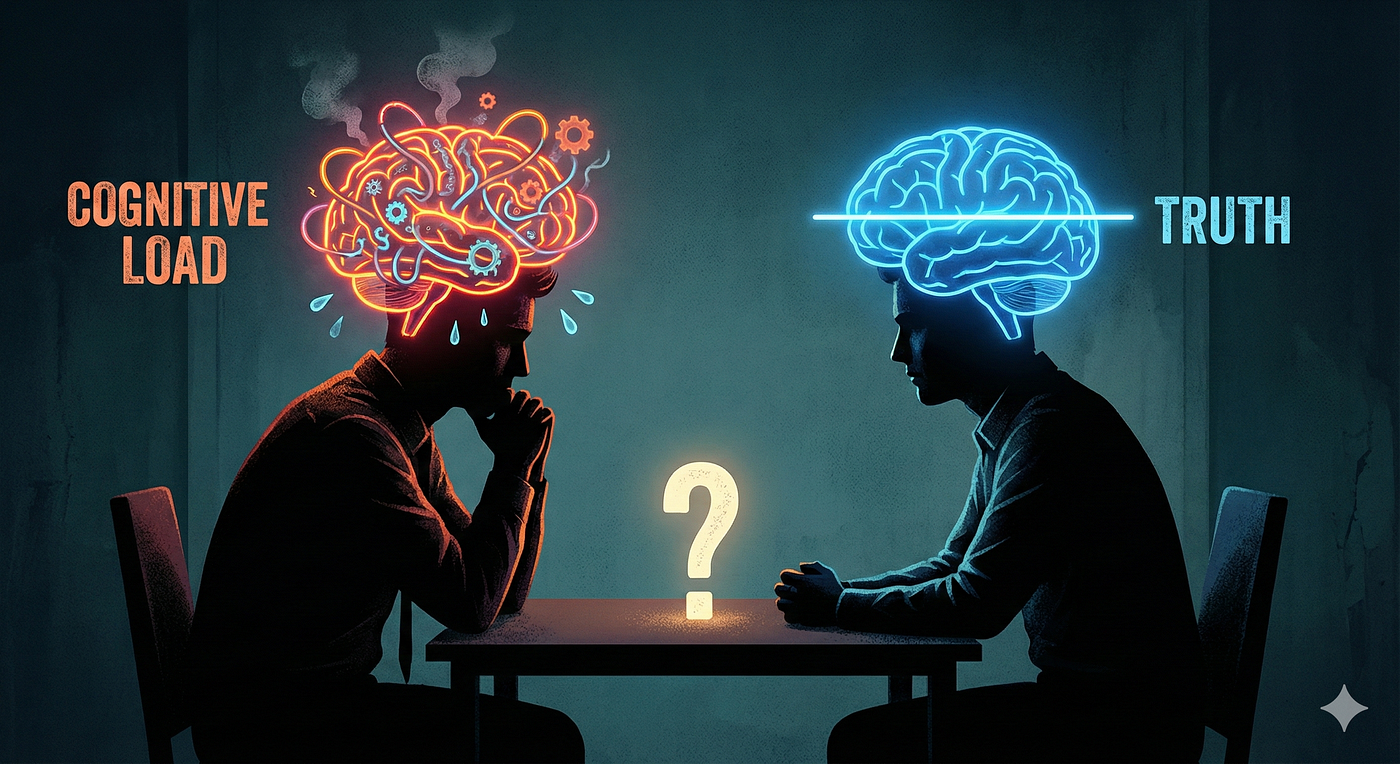
Source: Adobe Firefly
The Context of Culture
When we watch a K-drama like Squid Game, the violence is compared with our own past experiences of violence and those which are present in the culture: our internal conceptual model of a category called violence. If you grew up in a violent culture, the ad hoc emotion created might be a lower amount of fear, with an outward emotion of laughing. On the other hand, if you were brought up in a sheltered and safe environment, an ad hoc emotion of disgust and fear might create the urge to gag or cover your mouth and eyes from the giant doll with the guns.
Sometimes, there is a complete mismatch. When watching an Indonesian film, a Westerner might mistake smiling for a positive emotion like happiness, whereas in that culture, it can also signal embarrassment, discomfort, or anger. Smiling at strangers is a common occurrence in many Western cultures, but in Poland, it may be perceived as stupid and in Norway as a sign of insanity. A well-known Russian proverb states that smiling for no reason is a sign of stupidity.
Then there are subtle mismatches. In Japanese films, silence and a lack of dialogue may be interpreted as coldness and indifference, whereas Americans may talk incessantly, the Australians swear profusely, and the Koreans wail with great *Han*.
Nonetheless, we still manage to navigate these mismatches and find foreign films and media entertaining and captivating. Something else is also at play here.
The brain is finely attuned to picking up on cultural and situational cues, all part of our learned and innate survival mechanisms. Take, for example, the unfolding emotional drama of a quirky series like Bon Appétit, Your Majesty. In this K-Drama, a Michelin Star chef is mysteriously transported back to the Joseon Dynasty (1392 -1897). The main protagonist eventually finds herself enmeshed in cooking for the king and royal political shenanigans.
I have very limited knowledge of Korean culture or the Joseon Dynasty, yet I was able to follow the unfolding emotional subtleties. Why? Proximity of emotional cues to those of my own culture, combined with well-known cues used in filmmaking. Take, for example, a scene where the emotive music in a sad minor key swells to a crescendo and the camera tightens on the actress and her love interest.
Ignoring all other facial or emotional cues, our experience of this in other films signals a romantic interlude. So, regardless of an emotional mismatch, our brain compares our existing model with the updated incoming information and creates a ‘best guess’ about what is happening.
Nevertheless, sometimes cultural differences create a chasm that can be difficult to cross without a concept category of an emotional state.
For example, Japanese cinema is often replete with the uniquely Japanese aesthetic concept of Mono no aware, or the ‘pathos of things’, and Korean film and TV often revolve around the concept of Han.¹⁶ ¹⁷
Squid Game exquisitely illustrates the concept of Han. The main characters are trapped in a deadly game by factors beyond their control. Watched over by oppressive and powerful capitalist forces, the series personifies the collective trauma of countless wars and occupations, coupled with elements of grief, sorrow, injustice, unfulfilled desires, and longing for redemption. Scholars suggest that Han is a key factor in the darker societal themes that often feature in Korean TV and cinema.¹⁷
However, cultural discounting, a phenomenon in which a film or TV show centred on one culture may have diminished appeal in other cultures, can lead audiences to struggle to identify with its style, values, beliefs, and behavioural patterns.¹⁷ Korean people have an internal concept category of Han, much like a concept category of grief, for example, modelled on societal norms, which is compared with incoming sensory information to form an ad hoc emotion and guide allostasis. Without this concept category, the deeper, more poignant emotional factors may be lost on someone from outside that culture.
The Closing Scene
No doubt, there are some basic emotions that are intrinsic and ‘hard-wired’ for want of a better word, that do transcend all cultures. Disgust is a great example; the gag is an evolutionary reflex that helps prevent the ingestion of toxins. Viewers in most cultures will respond with disgust to the same gross scene, gagging and covering the mouth and nose with a hand, yet moral disgust is much trickier. What’s morally disgusting in Japan might be perfectly acceptable in the USA.
Nevertheless, the great movie theatre of our mind constantly screens the latest productions. Countless cinematic experiences play out minute by minute, updating our internal map of the world, giving meaning to sensations and forging emotional concepts we share with others. By broadening our own cultural cinematic horizons through travel, music, books, and films from other cultures, we can add to our repertoire of emotional concepts, bringing a richer emotional vocabulary to everything we watch, read, and feel. Who knows, this may even help me to decipher those maniacal screams in the wife’s K-drama viewings.
References
- Fatima S, Kewalramani S. Effect of Korean Drama on Emotional Expressivity. IJFMR. 2024.
- Barrett LF. Are emotions natural kinds?. Perspectives on Psychological Science. 2006; 1(1): p. 28–58.
- Damasio AR. The feeling of what happens.: Harcourt Brace; 1999.
- Panksepp J, Watt D. What is basic about basic emotions? Lasting lessons from affective neuroscience. Emotion Review. 2011; 3(4): p. 387–396.
- Russell JA. Core affect and the psychological construction of emotion. Psychological Review. 2003; 110(1): p. 145–172.
- Ekman P. Emotions revealed : understanding faces and feelings: Phoenix; 2004.
- Ekman P. The face of man. Expressions of universal emotions in a New Guinea village: Garland STPM Press; 1980.
- Ekman P. Universality of emotional expression? A personal history of the dispute. In Ekman P. The Expression of the Emotions in Man and Animals (3rd ed).: New York: Oxford University Press; 1998. p. 363–393.
- Sorenson ER, Williams TR. Culture and the expression of emotion. In Sorenson ER, Williams TR. Psychological Anthropology.: De Gruyter, Inc; 1975. p. 361–372).
- Barrett LF, Adolphs R, Marsella S, Martinez AM, Pollak SD. Emotional expressions reconsidered: Challenges to inferring emotion from human facial movements. Psychological Science in the Public Interest. 2019; 20: p. 1–68.
- Gendron M, Roberson D, van der Vyver JM, Barrett LF. 2014). Perceptions of emotion from facial expressions are not culturally universal: Evidence from a remote culture. Emotion (Washington, D.C.). 2014; 14(2): p. 251–262.
- Barrett LF, Atzil S, Bliss-Moreau E, Chanes L, Gendron M, Hoemann K, et al. The theory of constructed emotion: more than a feeling. Perspectives on Psychological Science. 2025; 20(3): p. 392–420.
- Barrett LF. The theory of constructed emotion: an active inference account of interoception and categorization. Social Cognitive and Affective Neuroscience. 2017; 12(11): p. 1833–1833.
- Corcoran AW,HAM,DR,TG,FKJ,PCMA. Integrated information and predictive processing theories of consciousness: An adversarial collaborative review. Neuroscience and Biobehavioral Reviews. 2026; 187: p. 106742.
- Solms M. The hard problem of consciousness and the free energy principle. Frontiers in Psychology. 2019; 9: p. 2714.
- Ward AF. “Pathetic Beauty: Mono no Aware in Hollywood Cinema –To Family and Friends in These Estranged Times.” Japanese Society and Culture. 2022; 4: p. 1.
- Gao X, Adnan HM, Wang C. The Spectrum of Han: Cultural Psychology in Korean National Cinema. Studies in Media and Communication. 2024; 12(1): p. 268.
메타데이터
- post_id
- 4450eda0c772
- slug
- what-lies-behind-the-rise-of-k-dramas-4450eda0c772
- url
- https://medium.com/the-springboard/what-lies-behind-the-rise-of-k-dramas-4450eda0c772
- canonical_url
- https://medium.com/the-springboard/what-lies-behind-the-rise-of-k-dramas-4450eda0c772
- author_url
- https://medium.com/@roboroos
- status
- ok
- fetched_at
- 2026-06-26 21:52:29