The Building That Reuses Its Own Water
Imagine walking into a modern university building. It looks completely normal. Students are studying, someone is making coffee, someone…
The Building That Reuses Its Own Water
Imagine walking into a modern university building. It looks completely normal. Students are studying, someone is making coffee, someone else is washing their hands in the bathroom.
Now imagine this:
The water from those sinks and showers doesn’t just disappear into the sewer.
It gets cleaned. And then reused. In the same building.
This is not science fiction. It’s real. And I work with one of these buildings.
A Building That Thinks About Water
At the Faculty of Environmental Sciences at CZU, we have a building that treats and reuses its own greywater — water from sinks and showers. After treatment, the water is used again, for example for toilet flushing.
It saves drinking water. It reduces pressure on infrastructure. It makes the building more sustainable.
From the outside, everything seems perfect.
But as a researcher, I ask a different question:
What is still inside that water?
The Invisible Part of the Story
When we shower, we use shampoo. When we are sick, we take medicine. When we brush our teeth, we rinse out toothpaste.
Tiny traces of these substances go down the drain.
They are called micropollutants — pharmaceuticals, personal care products, and other chemicals that are present in extremely small amounts. You can’t see them. You can’t smell them.
But they are there.
Traditional treatment systems are very good at removing dirt, nutrients, and organic matter. The water becomes clear. It looks clean.
However, some of these invisible substances can survive the treatment process.
And that is where my research begins.
Making the System Smarter
Instead of building huge, expensive treatment plants somewhere far away, decentralized systems work directly inside buildings.
They are local. They are efficient. They are part of the circular economy.
My work focuses on making these systems better at removing micropollutants.
We test different materials that can be added into the treatment process — for example special carbon-based materials (like biochar) or iron-based filters. These materials can “capture” or bind unwanted substances before the water is reused.
Think of it as giving the building an extra cleaning superpower.
We monitor how effective these improvements are, how stable they are over time, and whether they can realistically be used in real buildings — not just in laboratory experiments.
Because if it only works in a lab, it doesn’t really solve anything.
Why This Matters More Than You Think
Water reuse is becoming more common worldwide. Climate change, droughts, and growing cities are putting pressure on water resources.
Reusing water inside buildings is one of the smartest ways to respond.
But public trust is crucial.
If people hear that “wastewater” is being reused, they immediately think: Is it really safe?
That’s a fair question.
My research helps answer it.
By improving how buildings remove invisible pollutants, we make water reuse safer, more sustainable, and more acceptable for society.
The Bigger Picture
Sometimes sustainability is not about building something new.
Sometimes it is about improving what we already have.
A decentralized building that reuses water is already a step forward. Making sure that the reused water is as clean as possible — even at the microscopic level — is the next step.
Because sustainability is not just about saving water.
It is about responsibility for what flows through our systems — even the parts we cannot see.
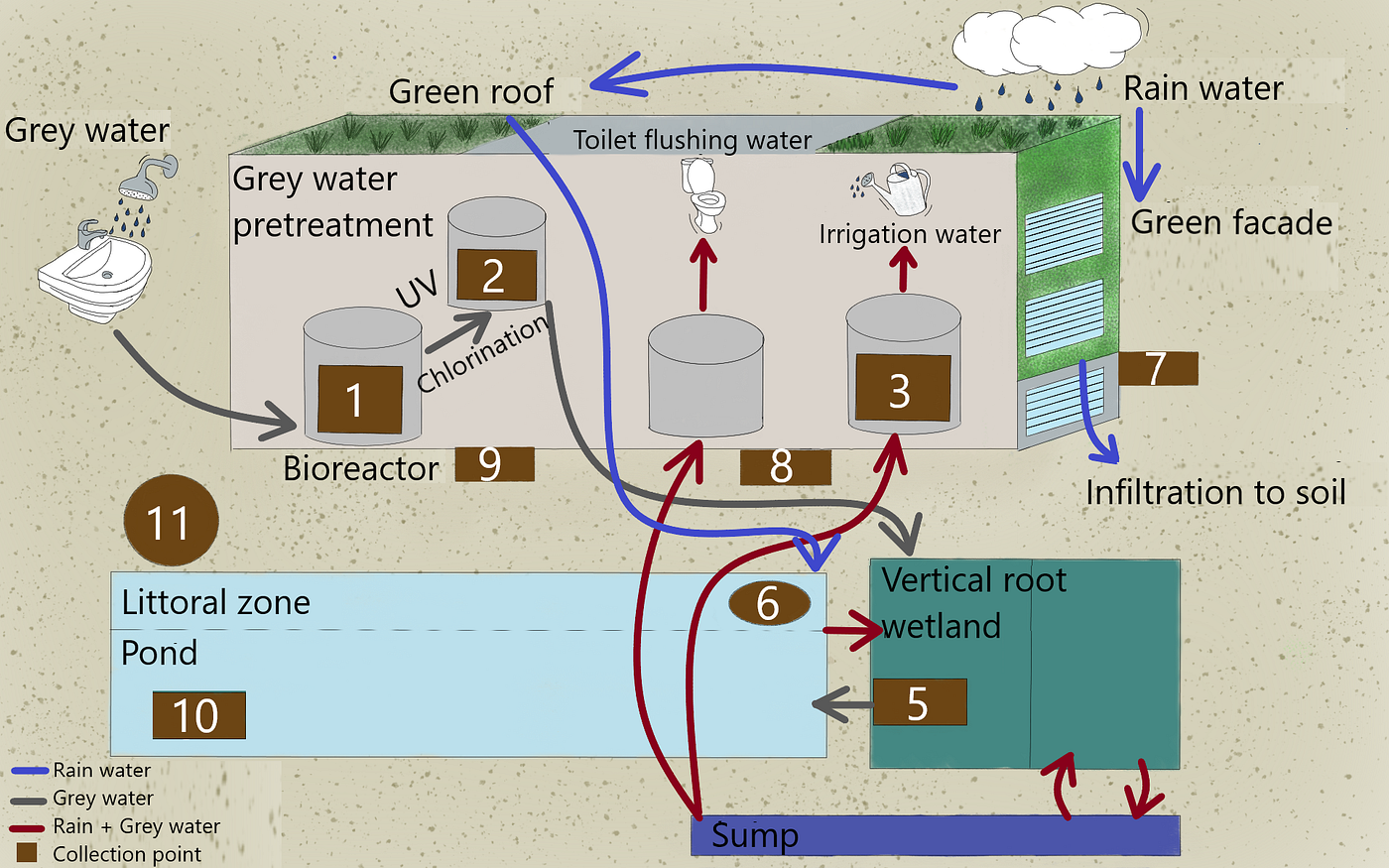
Figure 1: Conceptual model of a decentralized building CZU (author’s own design).
메타데이터
- post_id
- 4cfe90b1eb14
- slug
- the-building-that-reuses-its-own-water-4cfe90b1eb14
- url
- https://medium.com/ph-d-stories/the-building-that-reuses-its-own-water-4cfe90b1eb14
- canonical_url
- https://medium.com/ph-d-stories/the-building-that-reuses-its-own-water-4cfe90b1eb14
- author_url
- https://medium.com/@motlova
- status
- ok
- fetched_at
- 2026-06-11 21:11:36