Revisiting Longevity in the Light of Scientific Advancements: Unlocking the Secrets of Human…
Introduction
Revisiting Longevity in the Light of Scientific Advancements: Unlocking the Secrets of Human Longevity
Introduction
Throughout human history, myths and legends have provided explanations for the mysteries of existence. These myths, often characterized as fanciful tales or ancient beliefs, frequently served as placeholders for the knowledge that had not yet been unveiled by science. In this essay, we explore the idea that what were once dismissed as myths may actually contain hidden truths about the nature of life and longevity. We focus on a recent scientific breakthrough that has the potential to revolutionize our understanding of aging and lifespan, the study involving “jumping genes” or transposons. The study, published in the journal Nature Communications in September 2023 titled, Downregulation of transposable elements extends lifespan in Caenorhabditis elegans, suggests that blocking these transposons in mice extended their lifespan by an average of 15%. Furthermore, we delve into the possibility that these seemingly chaotic transposons’ behavior may be triggered by environmental changes and how practices such as meditation, and a controlled enviornment rooted in ancient wisdom, could help control these genetic elements to enhance human longevity.
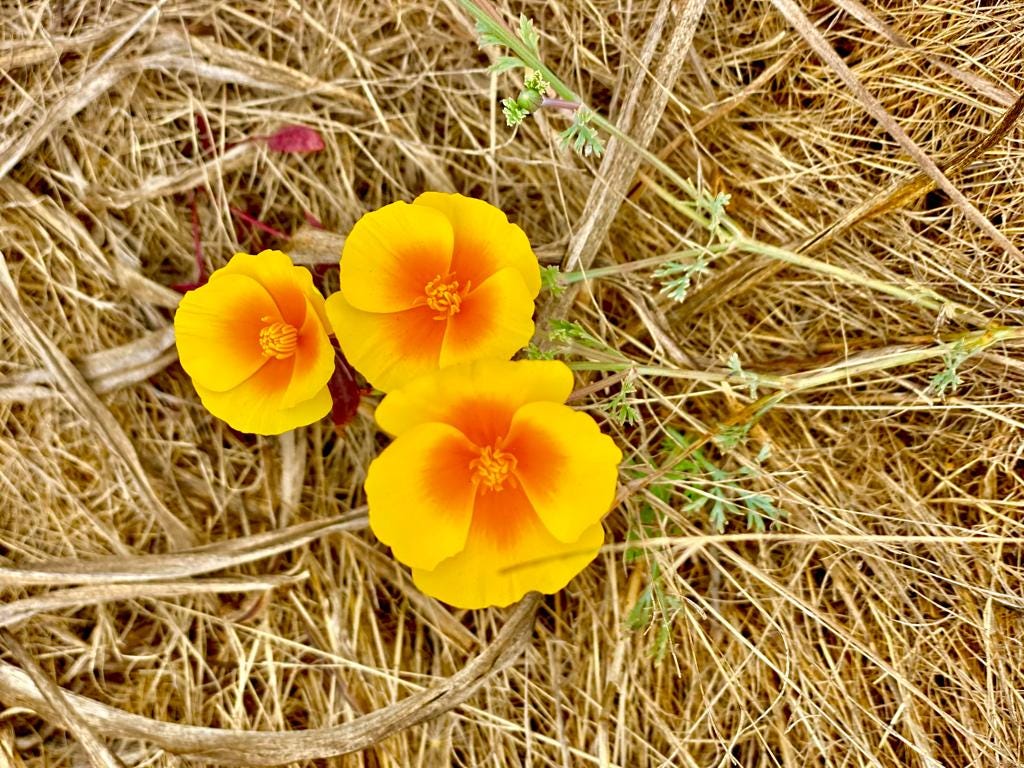
Poppy flower bloom after a drought or wildfire as its deep taproot access water deep underground and regenerate quickly after a wildfire similar to the resilience that sages develop in the caves.
Transposons and Their Role in Aging
Jumping genes, scientifically known as transposons, are mobile genetic elements that can move around the genome. These elements can insert themselves into new locations, disrupting genes and causing mutations, which, in turn, may contribute to aging and age-related diseases like cancer and Alzheimer’s disease. The study mentioned in 2023 used genetic engineering techniques to block transposons in mice, leading to a significant increase in their lifespan and a reduction in age-related cognitive and physical decline. This groundbreaking discovery hints at the potential for new anti-aging therapies that could significantly extend human lifespans.
Environmental Changes and Transposon Activation
One intriguing aspect of transposons is their apparent sensitivity to environmental changes. It is theorized that these genetic elements may be activated under certain conditions, such as exposure to toxins, infections, radiation, stress, or even lifestyle factors like obesity and smoking. The relationship between environmental changes and transposon activation is still an evolving field of research, but it suggests that external factors could play a pivotal role in the regulation of these genetic elements. Understanding these connections may offer new insights into the aging process and ways to mitigate its effects.
Meditation and Transposon Control
An intriguing hypothesis arises when considering ancient practices like meditation in deep caves and their potential effects on transposon activity. Meditation has been shown to reduce stress-induced inflammation, a known trigger of transposon activation. By reducing inflammation, meditation may indirectly influence the behavior of transposons, possibly slowing down their movement and mutations. Furthermore, studies have suggested that meditation can increase telomere length, the protective caps at the ends of chromosomes that shorten with age. Transposon activation can damage telomeres, making meditation a potential means of preserving them and preventing age-related diseases.
While further research is necessary to conclusively establish the link between meditation and transposon control, the existing evidence is promising and merits further exploration. Ancient practices such as meditation may contain wisdom about the human body’s intricate mechanisms that science is only beginning to unravel.
The Wisdom of Indian Rishis and Longevity
The idea that meditation practices in a controlled and isolated environment of a cave by ancient rishis may have contributed to the long and healthy lives is plausible. However, it is essential to consider that their longevity could also be attributed to various other factors such as diet, lifestyle, and the environment in which they lived. Indian traditions emphasize holistic well-being, with a focus on balancing physical, mental, and spiritual aspects of life. The rigorous practices and philosophies of these rishis may have indeed provided them with insights into the secrets of longevity and offered a lifestyle conducive to healthy aging.
The Indian rishis, known for their profound wisdom and spiritual insight, have left an indelible mark on the country’s rich cultural heritage. Several of these revered sages are documented to have lived remarkably long lives, some even surpassing the age of 100. While there is some debate about the accuracy of the ages attributed to these rishis, their contributions to yoga, philosophy, and literature are undeniably significant. Let’s delve into the lives of a few of these remarkable sages.
Maharishi Agastya, one of the Seven Sages (Saptarishis), is said to have achieved an astonishing lifespan of over 30,000 years. Mentioned in the Rig Veda, his profound influence extends to the realm of yoga and Ayurveda. Maharishi Agastya is believed to have authored the Agastya Samhita, a comprehensive treatise encompassing various aspects of yoga and Ayurveda. His enduring legacy reflects his deep understanding of the human body and mind.
Another prominent Saptarishi, Maharishi Bhrigu, is attributed with a life spanning over 10,000 years. He is renowned for founding the Bhrigu lineage of yoga, marked by his contribution to the Bhrigu Sutras, a text dedicated to the interpretation of astrological charts. Maharishi Bhrigu’s insights into the cosmos and human life continue to shape astrological traditions.
Maharishi Vashishtha, yet another Saptarishi, is celebrated for his longevity of over 10,000 years. As the family priest of the Suryavanshi dynasty, he authored the Vashishtha Samhita, a text that delves into various aspects of yoga and philosophy. His enduring wisdom has played a crucial role in shaping India’s spiritual heritage.
Maharishi Valmiki, the revered author of the epic Ramayana, is said to have lived for over 500 years. His enduring work, a cornerstone of Indian literature, narrates the heroic journey of Lord Rama. Maharishi Valmiki’s dedication to his craft saw him residing in a cave in the Himalayas while composing the Ramayana, further emphasizing the strong connection between spiritual practices and longevity.
Maharishi Vyasa, credited with writing the Mahabharata, another epic of immense significance, is said to have lived for over 300 years. In addition to the Mahabharata, he authored the Puranas and the Brahma Sutras, further establishing his intellectual prowess. Maharishi Vyasa’s dedication to his work saw him seeking solitude in the Himalayan caves, mirroring the isolation that modern scientists often adopt to delve into their research.
While there may be skepticism regarding the ages attributed to these revered rishis, their lives and legacies remain testament to their enduring wisdom and spiritual mastery. In addition to those listed, numerous other Indian rishis are said to have exceeded the century mark, and their long and productive lives serve as compelling evidence of the power of their spiritual practices and their profound understanding of the human mind and body. Their contributions continue to inspire and guide generations, offering insights into the secrets of human existence and longevity that have yet to be fully understood by modern science.
Conclusion
The study involving the blocking of jumping genes, or transposons, and their effect on extending the lifespan of mice is a groundbreaking discovery that challenges our understanding of aging and age-related diseases. These findings raise the possibility that what were once dismissed as myths may have held profound truths about the human body’s functioning. Environmental changes, meditation, and the practices of ancient sages may all be pieces of the puzzle in controlling transposon activity and unlocking the secrets of human longevity.
As science continues to advance, our perspective on myths and ancient wisdom may undergo a transformative shift. The boundaries between mythology and reality blur, and what we once believed to be fantastical stories may contain profound insights into the mysteries of life and the quest for extended human existence.
If you liked this article, subscribe/follow to see more of my posts in your feed.
메타데이터
- post_id
- 6eac837eff4e
- slug
- revisiting-mythology-in-the-light-of-scientific-advancements-unlocking-the-secrets-of-human-6eac837eff4e
- url
- https://medium.com/@Omnipreneur/revisiting-mythology-in-the-light-of-scientific-advancements-unlocking-the-secrets-of-human-6eac837eff4e
- canonical_url
- https://medium.com/@Omnipreneur/revisiting-mythology-in-the-light-of-scientific-advancements-unlocking-the-secrets-of-human-6eac837eff4e
- author_url
- https://medium.com/@Omnipreneur
- status
- ok
- fetched_at
- 2026-06-09 15:37:30