$6.23 Per Pound Is Not Just A Copper Chart
When copper sits near historic highs, the market is not really looking only at metal. It is looking at the world’s ability to build…
$6.23 Per Pound Is Not Just A Copper Chart
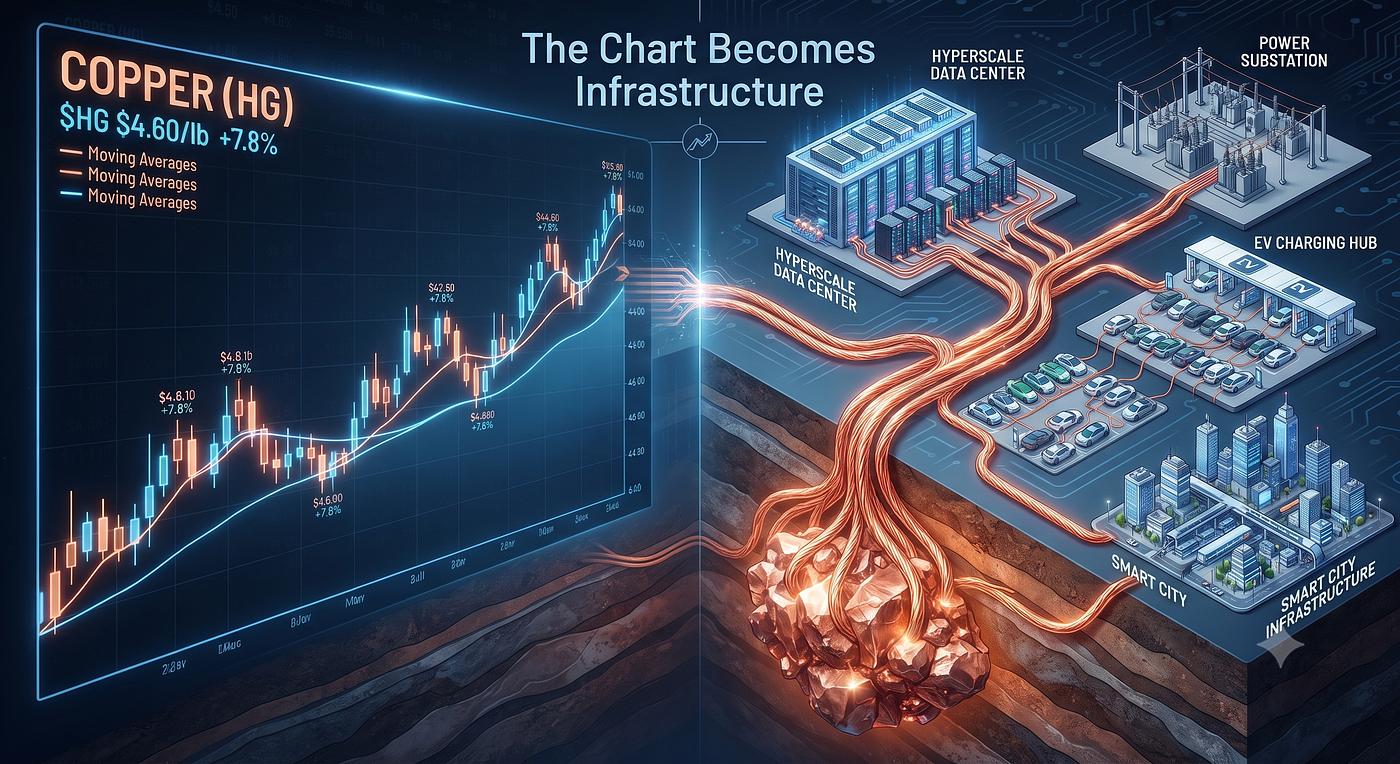
When copper sits near historic highs, the market is not really looking only at metal. It is looking at the world’s ability to build electricity.
Copper is often read like a normal commodity chart. One candle up, one candle down, the dollar, risk appetite, China, manufacturing data, rates. In trading, that makes sense. But when copper holds near $6 per pound, I would not reduce everything to the chart.
Because the chart here shows more than market mood. It shows pressure in things you do not see on a screen: cable, transformer, pump, motor, substation, charger, smelter, truck route.
According to Trading Economics, copper was around $6.23 per pound on July 10, 2026. Over one month, the price was down about 0.5%, but it was still roughly 12.5% higher than a year earlier. The all-time high was around $6.67 per pound in June 2026. So this is not a calm market after forgotten hype. This is a metal still trading close to the zone where every new cable becomes more expensive.
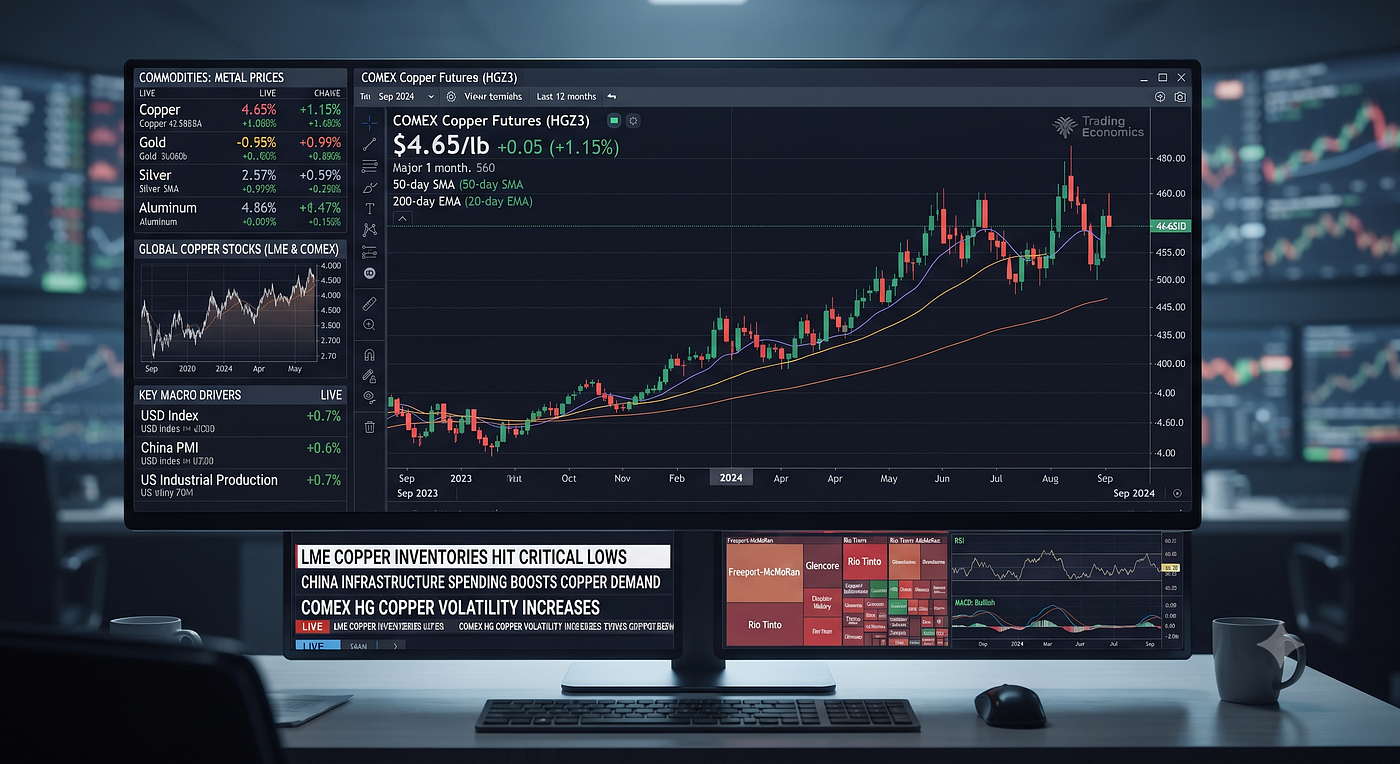
The daily explanation is easy to find: risk appetite, AI stocks, semiconductor rebound, Middle East risk, oil, inflation fears. All of that can move short stretches of the chart. But copper does not become expensive only because of headlines. Somewhere underneath, there is a simpler reason: the world is adding electric things faster than it is adding new sources of metal.
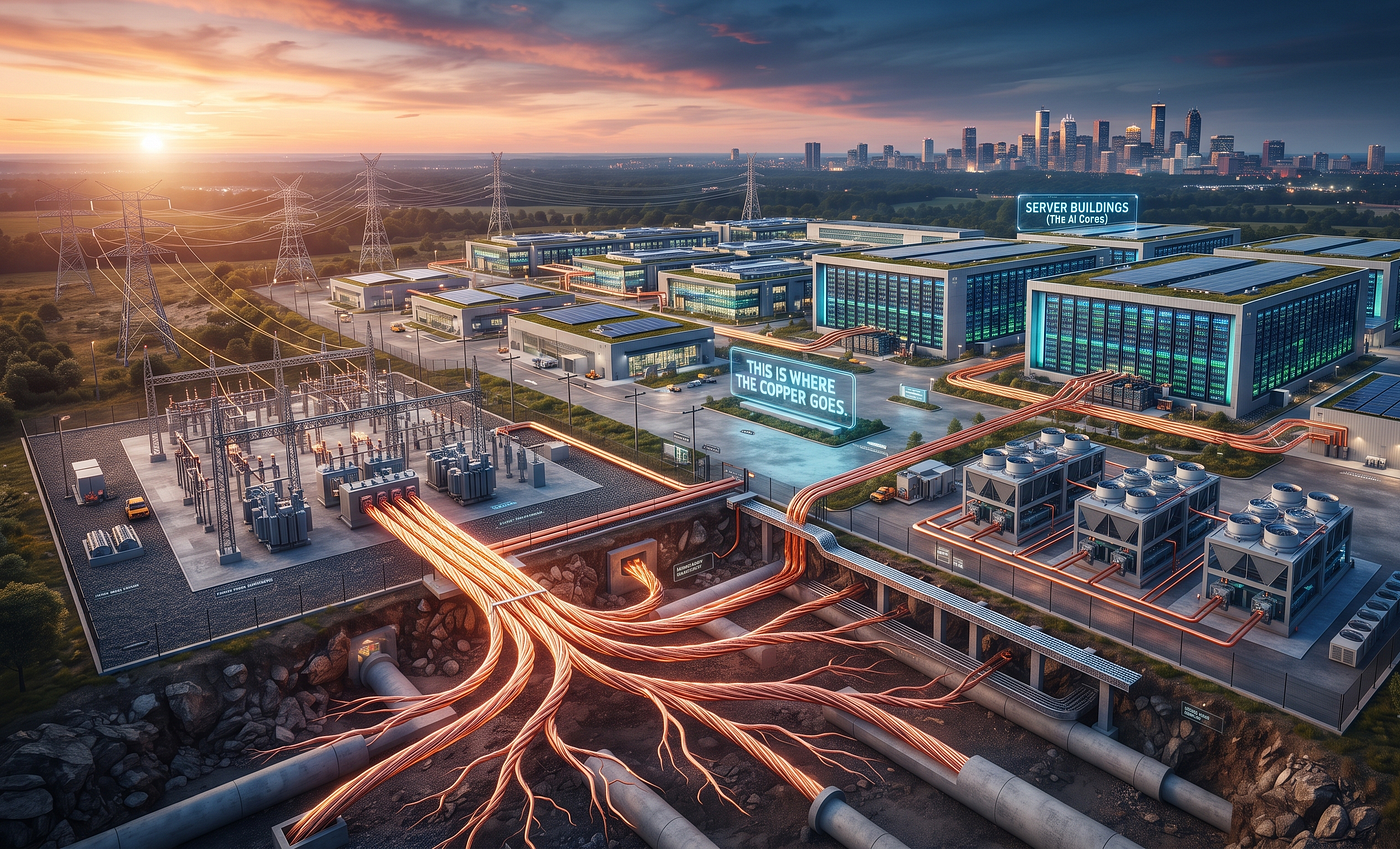
A data center does not run on the word “AI”. It needs megawatts, cooling, transformers, switchgear, and cables. An EV depot does not become real because of a press release. It needs grid connection, charger hardware, power electronics, and room inside the local network. A farm with automation does not begin with a dashboard. It begins with a pump, a motor controller, a sensor, and a wire to power.
That is why the copper price looks to me less like a “market number” and more like a small stress test for modernization. If every new theme — AI, grid, EV charging, battery storage, rail, desalination, robotics — quietly asks for more copper, then the question is no longer only about demand. The question is how long it takes for new copper to reach the market at all.
And that is where the slow part begins. Before a tonne of copper, there are old reports, soil samples, geophysics, permits, drilling, assays, a resource model, engineering, financing, construction, and processing. A market quote can change in a minute. A mine does not work like that. Between a signal in the ground and a cable inside a substation, there are often years.
Another practical point is that Wilmac is not staying only a data story. For 2026, the company has outlined expanded soil sampling and four IP/AMT surveys across North Lamont, West Lamont, Wilmac, and Plume. North Lamont has historical copper-in-soil up to 1,125 ppm. That is not finished copper inside a cable, but it is the first rough part of the process: ground, data, geophysics, target, permit, drill.
I like looking at the copper chart this way. Not as an isolated price line, but as a reminder that the whole “future economy” narrative has a very old material foundation. The metal has to be found, tested, mined, processed, and delivered. Only then does it become part of a data center, a charger, a pump, or a transformer.
$6.23 per pound is not just a quote. It is the market quietly asking: if we really want more AI, more grid, more EVs, and more electrification, where exactly are we going to get enough copper?
메타데이터
- post_id
- 8f383a34cc4b
- slug
- 6-23-per-pound-is-not-just-a-copper-chart-8f383a34cc4b
- url
- https://medium.com/@augustine-eberhart/6-23-per-pound-is-not-just-a-copper-chart-8f383a34cc4b
- canonical_url
- https://medium.com/@augustine-eberhart/6-23-per-pound-is-not-just-a-copper-chart-8f383a34cc4b
- author_url
- https://medium.com/@augustine-eberhart
- status
- ok
- fetched_at
- 2026-07-11 21:25:18



