Email Marketing in 2026 — How to Build a List and Actually Grow It
10,000 subscribers with no engagement or 1,000 subscribers who buy from you? The answer might surprise you. Read this guide.
Email Marketing in 2026 — How to Build a List and Actually Grow It
Introduction
Every year, someone declares email marketing is dead. Every year, they’re wrong.
In 2026, your Instagram reach can vanish overnight. Your Facebook page can tank because of an algorithm update. Your TikTok account can get banned without warning. But your email list? That’s yours. No platform owns it. No algorithm controls who sees it.
Social media attention is shrinking — studies tracking 970,000+ consumers flagged declining global social media time, and the trend hasn’t reversed. The platforms are noisier, algorithms are stingier, and the organic reach marketers had two years ago isn’t coming back. Email is the channel you own. No algorithm decides whether your message gets delivered, and no platform change wipes out your audience overnight.
The economics still hold too: email marketing returns $36–$40 for every $1 spent, making it the highest-ROI channel in most marketing stacks.
But here’s the truth nobody tells you: a big list means nothing if it doesn’t perform. This guide will show you how to build an email list in 2026 the right way — and actually grow it into something that drives real revenue.

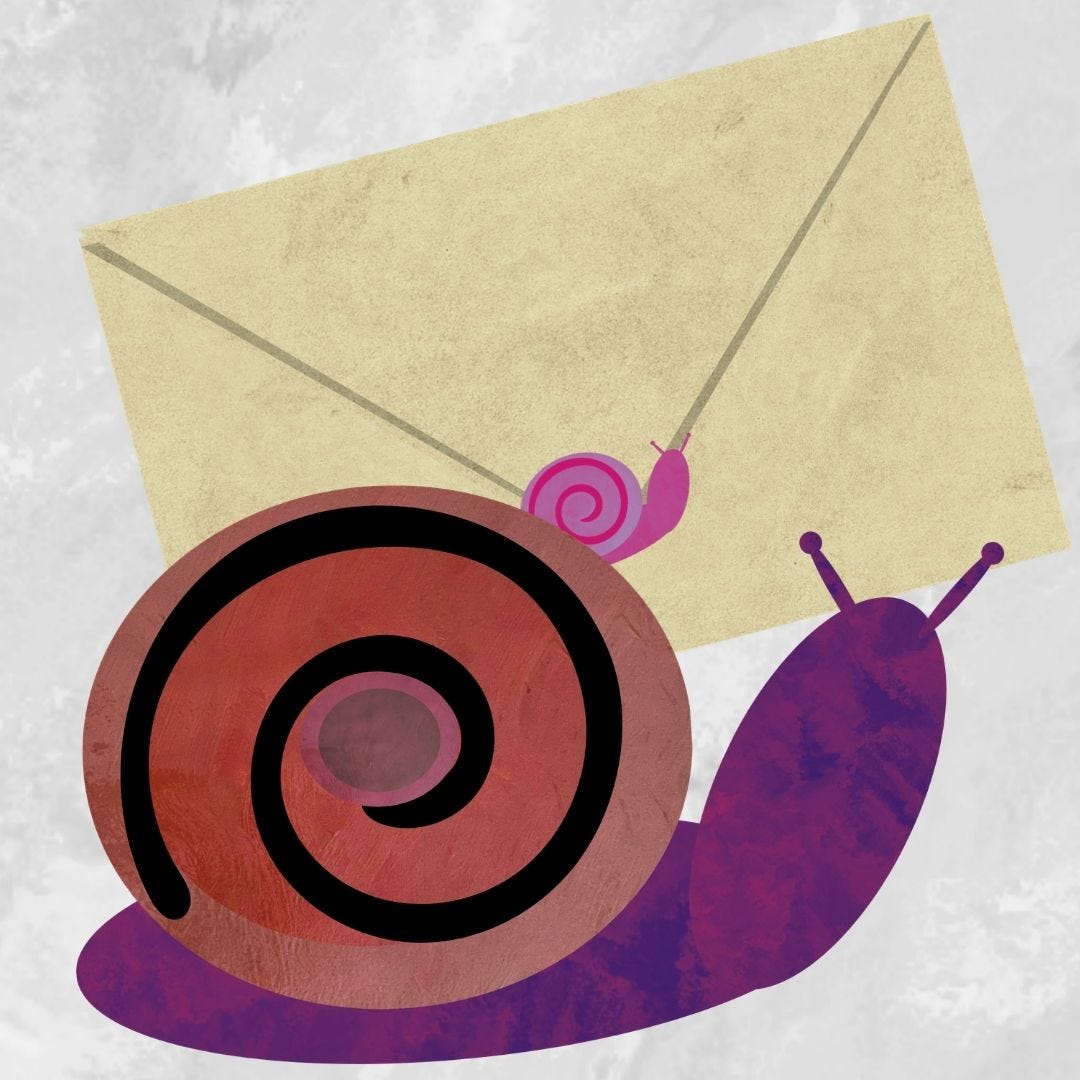
email marketing growth 2026 concept flat illustration- Farhan Khan digital Marketing Expert
Why Email Lists Matter More Than Ever in 2026
Let’s talk about what’s changed — and what hasn’t.
Email marketing is still highly effective, especially for B2B and relationship-driven businesses. Its success now depends on relevance, timing, and deliverability rather than simply sending large volumes of messages.
The most effective strategies in 2026 focus on improving what already works while building a stronger foundation for long-term growth. That means reviewing performance, focusing on metrics tied to business outcomes like clicks, conversions, and revenue — and aligning email with the full customer journey.
The big shift? Marketers are sending fewer emails, segmenting their lists more carefully, and paying closer attention to actions like clicks and conversions. The spray-and-pray era is dead. Precision is the new power move.
The Mindset Shift: List Size Is a Vanity Metric
Before we talk tactics, get this into your head:
List size is a vanity number. The metric that predicts revenue is engaged subscribers — people who opened or clicked in the last 60 to 90 days. A 50,000-person list with 8% engagement is worse than a 12,000-person list with 35% engagement, every time.
The industry average tells the story: roughly 22% of a typical list goes cold within 12 months, which means half the “growth” founders brag about is just churn masquerading as progress.
The real goal isn’t to collect emails. It’s to attract subscribers who want to hear from you, engage within the first 7 days, and stay loyal for 18+ months.
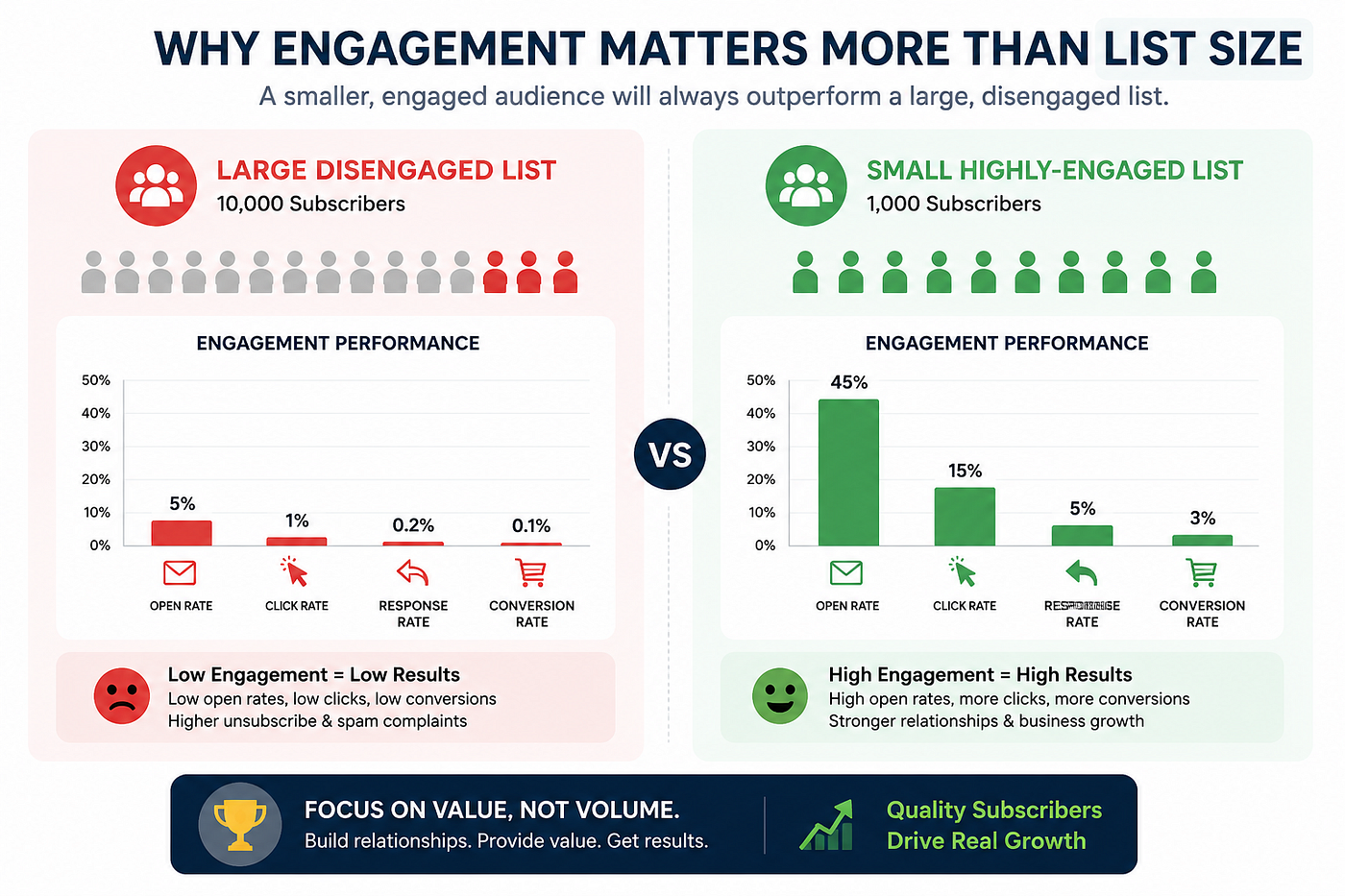
email engagement rate vs list size comparison
Step 1 — Choose the Right Email Marketing Platform
You can’t build an email list without a place to store and send from. In 2026, the top platforms to consider are:
Mailchimp — Best for beginners, easy drag-and-drop editor, free tier available.
ConvertKit (now Kit) — Best for content creators and bloggers. Automation-first design.
Brevo (formerly Sendinblue) — Great for mixed channels (email + SMS). Generous free plan.
Klaviyo — The gold standard for e-commerce. Deep Shopify/WooCommerce integration.
MailerLite — Affordable, clean UI, solid automation. Great for small businesses.
Pick one, start simple, and grow into the advanced features. Switching platforms later is painful — so choose wisely based on your niche.
Step 2 — Create a Lead Magnet That Actually Works
Here’s the harsh reality: nobody wants to give you their email address just because you asked nicely. You need to offer something genuinely valuable in return.
That’s called a lead magnet.
The best lead magnets are instantly accessible, easy to benefit from, and relevant enough that visitors feel they’d be missing out by not claiming them. Educational lead magnets like ebooks, guides, and courses attract more qualified leads than discount-only offers, because they filter for people who are genuinely interested in the topic.
The lead magnets that convert at 15% or higher in 2026 all share three traits: they solve one specific problem for one specific person, they deliver the result in under 15 minutes of consumption, and they include a tool, template, or calculator — not just information.
Lead Magnet Ideas by Business Type:
For Digital Marketers / Freelancers:
- Free audit checklist (e.g., “10-Point SEO Audit Checklist”)
- Swipe file of winning ad copy
- Pricing calculator template
For E-Commerce / D2C Brands:
- 10–15% first-order discount
- Free size guide or quiz
- “Complete skincare routine” PDF
For Educators / Course Creators:
- Free mini-course (first 3 lessons)
- Resource library access
- Webinar registration
For B2B / SaaS:
- Free strategy template
- Industry benchmark report
- ROI calculator
Lead magnets transform email acquisition from anemic 1.95% conversion rates into robust 6.5%+ subscriber capture mechanisms by offering immediate value exchanges that prospects actually want — rather than generic newsletter promises.
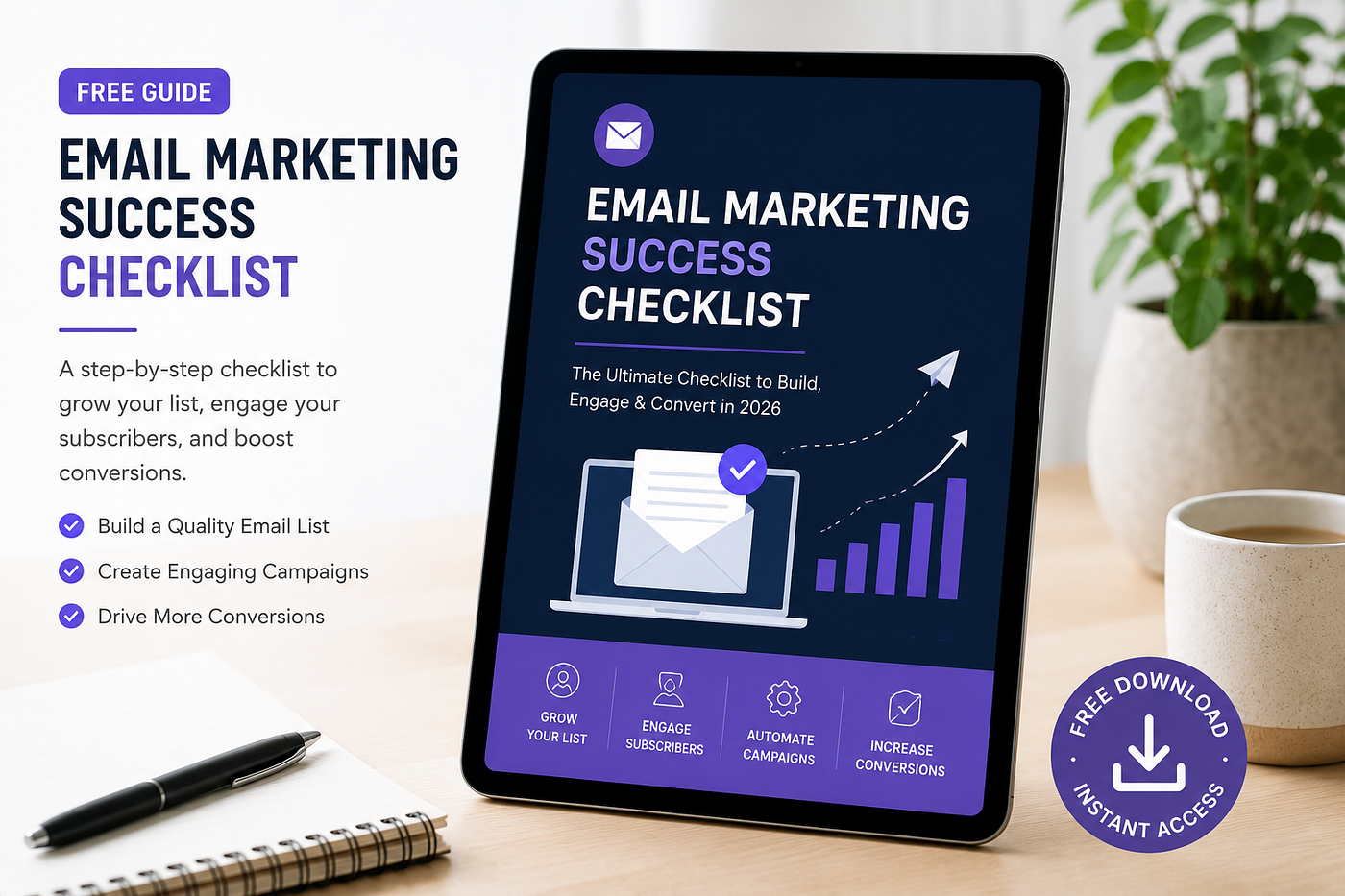
lead magnet ebook mockup free
Step 3 — Build High-Converting Opt-In Forms
Your lead magnet is the offer. Your opt-in form is the door. If the door is ugly, confusing, or slow — people won’t walk through it.
Keep forms simple — ask only for essential fields, typically just an email address or first name. Set clear expectations by telling subscribers what you’ll send and how often, to reduce future unsubscribes.
Where to Place Your Opt-In Forms:
Popups — Set a 6–10 second delay. Mobile-first design. Clear value prop. A well-configured popup with a 6–10 second delay, mobile-first design, and a clear value prop can get you to the 2.1% average conversion rate — and well past it with testing.
Embedded forms — Place inside blog posts, at the bottom of articles, or within your resource pages.
Landing pages — A dedicated opt-in page for your lead magnet converts higher than a sidebar widget. Drive paid or organic traffic directly to it.
Sticky header/footer bars — Always visible, never intrusive. Works well for time-sensitive offers.
Exit-intent popups — Triggered when a user moves their cursor toward the browser close button. One last chance to capture them.
Single Opt-In vs. Double Opt-In
Double opt-in is the safest way to legally prove that consent was legitimately given. When someone signs up, they receive a confirmation email and must click to verify. This keeps your list cleaner and more compliant with GDPR and other global privacy laws.
Implement clear double opt-in processes and make the unsubscribe process straightforward. An easy unsubscribe process paradoxically improves sender reputation by signaling respect for subscriber preferences and reducing spam complaints.
Step 4 — Set Up Your Welcome Sequence (This Is Where the Money Is)
Most people obsess over getting the signup. Smart marketers obsess over what happens after.
Automation flows generate 41% of email revenue from just 5.3% of sends. The signup is step one; the automation is where money happens.
Your welcome sequence is the first impression of your brand in someone’s inbox. Get it right, and you build trust fast. Get it wrong, and they’ll ghost you forever.
A Simple 4-Email Welcome Sequence:
Email 1 (Immediately): Deliver the lead magnet + warm welcome. Tell them who you are and what they can expect.
Email 2 (Day 2): Share your best piece of free content. A blog post, a video, a case study. Prove your value.
Email 3 (Day 4): Tell your story. Why do you do what you do? People buy from people, not brands.
Email 4 (Day 7): Soft pitch or segmentation question. Ask what they’re struggling with most. Use their answer to send more relevant emails going forward.
A four-to-six email welcome series that delivers the magnet, sets expectations, names the brand, and asks one segmentation question outperforms a single confirmation email by a wide margin.

email welcome sequence flow diagram
Step 5 — Drive Traffic to Your List (Multi-Channel Growth)
Once your system is set up, you need people to actually find it. Here are the best channels in 2026:
Your Blog / Website Every blog post should have an embedded opt-in or content upgrade. If someone is reading a 1,500-word article on “How to Run Meta Ads,” offer them a free Meta Ads checklist at the end.
Social Media Add your lead magnet link to your bio (Instagram, LinkedIn, X). Tease the value of your newsletter in posts. Use Stories, Reels, and short-form videos to drive traffic to your opt-in page.
YouTube Mention your freebie in every video. Pin the link in the comments. Add it to your video description.
Paid Ads Meta Ads and Google Ads can be laser-targeted to your ideal subscriber. The most effective channels for promoting a lead magnet are your own website via popups and landing pages, social media ads targeting your ideal audience, blog post content upgrades, and your email signature.
Collaborations & Cross-Promotions Partner with complementary newsletters or creators in your niche. Mention each other’s lists to your audiences. It’s free, fast, and highly targeted.
Referral Programs Morning Brew’s early growth was powered by a single referral widget that rewarded subscribers with a branded coffee mug at 5 referrals — beating every lead magnet their competitors tried. Build a referral system where your existing subscribers are incentivized to share your newsletter.
Step 6 — Segment, Personalize, and Send Smarter Emails
Getting subscribers is only half the job. Keeping them engaged is the real challenge.
Email marketing uses detailed customer data like past purchases and browsing behavior to deliver relevant content. CRM systems and customer data platforms collect the sophisticated information that supports these campaigns.
In 2026, personalization means more than using someone’s first name in the subject line. It means sending the right content to the right person at the right time.
Basic Segmentation Ideas:
- New subscribers (in welcome sequence)
- Buyers vs. non-buyers
- Subscribers by interest (based on links they clicked)
- Location-based (especially useful for local businesses)
- Engagement level (active, at-risk, cold)
It’s no longer about sending the most emails, but about sending the most relevant ones. By mastering this in 2026, you will not only reach the inbox but also build deeper connections and drive more meaningful results.
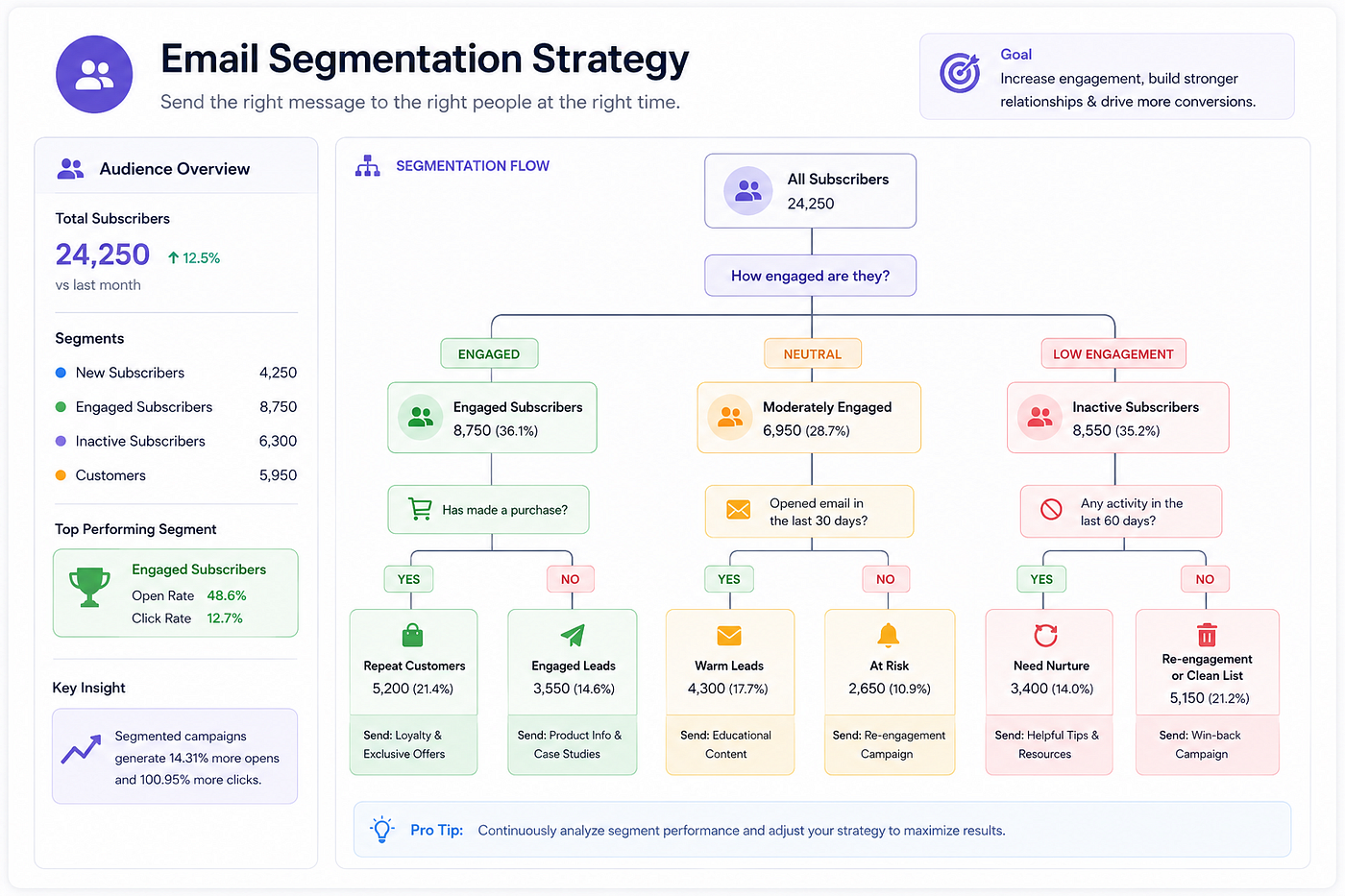
email segmentation strategy infographic
Step 7 — Maintain List Hygiene (Don’t Skip This)
Removing unengaged subscribers may feel counterproductive, but it’s essential for list health. Subscribers who haven’t opened your emails in six to twelve months drag down your performance metrics and increase costs. More importantly, email service providers use engagement rates to decide whether your emails land in inboxes or spam folders.
Every 3–6 months, run a re-engagement campaign. Send a “Are you still there?” email to cold subscribers. Give them a reason to stay — or let them go gracefully.
Clean your list on a regular basis: inactive subscribers damage your sender reputation, and it is closely monitored by algorithms.
Also ensure your technical foundation is solid. SPF, DKIM, DMARC, and BIMI are becoming table stakes for inbox visibility in 2026. If you haven’t set these up, do it today — your deliverability depends on it.
The 2026 Email Marketing Trends You Need to Know
The fundamentals stay the same. But these shifts are reshaping the game:
AI-Powered Personalization — AI is now being used to predict the best send time, write subject lines, and even generate personalized email body content at scale. The marketers who win won’t be the ones chasing every new tactic, but rather the ones building durable systems that scale without sacrificing quality or credibility.
Interactive Emails — Polls, quizzes, countdown timers, and even checkout flows embedded inside the email itself. In 2026, personalization is not only about making subscribers feel heard, but about demonstrating that your emails are worth seeing to AI gatekeepers.
Omnichannel Integration — Email will increasingly be just one part of a larger omnichannel marketing strategy, acting as a central node in a web of channels including SMS, chat/messaging, in-app notifications, and more.
Privacy-First Marketing — Third-party cookies are largely gone. First-party data — including your email list — is now your most valuable marketing asset. The top trends are privacy-focused data practices, smarter automation, and better coordination across channels.
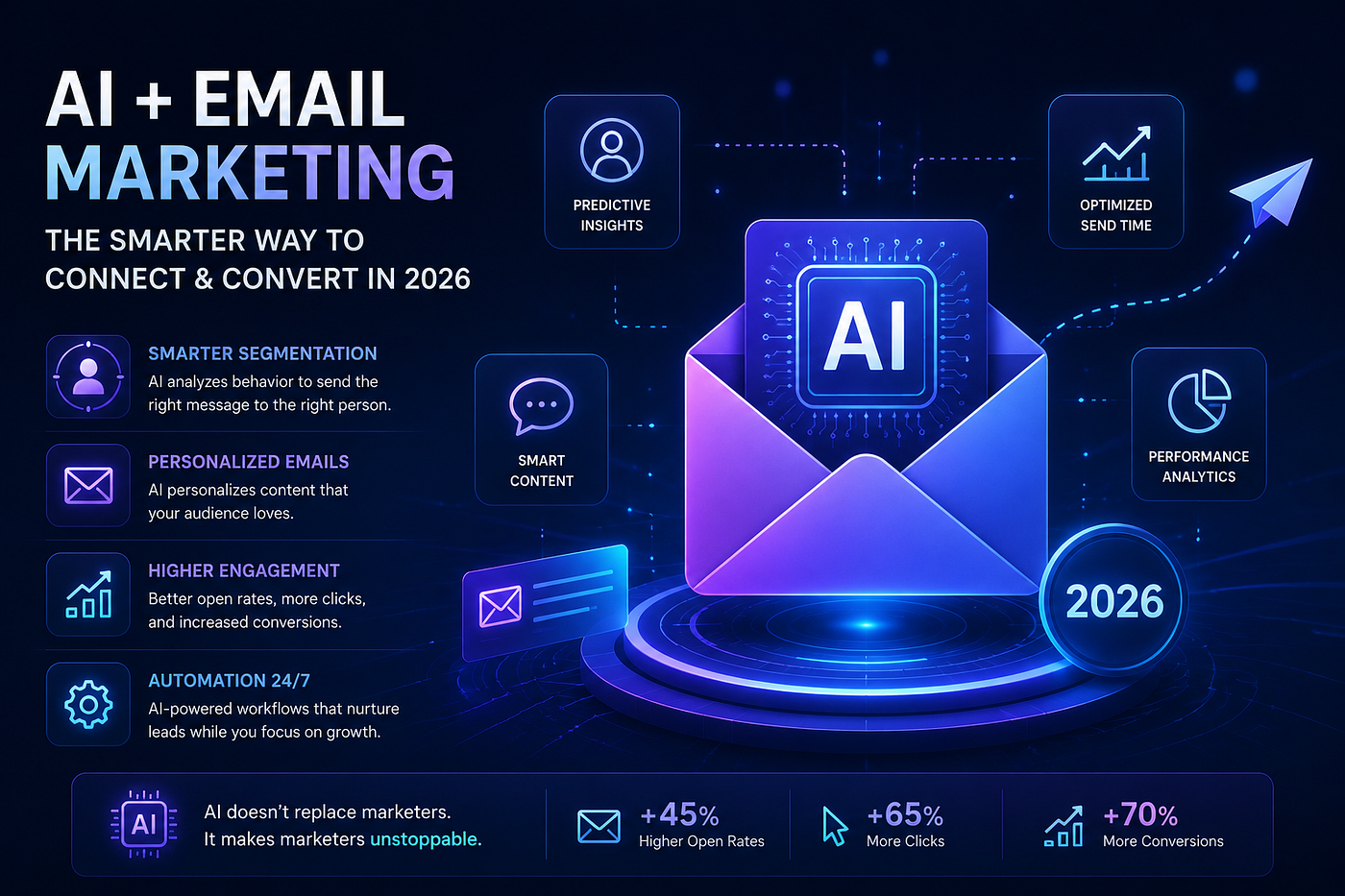
AI email marketing 2026 concept illustration
Quick-Action Checklist
Before you close this tab, here’s what to do in the next 7 days:
- Choose your email marketing platform (free plan is fine to start
- Create one specific, high-value lead magnet
- Build a simple opt-in landing page
- Add a popup or embedded form to your website
- Write a 4-email welcome sequence
- Set up SPF, DKIM, and DMARC on your domain
- Share your lead magnet link on all your social profiles
Final Thoughts
Email marketing in 2026 is not about blasting more emails. It’s about building real relationships with real people — one inbox at a time.
Build a list. Share great content. Promote offers people want. Bring in sales. The fundamentals stay constant — speaking to customers, creating content they care about, optimizing for deliverability, and growing your list are essential strategies that matter now and will continue to matter beyond 2026.
Start small. Be consistent. And always, always lead with value.
Your email list is the only audience you truly own. Treat it that way.
If this article helped you, consider sharing it with a fellow marketer. And if you’re building your list right now — drop a comment and tell me what’s working for you.
Connect With Me
Website:- https://farhankhanseo.com
facebook page:https://www.facebook.com/FarhanKhanDigitalMarketer/followers/
instagram:- https://www.instagram.com/marketingby_farhan/
Linkedin:- https://www.linkedin.com/in/farhan-khan-019077379
Pinterest:- https://in.pinterest.com/FARHAN_KHAN_DIGITAL_MARKETER/
Threads:- https://www.threads.com/@silent____farhan
Tumblr:-https://www.tumblr.com/blog/farhankhandigitalmarketing
메타데이터
- post_id
- 92970b5f1a40
- slug
- email-marketing-in-2026-how-to-build-a-list-and-actually-grow-it-92970b5f1a40
- url
- https://medium.com/@farhankhandigitalmarketer/email-marketing-in-2026-how-to-build-a-list-and-actually-grow-it-92970b5f1a40
- canonical_url
- https://medium.com/@farhankhandigitalmarketer/email-marketing-in-2026-how-to-build-a-list-and-actually-grow-it-92970b5f1a40
- author_url
- https://medium.com/@farhankhandigitalmarketer
- status
- ok
- fetched_at
- 2026-06-26 21:52:29