Your Blood Pressure Is Supposed to Drop at Night
The most important blood pressure hours of your day are the ones you’re asleep for.
Your Blood Pressure Is Supposed to Drop at Night
The most important blood pressure hours of your day are the ones you’re asleep for.
AI Generated Image
· 8 min read · Save this article to come back to it anytime.
By Dr. Tasha | Board-Certified Internal Medicine Physician, 23 Years of Clinical Practice
A patient I’ll call Ellen was doing everything right. She was also exhausted.
Fifty-six years old, caring for her mother three days a week, working full-time, and following every instruction I’d given her. DASH meals. A walk most days. Sodium down. She tracked her numbers twice a day like clockwork.
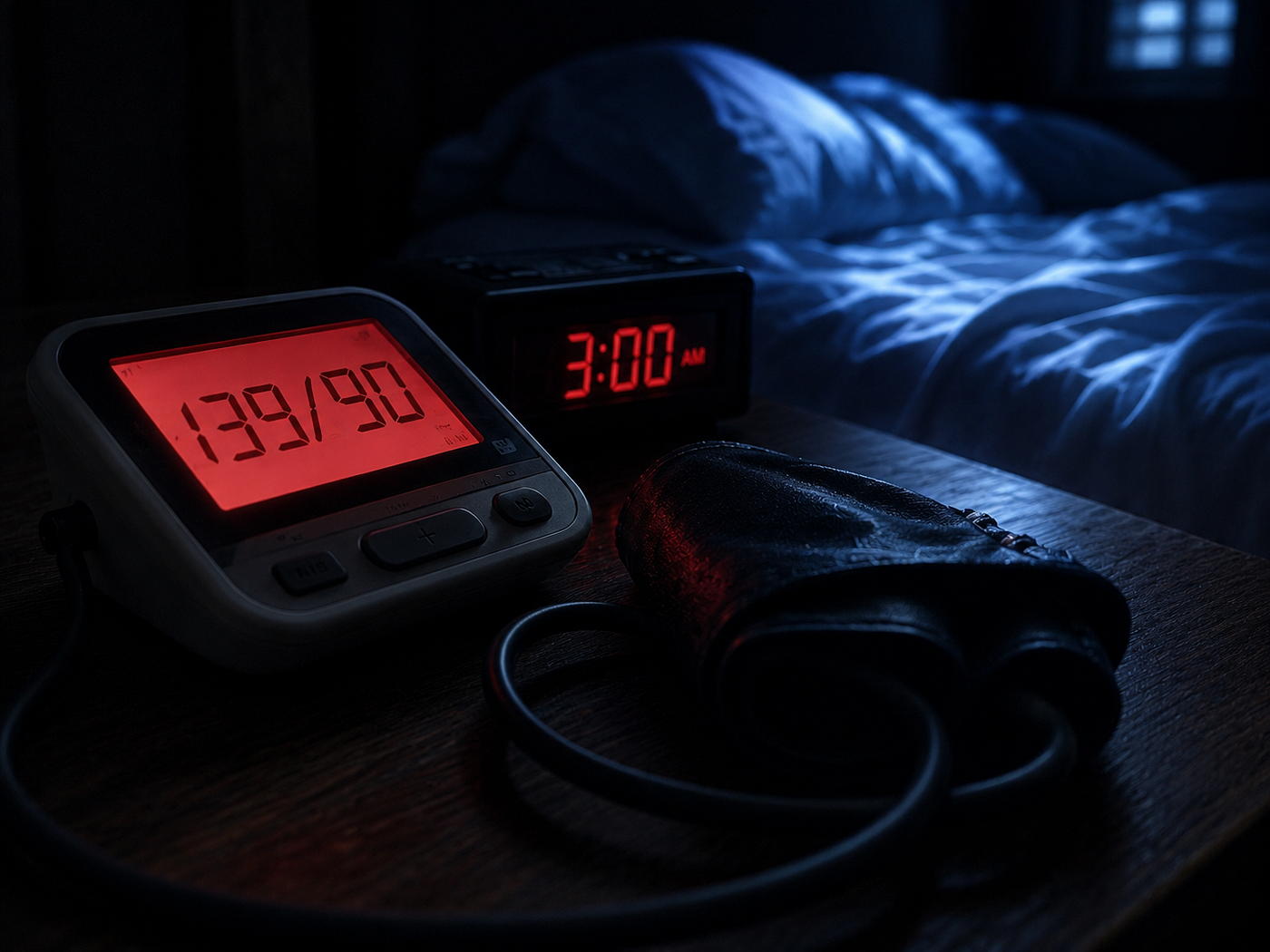
And her blood pressure sat at 139 over 90 and would not move.
“I’m doing all of it,” she said. “Why am I still stuck?”
So I asked her a question I ask all too often. “How’s your sleep?”
She laughed. Not a happy laugh. She was getting about five hours a night, and broken at that. She’d fall asleep in the recliner around ten, wake at three, and lie there until her alarm. Her husband had mentioned, more than once, that she snored and sometimes seemed to stop breathing. She’d waved it off. Everyone snores when they’re this tired.
That was the thread. She’d worked on food and movement for months. The whole time, the eight hours that mattered most were quietly working against her.
Here’s what almost no one is told about blood pressure. Some of the most important work your heart does happens while you’re asleep. If your sleep is broken, that work doesn’t get done.
Your blood pressure has a night shift
Your blood pressure isn’t supposed to hold steady around the clock. It’s supposed to fall.
During healthy sleep, blood pressure drops by 10 to 15 percent below your daytime level. Doctors call this “dipping.” It isn’t a glitch. It’s the design. Those hours are when your cardiovascular system does its repair work.
While you sleep well, your body repairs the arterial wear of the day. Your stress hormones reset. Cortisol drops back to baseline. Inflammation settles. The pressure eases off your vessel walls and gives them a real break.
People whose blood pressure doesn’t dip at night carry higher stroke and heart attack risk. The nighttime drop isn’t a nice-to-have. It’s protective.
A single daytime reading in a clinic can’t show you any of this. Neither can a good morning number at home, which is one more reason a single reading is often the wrong picture. The dip happens in the dark, when no cuff is on your arm. You can feel completely fine and still be missing it. That’s the same blind spot as the silent version of high blood pressure, which does its damage with no symptoms at all.
Why broken sleep keeps the pressure up
When sleep is short or fragmented, the dip doesn’t happen the way it should. A few things go wrong at once.
Your sympathetic nervous system stays switched on. That’s the fight-or-flight system, and it’s meant to quiet down at night. Poor sleep keeps it humming. A humming nervous system keeps vessels tighter and pressure higher.
Cortisol stays elevated too. That stress hormone tells your kidneys to hold on to sodium. Retained sodium pulls more fluid into the bloodstream. More fluid means more pressure.
And it compounds. Sleep-deprived people eat differently. On average they take in a few hundred extra calories a day, mostly from high-sodium, high-sugar food. So poor sleep raises your pressure directly, then makes healthy eating harder at the same time.
This is why Ellen’s careful food work kept stalling. She wasn’t doing anything wrong at the table. She was undoing it every night without knowing.
Adults who regularly sleep less than six hours carry a higher risk of developing high blood pressure. And poor quality sleep, the kind with frequent waking and no real deep rest, raises pressure even when the hours on paper look fine. It isn’t only how long you’re in bed. It’s how well you actually sleep.
The saboteur most people never get checked for
There’s one cause of broken sleep I have to name directly, because it’s common, it’s dangerous, and it hides.
Obstructive sleep apnea affects up to 30 percent of people with high blood pressure. Many of them have no idea they have it.
Here’s what it does. The airway briefly collapses during sleep, over and over. Each pause drops your oxygen, jolts the nervous system, and spikes your blood pressure. This can happen dozens or hundreds of times a night. Your pressure never gets to dip. You wake already elevated, and it stays that way all day.
Untreated, sleep apnea can raise blood pressure by 10 points or more. It’s one of the most common reasons blood pressure won’t come down despite everything else being right.
The warning signs are worth knowing:
- Loud snoring with pauses or gasping
- Waking up choking or gasping for air
- Morning headaches
- Daytime exhaustion despite a full night in bed
- A partner who says you stop breathing
- Waking often to use the bathroom
- Blood pressure that won’t budge despite real effort
If several of those sound familiar, this is a conversation to have with your own physician, and the next step is usually a simple sleep study. Treatment, often a CPAP machine, can lower blood pressure by 5 to 15 points on its own. Not a supplement. Not more willpower. Air.
Quick Reference — What Sleep Does for Your Blood Pressure
Why nighttime sleep matters:
- Healthy blood pressure drops 10 to 15 percent during sleep (“dipping”)
- Those hours are when arteries repair and stress hormones reset
- People whose pressure doesn’t dip have higher stroke and heart attack risk
Why poor sleep raises pressure:
- Keeps the fight-or-flight nervous system switched on
- Keeps cortisol up, which makes the body hold on to sodium
- Drives higher-sodium eating the next day
Don’t overlook sleep apnea:
- Affects up to 30% of people with high blood pressure
- Signs: loud snoring, gasping, morning headaches, a partner who notices stopped breathing
- Untreated, can raise BP 10+ points. Treatment can lower it 5 to 15.
The basics that protect the dip:
- Seven to nine hours, on a consistent bedtime
- A cool, dark, quiet room
- No caffeine after noon, no alcohol as a nightcap
What actually helped Ellen
Ellen got the sleep study. She had moderate sleep apnea, the kind that had been stealing her nights for years while everyone called it snoring.
We didn’t add a single new restriction. She started CPAP. She set one consistent bedtime and held it, even on weekends. She kept the DASH eating and the walks she’d already built.
The difference showed up first in how she felt. She stopped waking at 2 a.m. She had energy for the walk instead of dragging through it.
Ten weeks later her blood pressure had come down into the normal range at 119 over 74. Same food. Same movement. The piece that had been missing the whole time was the one nobody had checked.
“All that time,” she said, “and it was my sleep.”
The permission slip
If you’ve been doing the food and the movement and still feel stuck, read this next part slowly. You are not failing. You may simply be missing the third piece, and almost no one is taught to look for it.
Protecting your sleep isn’t selfish, and it isn’t a luxury you’ll get to later. For your blood pressure, it’s medicine. You can’t pour from an empty cup, and sleep is what fills it.
Your one step
Tonight, pick the time you have to wake up. Count back eight hours. That’s your bedtime, starting tonight and the same time tomorrow. One consistent bedtime is where the dip begins.
Want to go deeper?
Know your personal risk level - take my free 2-minute Blood Pressure Risk Assessment: tinyurl.com/drtashahealthknowyourrisk
For the full breakdown of how sleep drives your numbers, and how to protect it even in a chaotic house, read my complete guide: Sleep and Blood Pressure at drtashahealth.com
Free Blood Pressure Reset Toolkit → mailchi.mp/d310881df899/dash-recipe-book-lead-magnet
All identifying details have been changed. Save this article if it made you rethink your nights. If it helped, tap the clap button - it helps more people find it.
Sources
Gangwisch JE, Feskanich D, Malaspina D, Shen S, Forman JP. Sleep duration and risk for hypertension in women: results from the Nurses’ Health Study. Am J Hypertens. 2013.
2017 ACC/AHA Guideline for the Prevention, Detection, Evaluation, and Management of High Blood Pressure in Adults — American Heart Association / Hypertension.
This article reflects Dr. Tasha’s clinical perspective and is for educational purposes only. It does not constitute medical advice and does not create a doctor-patient relationship. Always consult your own physician before making changes to your diet, exercise, or medication — especially regarding high blood pressure (hypertension).
Dr. Tasha is a board-certified internal medicine physician with 23+ years of clinical practice. She helps the sandwich generation take back their heart health with evidence-based guidance that fits real life. Author of Blood Pressure Peace, an Amazon #1 New Release in High Blood Pressure, Heart Disease, and Heart Health and reached Top 10 Best Seller in High Blood Pressure. Worried about your blood pressure? Start here — calmly. Get the free Blood Pressure Reset Toolkit Reset guide + 4 reference sheets (DASH grocery starter, sodium swap cheat sheet, restaurant survival, doctor-visit checklist), a 7-Day Starter Log, and the 50-Recipe DASH Book) drtashahealth.com
메타데이터
- post_id
- 935d01b0afbd
- slug
- your-blood-pressure-is-supposed-to-drop-at-night-935d01b0afbd
- url
- https://medium.com/health-science/your-blood-pressure-is-supposed-to-drop-at-night-935d01b0afbd
- canonical_url
- https://medium.com/health-science/your-blood-pressure-is-supposed-to-drop-at-night-935d01b0afbd
- author_url
- https://medium.com/@nmeadowsmd
- status
- ok
- fetched_at
- 2026-07-11 12:05:32