Hardcore Black Democracy Fighters
Equality Tolerance is Democracy’s Definition
Hardcore Black Democracy Fighters
Equality Tolerance is Democracy’s Definition
![Wisconsin was born divided over the race issue and it remains so. [wisconsinhistory.org picture from article on suffrage in the state by Christy Clark-Pujara, 2017]](https://miro.medium.com/v2/resize:fit:1233/1*dzTmklzY5aJIrlCcxzAFWw.png)
Wisconsin was born divided over the race issue and it remains so. [wisconsinhistory.org picture from article on suffrage in the state by Christy Clark-Pujara, 2017]
Democracy was always a struggle blacks engaged in since first getting the vote in North Carolina by default in 1667. Slavery was an evolutionary experience of downward degradation. What started off as “good” slavery — where good means “not cruel” but is still slavery — turned nastier when major political earthquakes kicked up, like rebellions. But in the Carolinas, freedmen struggled and continued to struggle harder as whites got crueler.
Freedom was never a given they learned. Any “freeholder” could vote, and the business model of Britain until the 1676 Bacon’s rebellion was one of contract worker with five-year terms of employment. After that, re-sign or go free. Hence decency started before nastiness spread by converting temporary adventure workers to permanent titled forced workers.
When “things got worse” when indentured servitude ended and Contracted Negroes were converted to permanent enslaved and some of contracted whites became their overlords, freemen or freed blacks were trapped in the middle, forced to struggle to maintain their position, their land, their voice.
White backlash because “harder” slower, and few freed blacks though there was, they became a potent symbol of civic engagements for the ever-growing number of enslaved blacks. When the first reports rolled in of black “freeholders” voting in the 1701 and 1703 elections, the response was largely a legal yawn.
In fact, it wasn’t until 1714 after continual elections that white legislatures and the governors finally invented “white” in the Carolinas. White became a recognized term for voting, giving “white” freeholders a “ballot” and disenfranchising black freeholders for the first time. It wasn’t the last straw for either side.
Oh, I have to stop here for a second. If you’re not used to hearing about the factual struggle of blacks voting and working, then you probably are completely unaware, like I was, of the archival facts showing the many factions of democracy, autocracy, and the creation and struggle for and against voting and the democracy.
Don’t worry, I grew up either mostly ignorant of the history of democracy and slavery, or completely ignorant. I haven’t decided which. But my delight in continually finding surprising new facts by bumping into them creates a wondrous surprise of the various groups that were created and that struggled hard against each other.
American history was not born until 1776 by intense revolutionaries let down by the previous failed rebellions over the Monarch, or the tyrant of Britain. But the struggle for voting rights was already underway. Yet every bunch of decades there is a “flattening,” an elimination of political opposition and a resetting into “us” and “them” politics.
Those who suffer the most are blacks, but the majority of Americans suffer as well, because the “us” is the white ruling class, who concentrate their wealth, getting whiter and more powerful regionally, then nationally. Those groups “in-between” these two “extreme” classes — one intent on gaining their freedom and their rights and the other intent of keeping them from getting it and using it — contain “permanent” groups of struggle, some whites hungering for democracy, black freeholders and thinkers, and the general group of whites.
Today we live with a flattened false dichotomy again. We’ve grown accustomed to the “wrong” language to describe what happened in the post-Civil Rights era. The Civil Rights Movement has a celebratory air and encapsulates a triumphal narrative of black “freedom” won with intense peaceful struggle from the likes of Martin Luther King, Jr and Rosa Parks.
That protective cocoon helps whites in the middle and those other whites and various “coloreds” who believe they are liberals to carry on “normally.” Since they fall into a majority, and since getting on with life and enjoying the ever-growing middle-class wealth that was already underway after WWII, this triumphal narrative got stronger.
It’s important to revisit these periods to overcome the continual deception waged on us. Black disenfranchisement was nationalized at the greatest level post-Civil Rights. Pre-Civil Rights Movement, black Americans were already enfranchised outside the traditional South. Blacks could and did vote in many northern British colonies that became American states since before the Founding.
We see this struggle in the Carolinas. It is a struggle of freed blacks and revolutionary whites coming together across the 1700s and into the mid-1800s. It was only after the Civil Rights Movement did it become legally possible to disenfranchise black Americans outside the South.
Another disenfranchisement ban occurred in 1740 after a victory enfranchising free blacks in 1734. America wasn’t even a country yet and the struggle was ongoing for decades.
Through mass imprisonment, laws shifted, and “prisoners” now could be stripped of their vote in the West, Midwest, and North that never happened before. It would be better to call this era starting in 1982 as “mass disenfranchisement.”
Thus, we can see a patchwork of white resistance activists, pro-slavery and their white allies acted at an ever-increasing rate, getting better, not worse, and consolidating their patchwork over counties, then states, then regionally, until finally nationally, where we are today.
Because of persecuted white Protestant sects fleeing British Monarchical repression, or religious persecution, there was little appetite for being “pro-slavery” in the Northern British colonies, even though the autocratic monarch made it allowable across his empire. Abolitionists like the Quakers continued to agitate for the rights of blacks through equality, in practice, since the first tract appeared in 1688. Puritans had no interest in having other people do their work. Their White intolerance against the Monarch denying them of their religious rights dominated their thinking. They could stand having this basic right alienated from them by some absolutist tyrant who was the legal spiritual head of the Anglican church, the official Anglican Pope whose very legal existence they opposed.
By 1754 there were about 11,000 Africans and native-born blacks in Pennsylvania. In New York there were about 13,000 adult “Negroes” in 1756. This was the biggest group of enslaved workers in the northern colonies (statistics taken from reference of McManus, 1973, 14–16). But it was a small population and was less than 2 percent of the total population. That smaller population may help to not “upset” the condition of fierce independence, in addition to the growing intolerance of slavery, or allowing the government to enslave humans.
Besides a general intolerance toward any form of Monarchal repression, the class of people with a “Protestant” work ethic built their own farms and fortunes. They had conditioned themselves in a larger mass that compromised a majority of whites to reject any acts of tolerance where the government could deprive any form of “natural” life and liberty to a human, a set of inherent rights that must be preserved.
That larger mass allowed for the conditions of tolerance of “others,” however that is defined and by whoever, to not be overturned by a minority of people and voters with any oppositional belief that such-and-such a person shouldn’t vote.
They were not only politically resistant but economically as well. Freed blacks agitated for their vote in an atmosphere of weak opposition. These conditions set up “equality tolerance,” not only for voting but for abolition. Complete abolition by law was almost completely established, like voting, by 1804, creating a hardened Mason-Dixon Line. That was the line of tolerance.
The legal right to vote is critical to establish, even if there was continued “white resistance” in some, or most all, areas to black voters exercising their right. There were always blacks determined enough or rich enough to overcome opposition, and even if few in number, their voting was critical to moving democracy forward through the practice of equality.
In 1834, the fight for voting and democracy wasn’t over in the South below the Mason-Dixon Line though. In North Carolina an important legislative battle ensued to strip the ballot from freed blacks. The vote was rife with accusations of cheating by pro-slavery practitioners in several counties. The fight was to change the state constitution to eliminate black voting completely. These details appear on the NC archival records and in books like Deliver Us Evil and Black Slaveholders. vote 66 (pro-slave democrats) to 61 (egalitarians, or equality) to disenfranchise black male freeholders, as 10 percent of blacks were freedmen. Voting to create a new state constitution to strip away the right to vote is anti-democracy; it is autocracy.
In a slave state, in a far northern state deciding on the basic fabric of what they would be, writing a constitution in Wisconsin in 1846, 47, that became a state in 1848, they were not struggling over just to enfranchise black Americans — the liberal whites, the negroes, the conservative whites — they were deciding if they were going to become a democracy or an autocracy.
Those voting for enfranchising black Americans thought they wanted human rights; they weren’t thinking about the vote but the humanity behind the vote. The vote was relatively close, with a good 46 percent or so of whites and their black human allies voting for enfranchising black Americans.
Though they lost and pro-autocracy whites won by 56 percent to set up a state constitution that was fundamentally anti-American democracy, the struggle was not over. Many immigrants voted based on race and their assumptions of race. They voted on perhaps as they vote now, on a dialectic of fear. “Others” are fundamentally inferior, of a “different race.”
But the Supreme Court of the state overturned the 54%, allowing for “negro” suffrage in 1866. It was also called Human suffrage, democracy. It was a step forward toward greater democracy. The minds of the people in that majority needed to be changed. They had the wrong idea of what democracy was, and that it could be based on race, a physical condition, instead of not taking away or not alienating the vote from any human who is a citizen, a pre-condition of democracy.
The struggle post 1865 didn’t stop in North Carolina but “ramped up” again, never having died in the hearts and minds of those negroes and white “fusionist” egalitarian allies who struggled before. Take to heart this passage of that struggle from the NC state society: “Craven County’s black majority helped elect several state representatives during the Reconstruction years. Of thirty-two black legislators who served in the General Assembly from 1868 to 1872, four came from Craven County. Five black justices of the peace were appointed locally during this period, and several other black Americans served as councilmen and aldermen. The political gains made by black people during the years following emancipation were significant, if short-lived.” It’s not the victory of serving that is very consequential, but the struggle that victory represented. The struggle to fully politically participate in society never stopped.
![1866 Wisconsin Supreme Court [from article at outset]](https://miro.medium.com/v2/resize:fit:1355/1*xvpF5ybDVZTJc9OeViy-og.png)
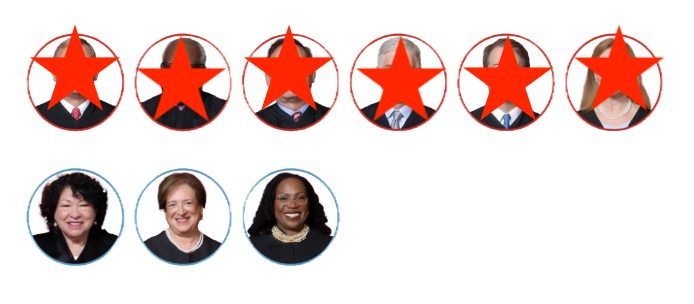
1866 Wisconsin Supreme Court [from article at outset]
It’s a benefit, a benefit to white conservatives to divide black and whites. They do it today in the most rudimentary way possible. And we help them. We say Blacks are this and Whites are this. While such compressed language has its place in rhetoric, it can’t be at the expense of erasing history and not being reminded of the constant struggle people were in each year.
Fighting to or not to enfranchise black Americans is a debate for and against democracy at the most fundamental level. It is fighting to recognize black American rights or to not recognize them. How do we not see this and think this? Of course, we are not a democracy if we allow a single human citizen of voting age to remain disenfranchised. Today, intolerance has been aggressively nationalized.
Almost half the state of North Carolina and Wisconsin were voting and fight court cases to enfranchise or to disenfranchise ‘the negro.’ Statewide voting measures were hard fought on this single issue. Even when South Carolina made a law in 1714 to take explicitly use the word “white” for the first time legally, they set not just a condition on race but a condition of the legal right to vote. Even if only five “freeholders” became disenfranchised it is still alienating the right to vote.
Yes, South Carolina was part of Britain and Britain was an autocracy, one with voting for legislators but not the country’s leader. But newly minted “white” Americans in a not yet “official” democracy of America decided against the objections of some voting citizens — black citizens and some white ones — to legally take away the vote of some citizens, or freeholders, by creating a new legal condition to disenfranchise previously voting citizens. That condition set a precedent for disenfranchisement that persisted in South Carolina explicitly as “white” or “negro” used until 1865. In Massachusetts until 1865, all eligible citizens could vote, black and white.
Today, right now, in this election season as in the last ones, in this period of mass disenfranchisement, where millions of those out of prison on parole, not on parole, in prison, and in the Nation’s capital who can’t vote for their president, we believe stripping away that right and not giving it back is what a democratic government should do, must strive to do at all times. To preserve an individual’s right to vote is democracy, not the voting itself. The voting is an expression that democracy is preserved. But it is only when all individuals have their rights preserved do we have a full democracy. We are as far away from that as they were in 1701, 1740, 1834.
It’s absurd. The stripping away and disallowing the vote from a single American citizen is autocracy. Absurd we can’t see this fundamental act and condition of democracy. But we can’t. The government is alienating the right to vote under conditions it sets, not the people. The basic condition of democracy is not dependent on leaders or even voters. It is dependent on the basic condition of not allowing the government to strip away the vote from a single human citizen under any condition. Period.
Did you see that full stop? Here it is again: Period. After you encountered that period your mind says, “but what about….?” then you, yes you, have crossed over into autocracy. You have thought: But what about? What about the crippled? The mentally impaired like down-syndrome? The ex-cons? The imprisoned? The Samoans or Puerto Ricans with full American citizenship living in an American “territory” their whole life which are not an official “state”? But ….
Full stop. Period.
We are not struggling anymore. We have accepted that “criminals can’t vote,” that “ex-cons on parole can’t vote.” That Puerto Ricans Americans citizens with a blue passport to prove it can’t vote. That American citizens in America’s can’t vote for their president. The only capital in the “first world” or maybe the whole world where voters vote for their leaders. The Civil Rights Movement is dead. Democracy is over. Trump is not what we get but what we deserve.
메타데이터
- post_id
- 9825c439c58e
- slug
- hardcore-black-democracy-fighters-9825c439c58e
- url
- https://medium.com/@brenkelly1970/hardcore-black-democracy-fighters-9825c439c58e
- canonical_url
- https://medium.com/@brenkelly1970/hardcore-black-democracy-fighters-9825c439c58e
- author_url
- https://medium.com/@brenkelly1970
- status
- ok
- fetched_at
- 2026-07-31 18:43:46