Dressing Sustainability into a Hoodie instead of a Blue Collar, or Why Personal Habits Matter in…
The word “sustainability” is blaring. Finally, we’re in an era when the lack of ESG compliance affects your corporate profile and economic…
Dressing Sustainability into a Hoodie instead of a Blue Collar, or Why Personal Habits Matter in Climate Change
The word “sustainability” is blaring. Finally, we’re in an era when the lack of ESG compliance affects your corporate profile and economic opportunities. Yet, the merely corporate coloring of sustainability is not doing the world a favor.
Individually, everyone understands climate change is an unavoidable struggle. Even moderate scenarios will change our lives and habits. But as corporations speak about their sustainability actions in sophisticated wording, individuals tend to think their power is limited to whether or not to buy a plastic bag at the cash register.
This and other pics appearing in the article were generated by AI via Wepik.com
According to the author of “Sustainability: A History,” sustainability is not synonymous with environmentalism, which explains its business connotation: “The history of sustainability is as much social, political, and economic as it is environmental history.”
Some might think: If our planet’s climate is screwed up because of the modern economy, should I take responsibility on a personal level and try to fix the consequences of someone’s enrichment?

No fast food or soda corporation has indeed closed because of someone getting diabetes. But for an individual, changing habits to a healthier diet and a more active lifestyle makes your life notably better.
The same is true for sustainability; the power of choice should not be underestimated.
Just in the U.S., nearly 30% of greenhouse gas emissions (GHG) come from transport, including personal fossil fuel vehicles, and the same 30% stands for electricity consumption in residential and commercial neighborhoods. To hold global warming within the 1.5°C increase (according to the Paris Agreement), sustainability as a concept should descend to become an individual habit.
And surprisingly, the more personal it gets, the wider it affects. Why? Let’s look at the IPCC 2023 Climate Change Synthesis Report.
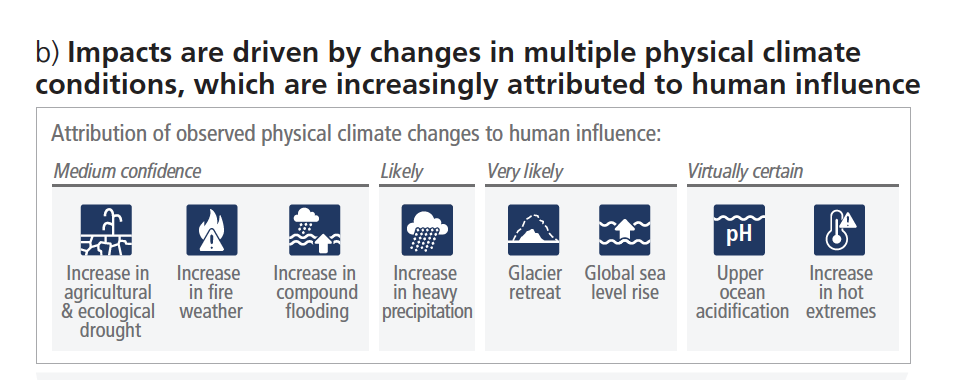
IPCC AR6 Synthesis Report
According to the Intergovernmental Panel on Climate Change (IPCC), unsustainable energy use, land use, and land-use change, as well as lifestyles and patterns of consumption and production across regions between countries and individuals, have increased greenhouse gas emissions dramatically. About 42% of historical cumulative net CO2 emissions calculated during 1850–2019 occurred between 1990 and 2019.
Global net anthropogenic GHG emissions in 2019 were 54% higher than in 1990, with the highest relative growth occurring in fluorinated gases (components of refrigerators, air conditioners, and aerosol cans). In 2019, approximately 79% of the global GHG emissions came from the sectors of energy, industry, transport, and buildings together.
Related to that, the most polluting countries are the ones with developed economies. About 35% of the population lives in countries emitting more than 9 tCO2-eq per capita, while 41% lives in countries that emit less than 3 tCO2-eq per capita. Cutting down the 10% of most pollutant households would have reduced GHG emissions by 40% on average.
If you think you’re not part of the 10% of households with the most GHG emissions worldwide, hold on a second. Here is the list of the top GHG contributors worldwide:
- China
- United States
- India
- EU (27 countries)
- Russia
- Japan
- Brazil
- Indonesia
- Iran
- Canada (some sources say it’s South Korea)
Check out this interactive calculator by WRI if you want to know more about your country. Here’s another graphical source for GHG emission reduction initiatives for some regions. And this tool by Climate Watch will be beneficial for comparing sustainability tendencies across countries.
According to the same summary by the IPCC, approximately 3.3 to 3.6 billion people live in contexts that are highly vulnerable to climate change. Extreme climatic events, such as floods and droughts, are more hazardous to communities with low incomes and a low GHG emissions footprint. Between 2010 and 2020, human mortality from floods, droughts, and storms was 15 times higher in highly vulnerable regions compared to regions with low vulnerability.
The impact from the top 10 emitters affects all nations downstream. But the power of conscious choices helps downstream, too. Going back to the consumption aspect of GHGs: According to McKinsey, battery electric vehicle sales since 2015 are already exceeding the trajectory needed to reach net zero by 2030, and that’s clearly on account of upper-middle-class households in developed economies.
It’s not so easy to calculate your GHG emissions and carbon footprint, although there are many tools to help you understand the impact of your household. I’ll note some of them for your reference at the end of this article.
Selling your car and getting a habit of cycling to work is not the only way to contribute to lowering climate change. There are many initiatives, and if one doesn’t work for your household, another will. Here are some examples, assuming you already practice the basic ones (recycling waste, reducing plastic, and keeping your old diesel Chevy in the garage):
-
The 100-Mile Diet is a movement that shares the concept of buying only local (within 100 miles of your home) and ecological food.
-
The Net Zero Home concept attracts people aiming to reduce their utility bills and create a self-sustainable household. Thanks to the availability of solar electricity systems and engineering solutions to preserve and reuse water, it’s an affordable step to make the life of your family self-sufficient.
-
Choosing a green energy provider. Few economies have a monopoly on energy supply. In most cases, you do have a choice of providers that invest more in renewable energy installments. Sourcing can be a challenge, though, as many invest more in marketing means than they actually do in green energy supplies.
-
Run all your appliances in ECO mode. The ECO mode in dishwashers and washing machines runs at lower temperatures, and to get the same level of cleaning, the cycles are normally longer. If you are not fighting with heavy dirt daily, choosing the ECO mode can save you up to 25% of electricity.
That seemed like a suspicious statement, so I checked mine. The load of 8 kg of cotton clothing on a normal 60-degree C cycle will consume 1.440 kWh/cycle, while the ECO mode results in 1.048 kWh/cycle. If I averagely run 200 cycles per year, that will save me 78.4 kWh of energy. If I assume the source of my electricity is a gas-fired power plant, I’ve just saved 27.5 kg of CO2 emitted to keep my clothes clean.
-
Buy from small businesses. Small businesses can be more sustainable because of the volumes they sell, higher quality control, and a transparent environmental policy. They don’t use cheap labor and eagerly adopt carbon offsetting, and the end price of their product can be higher, but so will the quality.
-
Keeping consumption to a minimum. Closely connected to the previous clause, consumerism is a great driver both for sales and for global warming. In 2021, the apparel industry is said to emit 897 MtCO2 annually into the atmosphere. The habit of buying new clothes every season supports 10% of global GHG emissions.
7) Use air conditioners only when you really need to. While your house is cooled, the atmosphere is heated. Air conditioners account for 4% of global GHG and show a higher impact in hotter climates. The more noticeable climate change gets, the more people will use air conditioners to cool their houses and offices, and the worse the impact will be.
- Participating in an environmental non-profit. Whether you contribute your money or your time, both matter. Please use the comments section to share your ideas on an added sustainability effort.
I live in Spain, and it is the fourth largest contributor of GHG emissions in the European Union, with 295.49 MtCO2e in 2019. Per capita, that number is 6.57 MtCO2 equivalent, which is my average annual emissions subsidy as a Spanish resident (and the calculators I’ve just used to confirm that showed much more!)
I’m using a second-hand marketplace here called Wallapop, which congratulated me on saving 1104 kg of CO2 this year (2023) by being one of the 5% most active users in my region. I mitigated at least a ton of CO2, so my reuse-recycle endeavor was not so pointless.
Wrapping it up, here are a few scenarios that someone of my age (35) should be completely prepared for. According to the IPCC, by the time I turn 60 and my kids are in their thirties, the global temperature change will have already exceeded 2–3 degrees above 1900 levels.
IPCC AR6 Synthesis Report
If emissions are dramatically reduced and industries have reached their Net Zero targets, the global earth's surface would be 2 degrees C hotter. According to NASA, a 2-degree rise in global temperatures is considered a critical threshold above which the dangerous and cascading effects of human-generated climate change will occur.
If emissions are moderately reduced or remain at the same level, I’d most likely spend my post-retirement fighting floods and forest fires, building a safe environment for my kids and grandkids.
So I prefer personal actions in parallel with all the corporate efforts that communities and entities show. To be straight, it’s something I’ve been extremely ignorant of up until now because I thought sustainability was a corporate liability.
And here’s a list of tools that will help you calculate the CO2 in your household:
- Berkeley Cool Climate Calculator for averages/household in the U.S.
- The WWF Carbon Footprint Calculator is based on a questionnaire.
- Climate Hero Carbon Calculator also takes into account your electricity and AC usage, trips per year, and other interesting details.
- Wren’s Carbon Footprint Calculator is tailored to the average expenses, assets, and diet your household has.
- Footprint Calculator is a bit more interactive, and you don’t need to have a background in understanding CO2 emissions to read the result.
메타데이터
- post_id
- 9a86790b7fad
- slug
- why-personal-sustainability-is-as-strong-as-corporate-9a86790b7fad
- url
- https://medium.com/@vidstrom/why-personal-sustainability-is-as-strong-as-corporate-9a86790b7fad
- canonical_url
- https://medium.com/@vidstrom/why-personal-sustainability-is-as-strong-as-corporate-9a86790b7fad
- author_url
- https://medium.com/@vidstrom
- status
- ok
- fetched_at
- 2026-07-24 16:59:40