I Changed My Mind About Abortion in America
Why I am no longer the one-issue voter I used to be
I Changed My Mind About Abortion in America
Why I am no longer the one-issue voter I used to be
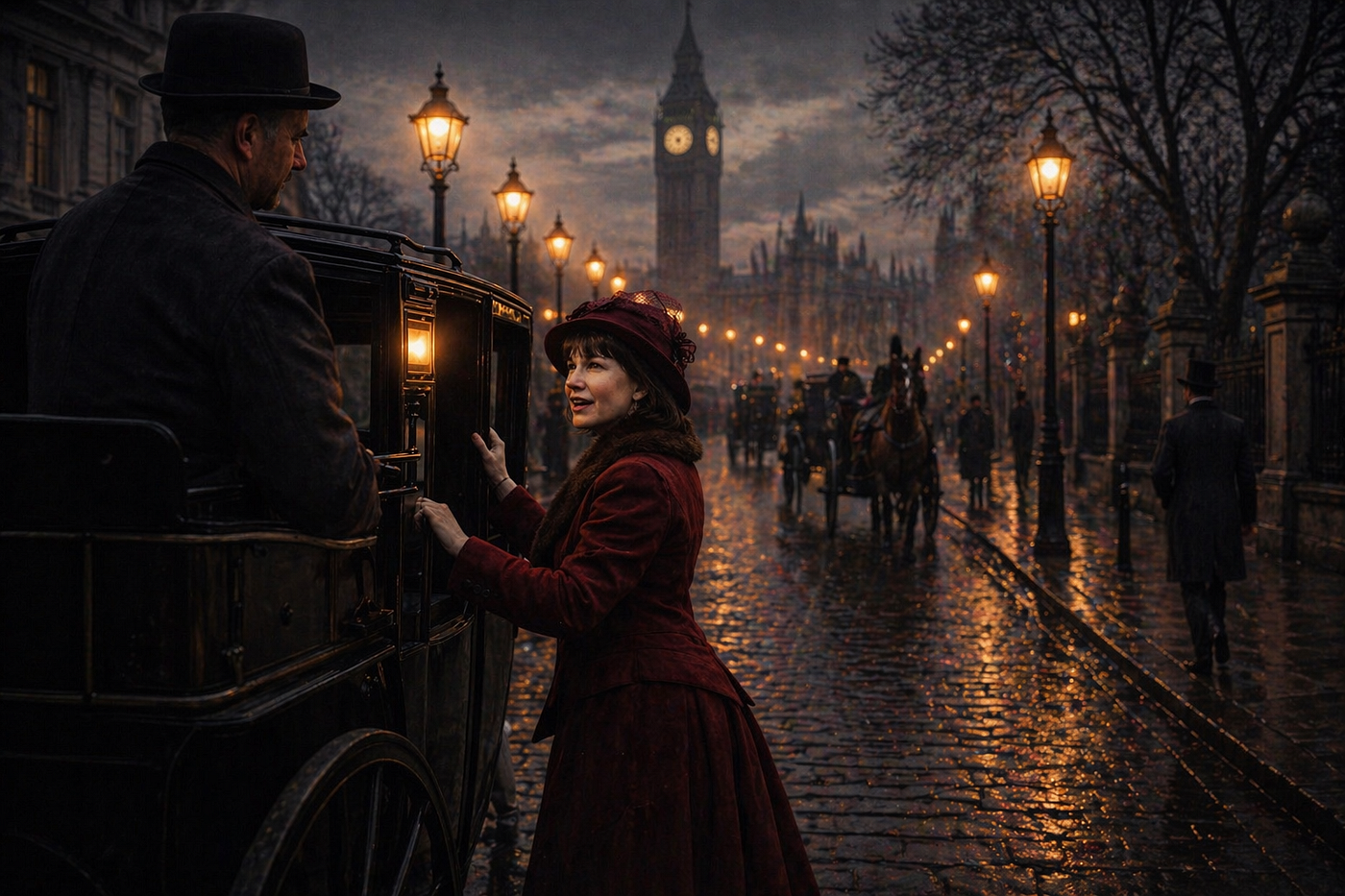
Created by Eric Swanson on Gemini Nano Banana
At that moment, the seasoned cabbie knew her secret.
He’d wondered at her hurried pace, her ducked head. Something wasn’t quite right. Her type usually liked being seen … admired. And then, just before escaping into the anonymity of his cab, the pieces fell into place as she whispered the address where he was to take her. Harley Street.
I’ve read enough Victorian era novels to recognize Harley Street as home to London’s medical practioners — including those who perform abortions.
There’s nothing like a scandalous pregnancy to thicken a plot. Society mostly disapproves of unmarried-and-pregnant women. And of the two parties involved, the woman bears the blame. Often alone, vulnerable, and fearful, she has to figure out a solution. Or pay the price. Or both.
A quick google search cites an Egyptian source from 1550 B.C.E. as referring to “a mixture of herbs concocted to induce miscarriage.”
Abortion isn’t likely to fade off into the sunset anytime soon.
Though I am and always have been “pro-life,” my orientation has changed. My eyes now see bad actors, a gullible voting bloc, nuances, and inconsistency on the pro-life stage.
It’s no longer a simple matter of right and wrong for me.
Here are 10 reasons why:
- The Law is Ineffective in Preventing Abortion
The wealthy will always have access to (safe) abortion, no matter what the law.
The Guttmacher Institute reports an increase in the number of abortions in recent months. Given the Dobbs v. Jackson Supreme Court ruling, and pro-life candidate Trump taking office, this statistic is ironic. Massive anti-abortion efforts in the judicial and executive arenas have yielded the opposite of their stated intent.
2. The Law Can Be Effective in Reducing Abortions
Those who are not wealthy could be persuaded away from abortion by a different kind of law. Better medical coverage, paid family leave, subsidized child care … these legislative actions offer the practical support many women feel they need to bring a pregnancy to term.
3. Wins from the Past: Agencies Helping Mothers Keep Their Babies
In 1883 a national network of maternity residences known as Florence Crittenton homes were established to provide shelter, medical care, and vocational training to single mothers. The idea was to help these women keep and raise their babies AND earn an income. Accounts record many success stories. No doubt, some abuse occurred, but the overall impact was positive, as indicated in the book, The Girls Who Went Away.
4. Follow the Money: Adoption Became a Big Business
Post WWII, rates of infertility among couples increased, apparently due to sexually transmitted diseases contracted by men in the military. With the prospect of money to be made in adoptions, unprincipled players exploited the vulnerability of single pregnant women.
Instead of the Florence Crittenton model of keeping mothers and babies together, women were shamed into giving their babies “a better life” through adoption. It’s worth noting that an adoption usually involves three deeply wounded entities: the couple unable to conceive, the birth mother with her empty arms, and the baby who has been removed from its mother.
Adoption can be an ideal solution for those longing for a child and unable to conceive. It‘s sometimes the best solution for all three entities.
My close friend, Christy, had a happy life with her adopted parents. Later on, Christy met and maintained a relationship with her birth mom. Christy leads a support group for adopted children on campus. She has helped me to understand that adoption comes with challenges as well as joys.
5. Pro-life as a Cover for Segregation
In his 2021 book, Bad Faith, Randall Balmer documents the history of the pro-life movement among evangelicals. The ugly truth? Pro-life originated as a desperate attempt to hold on to segregation.
Segregation as a cause was losing steam. Civil Rights Activists had succeeded in helping increasing numbers of Americans to see the injustice of the practice. The segregationist “Moral Majority” needed to rev up momentum. They needed a pretense, something that would recapture those slipping away, those awakening to the immorality of racism.
Pre-born babies. It was a brilliant choice.
Pre-born babies effectively distracted the public from the ulterior racist agenda of this group. Pro-life was the face of the movement, but segregation remained the goal. With increased enforcement of Brown v Board, public schools began to integrate.
And so began the proliferation of white “Christian Academies” in the South. The pro-life movement helped blur the real reason for these academies. Accruing funding and political power, the Moral Majority began throwing their weight around the White House, negotiating protection for tax-exempt status while practicing segregation.
6. A Stalwart Pro-Lifer’s Eye-Opening Experience
Robert Schenk for many years was a powerful force behind the pro-life movement, raising millions of dollars and influencing Supreme Court decisions.
Schenk now regrets this.
The documentary Armor of Light tells how a mother whose son was senselessly shot and killed, reached out to Schenk, reasoning that Schenk’s pro-life position should extend to gun control. After thoughtful prayer, Schenk began to agree with this bereaved mother. So he set out on a bumpy road of NRA conventions, focus group discussions, constituent interactions, and more.
The experience yielded a number of epiphanies.
Schenk, a true protector of the pre-born, ultimately saw through the political machinations of this movement. Schenk’s humble repentance for his complicity in the underbelly of this movement is remarkable.
Not surprising, the conservatives with whom Schenk had previously been allied now aim at him the full force of their wrath and weaponry.
7. A More Expansive View of Pro-Life
Like Schenk, my pro-life view has expanded, encompassing vulnerable populations outside as well as inside the womb. This includes poorer, desperate women who seek out life-threatening abortions.
The same religious and moral pro-life sensibilities apply to all of humanity, all created in the image of God: the hungry, the sick, the imprisoned, refugees, victims of gun violence … The thing is, these “post-born” groups can be complicated, demanding more from us.
Pre-born babies themselves ask nothing of us. It’s on our terms, how we help. A vote for the right candidate, a bumper sticker on our cars, a donation here and there …
I wonder. If it could be proven that tangible help given to vulnerable populations drastically reduces the number of abortions, would those who have made a career of the pro-life movement change their tactics … ?
8. Opposing Exploitation
As I became more aware of the political realities of the pro-life movement, the villains switched faces. Rather than the abortionist or the woman ending the life in her womb, I am assigning more of the blame elsewhere.
Those profiting from platforming unborn babies and then doing nothing to care for them once they are born … those using these innocents as a cover for racism … those who sanctimoniously identify as pro-life while supporting death in other arenas—among them unjust war and the dismantling of aid both at home and abroad — these are now the villains.

Photo by Pavel Danilyuk
9. The Bible Isn’t Much Help Here. Science? Well, Yes and No
“When there’s a fight and in the fight a pregnant woman is hit so that she miscarries but is not otherwise hurt, the one responsible has to pay whatever the husband demands in compensation. But if there is further damage, then you must give life for life — eye for eye, tooth for tooth, hand for hand, foot for foot, burn for burn, wound for wound, bruise for bruise.” Exodus 21:22–25 The Message
This is the clearest scripture I could find on the topic. And it’s not terribly decisive as far as establishing the personhood of the miscarried baby.
Scientific advancements have brought both increased clarity (ultrasounds) and obscurity (frozen fertilized eggs) to this issue.
10. Aborted vs Abused
I read a harrowing account of a little girl in the foster care system. Her torturous life and death tested my pro-life commitment. In that particular instance, I deemed abortion to have been the more merciful option.
And yet I remain anti-abortion. I cringe and grieve whenever an abortion is depicted on a movie or TV show, trying to “talk her out of it.”
But my pro-life lens is no longer narrowly framed, no longer blurred by the propaganda of opportunists. I’m seeing a much bigger picture, and, at the same time, zooming in, picking up on the multitude of political scavengers populating the underbelly.
I no longer see it in black and white.
And one thing for sure. I no longer cast my vote for political candidates, based upon whether or not they are anti-abortion. I’m learning to look more closely at each candidate, to see if they are truly pro-life.
메타데이터
- post_id
- a003d82d0f92
- slug
- i-changed-my-mind-about-abortion-in-america-a003d82d0f92
- url
- https://medium.com/backyard-theology/i-changed-my-mind-about-abortion-in-america-a003d82d0f92
- canonical_url
- https://medium.com/backyard-theology/i-changed-my-mind-about-abortion-in-america-a003d82d0f92
- author_url
- https://medium.com/@2ndhalfoflife
- status
- ok
- fetched_at
- 2026-06-09 15:37:30