Software Deployment Confidence: How We Went From Monthly Releases to Hourly
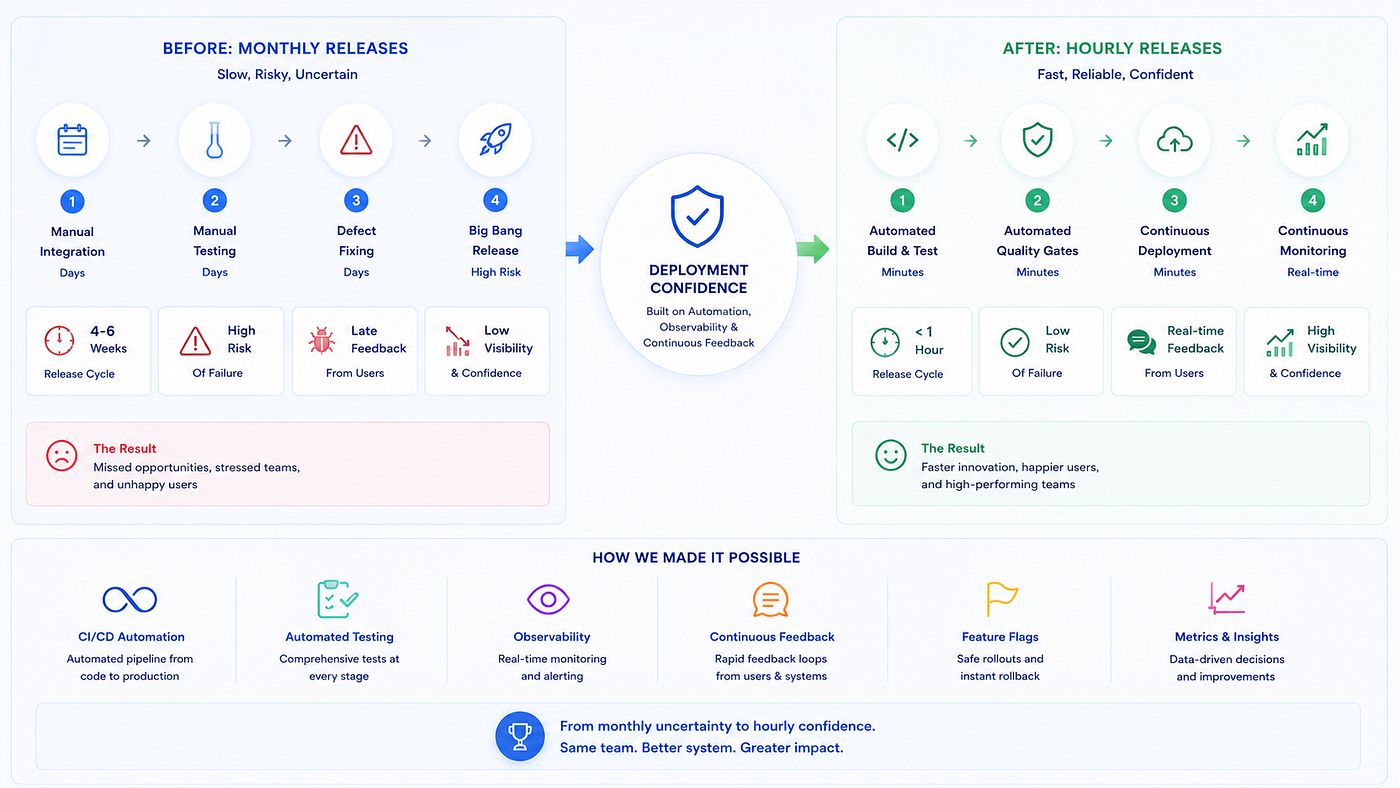
For a long time, our team believed that releasing software once a month was the responsible thing to do.
Software Deployment Confidence: How We Went From Monthly Releases to Hourly
For a long time, our team believed that releasing software once a month was the responsible thing to do.
The logic seemed sound. Fewer deployments meant fewer opportunities for something to break. We had plenty of time to test changes, review release notes, and coordinate across teams. On paper, the process looked mature. In reality, every deployment felt stressful.
Release days required careful planning. QA teams spent days validating functionality. Engineers stayed online longer than usual. Product managers waited anxiously for confirmation that everything was working as expected. Nobody wanted to admit it, but there was always an underlying concern that something unexpected might happen once the deployment reached production. The strange part was that we accepted this stress as normal. Deployments were supposed to feel risky. That was simply the cost of shipping software.
At least, that was what we thought. The turning point came after a production issue that should have been easy to diagnose but was not.
A few minutes after a release, customer-facing errors started appearing. Nothing catastrophic happened, but enough users were affected that we needed to investigate immediately. The challenge was not fixing the issue. The challenge was figuring out where to start. The deployment contained weeks of accumulated changes.
It included:
- New product features
- Bug fixes from multiple teams
- Infrastructure updates
- Dependency upgrades
- Configuration changes
- Database modifications
Any one of those changes could have been responsible. The problem was eventually resolved, but the experience exposed a flaw in our thinking. The issue was not that we were deploying too often; in fact, the issue was that we were deploying too much at once. That realization completely changed how we approached **software deployment**.
The Myth of the Safe Monthly Release
Many engineering teams assume that releasing less frequently reduces risk. It sounds reasonable. If deployments are risky, then fewer deployments should create fewer problems. What often gets overlooked is the relationship between deployment frequency and deployment size.
Every day that code remains unreleased adds more complexity to the next deployment. New features continue to accumulate. Additional bug fixes are merged. Infrastructure changes wait for the same release window. Dependencies get updated. Before long, a single deployment contains work from multiple teams across multiple weeks.
At that point, even a minor issue becomes difficult to investigate. When a deployment contains hundreds of changes, answering a simple question becomes surprisingly hard:
“What actually caused the problem?”
The larger the release, the larger the search space.
Over time, we realized that monthly deployments were not reducing risk. They were concentrating risk into a single event.
When Deployment Fear Starts Influencing Decisions
One consequence of low deployment confidence rarely appears in engineering discussions. Fear changes behavior. Not in dramatic ways. In subtle ways.
Developers become hesitant to touch sensitive areas of the codebase. Small improvements are postponed because they can wait until the next release. Teams bundle unrelated changes together to avoid additional deployment cycles. Technical debt remains unresolved because nobody wants to introduce uncertainty before release day.
Looking back, we started noticing several warning signs:
- Small fixes waiting weeks to reach users
- Longer release preparation cycles
- Growing technical debt
- Increased pressure around deployment windows
- More conversations about risk than value
The deployment schedule gradually stopped serving the business. Instead, it became a coping mechanism for uncertainty.
That was when we realized we had a deployment confidence problem, not a deployment frequency problem.
The Shift From Large Releases to Small Releases
The first meaningful change we made was surprisingly simple. We stopped waiting for large batches of work to accumulate. Instead of releasing dozens of changes together, we began releasing smaller increments more frequently. The difference was immediate.
When issues appeared, there were fewer possible causes. Engineers could connect production behavior to recent changes much more quickly. Rollback decisions became simpler because deployments affected a smaller portion of the system.
Smaller releases also changed how teams approached development. Rather than building massive feature drops, engineers began thinking in smaller, deployable increments. Features could evolve gradually instead of appearing all at once. This reduced deployment risk without slowing down delivery.
In fact, it often accelerated delivery because teams spent less time preparing releases and more time shipping value.
Why Testing Had to Change
Deploying more frequently exposed another challenge. Our existing testing process could not keep up.
Like many teams, we relied heavily on manual validation before releases. QA engineers followed checklists, tested critical workflows, verified integrations, and reviewed recently completed work. That approach worked reasonably well when deployments happened once a month.
It became a bottleneck when deployments started happening multiple times a week. The solution was not to automate every possible test, but to automate the areas that consistently created deployment risk.
We focused on:
- Authentication and authorization flows
- Core business APIs
- Customer-facing workflows
- Payment-related functionality
- Third-party integrations
This allowed teams to validate critical functionality continuously instead of waiting for a dedicated testing phase. The goal was not perfection, it was confidence.
The Most Important Lesson: Confidence Comes From Feedback
One of the biggest misconceptions about software deployment is that confidence comes from preparation. Preparation helps. Feedback matters more. Teams gain confidence when they learn quickly whether a change is working.
Earlier in our deployment process, feedback often arrived too late. Problems were discovered through customer reports, support tickets, or monitoring alerts long after deployments had completed. By that point, multiple changes had already reached production. Troubleshooting became harder because the connection between cause and effect was less obvious. As deployment sizes became smaller and automated validation improved, feedback cycles shortened dramatically.
Instead of learning about issues days later, developers learned about them within minutes. That changed everything. Fast feedback reduced uncertainty. Reduced uncertainty increased confidence.
And increased confidence made frequent software deployment possible.
Why Regression Testing Became a Priority
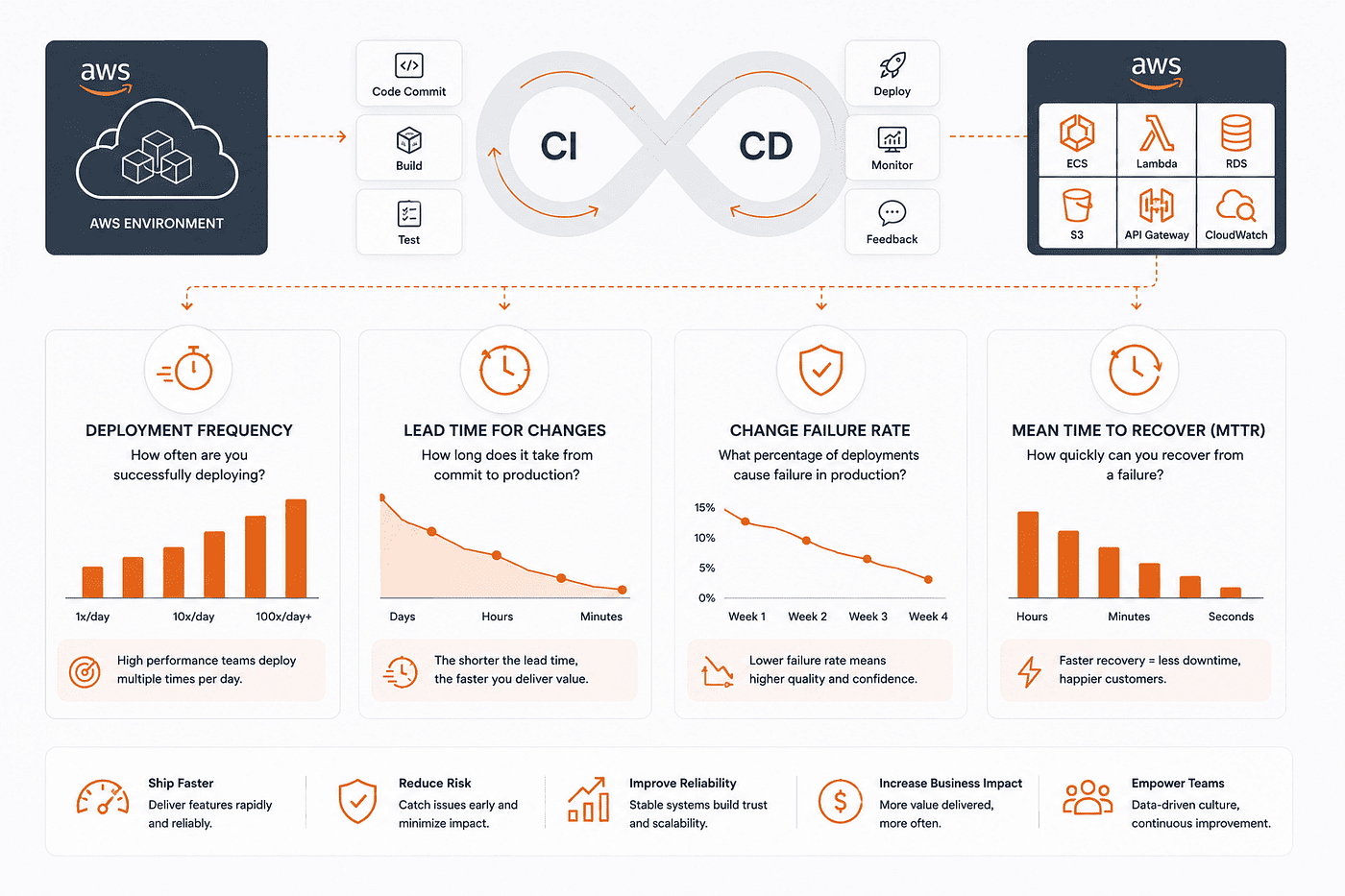
As release frequency increased, another reality became impossible to ignore. Every deployment introduced another opportunity for regression. A team deploying software once per month might release twelve times per year. A team deploying multiple times per day could easily execute thousands of deployments annually. The more changes that move through production, the more important regression testing becomes. The challenge is that traditional regression suites often become difficult to maintain over time.
Tests break. Workflows change. Execution times increase. Teams spend more effort maintaining tests than learning from them. We experienced many of these problems ourselves.
Eventually, we started looking for approaches that reduced the maintenance burden while still providing meaningful coverage. Some teams solve this challenge with conventional automation frameworks. Others use tools that generate regression coverage from actual application behavior. Tools like Keploy, for example, can create API-level regression tests from real traffic, helping engineering teams validate backend changes without manually writing every scenario from scratch.
The specific implementation matters less than the outcome. The objective is straightforward:
Every deployment should provide confidence that existing functionality continues to work as expected.
Monitoring Completed the Picture
Testing improved confidence before deployment. Monitoring improved confidence after deployment. Both were necessary.
Even strong automated test suites cannot predict every production issue. Real users interact with systems differently than test environments do. Infrastructure behaves unpredictably. External services fail. Traffic patterns change.
Monitoring became an essential part of our deployment strategy because it allowed us to observe software in its natural environment.
The metrics we paid closest attention to included:
- Error rates
- API response times
- Failed requests
- Infrastructure health
- Database performance
- User-facing availability
These signals helped us identify issues quickly and respond before small problems became major incidents. Testing reduced the likelihood of failure. Monitoring reduced the time required to detect and understand failure. Together, they created a much stronger deployment process.
When Deployments Stopped Feeling Special
Perhaps the most surprising outcome of this transition had nothing to do with technology.
It was cultural.
At the beginning of our journey, deployments felt like major events. They required planning, coordination, communication, and contingency preparation. As confidence increased, deployments became routine.
Engineers stopped treating production releases as something unusual. Product teams became more comfortable shipping incremental improvements. Discussions shifted away from deployment logistics and toward customer value. The process became less dramatic. That was a good thing.
Reliable software deployment should not require extraordinary effort every time code reaches production. It should feel normal.
The less attention teams spend worrying about deployments, the more attention they can spend improving products.
The Five Factors That Increased Deployment Confidence
Looking back, there was no single breakthrough that transformed our deployment process.
Confidence emerged from a collection of improvements working together.
The biggest contributors were:
- Smaller and more frequent releases
- Automated validation of critical workflows
- Faster feedback loops
- Continuous regression testing
- Production monitoring and observability
Each practice addressed a different source of uncertainty. Together, they created a deployment process that teams could trust.
Final Thoughts
Our journey from monthly releases to hourly deployments was never really about speed. Speed was simply a byproduct. The real objective was confidence.
Once deployments became smaller, testing became more automated, feedback became faster, and monitoring became more effective, releasing software stopped feeling risky. That does not mean production incidents disappeared. Every engineering team encounters unexpected issues eventually.
What changed was our ability to understand, diagnose, and recover from those issues quickly. Many organizations focus on increasing deployment frequency because they want faster delivery. A better question is whether teams trust their deployment process. Frequency follows confidence. When teams trust their systems, deployments naturally become smaller, more frequent, and less stressful.
That was the biggest lesson we learned. We did not become confident because we started deploying more often. We started deploying more often because we finally became confident in our software deployment process.
메타데이터
- post_id
- bd3b4e4df080
- slug
- software-deployment-confidence-how-we-went-from-monthly-releases-to-hourly-bd3b4e4df080
- url
- https://medium.com/@sancharini.panda/software-deployment-confidence-how-we-went-from-monthly-releases-to-hourly-bd3b4e4df080
- canonical_url
- https://medium.com/@sancharini.panda/software-deployment-confidence-how-we-went-from-monthly-releases-to-hourly-bd3b4e4df080
- author_url
- https://medium.com/@sancharini.panda
- status
- ok
- fetched_at
- 2026-06-22 05:41:33