DNA Doesn’t Lie: The Ulster — Connacht Split in Ancient Genetics
Ancient DNA reveals Ireland’s oldest tribal divide—hidden in the genes of Ulster, Connacht, Leinster, and Munster.
DNA Doesn’t Lie: The Ulster — Connacht Split in Ancient Genetics
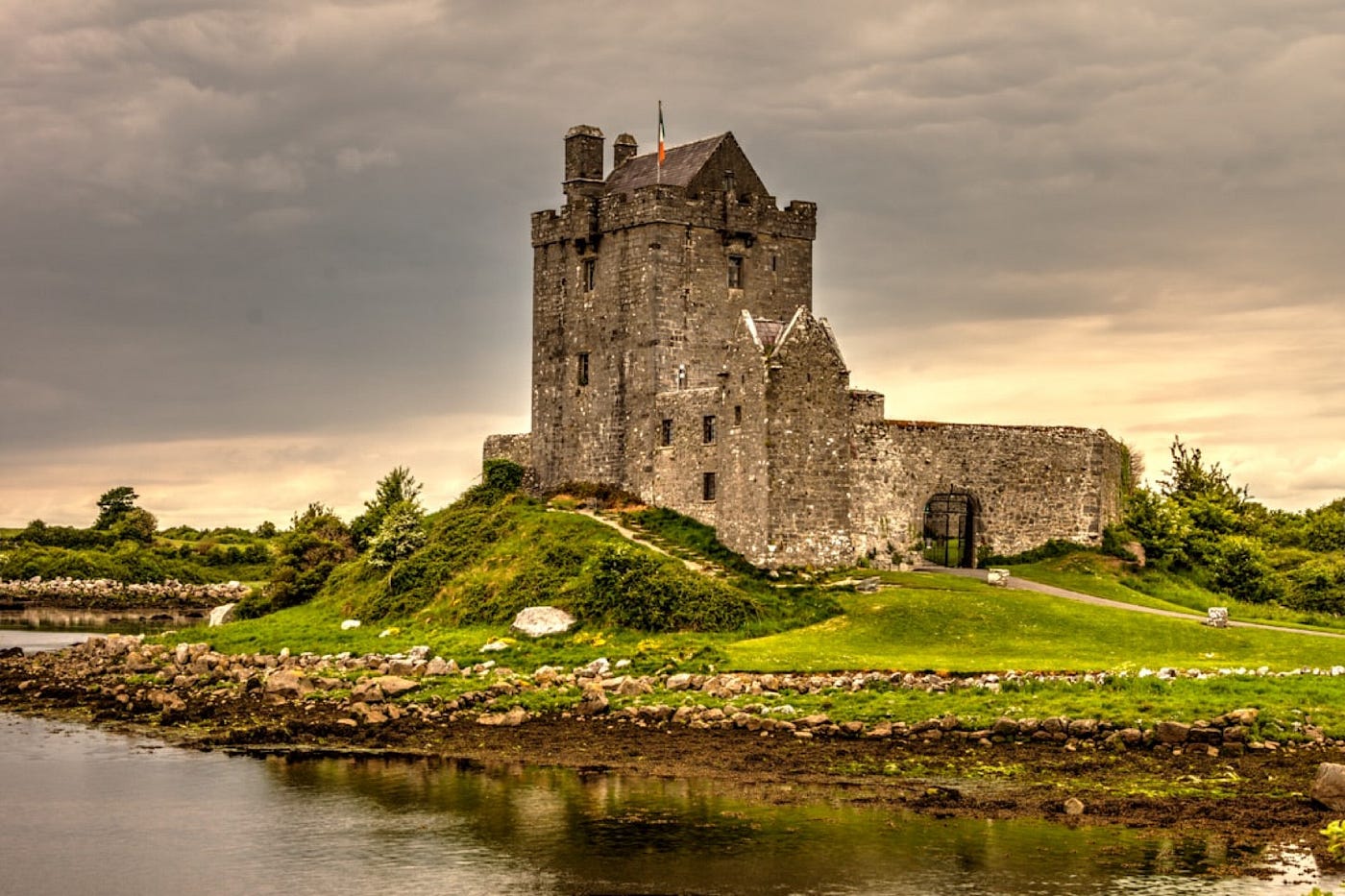
Photo by Wallace Bentt on Unsplash
Opening the Atlas: DNA Reveals a Hidden Map
In 2017, the Irish DNA Atlas — sampling nearly 200 individuals with deeply rooted ancestry — uncovered a genetic landscape that mirrored Ireland’s traditional provinces: Ulster, Connacht, Leinster, and Munster. Seven out of ten distinct genetic clusters aligned with Gaelic-origin populations, and three reflected admixture with British ancestry. But the most striking discovery was a genetic boundary slicing across northern Ireland — Ulster stood apart from the rest.
This wasn’t a subtle gradient — it was a sharp, high-contrast demarcation. Similar to natural barriers like rivers and mountain ranges, this invisible genetic line separated not only Ulster from Leinster and Munster, but even bisected Ulster itself — northwest vs. northeast — hinting at deeply embedded tribal identities.
⸻
Genetic Communities: Reconstructing Ancient Alliances
Fast forward to March 2025, when a paper in European Journal of Human Genetics (EJHG) analyzed over 6,500 individuals using haplotype-based “Leiden community detection”. This approach identifies groups whose shared genetic segments — shorter for more ancient connections — draw demographic maps through time.
Key results:
• Persistent gene flow between northeast Ireland and southwest Scotland — a corridor that has endured for centuries.
• Conversely, a strong barrier dividing southeastern (Leinster/Munster) from western and northwestern (Connacht/Ulster) Ireland, which has emerged only recently — in evolutionary terms — reflecting centuries of isolation that reinforce ancient patterns.
• Surname analysis: Normans clustered around Wexford (southeast), while Scottish/Gallowglass lineage names clustered in Ulster — especially northwest.
These patterns aren’t accident. They’re living echoes of migration, conquest, and sustained marriage patterns over the last two millennia.
⸻
The Northwest/Southeast Divide: More Than History
Zooming into Ulster reveals the most significant divide: Donegal and Derry in the northwest form one cluster; Cavan, Monaghan, Tyrone (drifting toward northeast Ulster) connect more closely with Scotland. This split, already noted by the Irish DNA Atlas, was reaffirmed by haplotype-sharing analysis.
A brief historical sketch helps frame this:
• Cenél Conaill and Cenél nEógain — two powerful branches of the Northern Uí Néill — ruled much of northwest and east Ulster from the 5th century onward.
• An ancient group known as the Cruithin (possibly pre-Celtic) once held power in Derry/Down; their legacy might still linger in the northwest genetic core.
• From the 12th century, Scottish mercenaries (Gallowglass) settled in Ulster, bringing Y-chromosome lineages that survive today in abundance.
⸻
Tracing the Timeline: Bronze Age to Plantation
🌄 Deep Roots: Bronze — Iron Age
Haplogroup R‑L21 — present in around 65% of Irish men today — is a signature of Bronze Age migrations around 2,500 — 2,000 BC; it dominates ancient remains from Rathlin Island.
This ancient genetic layer permeates all Ireland, but regional subclades have diverged along provincial lines. Neolithic genes from continental Europe are more pronounced in Leinster and Munster, suggesting sustained ancient contact there.
🛡️ Early Medieval & Gaelic Tribes
The Gaelic kingdoms emerging in the Early Christian period anchored genetic regions:
• Connacht, ruled by the Uí Briúin, shares DNA with Ulster’s Uí Néill — reflecting deep genealogical ties among northwest tribes.
• Leinster and Munster, with lineages like Dál gCais, show mitochondrial and autosomal signatures linked to continental groups — evidence of trade, dynastic alliances, and Norse/Viking settlement.
Y-chromosome studies also trace paternal continuity in northern dynasties. A subclade of interest is linked to the Northern Uí Néill, centered in what became County Donegal — likely marking unfettered clan inheritance for over 1,500 years.
🏴 Interruption: Vikings, Normans & Plantations
Viking DNA peaks in Leinster/Coastlines (cities like Dublin, Wexford) — genes reaching west but less so in Ulster.
The Norman arrival brought surname clusters around southeast counties, especially Wexford, deeply influencing regional genomes.
The 17th c. Ulster Plantation had the most profound genetic effect on northeast Ulster, introducing heavy Scottish-Lowland English Y-lineages. Yet northwest Derry/Donegal resisted this wave, retaining older genetic signatures.
🔄 Recent Isolation & Gene Flow Patterns
Modern haplotype data show that southeast and west Ireland are now less genetically connected — a “recent migration barrier” unveiled by the 2025 haplotype study. This encapsulates centuries of localized insularity: isolated rural communities, infrequent regional marriages, and minimal urban mingling.
Simultaneously, northeast Ulster and southwest Scotland have remained in genetic contact — via seafaring, kinship, and shared Highland/Lowland culture.
⸻
Ulster — Connacht: A Tribal Mirror
The northwestern cluster — including Donegal and Derry — shows a remarkable alignment:
• This region remained less changed by later Scottish settlers.
• It maintained genetic lines from the Northern Uí Néill and earlier inhabitants like the Cruithin.
• Across millennia, the geography — mountains, bogs, inlets — encouraged inward-looking communities, preserving unique Y-lineages and haplotype patterns.
In contrast, the Connacht region is genetically closer to northwest Ulster than to Leinster/Munster — a testament to ancient pre-provincial ties, especially through tribal affiliations and shared ancestry.
⸻
Autosomal Evidence: Every Ancestor Tells a Story
Autosomal (non-sex-linked) DNA patterns reinforce the picture:
• Shorter shared segments between Ulster and Scotland echo ancient population links predating Norman influence.
• Higher Early European Farmer (EEF) ancestry in southeast Ireland links them to continental Bronze and Iron Age migrants — possibly the early Celtic language-bearers.
These autosomal threads weave a tapestry of Ulster — Connacht vs. Leinster/Munster deep splits — long after conventional historical borders emerged.
⸻
Why These Genetic Lines Persisted
Why didn’t waves of conquest or migration erase these patterns?
1. Geography and settlement: Local topography favored internal endurance over mass assimilation.
2. Kinship and surnames: Over centuries, clans remained endogamous — freezing in place earlier gene pools.
3. Political fragmentation: Ireland’s decentralized medieval polity meant no single identity dominated; regional patterns remained strong.
4. Cultural memory: Tribes such as Uí Néill, Cruithin, Dál gCais nurtured loyalties and marriage customs that reinforced isolation.
⸻
Modern Reflections & Genealogy
For anyone tracing Irish ancestry:
• A DNA test revealing alignment with Ulster — Connacht hints at lineage woven from Gaelic tribes and ancient kin networks.
• A genomic match to Leinster/Munster may signal continental farmer/descent and later Viking/Norman influences.
• Scottish autosomal signals in Ulster likely reflect 17th-century plantation ancestry — but should be interpreted alongside Y-chromosome markers to distinguish older vs. newer roots.
⸻
Broader Implications
• Anthropology & archaeology: DNA exposes cultural-geographic divides invisible to artifact-based methods.
• Medical genetics: Regional allele frequency differences can affect disease risks localized to northwest vs southeast Ireland.
• Cultural identity: Understanding DNA-geography links invites deeper exploration of living traditions — language, folklore, music, clan structure.
⸻
Conclusions: DNA as a Time Capsule
DNA doesn’t lie. 4000+ years of population movement, political formation, and social bonds have imprinted themselves on our genomes.
• Ulster — Connacht form one enduring bloc — anchored in Gaelic clan heritage and minimal external admixture.
• Leinster/Munster reflect dynamic continental contact — Neolithic farmer influx, Bronze — Iron Age movements, Viking and Norman waves.
• The stark genomic divide visible today matches ancient tribal borders predating Gaelic polity.
⸻
Native Irish, descendants of northeast settlers, or anyone exploring their Irish roots: your DNA is an echo of ancient loyalties, ancient landscapes, and ancient divisions. When genetics paints a map of Ireland, it tells stories only stone and storybooks hint at.
메타데이터
- post_id
- c3231d840a74
- slug
- dna-doesnt-lie-the-ulster-connacht-split-in-ancient-genetics-c3231d840a74
- url
- https://medium.com/@sdespin/dna-doesnt-lie-the-ulster-connacht-split-in-ancient-genetics-c3231d840a74
- canonical_url
- https://medium.com/@sdespin/dna-doesnt-lie-the-ulster-connacht-split-in-ancient-genetics-c3231d840a74
- author_url
- https://medium.com/@sdespin
- status
- ok
- fetched_at
- 2026-06-09 15:37:30