India is a vast and diverse country, and that diversity extends to the interests and aspirations of…
The youth are among the biggest victims of the present political and administrative system. Society remains divided by religion, caste, and…
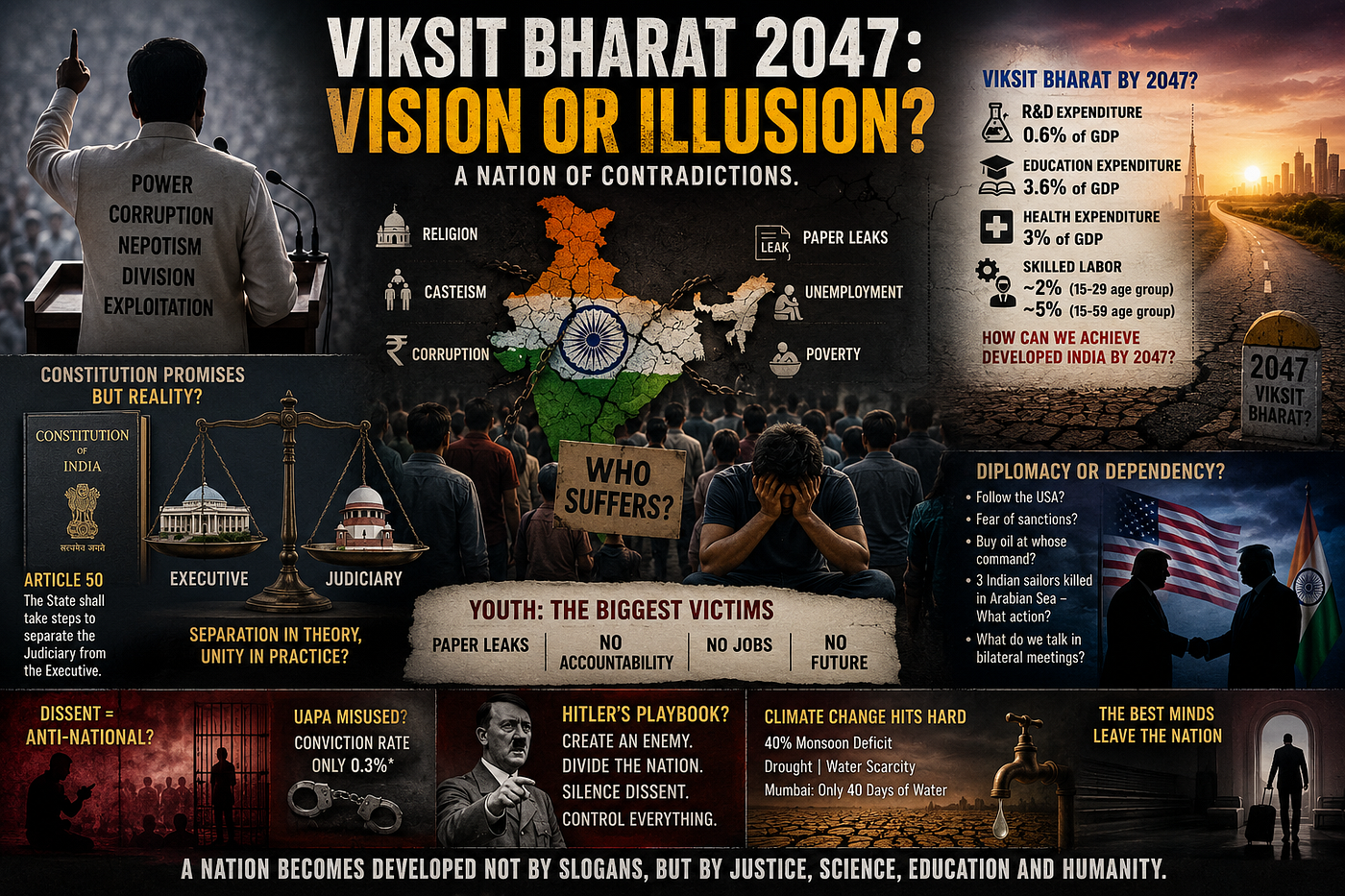
India is a vast and diverse country, and that diversity extends to the interests and aspirations of its people. However, many critics argue that different sections of society pursue their own interests at the expense of the common good. Politicians are accused of being more interested in retaining power than serving the people. Sections of the electorate are often criticized for prioritizing short-term benefits during elections, while some bureaucrats are perceived as rulers rather than public servants. In this struggle of competing interests, the poorest and most powerless suffer the most.
The youth are among the biggest victims of the present political and administrative system. Society remains divided by religion, caste, and narrow identities, while governance, education, and accountability often take a back seat. Every other day, political leaders make divisive statements, and corruption and nepotism continue to be major concerns. Reports such as those of the Second Administrative Reforms Commission have emphasized ethical governance and the need to avoid conflicts of interest. Public questions are often raised regarding allegations involving politicians and their relatives, fueling distrust among citizens.
Repeated incidents of examination paper leaks and the absence of visible accountability have created frustration among students and job aspirants. Many people feel that those in power seek to rule rather than serve, forgetting that they are ultimately public servants accountable to the citizens. They question whether the political leadership views itself as servants of the people or as rulers over them.
Critics argue that anyone who questions the government is often labeled anti-national, anti-Bhakt, or even sympathetic to hostile countries. They claim that dissent is frequently delegitimized and that those demanding accountability are treated with contempt. Article 50 of the Constitution provides for the separation of the judiciary from the executive. Yet, many people perceive a close relationship between institutions in certain matters. For example, the Supreme Court upheld the demonetization decision, although there have also been instances, such as the Electoral Bonds judgment, where government actions were struck down for violating constitutional principles and concerns relating to transparency.
Some critics compare the current political climate with historical examples in which leaders cultivated a common emotional identity and portrayed dissenters as enemies of the nation. They argue that dissenters are often branded anti-national and that laws such as the UAPA are used extensively, despite concerns regarding low conviction rates and prolonged detention. According to these critics, governments should seek legitimacy through accountability and public service rather than through polarization and ideological conformity.
The government has set the ambitious goal of achieving a “Viksit Bharat” by 2047. However, critics ask whether India can truly become a developed nation while continuing to be divided by religion and caste. India spends only around 0.6 percent of GDP on research and development, about 3.6 percent on education, and roughly 3 percent on health. Skill development remains inadequate, and many talented individuals seek opportunities abroad. Critics ask how India can become a developed nation by 2047 without substantial investments in education, health, scientific research, and human capital.
In foreign policy, some critics argue that India lacks sufficient strategic autonomy and often aligns too closely with major powers. They question whether diplomatic priorities are focused more on symbolism and praise than on addressing difficult issues and safeguarding national interests. They argue that a strong foreign policy should combine pragmatism with the ability to raise concerns firmly and independently.
India, being the world’s most populous country, is highly vulnerable to climate change. Monsoon deficits, droughts, water scarcity, and environmental degradation pose serious challenges. Without stronger institutions, greater accountability, better investment in human capital, and a commitment to scientific and technological innovation, critics fear that the vision of a developed India by 2047 may remain difficult to achieve.
Ultimately, a healthy democracy requires transparency, accountability, tolerance of dissent, and a commitment to public service rather than personal or partisan interests. A nation becomes truly developed not merely through slogans or economic targets, but through strong institutions, social harmony, scientific progress, and equal opportunities for all its citizens.
메타데이터
- post_id
- c587531ebcfe
- slug
- india-is-a-vast-and-diverse-country-and-that-diversity-extends-to-the-interests-and-aspirations-of-c587531ebcfe
- url
- https://medium.com/@gauravkartik34/india-is-a-vast-and-diverse-country-and-that-diversity-extends-to-the-interests-and-aspirations-of-c587531ebcfe
- canonical_url
- https://medium.com/@gauravkartik34/india-is-a-vast-and-diverse-country-and-that-diversity-extends-to-the-interests-and-aspirations-of-c587531ebcfe
- author_url
- https://medium.com/@gauravkartik34
- status
- ok
- fetched_at
- 2026-06-21 07:44:09