10 Fitness Rules to Follow After 50
A no-BS guide to staying strong, mobile, and harder to kill.
Fitness Over 50
10 Fitness Rules to Follow After 50
A no-BS guide to staying strong, mobile, and harder to kill.

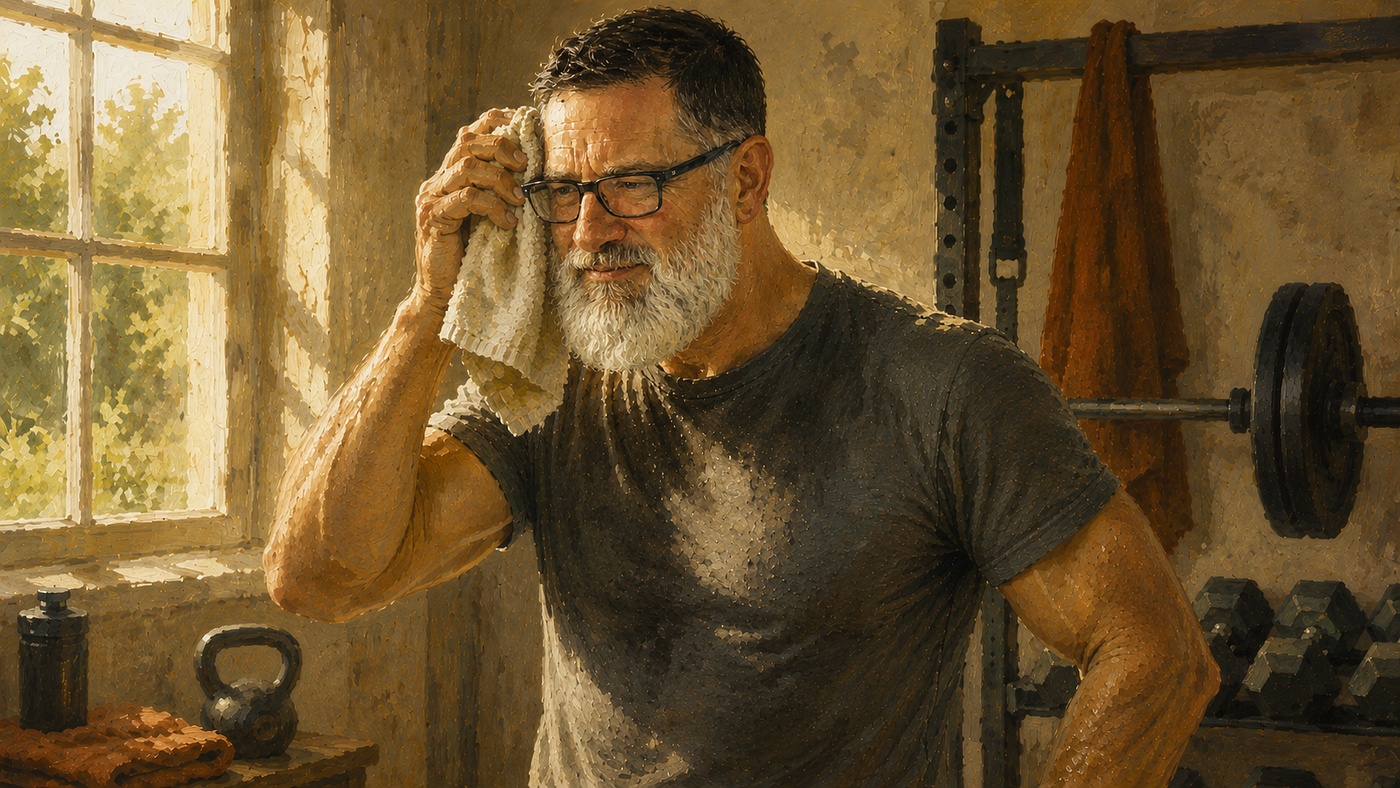
Fitness after 50 isn’t about impressing anyone else. It’s you bargaining with reality. I know that sounds depressing, but it’s actually kind of freeing. You stop pretending like you have to put on a show for an invisible crowd. You stop doing exercises that make sense for bodies with knees that haven’t been replaced. You stop pretending that taking recovery days is for people who aren’t tough enough, or disciplined enough, because some shirtless guy in his garage says they have to, while selling you his pre-workout.
I know because I’ve had to change the way I move through the world. Because of cancer. And thyroid disease. Psoriatic arthritis. Just plain ol’ living. My body now negotiates every request I make of it. It doesn’t snap back. It argues. Some days I feel like I got a letter from my body’s legal department.
But I don’t back down. I’ve just traded in workouts for the body I once had for ones that work for the body I still have. That’s what fitness after 50 is all about. No stress. No beating yourself up. No trying to get back to an arbitrary number from decades ago. It’s about how strong you are, how much muscle you have on your frame, how well you can move and balance, and how healthy your lungs and blood sugar are. It’s about staying in control of your physical health enough that life can’t put you in a box until they absolutely need to.
1. Strength training is no longer optional, so make the time for it.
Once you are over 50, regard your muscle like a retirement fund. You can delay working on it if you want, but eventually the bill comes due. It is what protects your joints and is as good for your bones, balance, insulin and metabolism as it is for those unheralded daily tasks you only notice when they are no longer there. Things like hoisting a bag of dog food, or rising from a chair without a second thought, or righting yourself before gravity has its way with you.
There is no call to log the kind of hours a powerlifter does unless you have the inclination. What you need is some form of resistance. A barbell, kettlebells, bands or dumbbells will do; start with a soup can if you have to. Your muscles don’t care about the provenance of the equipment. Just work the basics: a squat, a hinge, push, pull, carry, brace. No frills required.
2. Stop fixating on being sore.
It doesn’t mean you made progress. Occasionally it does, but often it just means you were as reckless as a raccoon let loose in a sporting goods store.
You are over 50 now, so there is no sense in racking yourself up on a Monday and then lurching around for the rest of the week like you have been through an earthquake. Do something you can bounce back from and put in your time again. A workout that is too heroic and wrecks your week will never be as good as one you have the constitution to do over and over. Be consistent with it. There is no need to put on a show for some phantom football coach from your past. Give your body enough of a signal with your efforts, but don’t make it a hostage situation.
3. Have a plan, even if it is boring.
Most folks don’t fall short because their routine isn’t sophisticated enough. They do because it is overly complicated, like something a caffeinated squirrel would put on a spreadsheet.
You don’t require ten different chest exercises or six types of curl. Or some Bulgarian split squat contrivance named after a man who has no joy in his life. You want a plan you can live with. Two or four times a week for strength, a walk most days, some mobility, your protein and your sleep. And when you can, put in a hard effort. It is not sexy. Brushing your teeth isn’t either, but you do it.
4. Work with your body, don’t try to train through it.
You have to know the difference between discomfort and damage. One is just hard work, the other is your body putting up a red flag.
At 25 you could afford to be willfully blind to the warning signs and get away with it. But once you hit 55 or 65 the reckoning is a lot more thorough and comes quicker. If your knees are complaining, then alter your squat. Shoulders in a mood? Adjust the press. And if your back has a mind of its own, show some courtesy to the load when you hinge. You have to make allowances for old injuries, arthritis, heart or thyroid meds, the whole lot. There is no shame in that, it is just intelligence with calluses on it. Don’t go berating yourself because you don’t have the same physique as before.
5. Show protein a bit more respect.
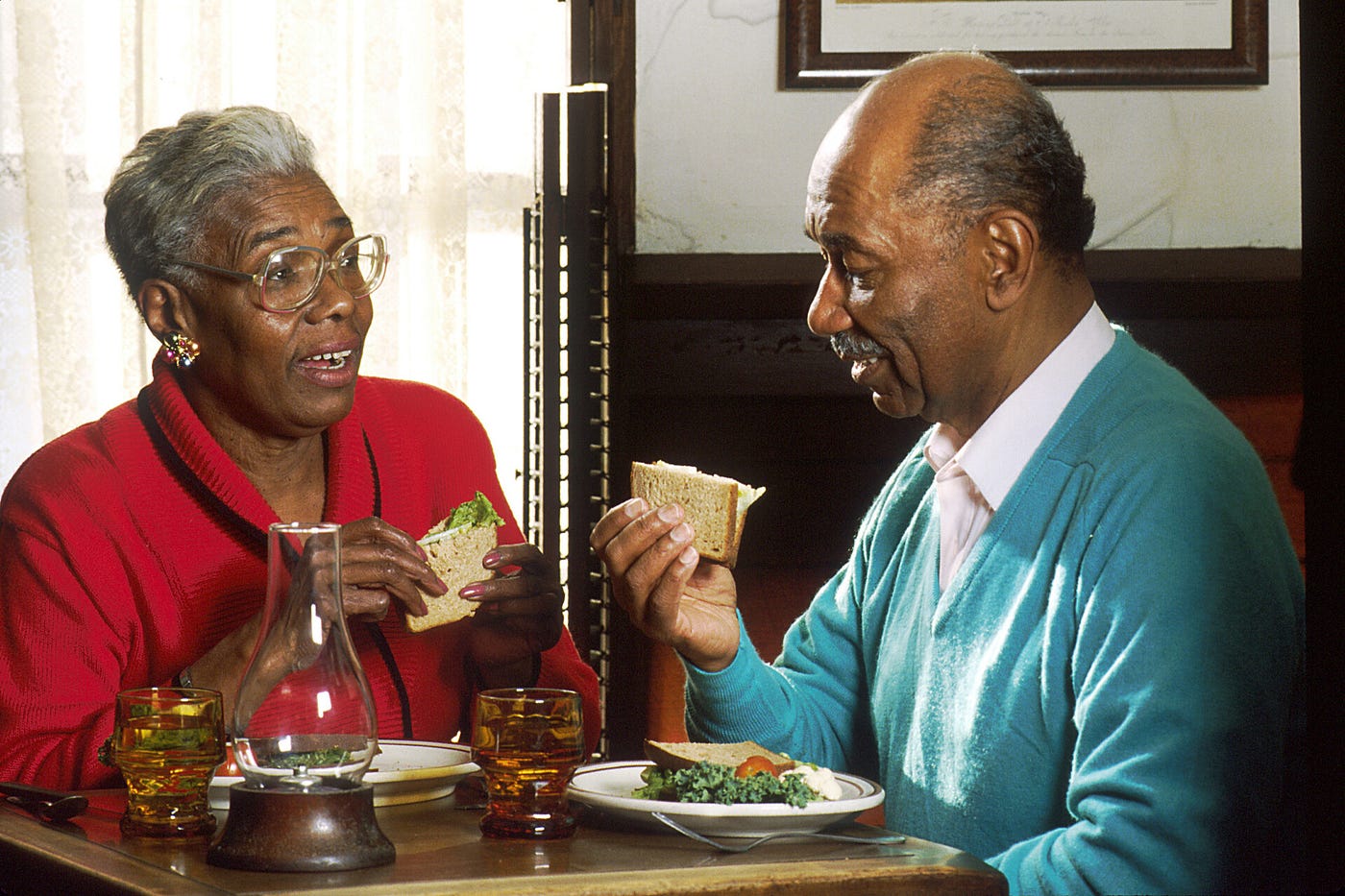
You can’t put on muscle with hope and good vibes and a cracker. The body doesn’t answer to training and protein the way it did in our younger days, so you have to be mindful of it. Not to the point of obsession, but see to it that every meal has some. Be it chicken, fish, eggs, Greek yogurt, tofu, beans, lean beef or a powder. I don’t care where it comes from, the habit is what matters.
And don’t fool yourself into thinking a shake will do the work by itself. Lacking the resistance training, it is nothing but expensive milk in a cape. Put them together and you are better off.
6. Give walking the credit it is due.
Most people don’t, probably because there is no logo to be had and it won’t put on a hardcore display for the internet. In my opinion that is to its credit. It is easy on the heart and joints, keeps your weight and blood sugar in line and does wonders for your mood and recovery. You can have a post-meal stroll or put in an hour of it, or do ten minutes. When your body has had enough of running and jumping and anything with “explosive” in the title, you can put in some miles. I have learned this the hard way: the older I get the less I have patience for all the drama of a workout and the more I like what works without making a scene. Walking works.
7. Think of mobility as maintenance, not something to put on display.
It can seem like a fool’s errand until you are trying to tie a shoe, get to the top shelf, or back out of a parking spot without wincing. Or when you have to get up off the floor and don’t want to make funeral noises. You need your hips, ankles, shoulders, spine and neck to move. An hour of yoga is only called for if you are into it; five or ten minutes of controlled movement, a light stretch or some balance drills will do. Mobility and strength are not interchangeable, but they live in the same house. Make them coexist.
8. Recovery is part of the training.
I was put off by that for years. To me it sounded passive, like copy from a spa brochure featuring a woman with cucumber water. But the adaptation takes place in the recovery. In the sleep, the rest days, the deloads, the food and hydration. In the warm-ups and cooldowns and in not letting your ego and a cup of coffee convince you to put in a PR every Tuesday.
Once you are over 50, you don’t just squeeze in some recovery after the damage is done, it is part of the program. Train hard when you should, but to train hard and never recover is not discipline. It is debt. And the bill comes due.
9. Balance has earned a place at the table.
People will shy away from the subject for fear of looking weak. Let them. You have to put in the work. After 50 a fall can do a number on your confidence and your day, and when you end up on the floor it is your independence and your plans that are at stake.
Do some single-leg stands and step-ups. Do your farmer’s carries. Strengthen your glutes and core. Try to make sure you can get up and down off the floor without trouble. Stay solid ground and let someone else perform their wobble-board act; this is self-defense against gravity, not a Penn and Teller party trick.
10. Take ownership of your training. Don’t treat it like penance.
You were told all the usual drivel as a kid: no pain no gain, burn off your sins, make your sweat count. Fine boot camp verse. I am done with it.
Think of your body as the place you call home, not something to be put in its place. Once you hit 50, being fit should mean you are more durable and in command of your life, not less. It might be as simple as a walk every day and two lifting sessions. Or if you are coming off surgery or years of making everyone else first, you may have to accept you won’t train the way you used to and figure out a smarter way with less of the drama. The rules are different now. Get to know them.
Lift. Walk. Eat protein. Move your joints. Practice balance. Recover. Stop chasing pain. Stop worshiping youth. Stop buying hacks from people whose main qualification is visible abs and ring lighting.
You are not done because you are over 50.
Follow the Proud Boomer Dispatches on Substack for the weekly newsletter, fiction, and opinion essays. Proud Boomer Wellness Substack [proudboomerwellness] covers health without the hype. Florida Stories [floridastories] is home to Loretta Faye and other Florida weirdness. Paid subscriptions are $8/month or $50/year for the full archive, one exclusive per month, and no sponsors. john@theProudBoomer.com
메타데이터
- post_id
- ca8ab95133bf
- slug
- 10-fitness-rules-to-follow-after-50-ca8ab95133bf
- url
- https://medium.com/illumination/10-fitness-rules-to-follow-after-50-ca8ab95133bf
- canonical_url
- https://medium.com/illumination/10-fitness-rules-to-follow-after-50-ca8ab95133bf
- author_url
- https://medium.com/@theProudBoomer
- status
- ok
- fetched_at
- 2026-06-12 07:40:50