High-Achieving Women Don’t Struggle to Work Hard. They Struggle to Receive.
Why the “Strong Woman” identity is often a high-functioning survival response — and the books that help recalibrate it.
High-Achieving Women Don’t Struggle to Work Hard. They Struggle to Receive.
Why the “Strong Woman” identity is often a high-functioning survival response — and the books that help recalibrate it.
Photo by M Mitchell on Unsplash
For many high-achieving women, effort is not the problem.
Working hard? That part is familiar. Taking responsibility? Almost automatic. Holding everything together when things fall apart? Unfortunately… also familiar.
Where things become unexpectedly difficult is somewhere else entirely.
Receiving.
Receiving support. Receiving appreciation. Receiving money without guilt. Receiving opportunities without immediately questioning whether we deserve them.
It’s a strange paradox.
The women who are most capable of creating value often feel the most uncomfortable when that value begins to come back toward them.
Why?
The answer rarely has anything to do with competence. Instead, it often lives in a quieter place — inside the invisible scripts many women have inherited about responsibility, worth, and safety.
A few books explore this dynamic particularly well.
1. The Queen’s Code — Alison Armstrong
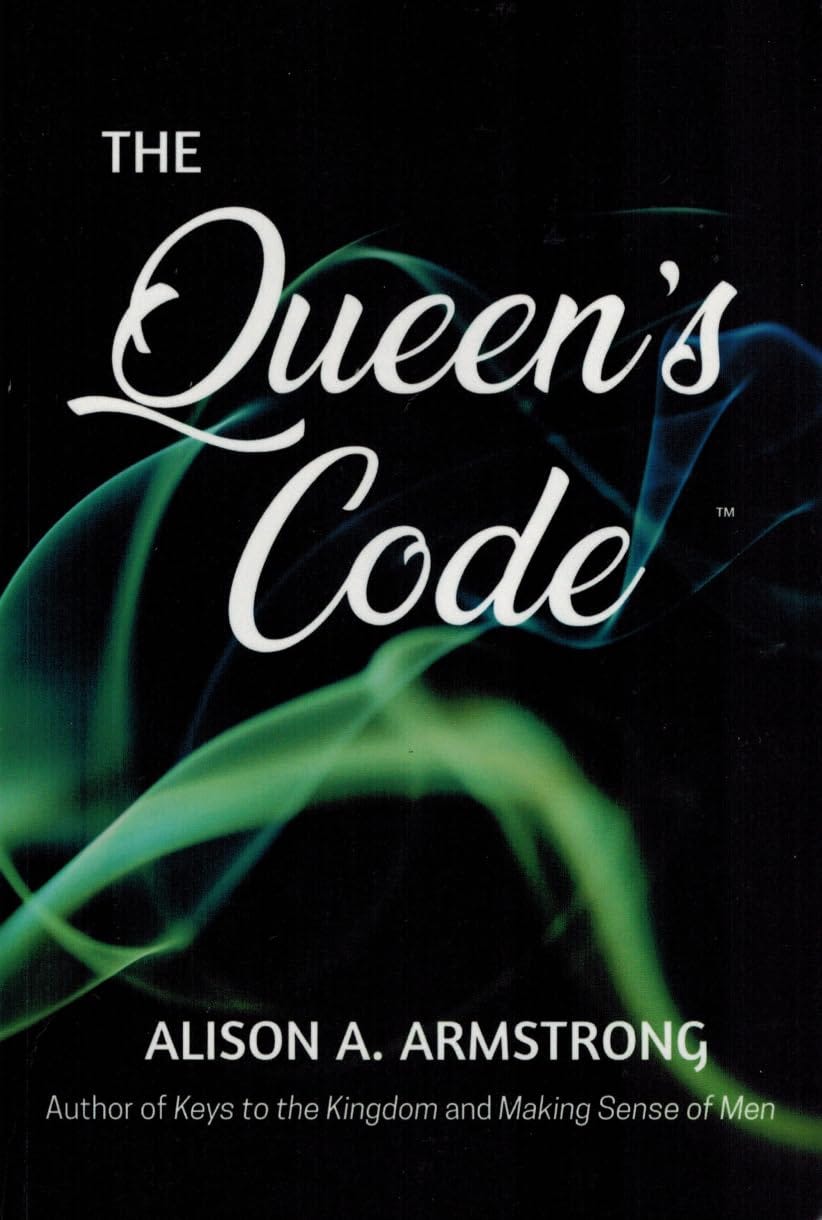
Armstrong’s work is a classic in the field of Feminine Leadership, though it reads like a narrative field report. It exposes the “Strong Woman” trap: the belief that strength equals carrying everything alone.
At its core, the book examines a pattern many women recognize: feeling responsible for everything.
Fixing problems. Managing emotions. Holding relationships together.
In the story, the protagonist slowly discovers that the more she tries to control outcomes, the more exhausted — and resentful — she becomes.
The shift happens when she learns something surprisingly simple:
Receiving support is not weakness.
It is part of the natural exchange that makes relationships sustainable.
Armstrong’s work doesn’t argue that women should become passive or dependent. Instead, it challenges the assumption that strength always means doing more.
Sometimes strength means allowing others to contribute.
For many high-achieving women, that can feel surprisingly unfamiliar.
At the Library, we view this book as a study in relational dynamics. Armstrong argues that when women stop trying to control every outcome through sheer force of will, they create the space for others to contribute. It isn’t about becoming “passive”; it’s about shifting from an exhausted “over-functioning” state to a sustainable “receiving” state.
2. Overflow — Fristy Sato
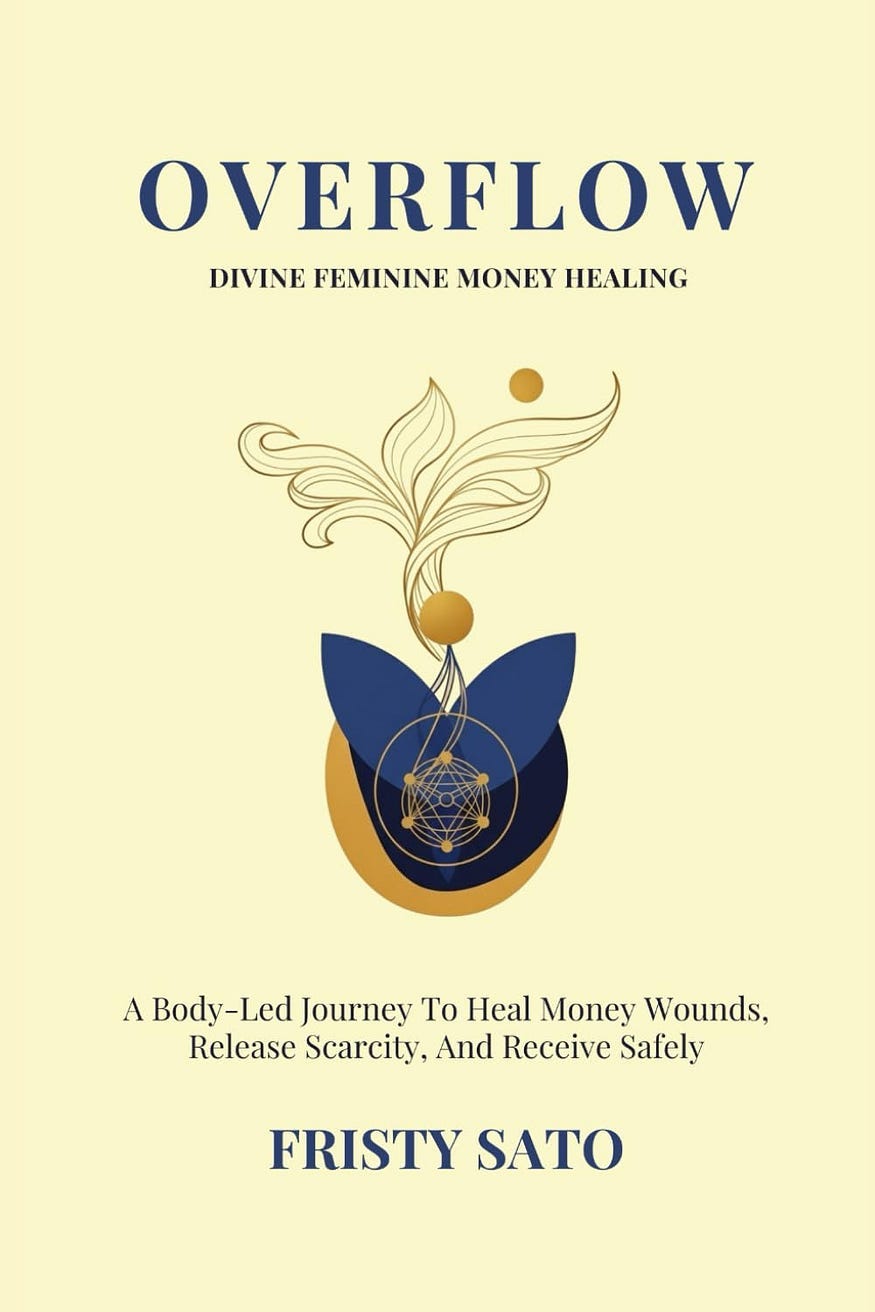
Another perspective on receiving appears in Overflow, which explores the relationship between achievement and the nervous system.
At first glance, the book seems to sit in the world of abundance and money. But the deeper theme running through it is capacity — specifically, the body’s capacity to hold success without interpreting it as a threat.
While Armstrong looks at the relational side of receiving, Sato looks at the biological side. This is where money healing and somatic leadership meet.
In Overflow, the central thesis is that abundance itself can feel like a threat if your nervous system is only calibrated for struggle.
For many high performers, effort has historically been tied to survival.
Work harder. Prove your value. Earn your place.
Over time, the nervous system begins to associate worth with striving.
So when life starts offering more — more income, more recognition, more freedom — the body can react with subtle resistance.
Guilt. Anxiety. The feeling that something must be wrong.
The book frames this dynamic in a way that many readers find immediately recognizable: abundance itself can feel unsafe if the nervous system has only learned how to operate under pressure.
Overflow provides the missing link for the woman who has “done all the mindset work” but still hits a wall with her income or her health.
One line in particular captures the shift the book invites:
“Ease isn’t the reward for abundance. Ease is the infrastructure that makes abundance sustainable.”
Instead of focusing on forcing success, the work explores how internal safety allows people to receive what they’ve already worked for.
The Quiet Pattern Behind Both Books
The Identity of the “Strong One”
What’s interesting about these two perspectives is how closely they converge.
Both point to the same hidden dynamic:
High-achieving women are often extremely skilled at giving.
Giving effort. Giving care. Giving stability.
But receiving operates through a different internal system altogether.
Receiving requires:
• trust • nervous-system safety • the willingness to stop proving ourselves
And that final step can be surprisingly difficult. To receive, you have to believe — at a cellular level — that you are worthy without “proving” it. You have to be willing to drop the identity of the one who has it all figured out.
At The Embodied Leadership Library, we see this as the ultimate leadership transition. It is the move from leading through force to leading through presence.
The Shift From Earning to Allowing
There is a moment many high achievers eventually encounter.
After years of effort, competence, and resilience, life begins to offer more.
More opportunity. More visibility. More support.
And instead of relief, something else appears.
A strange hesitation.
A quiet voice asking whether it’s really okay to accept what’s arriving.
That moment is rarely about capability.
It’s about whether the internal system has learned that it’s finally safe to stop fighting for space — and start allowing life to meet us there.
For many women, learning to receive is not about becoming less driven.
It’s about discovering that strength was never meant to carry everything alone.
Sometimes it also includes learning something equally unfamiliar:
How to let the good things in.
The Path to Receiving: To explore the intersection of identity and capacity, we recommend starting with Alison Armstrong for the relational shift and Fristy Sato for the somatic recalibration.
Books Mentioned in This Article
Explore more from The Embodied Leadership Library:
- [We analyzed 50+ books on wealth. Here is the “hidden” variable most of them miss.]
- [Stop trying to “fix” your mind. Presence is a biological state.]
Essays like this are part of an ongoing exploration inside **The Embodied Leadership Library**, where we look at leadership not just as strategy, but as a deeply human process shaped by biology, psychology, and the mechanics of the mind.
Explore Our Research-Led Curation
Disclaimer: We participate in the Amazon Associates Program. As an Amazon Associate, we earn from qualifying purchases.
메타데이터
- post_id
- cf7ca57dfdd7
- slug
- high-achieving-women-dont-struggle-to-work-hard-they-struggle-to-receive-cf7ca57dfdd7
- url
- https://medium.com/@leadershiplibrary/high-achieving-women-dont-struggle-to-work-hard-they-struggle-to-receive-cf7ca57dfdd7
- canonical_url
- https://medium.com/@leadershiplibrary/high-achieving-women-dont-struggle-to-work-hard-they-struggle-to-receive-cf7ca57dfdd7
- author_url
- https://medium.com/@leadershiplibrary
- status
- ok
- fetched_at
- 2026-07-07 21:25:56