Horror Classics: The Vampire Lovers (1970)
Originally posted to Vocal
Horror Classics: The Vampire Lovers (1970)
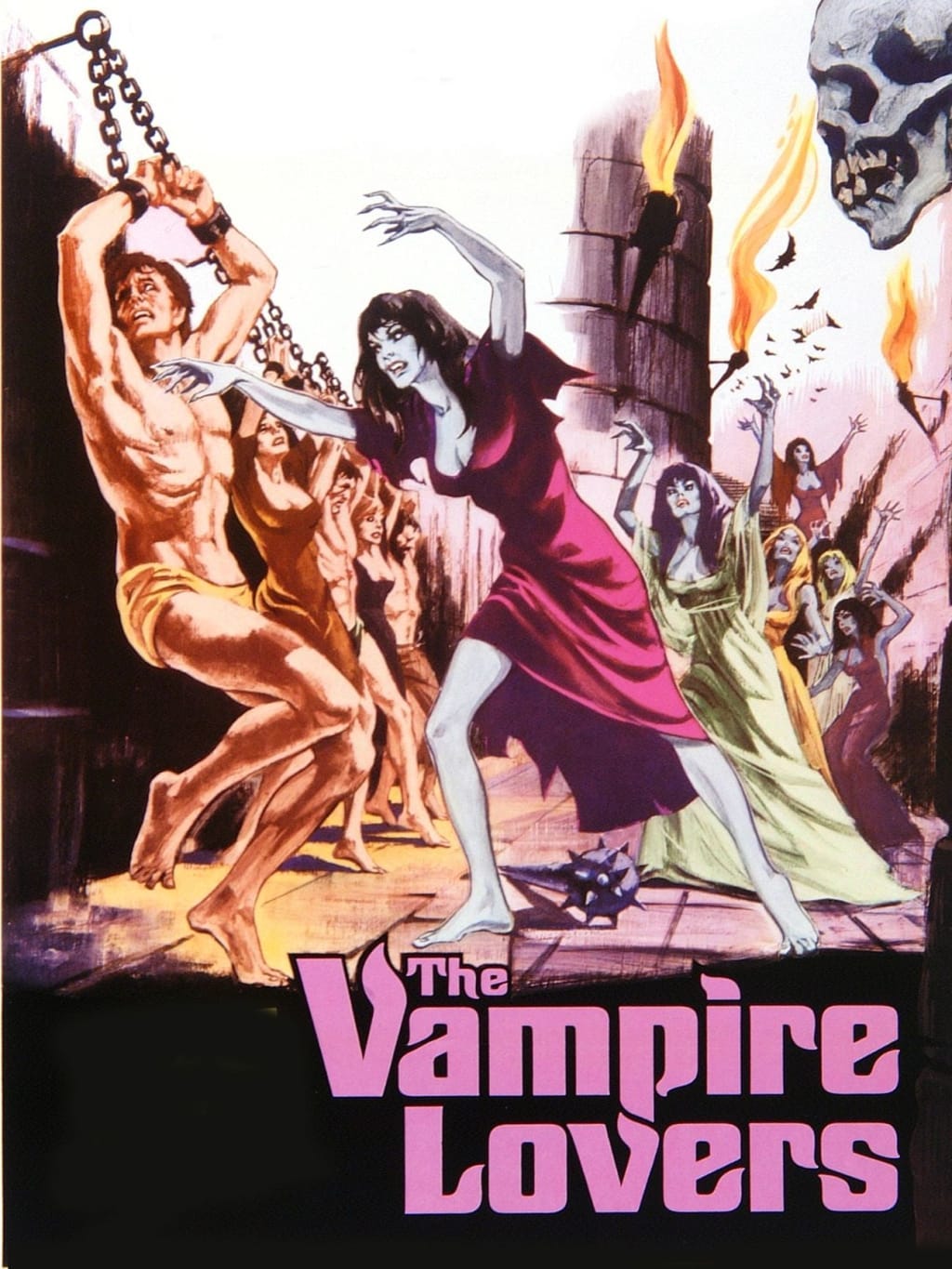
This is one of my personal favorite vampire films (TV Guide)
I love horror movies, and I especially love the old Hammer horror movies of the 1950s and 60s. For this reason, I figured I’d take a look at some of my favorite classic horror movies.
Since I’ve already mentioned Hammer, I picked a film from their repertoire: The Vampire Lovers. This is going to be a long one, so strap in and grab some coffee and a snack!
Please note that there will be spoilers ahead as I’ll be discussing the film in detail. There we go; with the spoiler warning out of the way, let’s take a look at this 70’s gem and see just how well it holds up to modern film standards.
The Story
A visiting Countess and her alluring daughter, Marcilla, arrive at a party hosted by General Spielsdorf. Following a visit from a mysterious man in black, the Countess has to leave, and the general takes Marcilla in as a guest. The general’s niece, Laura, starts having terrible nightmares and gradually becomes weaker and weaker until she eventually dies, leaving her uncle heartbroken.
Not long after Laura’s death, her friend Emma Morton encounters Marcilla (now calling herself Carmilla) and the Countess when their carriage breaks down. Once again, the mysterious beauty is taken in by the Morton family, and Emma becomes the vampire’s next target.
In a bid to save her, Emma’s father joins a vengeful Spielsdorf and a skilled vampire hunter — Baron Hartog — to find and kill the creature before she can claim another victim.
Behind the Scenes of The Vampire Lovers
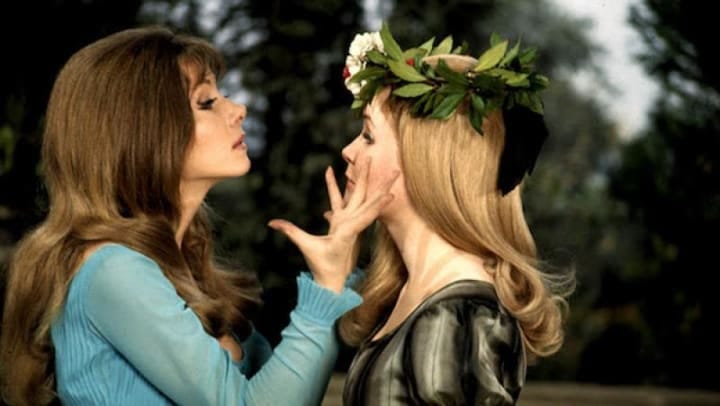
A bit of romance between Carmilla and Laura (The Signal Watch)
The Vampire Lovers is loosely based on J. Sheridan Le Fanu’s 1872 short story, Carmilla—more on this later. The film was produced by Hammer Studios and co-produced by American International Productions. While tame by modern standards, at the time, it was a much bolder film than its contemporaries in its portrayal of lesbian themes. This was something the chief censor at the time warned the producers about.
Production began on January 19th, 1970, with the release date set for August of that year. The film was made at Elstree Studios in London and on the property of the Moor Park Mansion in Hertfordshire. Just as a quick side note: the pictures of the mansion in question are absolutely amazing!
Filmed on a budget of 165,227 pounds (around $200,000), the film was released in the UK on October 4th, 1970, and in the USA just a few weeks later on October 22nd. As far as the box office is concerned, and I have to go off the numbers from the AFI Catalog here, after several weeks in American theaters.
The Vampire Lovers grossed $151,675 in box office returns. A quick check of a currency converter brings that dollar amount to roughly 121 million pounds—although I do have to point out that these numbers are in relation to modern exchange rates. These are impressive numbers either way.
Reception-wise, the film got mixed reviews, with critics praising the set design and Roy Ward Baker’s directing but criticizing the script by Tudor Gates.
What Works Here?
So, let’s look at what works in the film.
The Opening Scene
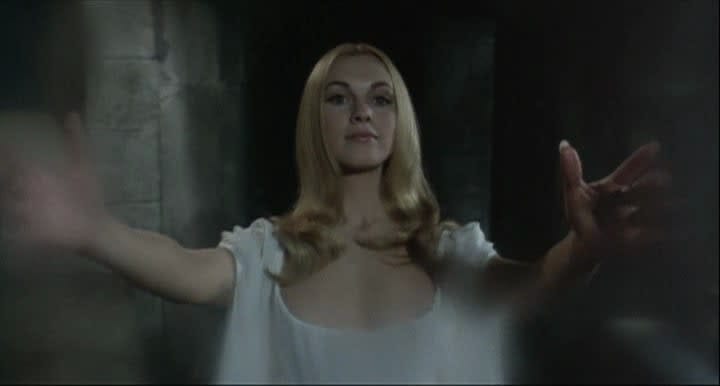
Our first on-screen vampire is very pretty (Listal)
“I place this memorium card in the pages of my history, and the book is closed; I pray forever.” — Baron Hartog, The Vampire Lovers
This is the opening narration issued by a vampire hunter, and it sets the scene really well. Our narrator adds a bit of vampire lore: that if the burial shroud were to be removed, the vampire would be unable to return to its resting place.
Kirsten Lindholm plays the first vampire that we see in the film. She’s onscreen for about five minutes or so before being killed, and while she isn’t around for long, her death sticks with you for a while. The reason being she doesn’t look dangerous at all.
She looks like a perfectly normal and attractive woman, so when she bares her fangs and is subsequently killed, it’s a bit of a shocker.
The Performances (Part 1)
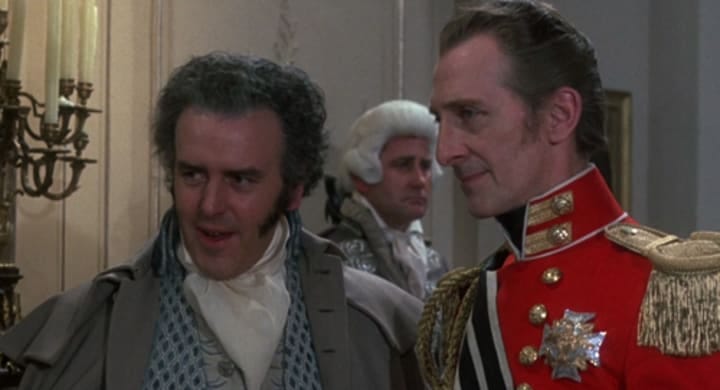
Peter Cushing is always cool (KultGuy’s Keep)
To say that The Vampire Lovers boasted one heck of a cast would be an understatement. In spite of the oftentimes flat script, everyone brought their A game to the table. Peter Cushing is fantastic as Gen. Spielsdorf, portraying a man broken by the loss of his niece and out for vengeance. Pippa Steele’s Laura is likable, considering how little time we get with her as an audience. Ferdy Mayne’s portrayal of the doctor in this film is perfectly balanced.
As good as these portrayals are, however, there are four standout performances in this picture. Those of Kate O’Mara, Madeline Smith, Ingrid Pitt, and Douglas Wilmer. There are also, rather unfortunately, some painfully underused characters — but we’ll get to those.
Madeline Smith plays Emma, the second of Carmilla’s main, sort of love interest characters (after Laura). She’s vulnerable and scared but empathetic and gentle. Between them, Smith and Pitt share some fantastic chemistry. There is some undeniable tension between the two of them, with Carmilla being the more forthright and almost openly pursuing Emma, and the latter being slightly uncomfortable but not really aware of what’s being implied.
Ingrid Pitt is stunningly beautiful. Your eyes are drawn to her the second she’s on screen, and she absolutely steals every scene that she’s in. Her portrayal of Carmilla is also the most…complex that I’ve seen. I’d even go as far as to say that there hasn’t really been a vampire character as complex since. She’s aloof and distant, then gentle and caring, then ferociously predatory, taking delight in killing, and finally vulnerable and lonely.
Brutal Kills but Minimal Gore
The special effects on display here are dated — there’s no getting around that but with that said, they hold up reasonably well. A lot of the work was done practically, which I love, and the gore that the Hammer films had become known for in previous films was largely underplayed. Although I suppose you could make the argument that Hammer was trying to up the ante regarding sexual content and so focused on the lesbian aspect of the film…I can’t complain about that.
Three kills stand out to me:
- Renton
- The doctor
- The governess
Renton gets the doctor against the orders of Perrodot, and the doctor does his thing before leaving. Carmilla kills him in the woods a short while later to prevent him from returning.
The next one to face her wrath is Renton himself. Despite his initial loyalty to the family, the butler eventually falls under Carmilla’s spell, giving in to his lust for her. Carmilla easily kills him in what’s probably the second most brutal kill in the film, making him believe that he was about to have the best sex of his life before sinking her fangs into him and draining his blood.
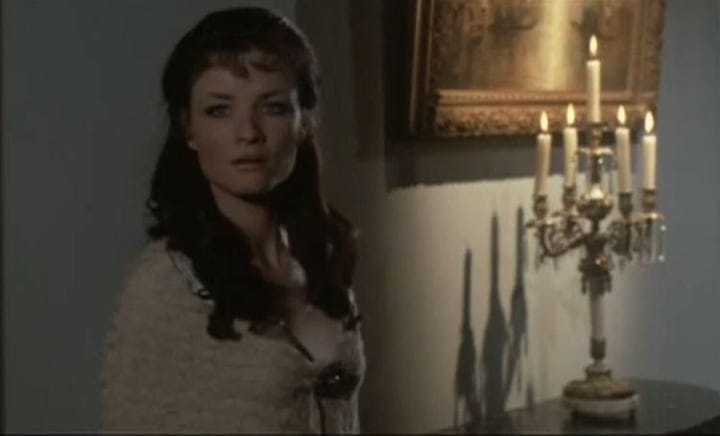
Kate O’Mara (Listal)
Mademoiselle Perrodot probably gets the worst possible deal in this film. As Carmilla is taking Emma away, the governess pleads to go with them. She’s kneeling at the top of the stairs, crying while Carmilla approaches. At first, it seems like there might be a show of mercy as the vampire slowly cradles the sobbing woman in her arms. As the governess relaxes a bit, she sees the vampire’s fangs and screams in despair as she’s drained of her blood.
This final kill is where we see an almost tragic element to Carmilla. She’s had moments throughout the film where she appears to genuinely love Laura and, later, Emma. She takes great care not to let Emma in particular see her kill. This is why, when Emma screams in horror at the sight of her governess’s death, Carmilla looks up with a look of absolute horror on her face. It’s like she forgot Emma was there for a second and is horrified at having revealed her darker nature to the innocent object of her desires.
One review that I looked up described it perfectly: it’s like she desperately wants to have a companion in Emma, but is condemned by her dark nature to an eternity of solitude.
The special effects work was largely practical, which is great, and they hold up really well, even if they’re a bit dated.
An Interesting Death Scene
The Vampire Lovers boasts one of the more interesting staking scenes I’ve ever seen in a vampire movie, which is saying a lot. While Carmilla was trying to take Emma away, Spielsdorf, Hartog, and Emma’s father had gone to Karnstein castle — Carmilla’s ancestral home. As they’re looking for the vampire’s grave, they spot her heading inside and follow her, finding her ruby necklace on the floor in the dining hall.
When they locate her casket and take it to the castle’s chapel, Spielsdorf agrees to stake her himself. He takes the stake from Hartog, lines it up, and then hesitates for a moment before driving it through Carmilla’s heart. That moment of hesitation echoes Douglas Wilmer’s portrayal of Hartog almost perfectly.
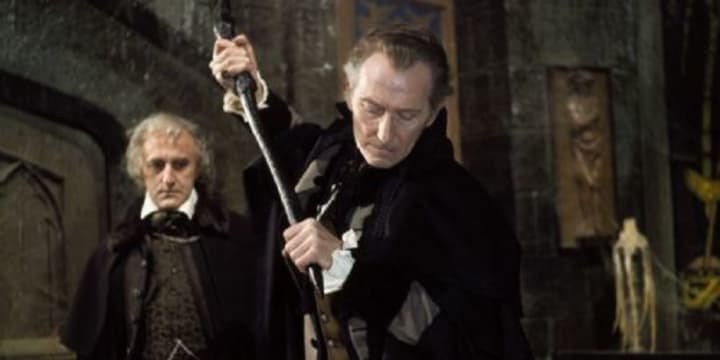
The vampire’s end (FamousFix.com)
As they hunt for Carmilla’s resting place, the baron recounts how he’d lain in wait for a vampire and then worked through the night, staking every vampire on the castle grounds until his strength gave out. Where the general’s hesitation fits in is with the tone in which the baron’s story is delivered. He isn’t proud of what he’s done; he’s weary and just wants to get on with his life.
The interesting part about Carmilla’s death scene is that she doesn’t fight back. The sun hasn’t come up yet, and she does wake up as they pull her shroud back. Still, she makes no effort to stop the general from staking her. It’s almost like she’s resigned herself to the fact that she can’t have the connection she wants. She doesn’t want to be alone and miserable anymore, so she allows the general to stake her.
What Doesn’t Work?
Right, since we’ve looked at what works, let’s look at what doesn’t work.
The writing is often criticized for being flat and uninteresting. It also feels very repetitive; the story arcs of Laura and Emma are very close to identical, which means the film feels slow.
Pippa Steele’s character (Laura) is fairly likable, but she disappears so quickly that it seems like the producers just wanted to get Madeleine Smith and Ingrid Pitt together.
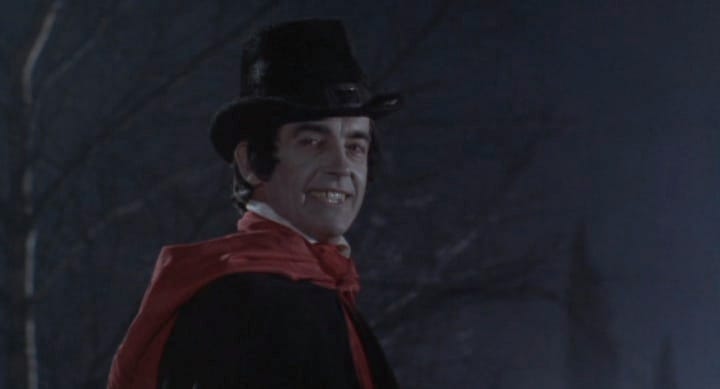
A Grim Reaper? (Maniacs and Monsters)
John Forbes-Robertson’s and Dawn Addams’ characters of the Man in Black and the Countess aren’t bad but they just don’t have any impact. Usually a character will leave a mark of some sort to say:
“Hey, I was here.”
In this case, that doesn’t happen. Dawn Addams is beautiful, and she has a definite presence when she’s on screen. Unfortunately, she appears only twice in the film, and both times it’s to drop Carmilla off at each of her two victims’ homes. With that said, Addams does leave a small impression on the audience; it’s just a shame she didn’t have more to do.
The Man in Black seems to serve as a sort of grim reaper-type character, portending the death of someone. He also appears to be a vampire but there’s nothing to him. He appears a total of three times in the film and does absolutely nothing!
The really sad part is that both the Countess and the Man in Black could’ve been so much more interesting.
An Adaptation
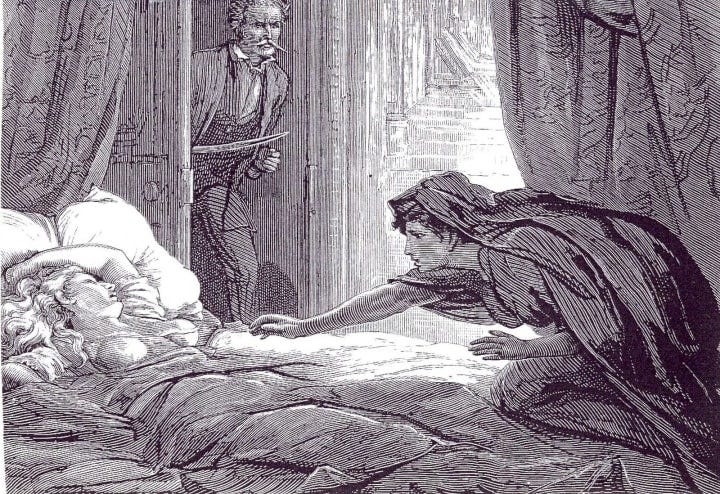
Artwork from the short story (Wikipedia)
Okey doke, let’s look at the adaptation side of things, shall we?
Carmilla was written by J. Sheridan Le Fanu and published in 1872 in his short story collection — In a Glass Darkly. The story follows a teenage narrator, Laura, as she’s preyed upon by a female vampire. In that regard, the film is remarkably faithful to the book, but there are several changes.
The Changes
- The film leaves out the odd dream that Laura has at the start where she sees Carmilla for the first time. The two later recognize each other from similar dreams.
- The carriage accident that brings Carmilla to Emma/Laura is the same in both the original story and the film, but the film leaves out the strict instructions regarding secrecy related to her family and her ‘daughter’ that the Countess gives before departing to visit a dying relative.
- We never actually see the general’s party in the book. We learn of it later. Likewise, the general’s niece never actually appears in the story — outside of a letter from her uncle — having died of a mysterious illness. This means that, in the film, Emma is fulfilling the role of Laura.
- Carmilla’s real name is Mircalla in both versions but in the book her first alias is Millarca — not Marcilla. Admittedly this is more of a nitpick than anything else.
As an adaptation, the film is very faithful to the book — even with the more overt sexuality and nudity.
Final Thoughts
At the time of The Vampire Lovers’ release, Hammer’s films weren’t being well-received. Still, the film was successful enough to warrant two sequels, which were released the following year.
The Vampire Lovers is one of my favorite films and I highly recommend checking it out if you haven’t seen it.
메타데이터
- post_id
- d21f068c03f0
- slug
- horror-classics-the-vampire-lovers-1970-d21f068c03f0
- url
- https://medium.com/@greg.seebregts/horror-classics-the-vampire-lovers-1970-d21f068c03f0
- canonical_url
- https://medium.com/@greg.seebregts/horror-classics-the-vampire-lovers-1970-d21f068c03f0
- author_url
- https://medium.com/@greg.seebregts
- status
- ok
- fetched_at
- 2026-06-27 23:56:40