A Bench Like No Other
The View From Here — 20 July 2026
A Bench Like No Other
The View From Here — 20 July 2026

Remembrance bench — Credit: Author
Introduction
This is an unusual bench the likes of which you’re unlikely to see anywhere else in the world except the Royal Botanic Gardens, Kew, in south-west London. It’s a memorial bench to commemorate 100 years since the end of the First World War (1914–1918).
How it came to be created in the first place is a special story in itself. It wasn’t merely that someone thought a memorial bench would be a nice idea. It goes much deeper than that.
This is a bespoke piece named Remembrance and Hope created from a very special tree that has direct links to the battlefields of war. We’re going to discover the history of both the tree and the story behind the bench.
Verdun oak
In the north-east of France lies a town called Verdun. The Verdun battlefield saw one of the longest and deadliest battles of the First World War between the French and the Germans.
Back in 1919, an acorn from an oak tree (Quercus petraea) in Verdun was collected and planted at the Royal Botanic Gardens, Kew.
The oak tree flourished in the beautiful surroundings of the Royal Botanic Gardens and was known as the ‘Verdun oak’ tree. It became a living memorial to all the soldiers, who lost their lives during the battle of Verdun.
For almost a century, this great oak tree stood near the Palm House Pond (see below).
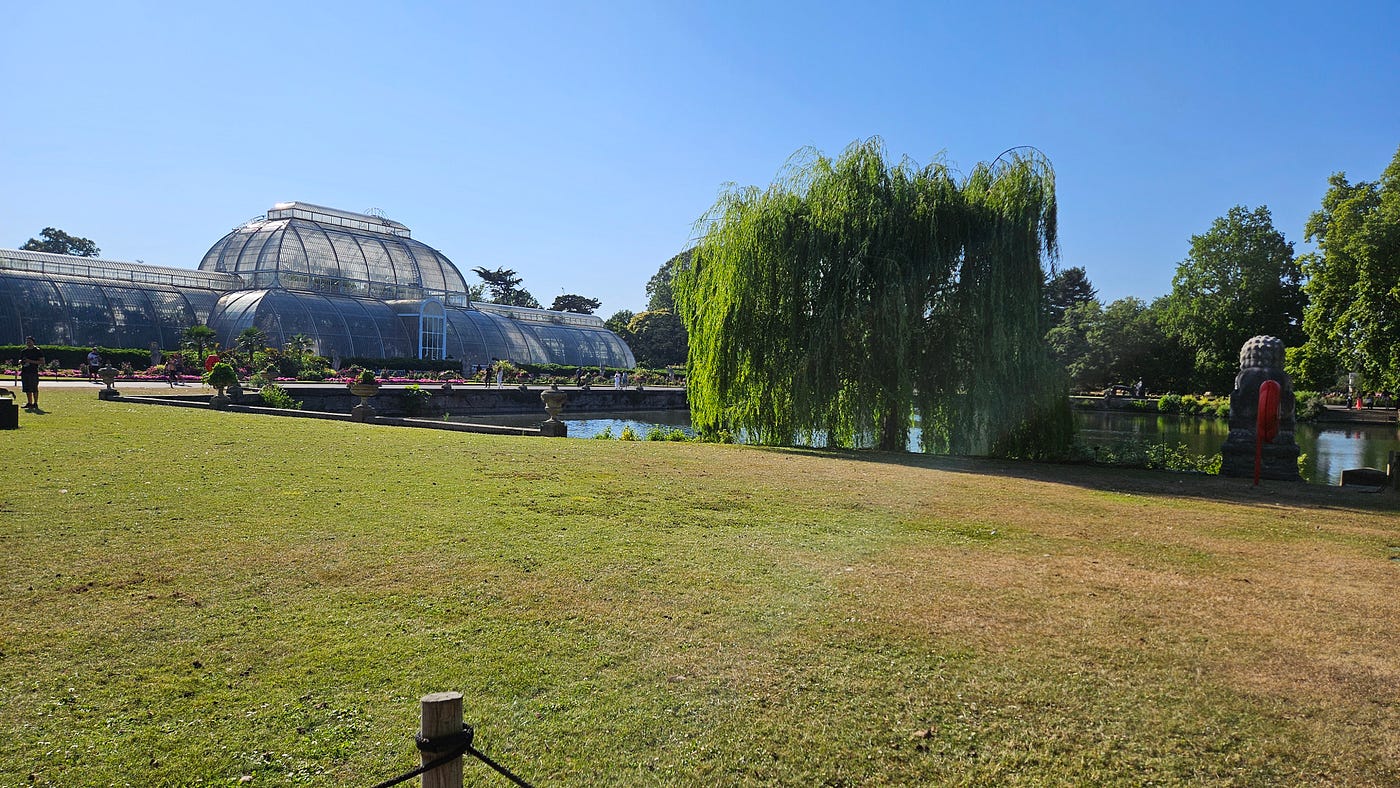
Palm House and pond — Credit: Author
Then, a severe storm during the autumn of 2013 damaged the oak so badly, that it couldn’t be saved and had to be felled.
Kew’s Head of Arboretum didn’t want the story of this very special oak tree to end there. After some brainstorming, he came up with the idea of creating a commemorative outdoor bench from the timbers of this tree.
The commemorative bench
The commemorative bench with its unusual, criss-crossed branches in the front and looped design in the back has been designed as a reminder of the barbed wire in the battle zones of the First World War.
It’s a curved seat with a convex side that looks out with hope. The other, symbolising remembrance, looks towards the Temple of Arethusa (below), in which there is a brown war memorial plaque.
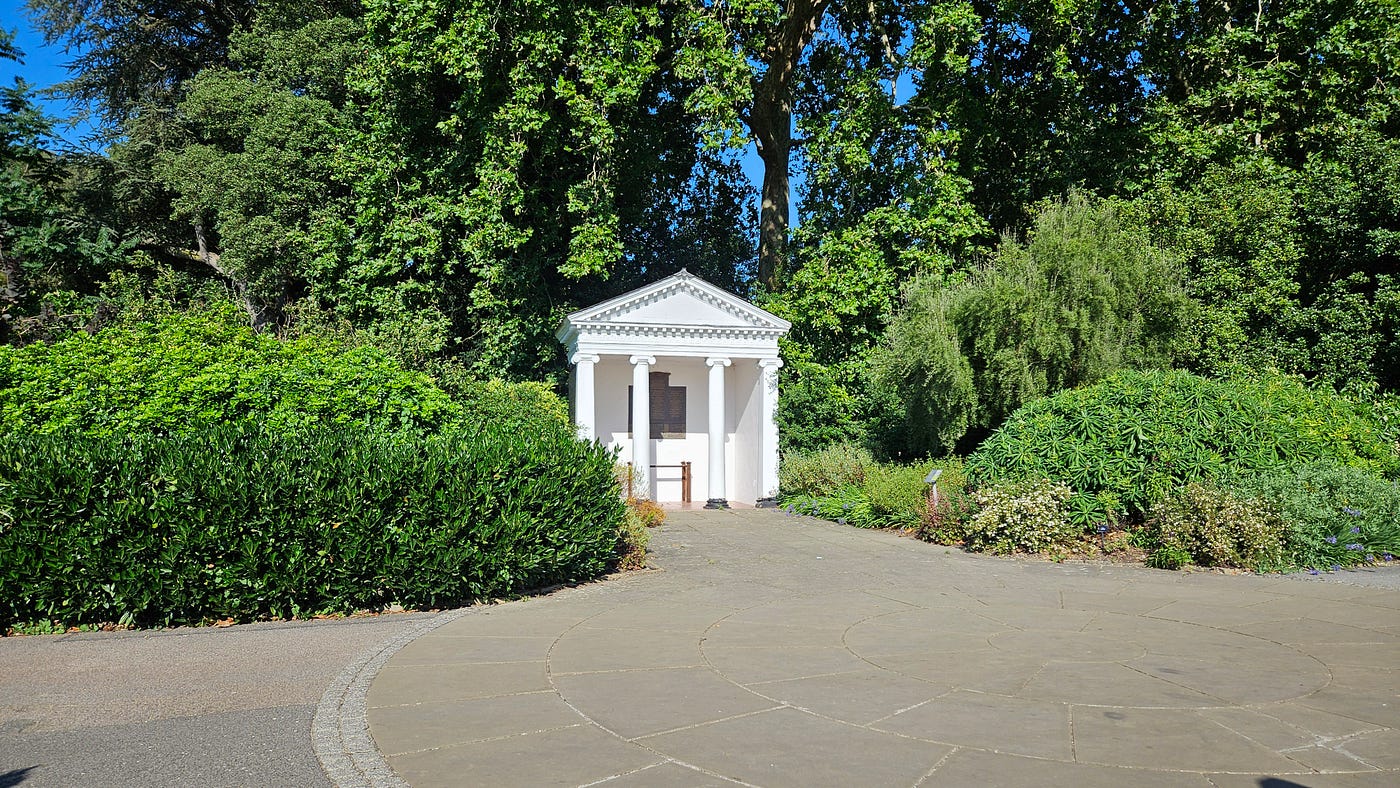
Temple of Arethusa — Credit: Author
The bench also has partially scorched oak on that side, which reminds us of fire in battle. Below is the side of the bench looking towards the temple.
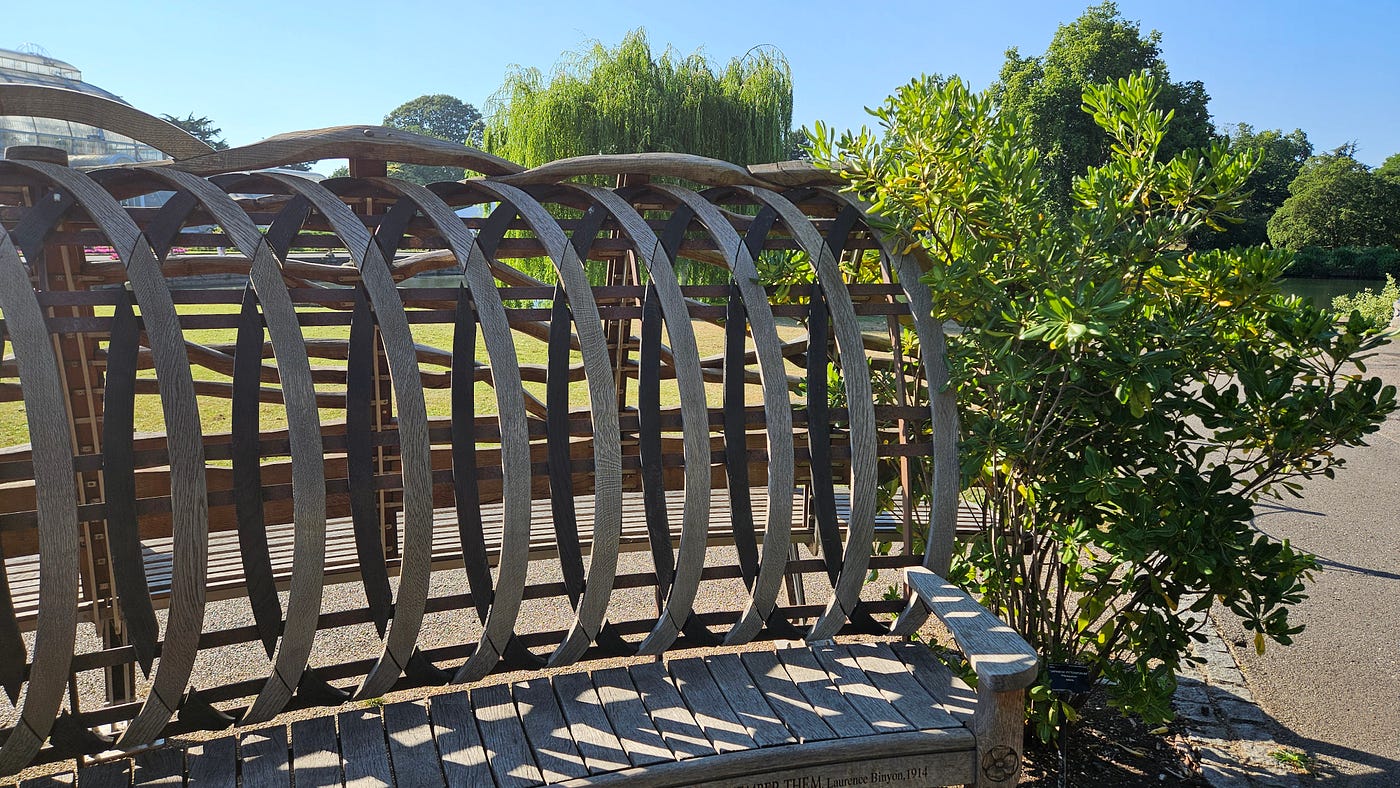
Credit: Author
By one side of the bench, a young sapling has been planted, which has been grafted from the original Verdun oak tree. This represents:
a symbol of hope and honour to the soldiers of Verdun and the 37 Kew staff, who lost their lives during the First World War.
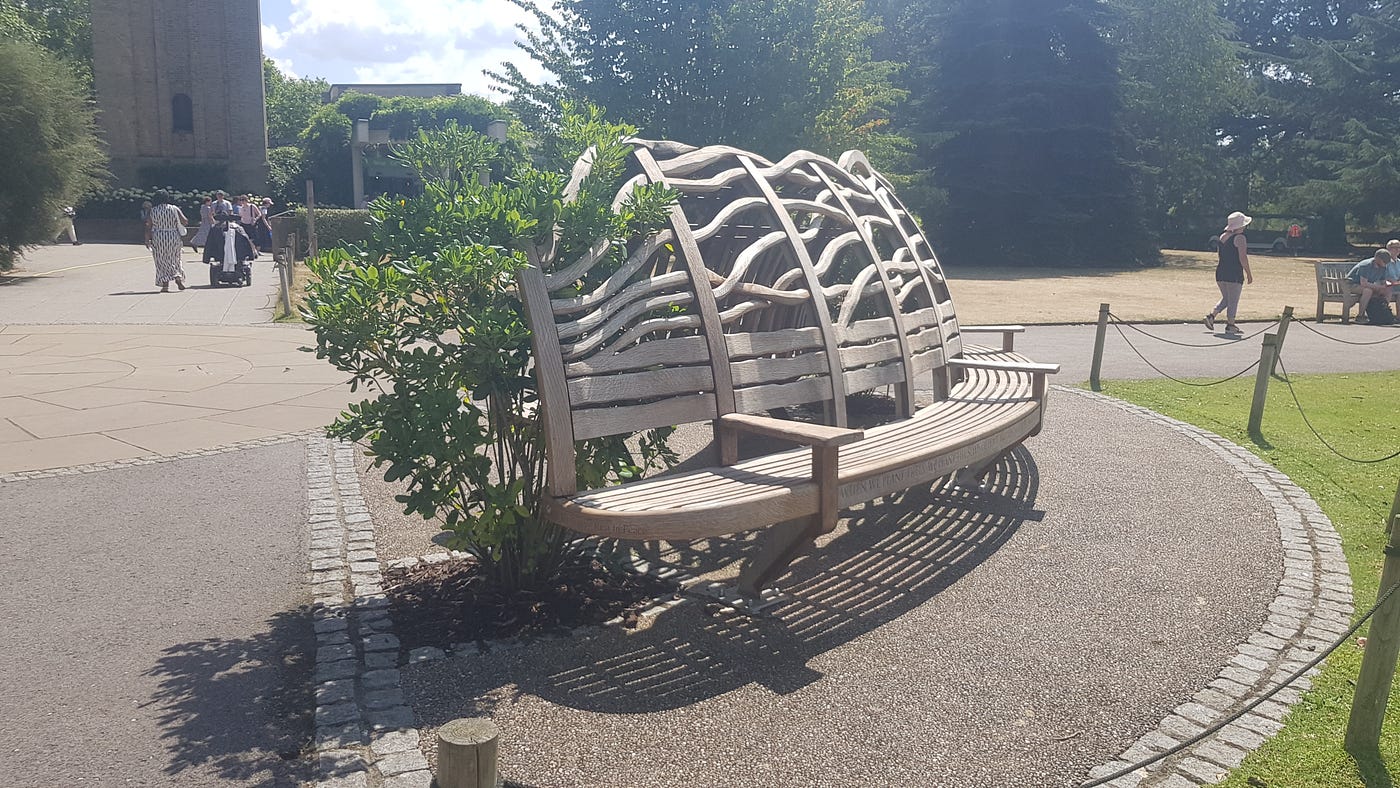
Sapling by the side of the bench — Credit: Author
I can’t help but wonder how that’s going to look in a decade or so, once it has grown beyond its space! Already now, you can see how the branches are growing through the loops at the top of the bench.
However, it’s a poignant touch to the whole commemorative aspect of this bench, once you understand its relevance.
Finally…
So, what at first looks like an oddity in sculpture, now takes on deeper meaning and relevance linking the battlefield of Verdun in France with the Royal Botanic Gardens in Kew, London
What do you think of this unusual bench?
Thank you for reading
People, who’ve asked to be tagged: Aidan Lu Skerdoo
For The View From Here: Dawn Ulmer
메타데이터
- post_id
- d562e470bd72
- slug
- a-bench-like-no-other-d562e470bd72
- url
- https://medium.com/ride-the-wave/a-bench-like-no-other-d562e470bd72
- canonical_url
- https://medium.com/ride-the-wave/a-bench-like-no-other-d562e470bd72
- author_url
- https://medium.com/@ella_58865
- status
- ok
- fetched_at
- 2026-07-23 17:41:36