Bee Hummingbird (Mellisuga helenae): A Jewel of the Avian World
The bee hummingbird (Mellisuga helenae), also known as the zunzuncito or Helena hummingbird, holds the distinguished title of the smallest…
Bee Hummingbird (Mellisuga helenae): A Jewel of the Avian World
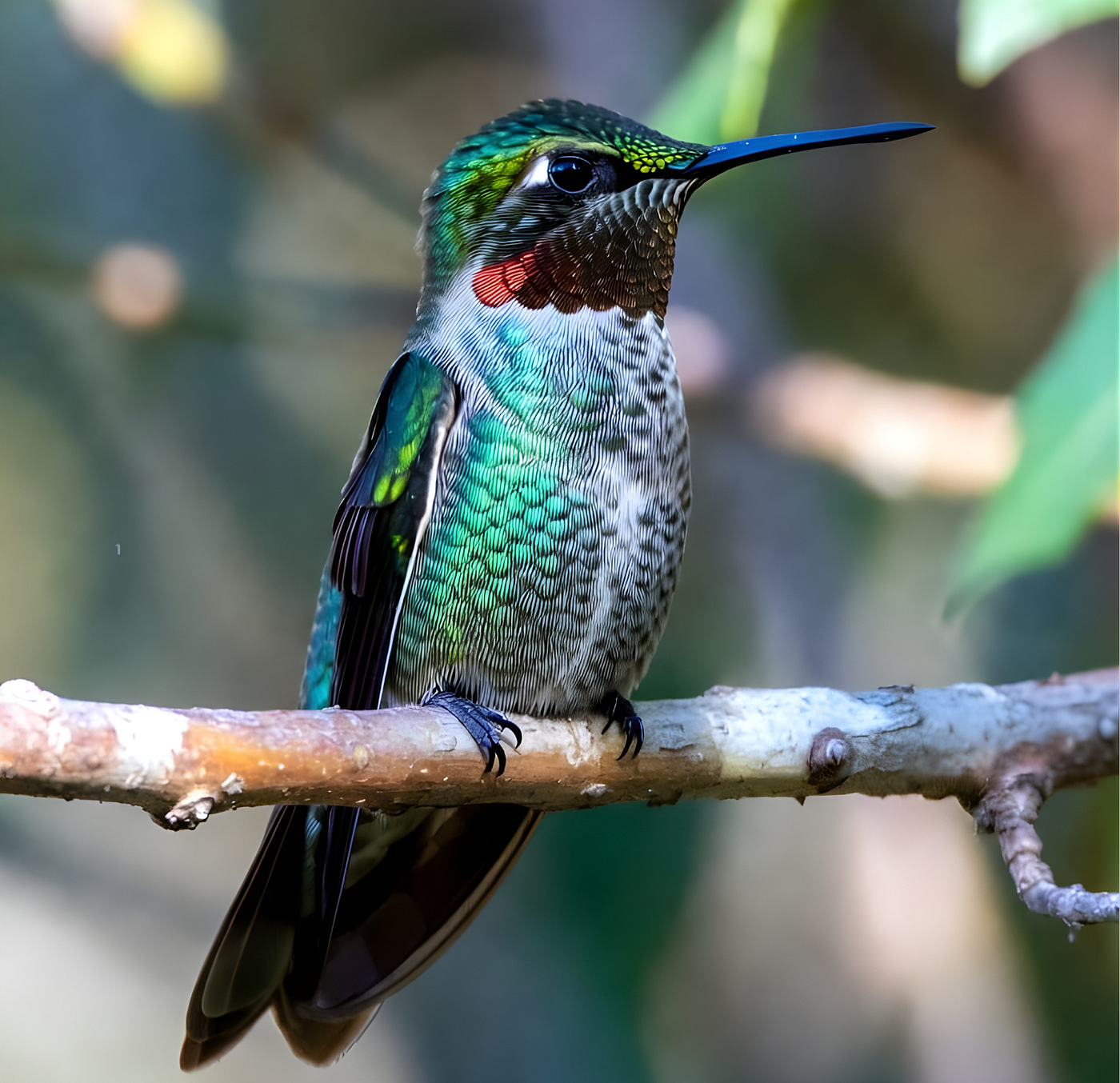
The iridescent plumage of the Bee Hummingbird. Image Credit: Grok AI, prompted by the author.
The bee hummingbird (Mellisuga helenae), also known as the zunzuncito or Helena hummingbird, holds the distinguished title of the smallest living bird on the planet. This diminutive species, native exclusively to the Cuban archipelago, earns its name from its bee-like size and the buzzing sound produced by its rapidly beating wings during flight. Resembling a larger insect than a traditional bird, the bee hummingbird's extraordinary aerial manoeuvres and vibrant plumage make it a captivating symbol of avian adaptation. Discovered and named in 1850 by Juan Lembeye, it is classified within the Trochilidae family, with its closest relative being the Vervain Hummingbird (Mellisuga minima) found on nearby islands like Hispaniola and Jamaica. Often hailed as the “smallest dinosaur” due to birds being descendants of avian dinosaurs, this tiny creature exemplifies extreme miniaturisation in the animal kingdom, with no smaller bird or non-avian dinosaur known from the fossil record.
Physical Description
At maturity, the Bee Hummingbird measures a mere 5–6.1 cm (about 2–2.4 inches) in length, with an average weight ranging from 1.6 to 2.6 grams — lighter than a dime or many common coins. Its wingspan averages just 3.25 cm, contributing to its compact, rounded appearance that sets it apart from other small hummingbirds. Females are slightly larger than males, with average lengths of 6.12 cm and weights up to 2.6 g, while males typically reach 5.51 cm and 1.95 g.
-
Male: During breeding season, males boast iridescent plumage featuring a fiery red-pink gorget (throat patch) that can appear reddish to pink, along with shimmering bluish upperparts and elongated lateral plumes. Their underparts are predominantly greyish-white. The head may display a green pileum (crown), and the feathers’ iridescence shifts with light angles, creating a dazzling effect.
-
Female: Females are marginally larger and more subdued in colour, sporting bluish-green upperparts, pale grey undersides, and white-tipped tail feathers. They lack the vibrant throat patch that males have.
-
Unique Anatomy: Equipped with broad, powerful wings relative to their size, these birds achieve rapid flight and precise hovering. Their straight, slender, and pointed bill is ideally suited for delving deep into flower corollas. Specialised flight muscles make up 22 to 34 percent of their body weight, supported by a large keel and tapered wings that rotate 180 degrees at the shoulder joint. Small feet and legs are used solely for perching, not walking, and the species exhibits endothermy, bilateral symmetry, and sexual dimorphism, where males are more colourful.
Due to their minuscule stature, bee hummingbirds are frequently mistaken for large bees as they dart among flowers — a fitting tribute to their name and insect-like agility.
Habitat and Geographic Range;
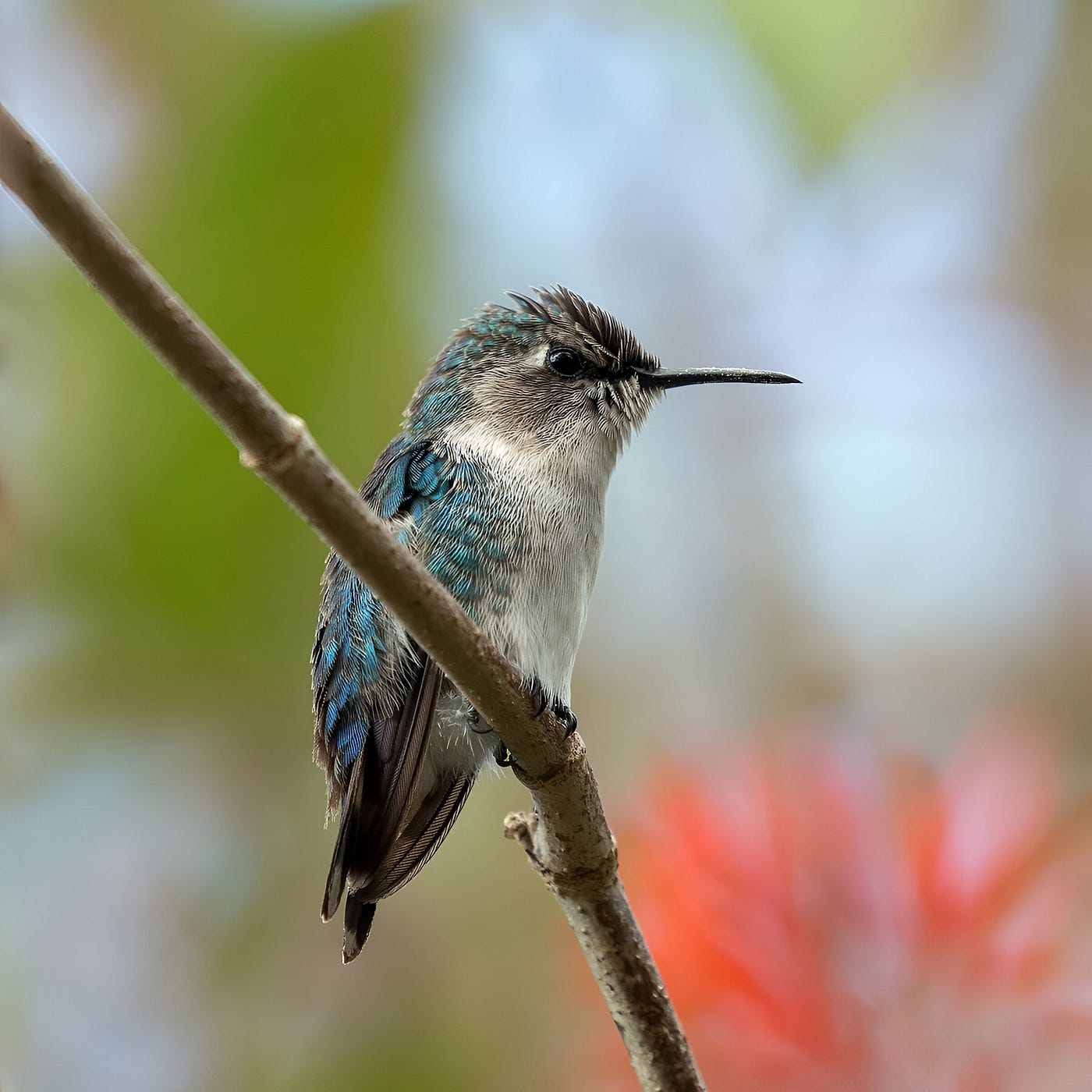
Bee Hummingbird, immature male. Image Credit: Wikipedia
Endemic to Cuba, the bee hummingbird inhabits the main island and the Isle of Youth (Isla de la Juventud), with occasional sightings in neighbouring Jamaica and Haiti. Its population is fragmented, thriving in areas like the mogote complexes in Pinar del Río Province; the Zapata Swamp in Matanzas Province; and eastern regions, including Alexander Humboldt National Park, Baitiquirí Ecological Reserve in Guantánamo Province, and Gibara and Sierra Cristal in Holguín Province. These birds favour dense forests, forest edges, woodland thickets, and gardens abundant with flowering plants, particularly those with lianas and epiphytes. They prefer lowland tropical habitats but can be found at elevations up to 800–1,200 metres where nectar is plentiful. Habitats include coastal and interior forests, mountain valleys, swamps, rainforests, and even suburban gardens, often near plants like Solandra grandiflora for nectar.
Behavior and Flight
Bee hummingbirds are diurnal, highly active creatures that remain in near-constant motion. Their wings beat at an astonishing 80 times per second during normal flight, escalating to 200 beats per second in courtship displays, generating the signature humming noise. Capable of speeds up to 25–30 mph (40–48 km/h) in bursts, they exhibit unparalleled aerial prowess:
-
Hovering stationary to sip nectar, achieved through a figure-eight wing pattern.
-
Flying backwards, sideways, upwards, downwards, and even upside down — the only bird species capable of such manoeuvres.
-
Immediate stops and agile territorial defences.
Males use aerial chases and displays to protect their feeding areas from intruders, such as other males, bumblebees, and hawkmoths. Outside breeding, they lead solitary lives and may shift locations seasonally based on flower blooms, though they do not migrate long distances due to Cuba’s stable climate. To conserve energy at night or in cool weather, they enter torpor, dropping their body temperature from a normal 41°C to around 30°C. Their call is a high-pitched, jumbled twitter, and males often sing from the highest places in their territory.
Diet and Feeding
Primarily nectarivores, bee hummingbirds sustain themselves on flower nectar, supplemented by tiny insects and spiders for protein. Their protrusible tongue laps nectar at rapid rates, and they prefer sucrose concentrations of 15 to 30 per cent. In a single day, they may visit 1,000–1,500 flowers, consuming up to half their body weight in food to fuel their hyperactive metabolism, which includes a heart rate soaring to 1,200 beats per minute and elevated body temperatures. They feed on about ten plant species, nine native to Cuba, such as Hamelia patens, Chrysobalanus icaco, Pavonia paludicola, Forsteronia corymbosa, Lysiloma latisiliquum, Turnera ulmifolia, Antigonon leptopus, Clerodendrum aculeatum, Tournefortia hirsutissima, and Cissus obovata. Flowers preferred are often odourless and brightly coloured with long, narrow tubular corollas and dilute nectar, showcasing coevolution. They spend up to 15 per cent of their time feeding and use their bills to pluck arthropods from blooms, facing minimal competition as their flowers lack perches for other birds.
Breeding and Reproduction
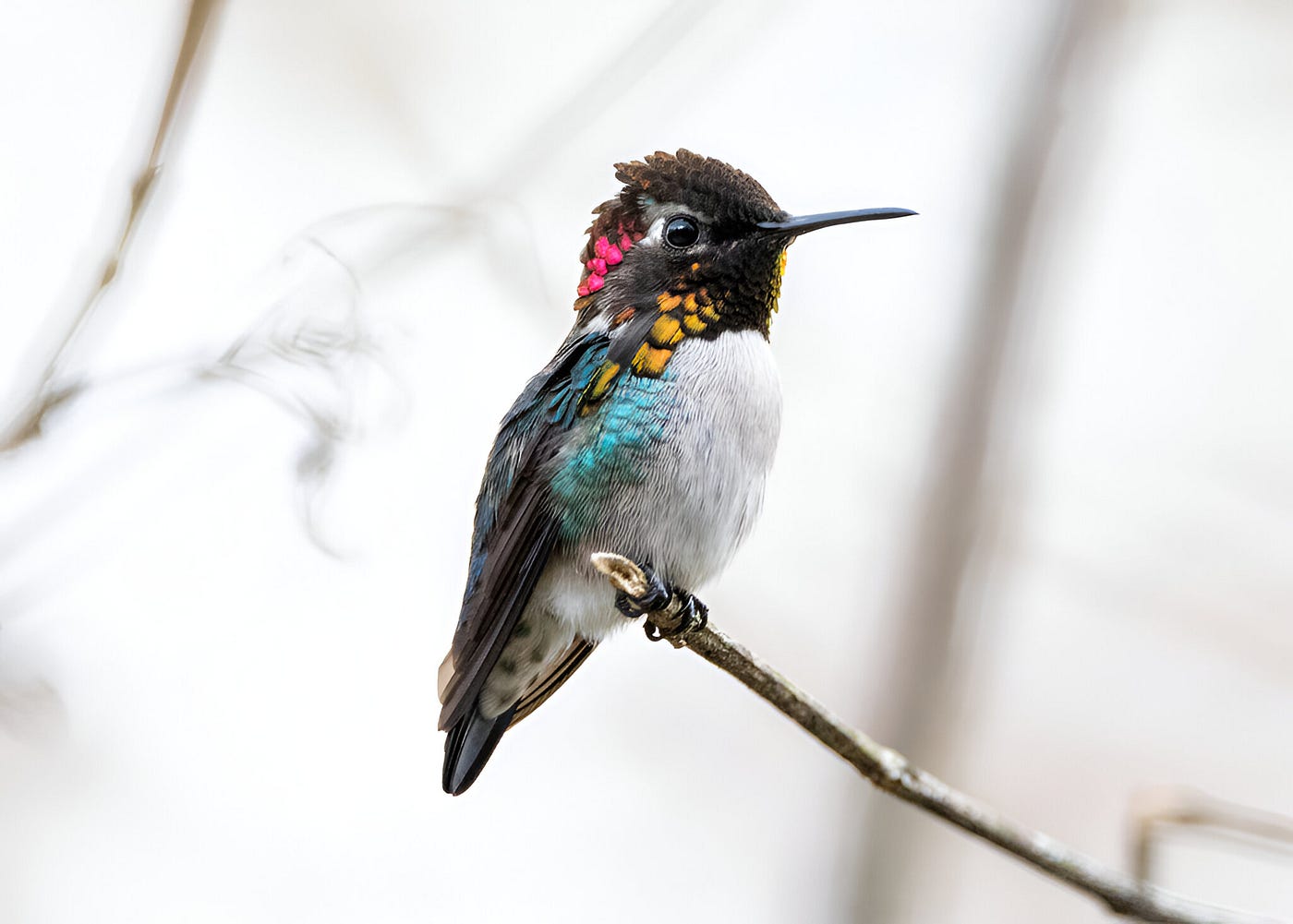
The Bee Hummingbird holds the distinguished title of the smallest living bird on the planet. Image Credit: iNaturalist.
Breeding aligns with peak nectar availability from March to June, at the transition from wet to dry seasons. Males form leks to attract mates through songs – brief warbles or repeated notes – and impressive aerial displays, diving steeply while flaunting their plumage. The mating system is polygynous, with males courting multiple females.
-
Courtship: Males ascend high and plummet in dives to showcase iridescent colours.
-
Nesting: Females construct tiny cup-shaped nests, 2.5–3 cm in diameter, 3–5 m above ground, using plant fibres, spider silk, bark, lichens, moss, and downy linings. Nests are usually on the branches of Terminalia buceras or Calophyllum antillanum and can only be used once.
-
Eggs: One or two white, elliptical, pea-sized eggs per clutch, resembling coffee beans.
-
Incubation and Fledging: Females incubate for 14–23 days (typically 21 days), with hatching taking 2 days. Altricial chicks, born blind and nearly naked, are fed regurgitated food by the mother alone for 18–38 days (fledging around 22–24 days when wing feathers develop). Juveniles practise flight in the final days and reach sexual maturity at one year.
Females handle all parental duties, from incubation to rearing, while males focus on mating.
Ecological Role
Despite their size, bee hummingbirds are vital pollinators in Cuban ecosystems, transferring pollen between flowers during feeding and aiding plant reproduction. They pollinate species like Solandra grandiflora and scarlet bush, which have evolved flower structures tailored to the bird’s bill and tongue, fostering codependent relationships. As they visit numerous blooms daily, they facilitate cross-pollination, enhancing biodiversity in forests and gardens.
Lifespan and Conservation
In the wild, bee hummingbirds live up to 7 years, extending to 10 years in captivity with optimal care. Classified as Near Threatened by the IUCN and listed on CITES Appendix II, the species faces threats from habitat loss due to deforestation for agriculture, historical over-collection for fashion (e.g., stuffed birds in the 19th century), and degradation of nesting sites. Cuba’s low deforestation rate (0.1% annually) and reforestation initiatives, planting millions of trees, offer some protection. Conservation efforts emphasise preserving native forests, swamps, and nectar-rich areas to sustain populations.
Why the Bee Hummingbird Matters
The bee hummingbird exemplifies extreme biological adaptation: maximal energy efficiency through torpor and rapid metabolism, superb aerial agility unmatched in the avian world, and specialised ecological bonds with plants. As a record-holder for size and a key pollinator, it underscores the fragility and diversity of island ecosystems. This tiny bird reminds us of nature’s complex equilibrium, where even the smallest organisms play pivotal roles in environmental health.
메타데이터
- post_id
- d6f2e919cc01
- slug
- bee-hummingbird-mellisuga-helenae-a-jewel-of-the-avian-world-d6f2e919cc01
- url
- https://medium.com/@xydecauzie/bee-hummingbird-mellisuga-helenae-a-jewel-of-the-avian-world-d6f2e919cc01
- canonical_url
- https://medium.com/@xydecauzie/bee-hummingbird-mellisuga-helenae-a-jewel-of-the-avian-world-d6f2e919cc01
- author_url
- https://medium.com/@xydecauzie
- status
- ok
- fetched_at
- 2026-06-23 17:05:31