Preparatory Manual of Pathology, 2nd Edition
What is the Preparatory Manual of Pathology, 2nd Edition?
Preparatory Manual of Pathology, 2nd Edition
What is the Preparatory Manual of Pathology, 2nd Edition?
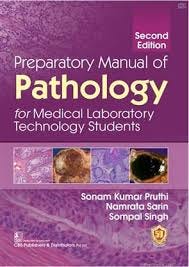
Preparatory Manual of Pathology, Second Edition, is a pathology laboratory manual designed for BSc and diploma-level Medical Laboratory Technology (MLT) students. It covers hematology, histological techniques, histopathology, cytology, clinical pathology, laboratory management, transfusion medicine, and laboratory diagnosis procedures in a concise, examination-oriented format.
Introduction
Pathology forms the foundation of laboratory medicine and plays a vital role in disease diagnosis, patient monitoring, and healthcare delivery. For Medical Laboratory Technology (MLT) students, mastering pathology requires understanding both theoretical concepts and practical laboratory procedures.
The Preparatory Manual of Pathology, Second Edition, was developed specifically to address the academic and practical needs of MLT trainees. According to the authors, the book was written after identifying a lack of a single comprehensive resource covering major pathology topics required for professional MLT examinations.
The text was designed around university syllabi and examination requirements, providing students with a focused and practical learning resource.
The book serves as a preparatory manual that combines essential pathology knowledge with laboratory techniques, quality assurance principles, and transfusion medicine concepts. Its straightforward language, point-wise presentation, flowcharts, diagrams, and practical orientation make it particularly useful for students preparing for academic examinations and laboratory practice.
WHAT THIS BOOK COVERS
One of the strongest aspects of this manual is its broad coverage of pathology laboratory sciences. The book contains 86 chapters organized into multiple sections that collectively cover the major domains of pathology relevant to medical laboratory technology education.
Hematology
The hematology section introduces students to:
- Red blood cells and anemia
- Leukemia
- Leukopoiesis and erythropoiesis
- Platelets and hemostasis
- Coagulation pathways
- Bone marrow examination
- Hemoglobin estimation
- Hemoglobin variants
- ESR
- Reticulocyte count
- Blood film examination
- Hematology automation
- Bleeding and clotting investigations
These chapters help students understand both normal hematological physiology and common laboratory investigations.
Histological Techniques
The histotechnology section covers:
- Tissue processing
- Fixatives
- Microtomy
- Cryostat techniques
- Histochemical stains
- Hematoxylin and eosin staining
- Amyloid stains
- Mucin stains
- Collagen demonstration stains
- Microbial staining
- Museum techniques
These topics provide a foundation for histopathology laboratory work.
Histopathology and Cytology
Students are introduced to:
- Automation in cytology
- Automation in histopathology
- Electron microscopy
- Gross specimen photography
- Grossing procedures
- Cytological specimen management
- Histopathological specimen handling
The inclusion of modern laboratory automation and digital pathology concepts increases the practical relevance of the text.
Laboratory Management
A significant portion of the manual is devoted to laboratory operations and quality systems, including:
- Biomedical waste management
- Internal quality control
- Quality assurance
- Standard operating procedures (SOPs)
- Record keeping
- Inventory management
- Laboratory ethics
- Statistical applications
- Turnaround time management
- Blood bank setup
These topics are highly relevant for students preparing for professional laboratory careers.
Clinical Pathology
Clinical pathology coverage includes:
- Urine collection and processing
- Stool examination
- Sputum examination
- Semen analysis
- Body fluid analysis
These chapters focus on routine laboratory diagnostic procedures commonly encountered in clinical practice.
Transfusion Medicine
The transfusion medicine section discusses the following:
- Blood group systems
- Blood grouping
- Blood banking
- Crossmatching
- Transfusion reactions
- Blood components
- Plasmapheresis
- Antibodies
- Blood bank record keeping
These topics provide essential knowledge for laboratory professionals involved in transfusion services.
COVID-19 Laboratory Management
The second edition introduces a dedicated section addressing the following:
- Laboratory diagnosis of COVID-19
- Safe handling and processing of COVID-19 samples
This addition reflects updates made to align the book with contemporary laboratory practice and recent healthcare challenges.
Key Features
- Covers 86 chapters relevant to MLT education.
- Written according to university examination requirements.
- Organized into clearly defined specialty sections.
- Point-wise presentation for rapid revision.
- Simple language suitable for undergraduate learners.
- Includes flowcharts, diagrams, color illustrations, and microphotographs.
- Covers both theory and laboratory practice.
- Includes laboratory quality assurance and management topics.
- Contains transfusion medicine and blood banking content.
- Updated second edition includes COVID-19 laboratory diagnosis and biosafety chapters.
Who Should Read This Book
Medical Laboratory Technology Students
This is the primary target audience. The authors specifically designed the book for diploma and BSc MLT students preparing for professional examinations.
Laboratory Trainees
Students undergoing practical laboratory training can benefit from the procedural and technical content.
Examination Candidates
The book was developed after reviewing university syllabi and previous examination patterns, making it particularly relevant for exam preparation.
Laboratory Educators
Faculty members teaching pathology and laboratory medicine may find the structured format useful for teaching and revision purposes.
Healthcare Professionals Entering Laboratory Sciences
Individuals transitioning into laboratory-based roles may use the manual as a foundational reference.
Why This Book Is Useful
Clinical Relevance
The manual focuses on laboratory investigations routinely performed in pathology laboratories, helping students connect theoretical concepts with practical applications.
Examination-Oriented Content
The authors explicitly state that the book was prepared according to university syllabi and professional examination requirements.
Practical Laboratory Focus
Unlike purely theoretical pathology texts, this manual emphasizes laboratory procedures, specimen handling, quality control, transfusion medicine, and diagnostic techniques.
Learning Efficiency
The point-wise format, diagrams, and concise explanations facilitate revision and quick recall, particularly useful during examination preparation.
Updated Content
The second edition incorporates revised content based on updated guidelines and protocols and introduces COVID-19-related laboratory chapters.
Table of Contents Overview
The book is organized into seven major sections:
Section I: Hematology
Topics include anemia, coagulation, blood cells, leukemia, bone marrow examination, hematology automation, ESR, hemoglobin estimation, and related laboratory investigations.
Section II: Histological Techniques
Covers tissue processing, staining methods, cryostat techniques, fixatives, microtomy, pigments, and histochemistry.
Section III: Histopathology and Cytology
Includes specimen management, automation, microscopy, grossing, and cytological techniques.
Section IV: Laboratory Management
Focuses on quality control, laboratory organization, waste management, SOPs, ethics, inventories, and blood bank setup.
Section V: Clinical Pathology
Includes urine, stool, sputum, semen, and fluid examinations.
Section VI: Transfusion Medicine
Addresses blood grouping, blood banking, crossmatching, transfusion reactions, and blood components.
Section VII: Management of COVID-19 Samples in the Laboratory
Introduces laboratory diagnosis and safe handling of COVID-19 specimens.
메타데이터
- post_id
- d8c9f4460f43
- slug
- preparatory-manual-of-pathology-2nd-edition-d8c9f4460f43
- url
- https://medium.com/@randadesigns4u/preparatory-manual-of-pathology-2nd-edition-d8c9f4460f43
- canonical_url
- https://medium.com/@randadesigns4u/preparatory-manual-of-pathology-2nd-edition-d8c9f4460f43
- author_url
- https://medium.com/@randadesigns4u
- status
- ok
- fetched_at
- 2026-07-11 16:48:19