Albert Camus’ Most Powerful Life Rules for Dark Times
This kept Camus sane his entire short life.
Albert Camus’ Most Powerful Life Rules for Dark Times
This kept Camus sane his entire short life.

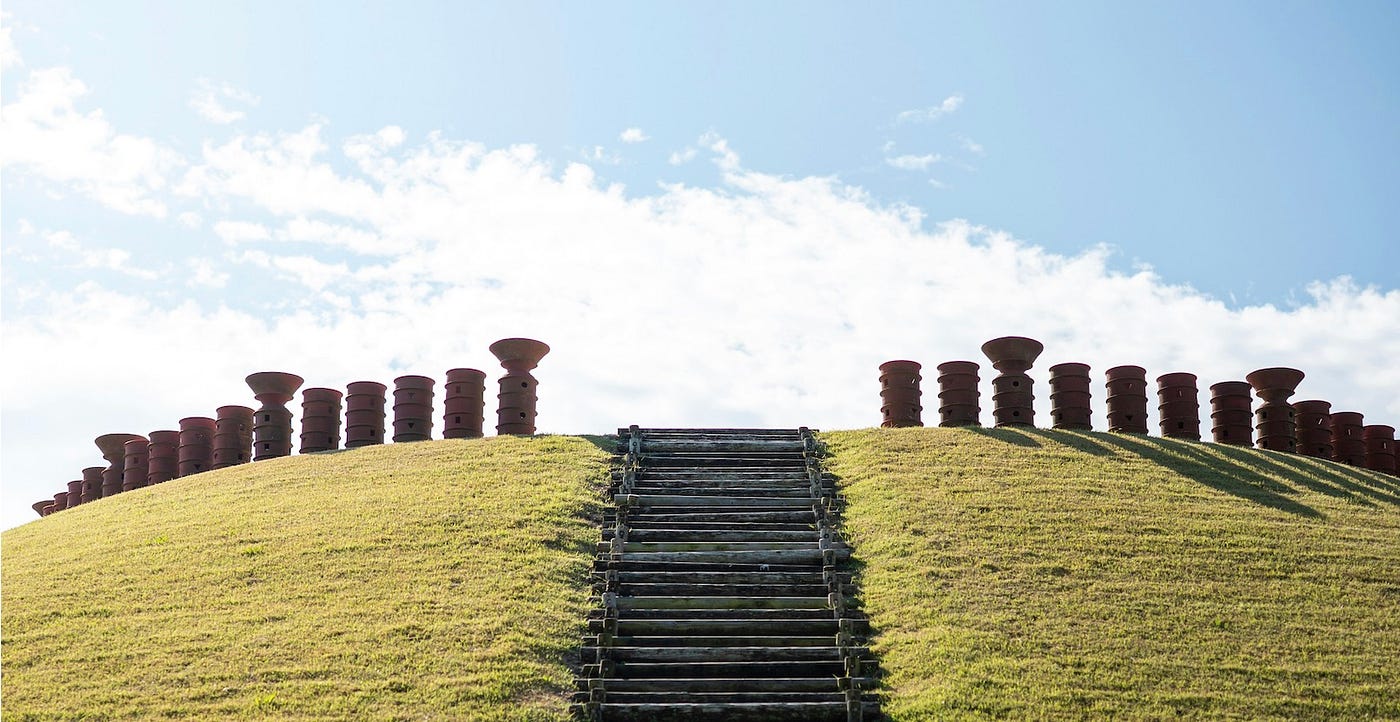
Photo by Maria Di Lorenzo on Unsplash
I’m not sure if there’s an antidote. Many psychologists and great thinkers have tried to keep that despair feeling away for good. But there’s a way to keep a space between you and the dark feeling that won’t go away. I aim not to get attached to the sources of darkness. Philosopher Albert Camus thought it was absurd . He spent his entire life not running from it. He walked straight toward it. And figured out a strange and counterintuitive antidote. Camus grew up poor, lost his father before he could speak, and was raised by a mother who could barely hear and rarely talked. He lived through poverty and war. He watched the plague take people away.
His book, The Plague, was inspired by true stories. But Camus never wrote like a defeated man. Even though he thought life was absurd. “Accepting the absurdity of everything around us is one step, a necessary experience: it should not become a dead end. It arouses a revolt that can become fruitful,” he said. And then in the Myth of Sisyphus, he wrote, “I said that the world is absurd, but I was too hasty. This world in itself is not reasonable, that is all that can be said. But what is absurd is the confrontation of this irrational and the wild longing for clarity whose call echoes in the human heart. The absurd depends as much on man as on the world.”
Everyone needs things to make sense.
You need a reason to get up, to work, to love, to endure suffering. That hunger for meaning is hardwired into all of us. It is as natural as breathing. But the universe does not care. You can’t ask the world why someone close to you died young. Why people work hard and end up with nothing? Or what your life is for. What you will get is absolute silence. As Camus wrote in The Myth of Sisyphus, “Man stands face to face with the irrational. He feels within him his longing for happiness and for reason. The absurd is born of this confrontation between the human need and the unreasonable silence of the world.” The collision between what you need and what the universe gives back is what he called the absurd.
It’s a description of reality.
Camus figured out that most people respond to the indifference in one of two ways. Both are wrong. The first is physical suicide. Life is meaningless, therefore stop living. Camus took this seriously as a philosophical question. In fact, he opens The Myth of Sisyphus with this. “There is but one truly serious philosophical problem, and that is suicide. Judging whether life is or is not worth living amounts to answering the fundamental question of philosophy.” Some people feel the absurd and then leap to God, ideology or a belief system that provides a ready-made answer. You feel the meaninglessness of things, and you run to certainty. Religion is the obvious example. But political extremism works just as well. So does obsessive work. And complete distraction.
Camus was anti-self-deception.
The problem he thought was believing in order to escape a feeling you cannot face. Both responses (deciding life is not worth living and looking to subjective beliefs alone) are forms of avoidance.
Both are ways of looking away.
Camus refused to look away.
The antidote he found was a strange approach to life. Camus said do not escape the absurd. Do not explain it away. Do not drug yourself with hope or ideology. Stay with it. Hold it in full view. And then keep living anyway, with everything you have. He wrote, “Thus I draw from the absurd three consequences, which are my revolt, my freedom, and my passion. By the mere activity of consciousness, I transform into a rule of life what was an invitation to death — and I refuse suicide.”
Three words. Revolt. Freedom.
And passion.
By revolt, Camus meant a specific refusal to accept the absurd. You know life is meaningless. You know the universe does not explain itself. And you refuse stubbornly, defiantly to pretend otherwise. You don’t make peace with it. Or normalise it. You keep the tension alive, every single day. He wrote, “Consciousness and revolt, these rejections are the contrary of renunciation. Everything that is indomitable and passionate in a human heart quickens them, on the contrary, with its own life.”
It’s probably harder than it reads for most people.
Despair comes from the feeling of being trapped, from accepting that things are hopeless, and you have no agency. That the silence or indifference of the universe means you must surrender. By revolting, Camus is encouraging you to say I will not surrender. Because surrender is not who I am. The second consequence is freedom. Conventional wisdom argues that freedom comes from certainty. Once you know your purpose, once you find your calling or have a plan, you are free.
Until then, you are lost.
Camus inverts this completely.
When you stop waiting for the universe to give you a purpose, you are suddenly free to do as you wish. You stop postponing your life until conditions are right. The imaginary destination falls away. And you are left with the life in front of you. As he described the absurd man in The Myth of Sisyphus, “Assured of his temporally limited freedom, of his revolt devoid of future, and of his mortal consciousness, he lives out his adventure within the span of his lifetime. That is his field, that is his action, which he shields from any judgement but his own.” Most people live in two places at once. In the present, and in the future, they are building toward. The future holds them hostage. Every present experience becomes a means to an end.
Take away the cosmic end you have in mind.
Take away the idea that it all means something in the long run. And suddenly, the present is all there is to put to work. And the last consequence is passion. You might expect that facing meaninglessness would drain you. No point in anything, so why bother? Camus says the opposite happens. When you stop trying to find cosmic significance in your actions, the actions themselves become clear. You love someone because they are there, now, real and warm. And take on work as the doing itself is alive. Camus wrote, “There is no love of life without despair of life.” The two are not opposites. They are from the same root. Fully loving your life requires fully knowing it will end, and that it explains nothing. That awareness is a source of the intensity of life.
If you talk to people who have experienced severe illness, loss or near-death. Almost universally, they will tell you about how they’ve stopped taking things for granted. Ordinary health, waking up to a good morning. Or even a quality conversation with a friend. These things did not change. Their relationship with them changed. The meaninglessness of the universe, stared at directly, does that to you.
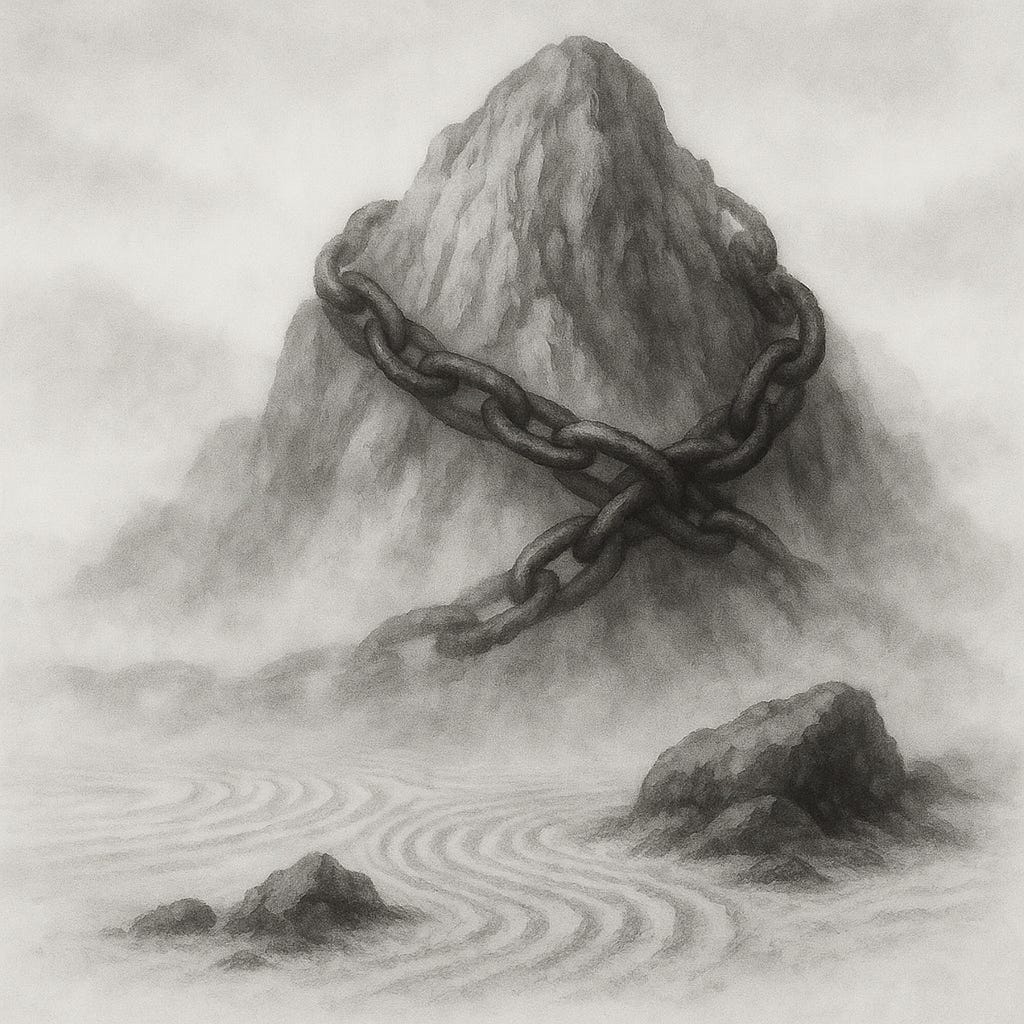
To explain it for his readers, Camus took inspiration from greek mythology. Sisyphus was condemned by the gods to push a boulder up a hill for eternity. Every time he got to the top, it rolled back down. He descended, started again. Forever. The gods thought this was the worst punishment imaginable. Hopeless, futile and endless. Camus took this story and said, Sisyphus is the perfect image of our lives. We build things, they fall. We love people; they leave or die. We pursue goals, we achieve them, and the achievement feels different from what we thought it would. And we start again. The boulder always rolls back.
But then Camus added his own twist.
“I leave Sisyphus at the foot of the mountain. One always finds one’s burden again. But Sisyphus teaches the higher fidelity that negates the gods and raises rocks. He too concludes that all is well. This universe henceforth without a master seems to him neither sterile nor futile. Each atom of that stone, each mineral flake of that night-filled mountain, in itself, forms a world. The struggle itself toward the heights is enough to fill a man’s heart. One must imagine Sisyphus happy.” Sisyphus, in owning his fate completely, in refusing to look away from it, and making the rock his rock, finds something the gods never predicted. He is free. In the worst experience imaginable.
But this is hard to accept.
The reason most people find this difficult is that we have been trained to think of happiness as a goal. You will be happy when. When the career works out. When the relationship is right. When the anxiety is over. Or when you have enough of what you want. Camus says it’s a trap. Every time you make happiness conditional, you defer your life. And the deferral never ends, because conditions are never perfect. Life keeps rolling the boulder down. The alternative is not resignation. Yes, things are bad. But you don’t give up and expect them to be good. That is philosophical suicide. Accepting defeat without a fight. Camus’ antidote is active and radical engagement. You see things clearly.
And dive in anyway, with full force.
He wrote, “For the absurd man it is not a matter of explaining and solving, but of experiencing and describing. Everything begins with lucid indifference.” Emotional indifference doesn’t work here. Lucid indifference to whether life owes you something. It does not. And that realisation is not a loss. It is a release to live. When you are in the middle of a project you love. And briefly wonder whether it will matter long-term, that is the absurd knocking. You have two choices. You can spiral into the question and let it drain the work. Or you can notice the question, acknowledge that no, it probably will not matter in any universal sense.
But you pick up your tools and do the work anyway.
The second choice is Camus’ revolt.
When someone you love dies, and you feel the random cruelty of life. The fact that the universe gave you no warning or consolation is the absurdity of all of life. You can seek comfort in the idea that there is a reason, a plan, a meaning. That is one path. Or you can feel the grief fully, sit with the silence, and slowly return to the living with a more urgent sense of what it means to love someone while they are here. The second path is harder. But you will be better for it. When work feels futile, when the daily grind wears you down. Or ask yourself why you bother. The Camusian answer is not to find a big purpose that makes it all add up.
It is to make the work itself the thing. Not the outcome. The actual doing, on this particular day, with all of your being.
Camus spent his childhood in Algeria, where the sun was harsh and the light was extreme. He loved it. And late in his life, after the poverty, the tuberculosis, the war, the philosophical battles and the political attacks. He wrote one of his most famous words. It comes from a short piece called Return to Tipasa, written in 1954. He was reflecting on returning to the Algerian coast, where he had spent time as a young man, in the cold Parisian winter of his soul. He wrote, “In the middle of winter I at last discovered that there was in me an invincible summer.”
He is saying, even when things don’t get better, there is something in you that the cold cannot reach. The revolt to live in spite of the cold. The antidote is not hope. Hope can be crushed. The antidote is presence. The capacity to find something worth having and living for. People misinterpret Camus as a pessimist. They read the absurd stories, the insanity of life, the rolling boulder, and they think, this is a bleak man who made peace with defeat. No, he was onto something more. His point is that we are condemned to absurdity by the human condition. But that is not necessarily a cause for despair. It is only by confronting this absurdity and carrying on in spite of it that a truly good life can be lived.
This is a radical act of defiance.
A declaration to keep going.
The universe is silent. Fine. You will make meaning for yourself as an act of living. The world may be indifferent to your pain. Or nothing may matter on a big scale. But everything immediately in front of you matters with full and urgent forces. The difference between those two positions is the difference between a wasted life and a full one.
Camus died in a car accident in 1960.
He was 46. His publisher’s car drove into a tree on a straight road. In his coat pocket, they found an unused train ticket. He had originally planned to travel by train and changed his plans at the last minute. Random. Right? No cosmic explanation. He would have found that unsurprising. He had spent his whole life preparing for a full life. He told you the boulder would roll back down. He told you that it would. And then he told you to push it anyway, with everything you have. And to find in the pushing itself something the gods never intended to give you. Joy. Meaning. And life fully lived. “One must imagine Sisyphus happy,” he wrote. The alternative is surrender. If you imagine him despairing, you accept that meaninglessness leads to misery. You give the absurd power over you.
Do not give it that power.
Push the boulder. Feel the pain. Know it will fall.
Push it anyway.
메타데이터
- post_id
- dc570f0f9537
- slug
- albert-camus-most-powerful-life-rules-for-dark-times-dc570f0f9537
- url
- https://medium.com/personal-growth/albert-camus-most-powerful-life-rules-for-dark-times-dc570f0f9537
- canonical_url
- https://medium.com/personal-growth/albert-camus-most-powerful-life-rules-for-dark-times-dc570f0f9537
- author_url
- https://medium.com/@thomas-oppong
- status
- ok
- fetched_at
- 2026-06-13 00:25:45