Hitler Didn’t Shake His Hand; Neither Did FDR. But I Did
What I learned the day I met Jesse Owens
Hitler Didn’t Shake His Hand; Neither Did FDR. But I Did
What I learned the day I met Jesse Owens
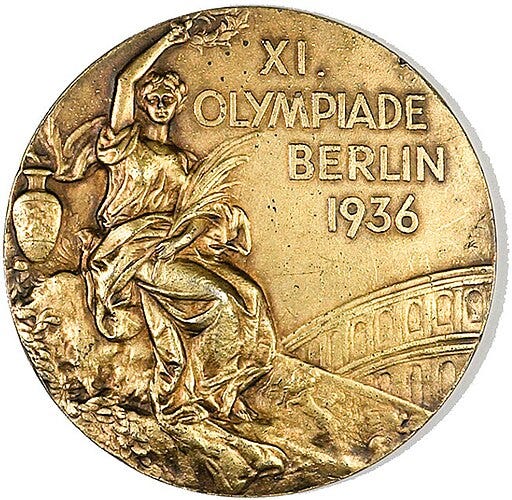
Grant Zahajko Auctions, Public domain via Wikimedia Commons
At the 1936 Olympic Games in Berlin, Jesse Owens made history. The star athlete won a gold medal in each of the four track and field events he entered, but he faced a much bigger challenge off the track — racial discrimination both at home and at the Olympics.
40 Years Later
I was invited to hear him speak 40 years later. I was unfamiliar with his story, but figured the Olympic champion would talk about running.
Jesse owned the stage the minute he walked on. In his early 60’s and sharply dressed, he was a commanding presence as he began to tell his story.
Son of a Sharecropper, Grandson of a Slave
“We all have dreams. But in order to make dreams come into reality, it takes an awful lot of determination, dedication, self-discipline, and effort.“ — Jesse Owens
Owens attended Ohio State University without a scholarship, balancing school and practice with working a variety of jobs to support his young family. In one meet, he set five world records and equaled a sixth in just 45 minutes.
The campus of OSU was segregated. Black athletes lived in separate dorms, and they weren’t allowed on the team bus. When the team traveled, they were not allowed to eat in the same restaurants.
Jesse spoke at length about sportsmanship, health, and love for one’s country. It became apparent that he was an extremely focused competitor and attributed his success to training, dedication, and persistence.
He had our attention.
United States Considers Olympic Boycott
The US almost didn’t send a team to Olympics in Berlin because of the ideology of the new German chancellor, Adolf Hitler.
Many thought that participation in the Games would infer endorsement of Hitler’s belief in the superiority of the Aryan master race. Others believed that Hitler’s regime was no worse than the discrimination against Black and Jewish people in the United States. (This was before the atrocities that would occur later.)
Black athletes had a unique dilemma — could they represent and support a nation that discriminated against them at home? Should they?
The Olympic Experience
“I let my feet spend as little time on the ground as possible. From the air, fast down, and from the ground, fast up.” — Jesse Owens
Jesse’s description of the Olympics was mesmerizing. He described the dirt track without starting blocks. Running in floppy leather shoes with flat bottoms. Hitler in the crowd. You could feel the tension, hear the crowds, and see the team celebrate their wins.
Eighteen Black athletes won a total of 14 medals — 8 of them gold.
Unlike at home, the housing and dining wasn’t segregated. Many of the Black athletes would never experience a world like that again.
The Snub From Hitler
One person who didn’t celebrate the wins was Adolf Hitler. The performance by the US team had destroyed his master-race theory.
He left the stadium rather than acknowledge the victories of a Black American.
The Return Home
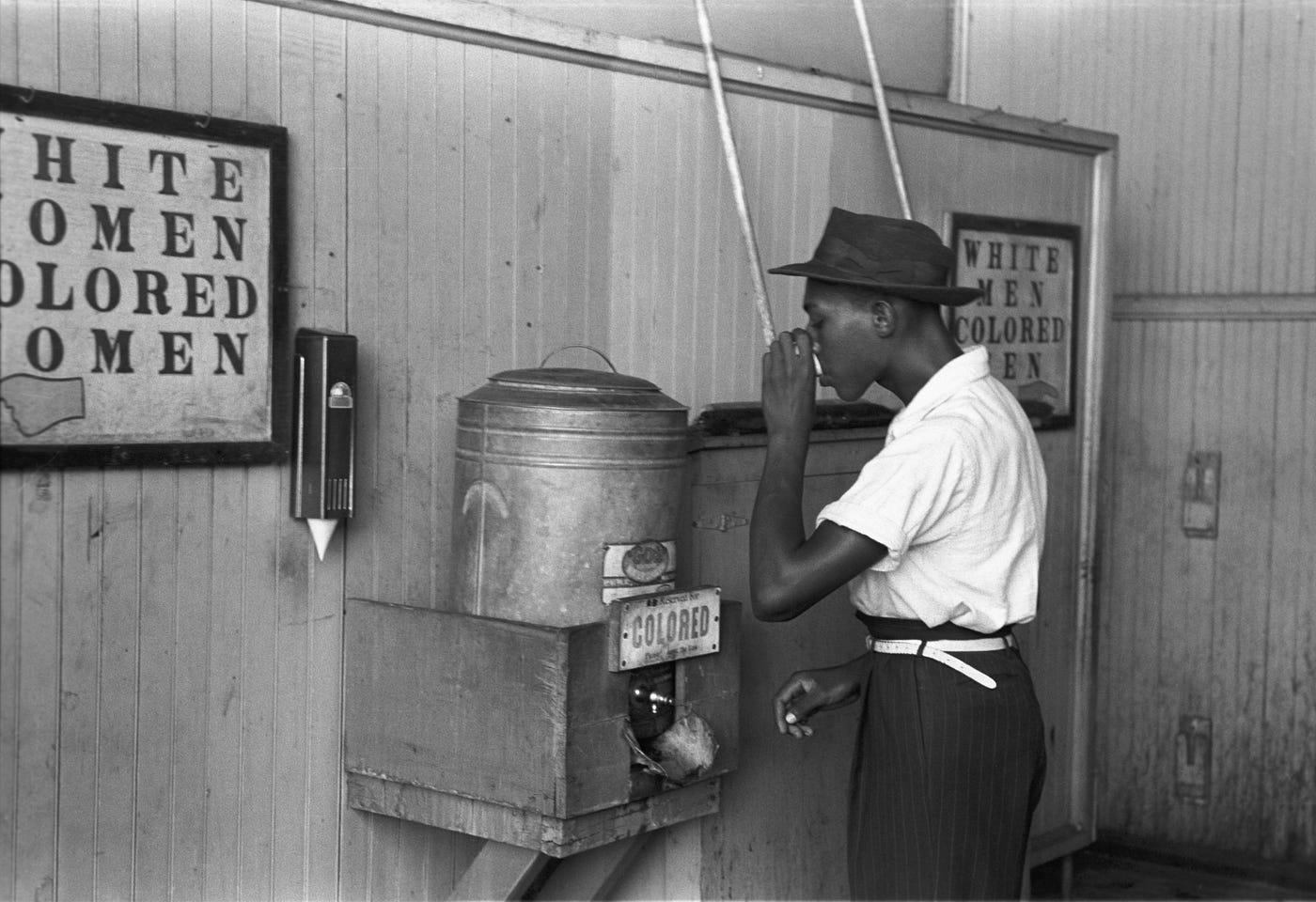
Russell Lee, Public Domain, via Wikimedia Commons
The team returned home to Jim Crow laws, a segregated military, colored-only drinking fountains and restaurants, and the back seats of the bus. When Jesse attended an event in his honor at the Waldorf Astoria, he had to take the freight elevator.
It was difficult to imagine, let alone understand.
“I had four gold medals, but you can’t eat four gold medals” — Jesse Owens
Jobs were scarce during the Great Depression and supporting his family was difficult. He worked at a fuel station, as a playground janitor, and raced against amateurs, cars, trucks and even horses for cash.
No Visit to the White House
“I wasn’t invited to shake hands with Hitler, but I wasn’t invited to the White House to shake hands with the president, either.” — Jesse Owens
Jesse’s achievements weren’t recognized until 1976 when President Gerald Ford awarded the Medal of Freedom. Later, Jimmy Carter bestowed the Living Legend award and said “Perhaps no athlete better symbolized the human struggle against tyranny, poverty and racial bigotry.”
“It Would Be My Honor”
After the presentation, as I waited in line to get my ticket autographed, I thought about how Hitler and FDR didn’t shake his hand.
When it was my turn, I stepped up to Mr. Owens and asked to shake his hand. His eyes twinkled, he smiled and graciously said “It would be my honor.”
What I Learned the Day I Met Jesse Owens
When I think back on that presentation, I realize I didn’t learn a thing about running.
I got an incredible glimpse into a remarkable achievement, a first-hand account of racial discrimination, and an admiration of the strength to love a country that only loved you back when you were winning.
메타데이터
- post_id
- e37a7db8ae08
- slug
- hitler-didnt-shake-his-hand-neither-did-fdr-but-i-did-e37a7db8ae08
- url
- https://long.sweet.pub/hitler-didnt-shake-his-hand-neither-did-fdr-but-i-did-e37a7db8ae08
- canonical_url
- https://long.sweet.pub/hitler-didnt-shake-his-hand-neither-did-fdr-but-i-did-e37a7db8ae08
- author_url
- https://medium.com/@rbnshnnn
- status
- ok
- fetched_at
- 2026-07-26 18:54:27