The Ontology of Evil: The Will to Power and the Illusion of Divinity
Throughout history, “evil” has often been categorized as a mere moral deviation. However, when we examine the roots of malevolence, we…
The Ontology of Evil: The Will to Power and the Illusion of Divinity
Throughout history, “evil” has often been categorized as a mere moral deviation. However, when we examine the roots of malevolence, we encounter a profound psychological void rather than a simple choice. Evil is frequently a tragic performance staged to mask an individual’s internal weakness. It is the manifestation of a distorted Will to Power, where the actor seeks to compensate for a lack of internal sovereignty by exerting absolute control over others.
1. Playing God: From Serial Killers to Al Capone
At the extremes of human cruelty, there is a recurring desire to achieve a state of “pseudo-divinity.” When Al Capone famously suggested that he felt like God when he ordered a hit and saw it executed the same day, he was revealing a fundamental truth: for the wicked, power is measured by the ability to decide the fate of others.
The rituals performed by serial killers or their claims of being “messengers of a higher power” serve a specific psychological function. These acts elevate their crimes from mundane violence to cosmic significance. By claiming a divine mandate, the perpetrator attempts to transcend their own insignificance. Taking a life becomes the ultimate tool to prove to themselves — and the world — that they are beyond the reach of human law and nature.
2. Evil as a Mask for Fragility
The core of your thesis rests on a compelling paradox: the more an individual feels weak and vulnerable, the more they must project an image of invincibility. In this context, evil functions as a defense mechanism:
- The Internal Void: Because the individual cannot confront their “inner cowardice,” they construct a persona of a “fearsome giant.”
- The Cycle of Escalation: This artificial display of power provides no lasting peace. Regardless of how others perceive them, the individual still sees a fragile soul in the mirror. To silence this internal insecurity, they must commit increasingly heinous acts. This creates a feedback loop where the escalation of evil is required to maintain the illusion of strength.
3. Paranoid Sovereigns and the Adoration of the Executioner
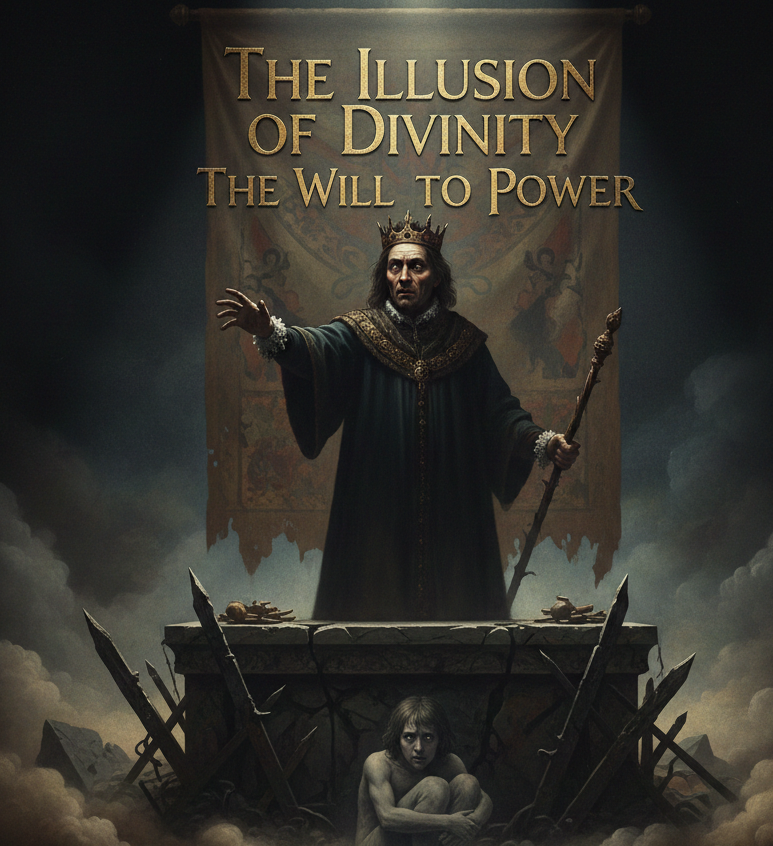
This dynamic is most visible in the political sphere, particularly in the figure of the “Paranoid King.” History is replete with monarchs who viewed every whisper as a conspiracy and took absurdly violent precautions to secure their throne. Interestingly, this extreme paranoia often results in a more subservient populace.
The phenomenon of the “masses falling in love with their executioner” suggests that the public often seeks shelter under the shadow of a tyrant’s perceived strength. By aligning themselves with a “strong” (albeit evil) figure, individuals attempt to outsource their own sense of security, mistaking the tyrant’s fear-driven aggression for genuine authority.
Conclusion: The Pathetic Nature of Evil
In conclusion, evil is not a sign of “superiority” or true strength; it is the product of profound existential insecurity. Most importantly, the primary audience of this dark performance is not the world, but the perpetrator’s own conscience. Every act of cruelty is a desperate attempt to prove to oneself that they are not as weak, cowardly, or insignificant as they secretly feel. The criminal or the tyrant does not kill to prove their power to the victim; they kill to convince themselves of their own dominance. Therefore, every figure who seeks to become a god through cruelty is, in reality, a fugitive running from their own mortality and perceived smallness. Evil is not the pinnacle of power, but the terminal point of character bankruptcy and a failed attempt at self-affirmation.
메타데이터
- post_id
- e4abf0094de0
- slug
- the-ontology-of-evil-the-will-to-power-and-the-illusion-of-divinity-e4abf0094de0
- url
- https://medium.com/@nobodyvoid/the-ontology-of-evil-the-will-to-power-and-the-illusion-of-divinity-e4abf0094de0
- canonical_url
- https://medium.com/@nobodyvoid/the-ontology-of-evil-the-will-to-power-and-the-illusion-of-divinity-e4abf0094de0
- author_url
- https://medium.com/@nobodyvoid
- status
- ok
- fetched_at
- 2026-07-13 23:39:03