She Wrote a Children’s Book About Grief. The Question Is Where the Grief Came From
For forty minutes, a woman in a lime-green jail uniform spoke to an empty room.
She Wrote a Children’s Book About Grief. The Question Is Where the Grief Came From
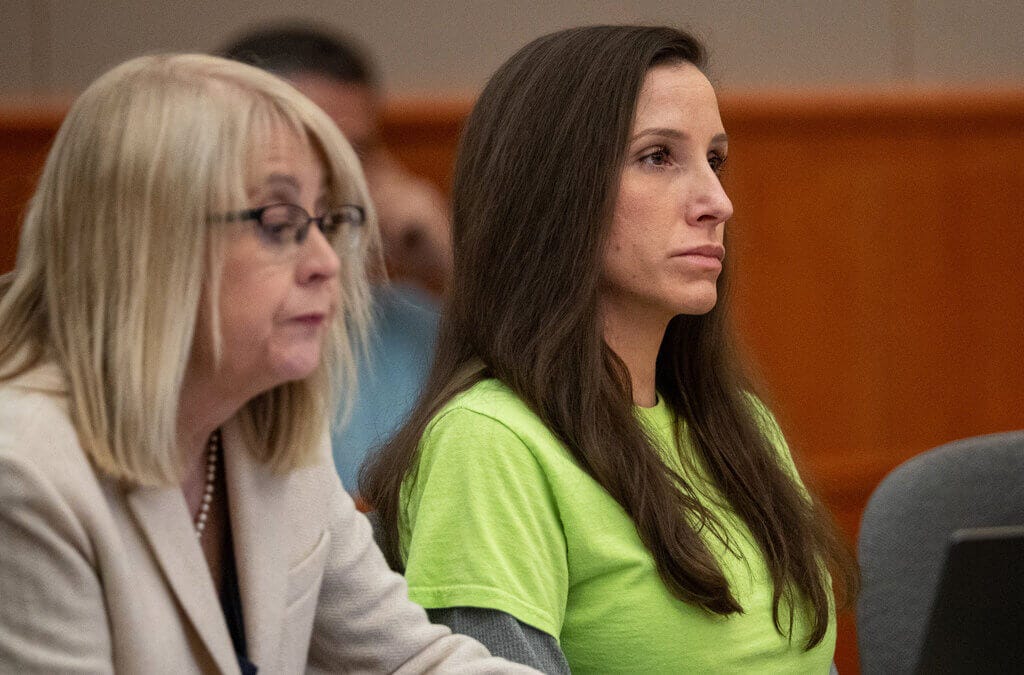
For forty minutes, a woman in a lime-green jail uniform spoke to an empty room.
Three empty chairs, to be exact. Her sons should have been sitting in them. Thirteen, eleven, and around nine. She addressed each in turn, hands cuffed in front of her, her voice breaking.
Please. Just don’t give up on me.
The boys didn’t come. They had asked the court themselves to make sure their mother never walks free. One of them wrote: if she gets out, I won’t feel safe.
To understand why three children are afraid of their own mother, you have to go back four years. To a man who wasn’t in that courtroom. And to a picture book with an angel on the cover.
Trent Nelson/Pool/The Salt Lake Tribune/AP
The Widow
At first, there was a flawless story.
A young mother of three from Utah. A real estate agent who flipped houses — her own business, her own money. Her husband, Eric, died suddenly in his sleep in the spring of 2022. He was thirty-nine. A healthy man who coached his kids’ soccer team, and one morning he simply didn’t wake up.
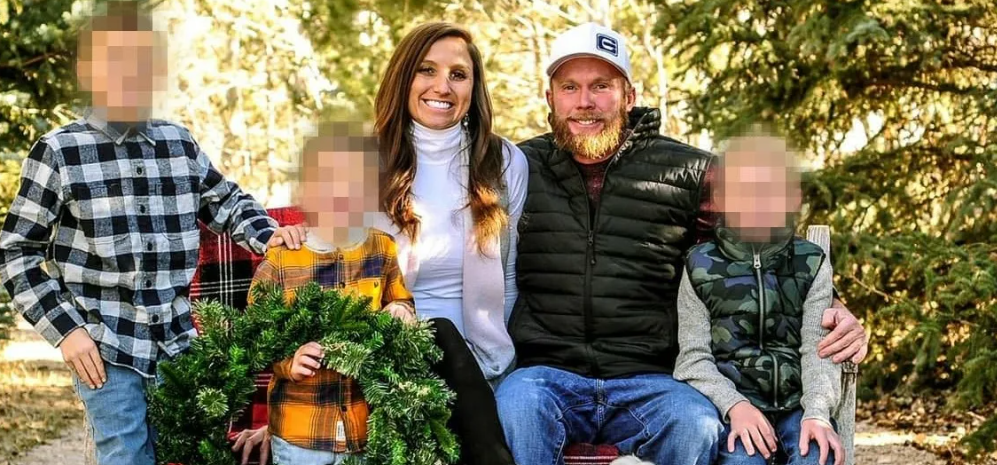
And the widow did what strong people do. She turned her pain into help for others.
A year after his death, Kouri Richins went on local television holding a children’s book. Are You With Me? The first book, she said, about helping a child cope with the death of a father. The cover was bright: a boy with a ball, a father-angel watching from the clouds. The idea, she explained on air, came from her own children’s questions. Will Dad be with us on our birthday? At Christmas?

The camera loved her. Composed, lovely, luminous. A woman who had walked through hell and come out the other side to help other people’s children walk through it too.

It was a perfect role. And it had one weak point that would surface later: she didn’t write the book.
In her messages, Kouri had haggled with a ghostwriter — somewhere between twenty-five hundred and ten thousand dollars for the manuscript. Even her own grief, she outsourced.
But that would come out later. For now, there was only a grieving mother with a book. A story you want to accept. A story that demands no uncomfortable questions from anyone.
The police were asking uncomfortable questions.

Valentine’s Day
Off-camera, a different timeline was running. It doesn’t begin with a death. It begins with a failure.
February 14, 2022. Eric eats a sandwich from a local restaurant and starts to feel wrong. Hives, trouble breathing — his body reacting to fentanyl with what looks like an allergic flare. Something is off with the food. He sets it aside.
And survives.
In two weeks he will be dead. Between those two dates lie seventeen days. A court will examine them closely later, because those seventeen days are what turn a tragedy into a sentence.
Most killings are a flash. A rage, a fight, a single second. There was no flash here. There was a failed first attempt — and seventeen days in which she could have stopped.
She didn’t stop. She revised.

A sandwich is solid food. The poison absorbs slowly, unevenly, some of it wasted. The conclusion is obvious: next time, use liquid.
How would a Utah housewife even know what to look for?
“The Stuff Michael Jackson Died From”
She didn’t. Not the street pharmacology, anyway — not the names, the doses, the sources.
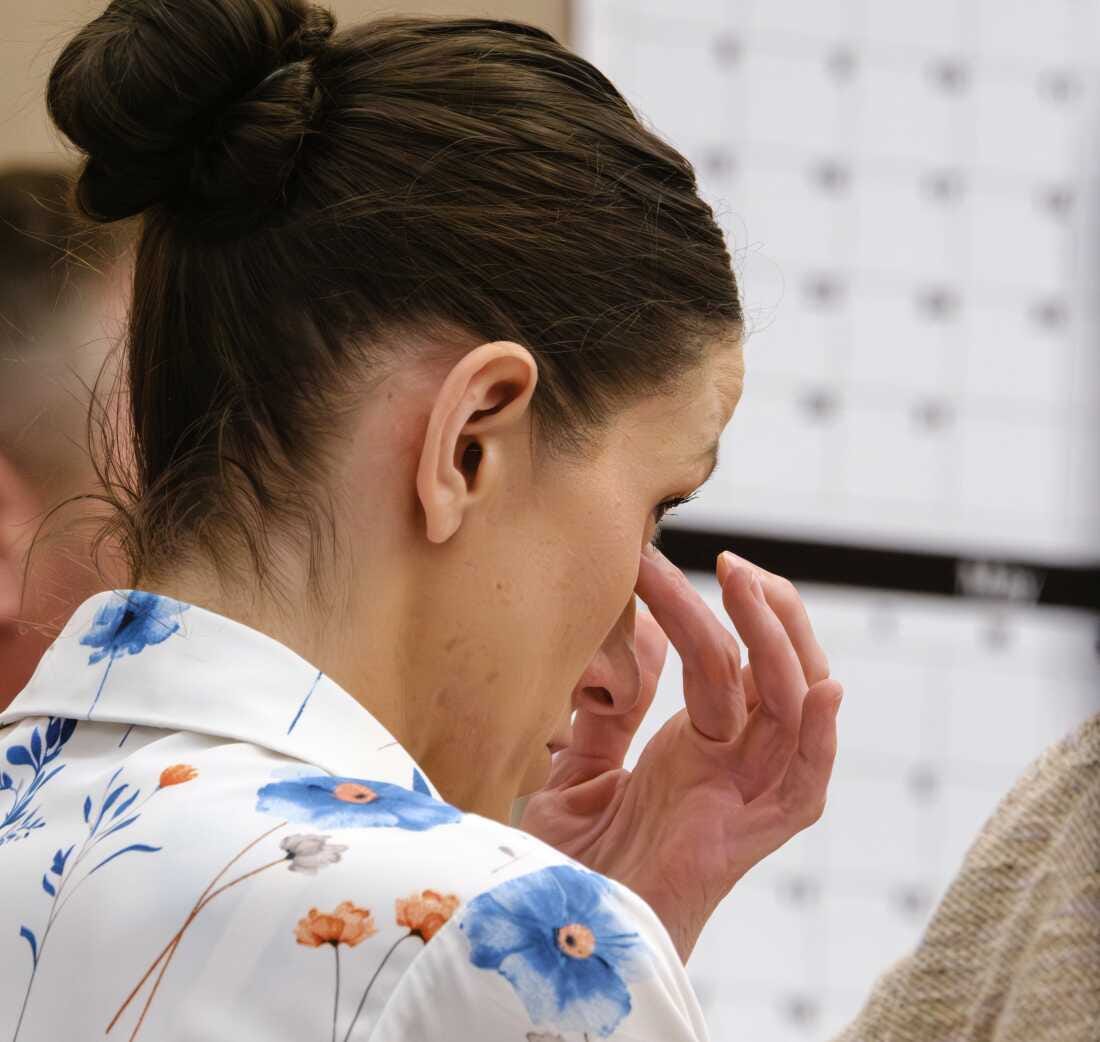
David Jackson/Pool Park Record
She knew something else. She knew what killed Michael Jackson.
That’s how she put it to the people she asked: get me something like the stuff Michael Jackson died from. Not by the name of the substance. By its reputation. By the result.
Prosecutor Brad Bloodworth would later put it plainly to the jury: she doesn’t know how to order a street drug, but she knows exactly that she wants the thing that kills.
The pills, prosecutors said, were sold to her several times by a housecleaner — Carmen Lauber, who became a key witness at trial. Cell phone data placed Kouri near the pickup location on dates suspiciously close to both Valentine’s Day and what came next.
On March 4, she made her husband a cocktail. A Moscow Mule. It carried a dose of fentanyl roughly five times the lethal amount.
Eric died in bed. He might have called for help, but fentanyl doesn’t leave the time. In the morning the children would wake and understand something had happened to their father. One of them would later recall being put to bed unusually early the night before. No bath. Not how the family did things.
The Evidence She Gathered Against Herself
Some killers are undone by chance. Kouri Richins was undone by her own phone — a device into which she had, for months, been typing the case against herself.
Her search history was shown to the jury. One entry is worth reading slowly:
How is poisoning noted on a death certificate.
Beside it, the others. The lethal dose of fentanyl. Luxury prisons for the wealthy in the United States. Women’s prison Utah. Can police force you to take a lie detector test.
These are not the searches of a person in grief. They are the searches of a person planning, and pricing out the consequences in advance.
Then there were the messages to a man named Robert Josh Grossman — her lover — where she imagined leaving her husband and coming into millions. And the financial underside of the perfect family, the part that never made it to the television segment.

The house-flipping business was drowning in debt — more than $1.8 million. And Eric’s life was covered by several insurance policies, some taken out without his knowledge. Picture the scene literally: she fills out an application on her husband’s life, names herself the beneficiary, signs it — while he, in the next room, has no idea he’s now insured in her favor. One policy, investigators said, she obtained through outright fraud.
Together: more than two million dollars payable on his death. And beyond that, prosecutors said, she believed she would inherit an estate worth over four million.
The jury would spell it out in a separate finding: both the murder and the attempt were committed for financial gain.
Not passion. Not revenge. Not madness. Accounting.
The Children as Characters
And here the mask comes off completely.
The three boys are being raised by Eric’s sister, Katie Richins-Benson. At the sentencing, their letters were read aloud by clinical social workers — the children couldn’t, and wouldn’t, do it themselves.
The middle son, now eleven: you took my dad for no reason but greed; all you cared about was yourself and your boyfriends. He described having to “be a parent” to his younger brother, because their mother wasn’t watching them.
The oldest, thirteen: he remembered that night. Being put to bed early. Trying to go into his parents’ bedroom and his mother shouting at him to leave. And how what she later told investigators about that night didn’t match what he had seen himself.

Domestic details surfaced that the children described flatly, as normal. Their mother threatened to kill their animals. She showed them videos of starving children in war zones when they refused to eat undercooked food.
All three said the same thing: if she is ever released, they will be afraid.
Eric’s sister said one sentence in court that compresses this entire piece into a line. Her nephews, she said, are not props for some twisted children’s book about grief and loss. And yet that is exactly what Kouri reduced them to.
This is where the lie stops being merely a lie.
Kouri didn’t just kill these children’s father. She cast the children themselves as co-authors of a touching story about how bravely they were coping. She took their trauma — trauma she had inflicted on them — and sold it from a television studio as the inspiration for a picture book with an angel on the cover.
Two Versions of One Death
Step back, and the whole architecture comes into view.
From the beginning, this case contained two documents, and both described the same death.
Kouri wrote the first. The grief book. The widow persona. The “sudden tragedy” version. The TV appearances. The dedication to her sons. A clean, emotionally finished narrative that people want to accept, because accepting it spares the observer any discomfort.
The investigation wrote the second. Toxicology. Browser history. Messages to a lover. Insurance policies. The housecleaner’s testimony.
Both laid claim to becoming the official version of what happened. The only difference was speed — which of the two texts the public would read first, and which one it would believe.
The whole plan rested on hers arriving first. A grieving widow with a book in her hands is a finished product. It requires no proof. People want to believe it.
She didn’t lose because she wrote it badly. She lost on speed.
On March 16, 2026, the jury read the real story in just under three hours — faster than she could finish writing hers. The defense called no witnesses. There was nothing left to argue.
The Birthday
The sentence came down on May 13, 2026.
It would have been Eric’s forty-fourth birthday.
Judge Richard Mrazik framed, in almost engineering language, the thing that makes this case what it is: she failed in her first attempt, then spent the next seventeen days not changing course but doubling down, preparing to try again, and ultimately completing the act through poison. A person who commits that sequence of acts, in that way, for that reason, the judge said, is simply too dangerous to ever be free.
Life without the possibility of parole. Plus consecutive terms for attempted murder, insurance fraud, and forgery.
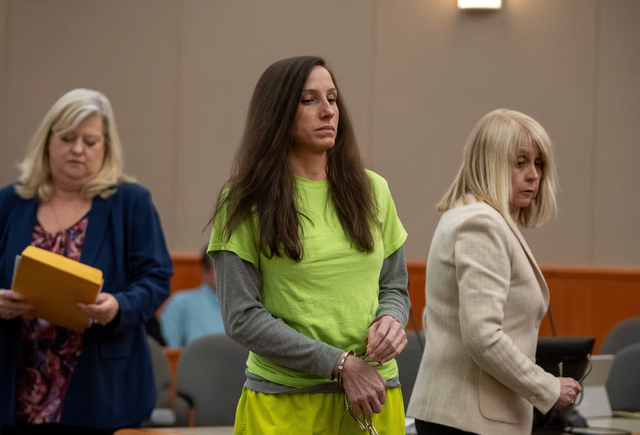
Kouri stood in her lime-green uniform and told her sons: be like your dad. Serve your community. Be generous. Be noble sons.
The same sons who had asked the court never to let her out.
She said she would appeal. That she would fight for as long as it takes. She still insists she is innocent, and that the verdict is “an absolute lie.”
The book stayed on sale for a while. A boy with a ball. A father-angel in the clouds. The first children’s book about surviving the death of a father.
Written — by other hands — by the woman who planned that death, rehearsed it on Valentine’s Day, and finished it seventeen days later.
The title turned out to be more precise than she intended.
Are You With Me? — a question three boys have already answered. In a courtroom. Through other people’s voices, because their own wouldn’t hold. With a single word.
No.
This piece is based on court documents and courtroom reporting (CBS News, CNN, ABC News, NBC News, KSL, KUER, The Salt Lake Tribune, Associated Press), March–May 2026. Characterizations of motive and circumstance follow the language of the court, the prosecution, and the trial’s participants.
메타데이터
- post_id
- e554812a2c2f
- slug
- she-wrote-a-childrens-book-about-grief-the-question-is-where-the-grief-came-from-e554812a2c2f
- url
- https://medium.com/@sobserver/she-wrote-a-childrens-book-about-grief-the-question-is-where-the-grief-came-from-e554812a2c2f
- canonical_url
- https://medium.com/@sobserver/she-wrote-a-childrens-book-about-grief-the-question-is-where-the-grief-came-from-e554812a2c2f
- author_url
- https://medium.com/@sobserver
- status
- ok
- fetched_at
- 2026-07-13 20:16:07




