How We Helped Turn AI Agent Prototypes Into an Enterprise Platform
A technically grounded look at how we helped evolve an AI agent initiative into a scalable enterprise platform built around the OpenAI…
How We Helped Turn AI Agent Prototypes Into an Enterprise Platform
A technically grounded look at how we helped evolve an AI agent initiative into a scalable enterprise platform built around the OpenAI Agents SDK.
Check out the full case study HERE
A global manufacturer of agricultural machinery and heavy equipment had already built several AI agents for its supply chain organization. The prototypes were delivering value, and additional use cases were already emerging. The next stage of the initiative depended less on adding another agent than on establishing an architecture that engineering teams could extend without creating a growing collection of independent implementations.
That became the focus of our six-week AI Advisory engagement.
Working closely with the client’s engineering teams, we reviewed the existing architecture, identified the areas most likely to limit future expansion, and developed a roadmap for an enterprise AI agent platform that could grow alongside the organization’s needs.
Looking beyond individual agents
The project didn’t begin with a blank page.
The client had already developed a triage agent alongside several agents supporting specific supply chain workflows. Each addressed a particular operational need, but the platform itself was expected to support many more use cases over time.
Scaling that initiative raised a different set of engineering questions.
How should agents share tools and capabilities? How should context be managed across workflows? How should knowledge be introduced without duplicating logic? What evaluation strategy would make it possible to improve the platform over time? How should observability be designed so that teams could understand what was happening once agents began interacting with external systems?
These questions shaped the direction of the engagement.
Establishing an architectural direction
Rather than producing a list of isolated recommendations, we focused on defining a target architecture that engineering teams could use as a reference while expanding the platform.
The engagement combined architecture review, technical advisory, code examples, proofs of concept, educational workshops, and implementation guidance around the OpenAI Agents SDK. Together, these activities helped translate architectural principles into practical engineering decisions.
One of the key recommendations was introducing a modular extension model.
Instead of treating every new agent as a separate implementation, the proposed architecture allows tools, skills, knowledge sources, personas, and integrations to be added through reusable components that can be discovered and extended dynamically. As the number of supported workflows grows, engineering teams can expand platform capabilities without repeatedly redesigning the underlying architecture.
Alongside that work, we prepared recommendations covering context management, evaluation, observability, governance, and application integration patterns.
Building observability into the platform
As AI systems become part of day-to-day operations, understanding how they behave becomes just as important as implementing new capabilities.
The advisory therefore included an evaluation framework based on real user interactions, together with recommendations covering tracing, monitoring, and observability. We also prepared an Architecture Decision Record comparing five observability platforms, providing the client with a structured basis for selecting the solution that best matched its technical requirements.
Knowledge transfer formed an important part of the engagement as well. Technical workshops, implementation examples, and discussions around architectural trade-offs helped engineering teams understand both the recommended approach and the reasoning behind it.
Check out the full case study HERE
From architectural roadmap to production
Following the advisory phase, the recommendations became part of the client’s implementation roadmap and supported the transition toward engineering delivery.
The platform has since been deployed to production, where it handles hundreds of requests each day.
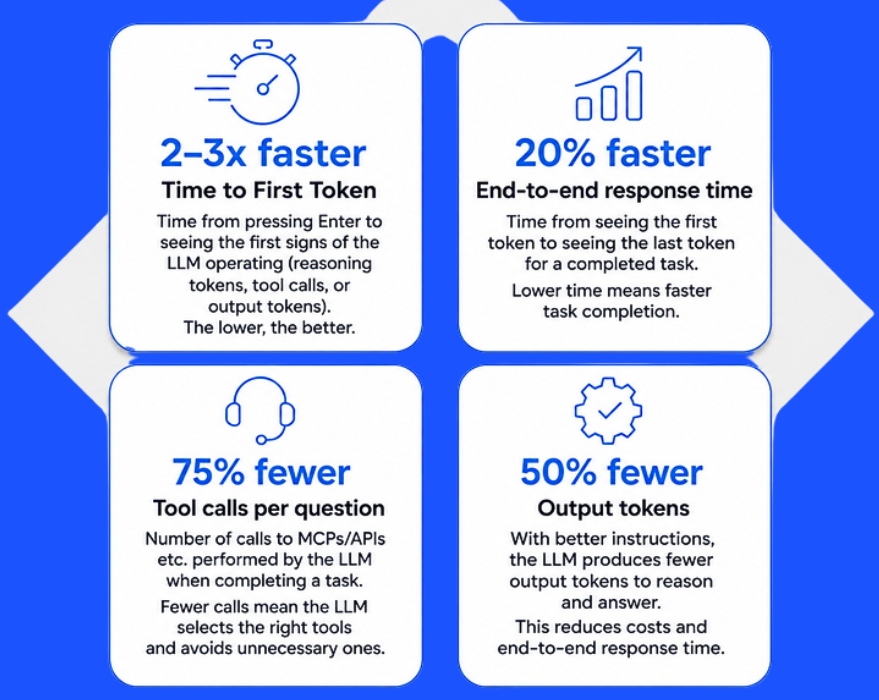
During implementation and optimization, the platform also achieved measurable improvements across several operational metrics:
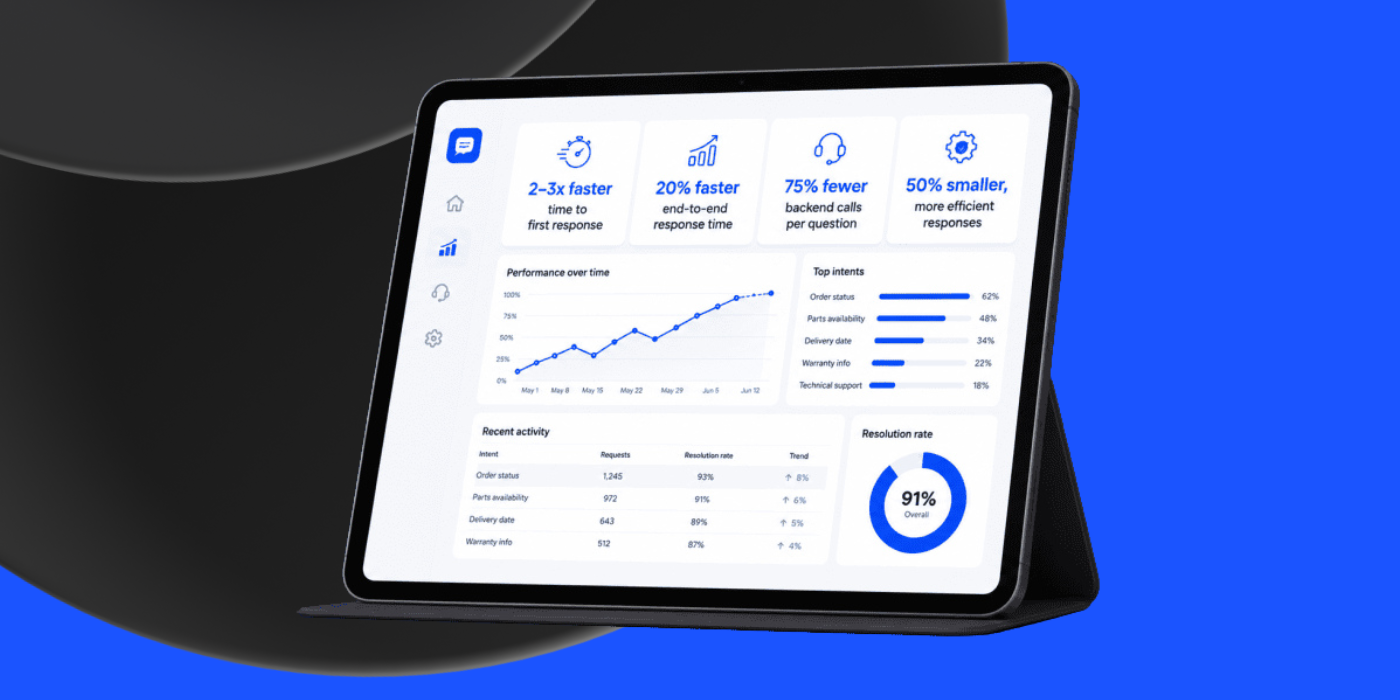
- 2–3× faster Time to First Token
- 20% lower end-to-end response time
- 75% fewer tool calls per request
- 50% reduction in output tokens
Together, these improvements reduced latency, lowered unnecessary interactions with backend systems, and improved overall execution efficiency.
A foundation for future expansion
The engagement gave the client a shared architectural direction before additional AI agents were introduced across the organization.
Instead of expanding the platform through a growing collection of independent implementations, engineering teams now have a framework designed around modular extensions, evaluation, observability, context management, and governance. Those architectural foundations make it easier to introduce new supply chain use cases while maintaining consistency across the platform.
**The full case study** explores the engagement in greater detail, including the target architecture, implementation approach, and the technical decisions that shaped the final solution.
메타데이터
- post_id
- e8f06c93251c
- slug
- how-we-helped-turn-ai-agent-prototypes-into-an-enterprise-platform-e8f06c93251c
- url
- https://medium.com/deepsense-ai/how-we-helped-turn-ai-agent-prototypes-into-an-enterprise-platform-e8f06c93251c
- canonical_url
- https://medium.com/deepsense-ai/how-we-helped-turn-ai-agent-prototypes-into-an-enterprise-platform-e8f06c93251c
- author_url
- https://medium.com/@deepsense-ai-team
- status
- ok
- fetched_at
- 2026-07-11 02:45:20