The murder of Muammar Gaddafi was tantamount to the murder of Libya
On October 20, 2011, Libya’s Muammar al-Gaddafi was brutally murdered by a mob of NATO-backed ‘rebels’, after first being beaten and…
The murder of Muammar Gaddafi was tantamount to the murder of Libya
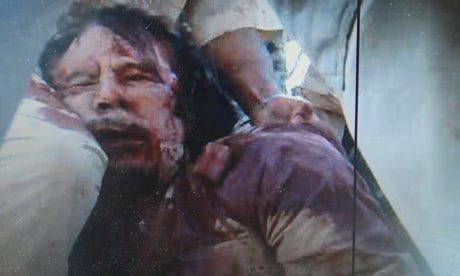
On October 20, 2011, Libya’s Muammar al-Gaddafi was brutally murdered by a mob of NATO-backed ‘rebels’, after first being beaten and violated in the most barbaric fashion. History leaves no doubt that not only was the Libyan leader murdered on this day, but so was Libya itself.
The regime-change crew who dominate Western governments have a long indictment sheet against their names. Since 9/11 they have wrought havoc and human misery on a grand scale in their determination to reshape and own a world that has never been theirs to own. The former Yugoslavia, Afghanistan, Iraq, Libya, Syria — and currently with Venezuela in its malign crosshairs — this is the miserable legacy of nations that speak the language of democracy while practising the politics of domination.
Of the aforementioned victims of Western imperialism, there is a strong argument to be made that Libya’s destruction in 2011 constitutes an especially grievous crime. After all, in 2010, the year before this North African state experienced its ‘revolution’, the United Nations Development Programme considered Libya a high development country in the Middle East and North Africa.
In concrete terms this status translated to a literacy rate of 88.4%, a life expectancy of 74.5 years, the advance of gender equality, and various other positive indicators. In addition, Libya enjoyed 4.2% economic growth in 2010, and could boast of foreign assets in excess of $150 billion.
Compare this record to Libya in 2025, where according to a report by Human Rights Watch, ‘Migrants and asylum seekers, including children, [are] arbitrarily detained in facilities controlled by armed groups affiliated with both governments or smugglers and traffickers, suffering inhumane conditions, torture, forced labor, and sexual assault.’
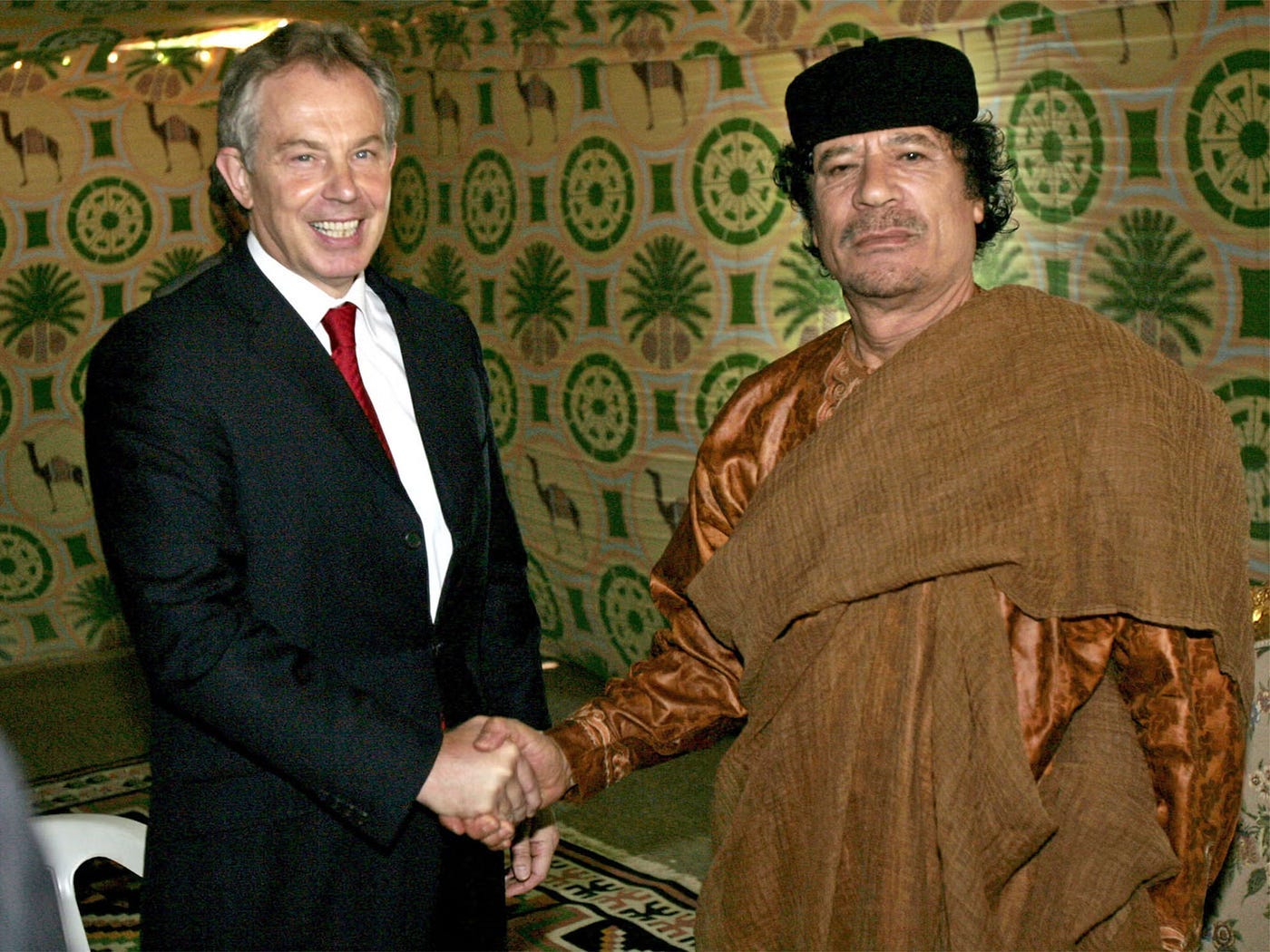
The impact of the chaos that has engulfed the country since Gaddafi was overthrown and murdered can be measured by the flood of Libyans who have attempted the perilous journey across the Mediterranean with the objective of reaching Europe. In the process untold thousands have perished.
How Libya’s turmoil unfolded
UN Security Council Resolution 1973, passed in March 2011, marked the end of the Arab Spring and the beginning of the Arab Winter. The mass and popular demonstrations that had succeeded in toppling Tunisian dictator Ben Ali and is Egyptian counterpart Hosni Mubarak were not replicated in Libya.
Instead, in Benghazi, where the anti-Gaddafi movement was centred, Islamists predominated. There was no nationwide mass movement in Libya, such as those that swept across Tunisia and Egypt, and no popular support for toppling a government and leader who presided over a society that enjoyed the highest standard of living of any in Africa.
Loyalist Gaddafi forces were defeated by NATO not the opposition forces emanating from Benghazi. Indeed, it was at the point at which the country’s armed forces were approaching Benghazi, preparatory to crushing the uprising, that NATO intervened — based on the lie of protecting civilians when in truth it was intent on regime change in order to protect investments.
Gaddafi’s crime in the eyes of the West was not that he was an authoritarian dictator — how could it be when their closet ally in the region was then and remains now Saudi Arabia?
No, Gaddafi’s crime in their eyes, as revealed in a tranche of classified Clinton emails, released by Wikileaks in January of 2016, was his intention of establishing a gold-backed currency to compete with the euro and the dollar as an international reserve currency in Africa. In this regard the then French president, Nicolas Sarkozy, and then US secretary of state, Hillary Clinton, were key actors in pushing for NATO intervention.
The Libyan rebels
Western news footage of the rebels in 2011 was largely made up of disparate groups of men driving around in pick-up trucks, some with assault weapons and heavy machine guns mounted on them them, firing salvos into the desert. They lacked discipline, cohesion or organisation, and instead appeared to embody the very definition of ‘rag-tag’.
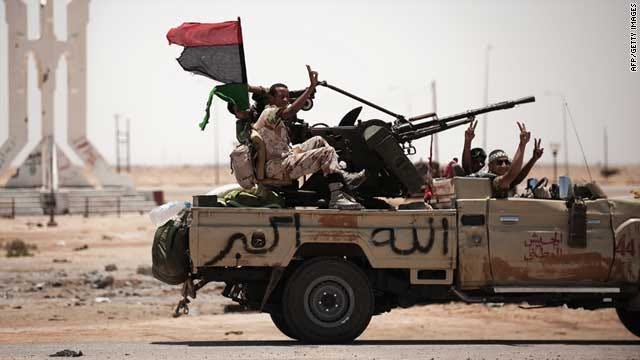
One political commentator who agreed with that analysis was the estimable Patrick Cockburn. Writing in August 2011, he argued persuasively: ‘Gaddafi may fall, but it looks increasingly that, if he does, it will be at the hands of a rag-tag collection of militias ever more dependent for success on being backed by tactical support from Nato aircraft. Given that the rebels lack a coherent leadership or a united military force, the outcome is unlikely to be a clear-cut victory. Even if victorious, the rebels will depend on foreign support at every level to exert authority over this vast country.’
US foreign policy expert and academic, Michael MacDonald, noted how ‘America’s European and Arab allies publicly pressured the United States to intervene in support of insurgents that were fighting Muammar Gaddafi.’
The question of why those European and Arab allies of Washington would do so is even more important when we consider that a proposal for a peaceful resolution to the conflict, drawn up by the African Union, was instantly dismissed both by the rebels fighting the regime and their backers in the West.
Gaddafi’s role
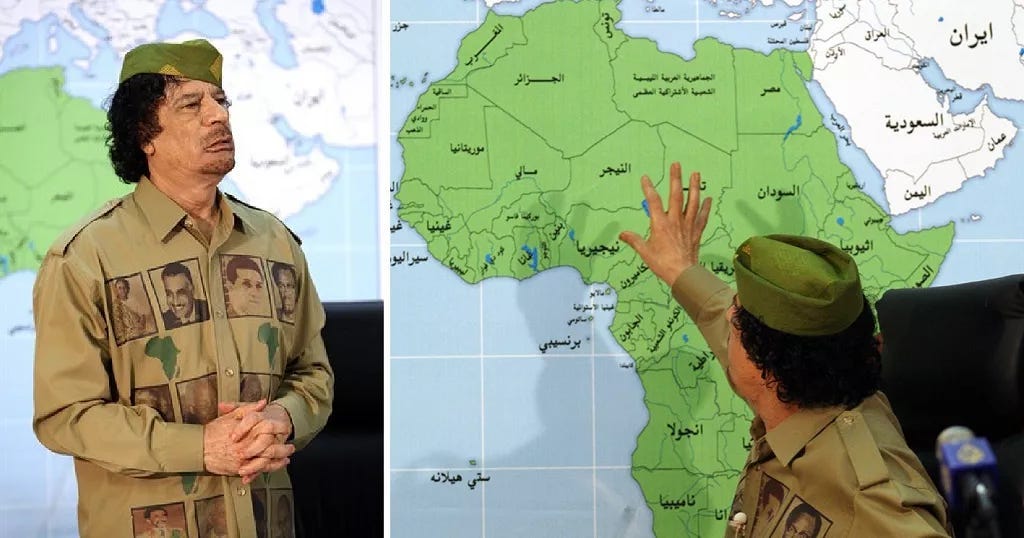
Gaddafi’s role as a founding member of the AU is crucial here. His staunch support for the aims and objectives of the organisation from its inception with the Sirte Declaration of 1999 — when African heads of state meeting in the Libyan city under the banner of its forerunner the OAU (Organisation of African Unity), put out the call for the establishment of an African Union. Their primary objective in doing so was to accelerate the ‘process of integration in the continent to enable it to play its rightful role in the global economy while addressing multifaceted social, economic and political problems compounded as they were by certain negative aspects of globalisation.’
This pan-African founding principle of the AU is the reason that its attempt to intervene in the Libyan conflict in 2011 was rebutted. For Western governments and Western ideologues, Africa and Africans in the 21st century still constituted the lowest rung in the ladder of status and importance when it came to resolving crises enveloping their own continent and region.
Press enter or click to view image in full size
Here we discern the rotten residue of centuries of colonialism, underpinned by racism, which holds that universal cultural values are Western cultural values and that civilisation and the West constitutes two sides of the same coin.
Given Gaddafi’s commitment to pan-Africanism as an antidote to the super- exploitation and immiseration suffered by the continent over generations of colonialism and imperialism, and with one of the primary goals of the AU closer integration of African states, the organisation was not considered an impartial actor in the conflict. This is confirmed by the details of the AU proposal itself, which in the eyes of a West that was by then committed to the objective of regime change, contained the fatal flaw of neglecting to include the non-participation of Gaddafi and his sons in Libya’s future.
Impartial?
But, then, what is the definition of impartial when it comes to regime change? Taken from the perspective of the sovereign government of an African state being removed at the behest of NATO military intervention, unleashed on the back of a UN Security Council resolution which, as explored, was wilfully manipulated to topple the Libyan leader and his government, preparatory to him being murdered at the hands of a mob, impartiality has no place. It certainly had no place in the actions of NATO, which, as seen, focused its efforts on attacking pro-government forces in order to ensure a victorious outcome for the various armed factions arrayed against them.
Press enter or click to view image in full size
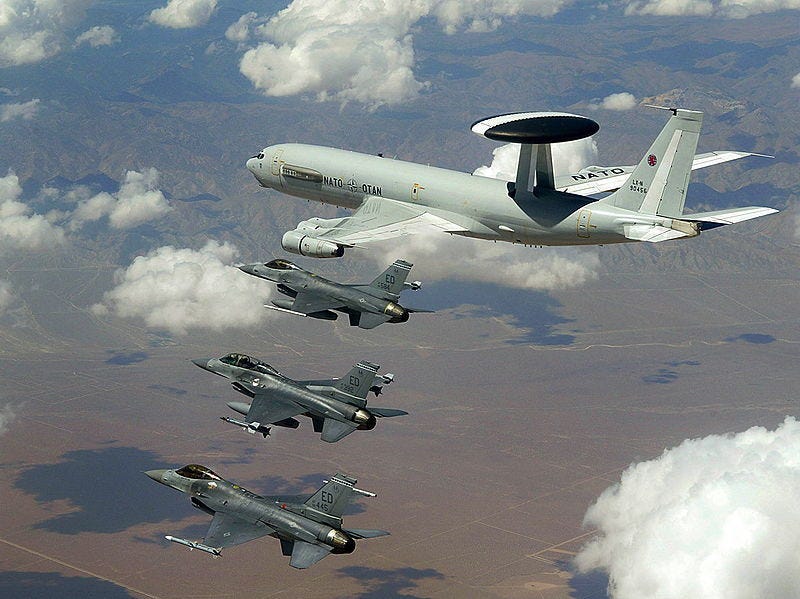
NATO fighters flying a sortie over Libya, 2011
This was an analysis confirmed by Barack Obama in thewide-ranging interview he gave with Jeffrey Goldberg of The Atlantic magazine in 2016 on his foreign policy record, with particular emphasis on the challenges his administration had faced in the Middle East.
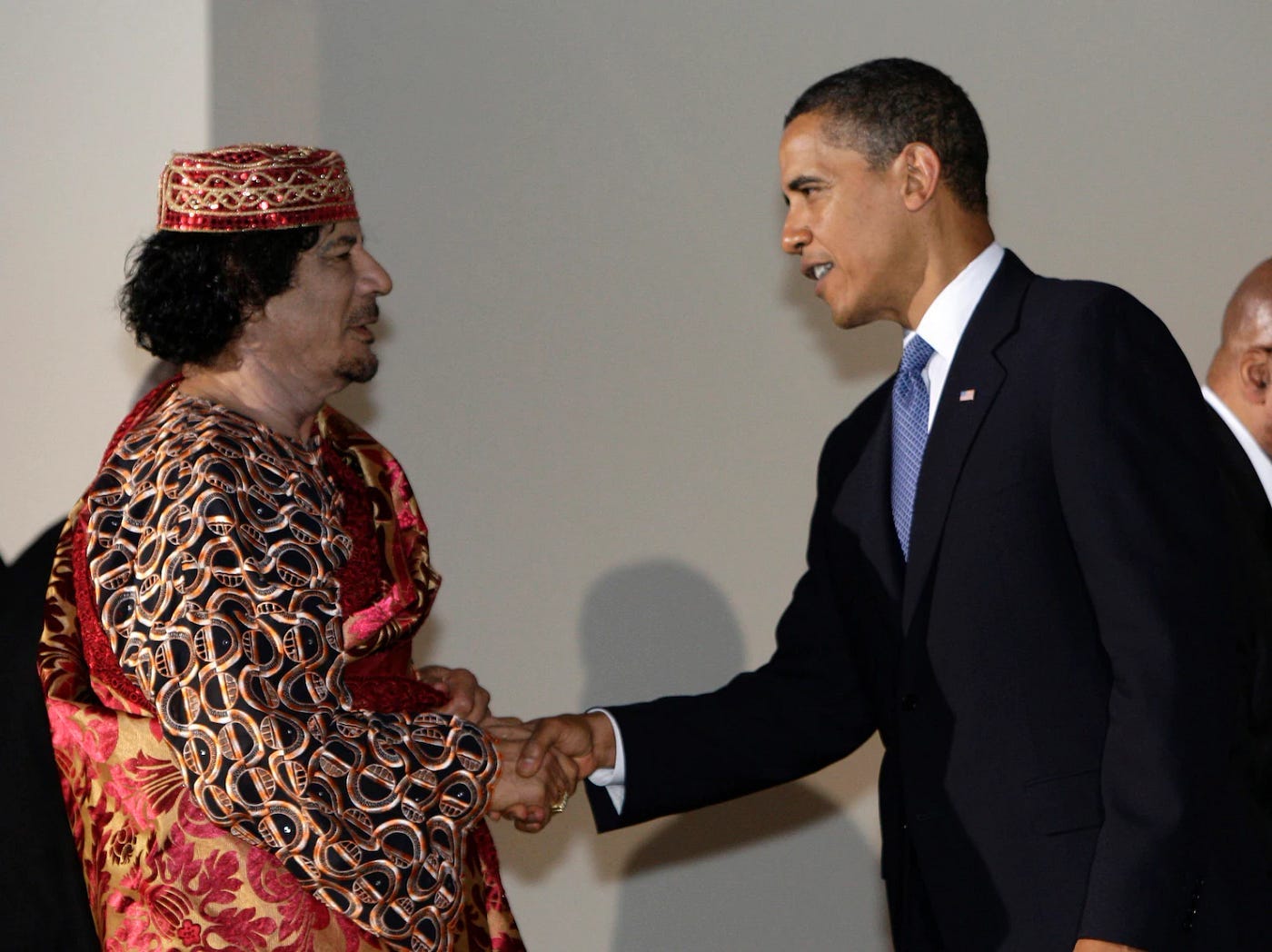
Specifically, on Libya, Goldberg reveals how ‘privately, he [Obama] calls Libya a “shit show,” in part because it’s subsequently become an ISIS [Daesh] haven — one that he has already targeted with air strikes. It became a shit show, Obama believes, for reasons that had less to do with American incompetence than with the passivity of America’s allies and with the obdurate power of tribalism.’
While Obama may have had a case when it came to the role that British prime minister David Cameron and French president Nicolas Sarkozy played in making the case for intervention in Libya, his own responsibility for the disaster that befell the country cannot be so conveniently abdicated.
Step forward AFRICOM
But this alone failed to answer the question of why the US would allow itself to become embroiled in yet another military intervention in the region at a time when the fallout from the disasters of its prior interventions in Afghanistan and Iraq had yet to run their course, and moreover evinced no sign of doing so anytime soon? In locating the answer to this question we must turn to the establishment and role of the United States Africa Command (AFRICOM).
On its website, under the heading ‘Mission’, a single, short paragraph outlines the purpose of AFRICOM as one of six US Defense Department geographic global commands which in the 21st century are entrusted with the task of maintaining the ‘full spectrum dominance’ of US military power.
United States Africa Command, in concert with interagency and international partners, builds defence capabilities, responds to crisis, and deters and defeats transnational threats in order to advance U.S. national interests and promote regional security, stability, and prosperity.
Reading this we are bound to ponder the question of what gives the United States the moral or ethical right to establish an ‘Africa Command’ in the first place? How deep must be the well of imperial arrogance in Washington to believe it has such a right? It also leads us to ponder what the reaction would be in Washington or London or Paris if China or Russia were to establish and operate an ‘Africa Command’? Or even more pertinently, imagine a world in which a United States of Africa established a ‘North America Command.’ It surely goes without saying that until we start imagining such a world we shall forever remain prisoners of the accomplished fact.
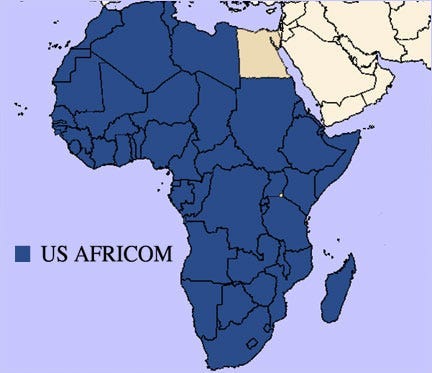
Despite the establishment of Africom in 2007, in 2011 its headquarters remained far removed from Africa in Germany at Kelley Barracks in Stuttgart to be precise. Washington’s only permanent military base on the African continent four years after AFRICOM was brought into being was at Camp Lemonnier in Djibouti, a facility which started life as a US Marine Corps base in 2003 before being handed over to US CENTCOM (US Central Command) in 2006, after which it was reassigned in support to US Africa Command in 2008.
Exploring the motives behind the formation of AFRICOM, we cannot overlook the centrality of the struggle for the control and domination of natural resources that has long been the driver of the chaos and conflict in the Middle East and throughout the Global South. In this regard, the fact that AFRICOM was the brainchild of a group of oil industry lobbyists in conjunction with a group of US congressmen in Washington in 2002 tells its own story.
Oil
Under the auspices of the African Oil Policy Initiative Group (AOPIG), said lobbyists produced a white paper arguing the case for why the US government should prioritise securing a foothold in Africa, especially West Africa from where the US at the time derived an increasing percentage of its oil imports.
In 2002 the AOPIG projected that by 2015, 25 percent of all US oil imports would emanate from sub-Saharan Africa, compared to the 16 percent it was importing in 2002. Time would prove this projection wholly inaccurate. In fact, rather than the percentage of US oil imports from Africa increasing to a quarter of its total needs, US oil imports from West Africa would decrease rather than increase due to the growth of the US domestic fracking industry and the production of shale gas as an alternative energy source.
However, though oil may have been one factor in Washington’s strategic thinking when it came to Africa back in 2002, it was by no means the only factor. One man who was never in any doubt as to the nature of Africa’s importance to Washington was Gaddafi himself.
Addressing the fifth Summit of the African Union in 2005, the Libyan leader said: ‘They are the ones who need Africa — they need its wealth. Fifty percent of the world’s gold reserves are in Africa, a quarter of the world’s uranium resources are in Africa, and 95% of the world’s diamonds are in Africa. A third of chrome is also in Africa, as is cobalt. Sixty-five per cent of the world’s production of cocoa is in Africa. Africa has 25,000km of rivers. Africa is rich in unexploited natural resources, but we were [and still are] forced to sell these resources cheaply to get hard currency. And this must stop.’
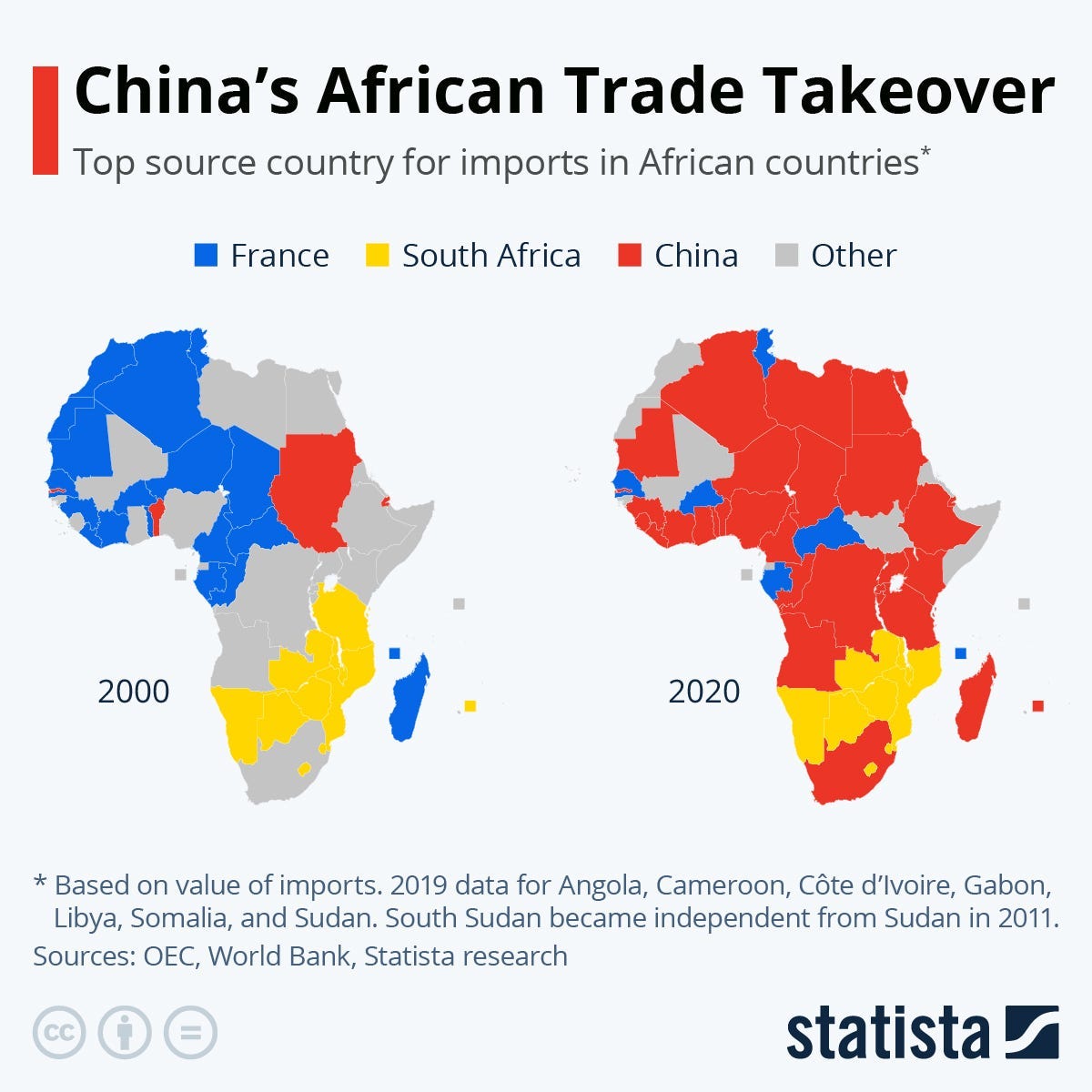
So here we see that in 2011, even though access to African oil may not have been a key factor when it came to Washington’s motives for supporting regime change in Libya, the continent’s extensive mineral deposits undoubtedly were. Add to this the threat posed by China’s growing presence in Africa, providing an alternative source of investment to that provided by the West — one that did not come attached with the kind of punitive terms that characterised Africa’s relationship with the IMF and World Bank in the 1980s and 90s — and things become clearer.
China’s growing footprint in Africa
Regarding the specifics of China’s presence in Africa, writer and author Martin Jacques describes a ‘distinctive Chinese model of development, characterised by large-scale, state-led investments in infrastructure and support services, and aid which is less tied to the donor’s economic interests and less overwhelmingly focused on the extraction of minerals as in the case of the West.’
China, it should not be forgotten, also had a longstanding policy of not involving itself in the internal affairs of other states, unlike its Washington and Western counterparts — no surprise given Beijing’s historical experience at the hands of colonialism and imperialism.
Further evidence of Africa’s importance to Washington lay in the Obama administration’s establishment of the “Young Africans Leadership Initiative” (YALI) in 2010. Sold as “a long-term effort to invest in the next generation of African leaders and strengthen partnerships between the United States and Africa,” YALI was a classic example of soft power projection with the objective of cultivating future African leaders and high achievers with a pro-US bent and worldview. Where in bygone centuries missionaries decamped to Africa intent on spreading the word of God, today the intent is to to spread the word of ‘democratism’, which is not to be confused with democracy, and promote US and Western cultural values.
The mainstream media narrative of the conflict in Libya implied that Gaddafi, along with a few diehard loyalists and African mercenaries, was pitted against a risen people struggling to emancipate themselves from tyranny.
But as Hugh Roberts wrote in an LRB (London Review of Books) piece in November 2011: ‘The idea that Gaddafi represented nothing in Libyan society, that he was taking on his entire people and his people were all against him was another distortion of the facts. As we now know from the length of the war, the huge pro-Gaddafi demonstration in Tripoli on 1 July, the fierce resistance Gaddafi’s forces put up, the month it took the rebels to get anywhere at all at Bani Walid and the further month at Sirte, Gaddafi’s regime enjoyed a substantial measure of support.’
Endgame
At the beginning of 2011, Gaddafi’s leadership in Libya was caught in a whirlwind of events that were outwith his control. The country had been plagued by the same crisis of youth unemployment that was endemic across a region in which expectations cultivated by a sharp increase in educational attainment could not be matched by economic and career opportunities.
Yes, there was corruption, mismanagement of resources, and a grievous lack of economic diversification. But such maladies were not confined to Libya. Moreover, any rendering of post colonial countries and societies, such as Libya, must take as their starting point the role of colonialism in retarding said countries’ social, political, and economic development. As Ghana’s Kwame Nkrumah, already mentioned, once reminded his critics: ‘Those who would judge us merely by the heights we have achieved would do well to remember the depths from which we started.’
The key factor in the uprising that erupted in Benghazi was the contagion effect of the popular revolution that had taken place across Libya’s eastern border in Egypt, which proved the catalyst required by disaffected social forces in Libya’s second city to seize the opportunity to try and emulate it.
As for those staunch opponents of Muammar Gaddafi and his leadership, there was no doubting the fact that his overthrow and murder at the hands of NATO-backed rebels did not usher in the liberal democracy of which David Cameron and Nicolas Sarkozy had prematurely boasted when they visited Benghazi as the ‘revolution’ approached its climax. Instead it pushed the country into an abyss of extremism, factionalism and civil conflict.
Muammar Gaddafi’s murder and Libya’s destruction at the hands of NATO was indeed a crime of the ages.
End.
Thank you for taking the time to read my work. If you enjoy my writing and would like to read more, please consider making a donation in order to help fund my efforts. You can do so here. You can also grab a copy of my book, ‘This Boxing Game: A Journey in Beautiful Brutality’, from all major booksellers, and my fiction novels ‘Gaza: This Bleeding Land’ and ‘The Ocean’ from same.
메타데이터
- post_id
- ef1571dc66f1
- slug
- the-murder-of-gaddafi-should-never-be-forgotten-nor-forgiven-ef1571dc66f1
- url
- https://medium.com/@johnwight1/the-murder-of-gaddafi-should-never-be-forgotten-nor-forgiven-ef1571dc66f1
- canonical_url
- https://medium.com/@johnwight1/the-murder-of-gaddafi-should-never-be-forgotten-nor-forgiven-ef1571dc66f1
- author_url
- https://medium.com/@johnwight1
- status
- ok
- fetched_at
- 2026-06-09 15:37:30