Learning on an Empty Stomach
Why Hunger Steals Kids’ Futures
Learning on an Empty Stomach
Why Hunger Steals Kids’ Futures
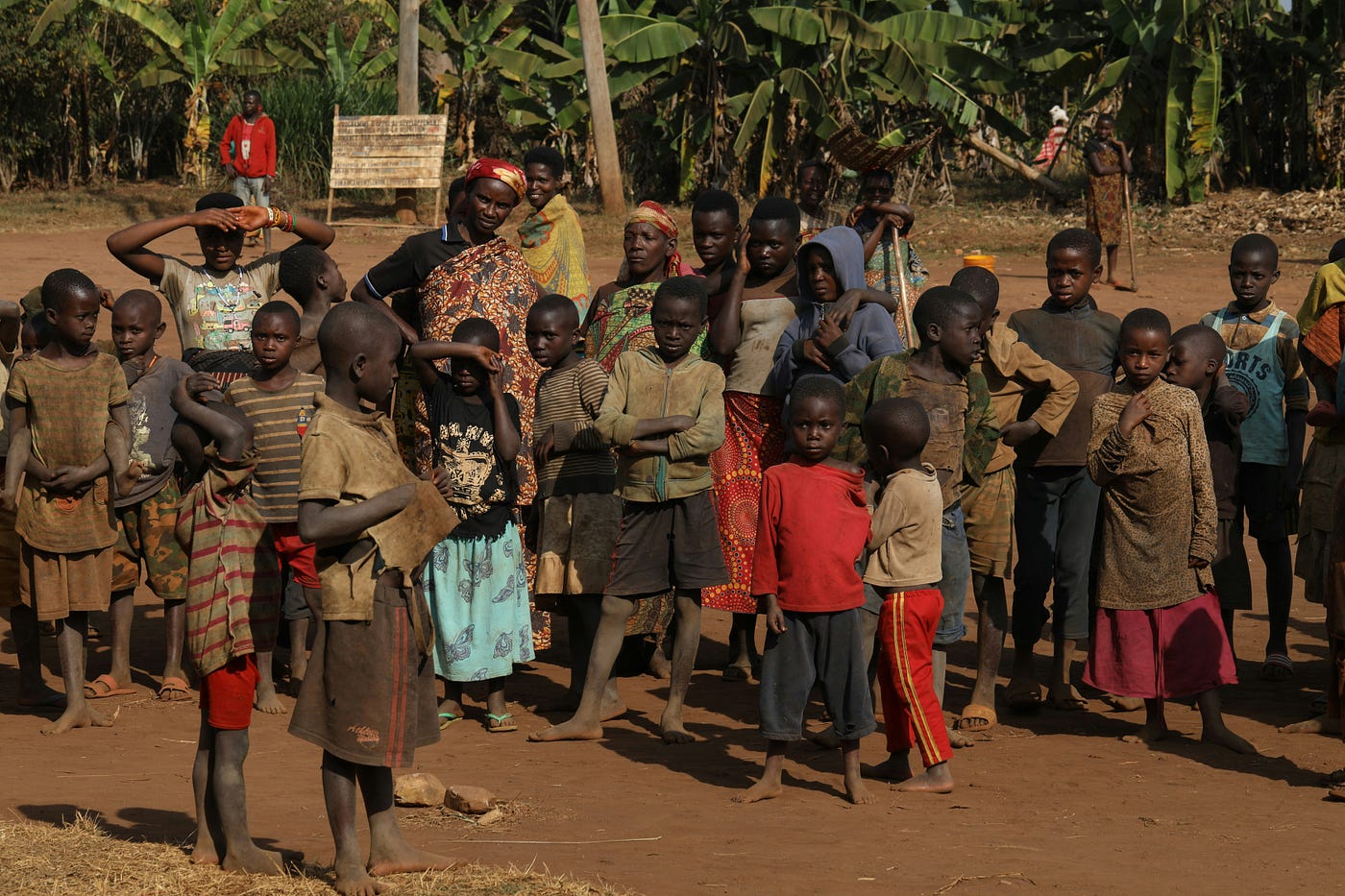
Photo by Armando fera on Unsplash
Amina wakes up at 5 a.m. Her village is a 40-minute walk from the nearest primary school in Malawi. She doesn’t eat breakfast — not because she’s running late, but because there isn’t any. Her last meal was yesterday afternoon, a plate of ugali split four ways with her siblings.
She goes anyway. Her uniform is faded, her notebook half-gone. But she shows up, like always.
This isn’t an inspirational story about resilience. This is the reality for 148 million children worldwide living with stunting — a chronic condition caused by malnutrition that damages brain development and physical growth. UNICEF’s 2024 data shows that number has barely moved, despite decades of intervention programs.
In Asia, the 2025 projection looks slightly better: stunting prevalence is expected to drop to 17%, or about 57 million children. But “better” is relative here. That’s still the entire population of South Korea — kids whose brains won’t develop to their full potential because they didn’t get enough protein and micronutrients in their first 1,000 days of life.
Hunger Doesn’t Just Steal Energy — It Steals Focus
Research by Wesnes et al. (2022) found that children who skip breakfast lose roughly 20% of their concentration capacity and short-term memory. Imagine sitting in math class, trying to understand fractions, while your stomach keeps growling and your head feels light.
A teacher in Lagos once told WFP researchers, “They’re present, but they’re not really in the room.”
School feeding programs help. WFP reported in 2025 that 20 million children in Africa receive free school lunches. The results are measurable: attendance up 40%, average grades improved. In India and Bangladesh, fortified biscuit programs drove enrollment up 9% and attendance 8%.
But that’s just a fraction. Most children in remote villages — where schools have no kitchens, no electricity, no clean water — still arrive on empty stomachs. And go home on empty stomachs.
Numbers Like That Don’t Mean Much Until You See Them
148 million stunted children. 57 million in Asia. 808 million people living in extreme poverty across Africa and South Asia (World Bank, 2025).
Those numbers are abstract until you sit in a fourth-grade classroom in Tanzania and watch half the students fall asleep by 10 a.m. Or hear a headmaster in Bangladesh explain that one in five of his students regularly skips school because they need to help their parents find food.
UNICEF reports that roughly one in five primary school kids in poor regions risk dropping out — not because they’re stupid or lazy, but because they’re hungry or sick from not eating enough. The system failed to provide the most basic thing: food.
The Nine-to-One Return — and Why That Still Misses the Point
UNESCO has run the numbers: every dollar invested in child nutrition and education returns nine dollars in long-term economic productivity. That’s a 900% ROI — better than most hedge funds, tech startups, or infrastructure projects that governments throw billions at without blinking.
If this were about building roads or subsidizing corporations, that kind of return would have policymakers scrambling to sign checks. But it’s about feeding hungry kids, so somehow the conversation always gets stuck in “we’ll consider it” and “budget constraints.”
Let’s be clear: the economic case is airtight. Countries that invested heavily in child nutrition and education in the 1960s-80s — South Korea, Singapore, Costa Rica — saw explosive economic growth within a generation. Meanwhile, regions that neglected it are still struggling with the same poverty traps decades later. The World Bank has documented this pattern repeatedly: malnutrition doesn’t just hurt individuals, it compounds across generations and drags entire economies down.
But here’s the thing — even if the ROI were break-even, even if it were a loss on paper, it would still be the right thing to do.
Kids should be able to learn to read without wondering when their next meal will be. Teachers shouldn’t be waking up students who fainted in class. Parents shouldn’t have to choose between sending their kids to school or feeding them.
The fact that it also happens to be an incredible economic investment? That should make it a no-brainer, not a debate.
If you need the spreadsheet to justify feeding children, fine — the spreadsheet is on your side. But don’t let the humanitarian argument become a footnote to the math. Because ultimately, this comes down to what kind of world we are. One that lets kids learn on empty stomachs while we wait for the cost-benefit analysis to be convincing enough.
What’s Actually Needed
School feeding programs aren’t a magic bullet, but they work. One bowl of corn porridge in Ethiopia can keep a child going until evening. Fortified biscuits in Bangladesh have drawn thousands of kids back to school.
But infrastructure is still a massive problem. Many rural schools have no kitchens, no budget for ingredients, no staff to cook and distribute meals. And that’s before we talk about clean water, toilets, textbooks, and decent teacher salaries.
WFP, UNICEF, and dozens of local NGOs have been at this for years. But the scale is still too small compared to the need. And every time there’s a crisis — pandemic, conflict, drought — these programs are the first to get their budgets slashed.
Twenty-Five Years from Now
If there’s no significant shift in government commitment and international budget allocation, chances are we’ll still be reading articles like this 25 years from now. About children learning on empty stomachs. About stunting rates that are “declining but still high.” About wasted potential.
Or maybe not. It depends on how serious we are — as individuals, communities, nations, and a world — about actually changing it.
School feeding programs need to scale. Education and health budgets in low-income countries need to grow, not shrink during crises. International donors need pressure to stop treating education aid as a political bargaining chip.
This isn’t about charity. This is about a failing system, and our collective responsibility to fix it.
References:
FAO, IFAD, UNICEF, WFP, WHO. (2025). The State of Food Security and Nutrition in the World 2025.
UNESCO. (2025). Global Education Monitoring Report 2025.
UNICEF. (2024). The State of the World’s Children 2024.
WFP. (2025). The 2024 State of School Feeding Worldwide.
Wesnes, K. A., et al. (2022). “Effects of Breakfast on Cognitive Function of Children.” Nutrition Journal.
World Bank. (2025). June 2025 Update to Global Poverty Lines.
This story published on “**Pen With Paper” — a fresh space where writers bring their thoughts, stories, and ideas to life. Want to share your voice? Join our community, and together, “We Elevate Your Stories”**
[embed]Welcome to ‘Pen With Paper’ — A Publication A Newborn Publication to Elevate Your Storiesmedium.com
메타데이터
- post_id
- f11194b07b47
- slug
- learning-on-an-empty-stomach-f11194b07b47
- url
- https://medium.com/pen-with-paper/learning-on-an-empty-stomach-f11194b07b47
- canonical_url
- https://medium.com/pen-with-paper/learning-on-an-empty-stomach-f11194b07b47
- author_url
- https://medium.com/@garinpasila
- status
- ok
- fetched_at
- 2026-08-02 18:10:28