Writing About Trump Without Being Preachy
The deeper issues for each side of a tribal dispute
Writing About Trump Without Being Preachy
The deeper issues for each side of a tribal dispute
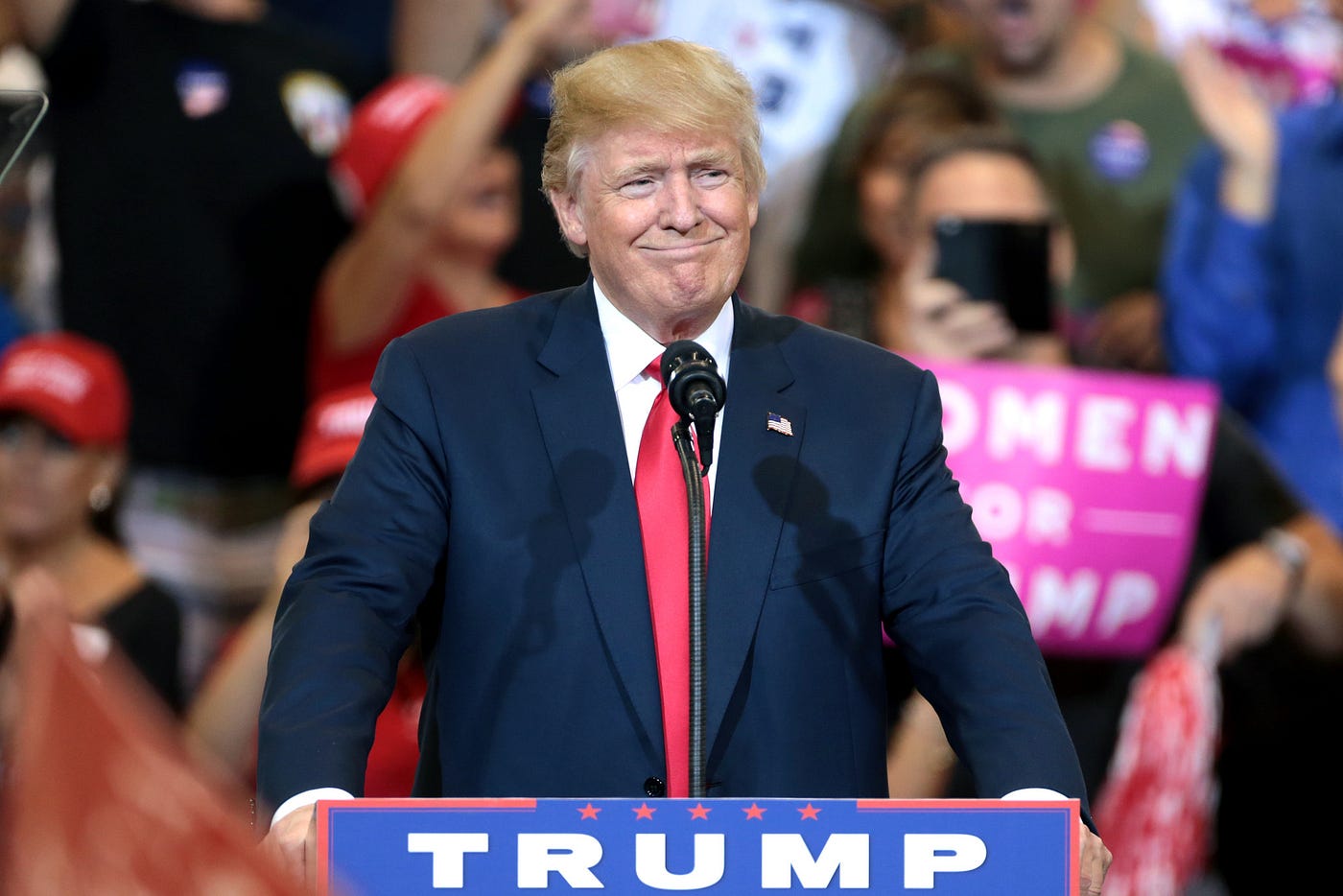
Photo by Gage Skidmore, on Flickr
Writing a political song is fraught because it’s hard to avoid the aesthetic sin of preachiness when criticizing political opponents. But Trumpism isn’t the usual tribal affair, so a song about Trumpism is likely to be about something much deeper than the usual disagreements about policies.
In my first Suno-generated album on YouTube, called “Algos in the Cave,” I wrote a song called “We Want it Medieval.” Here’s the core verse, followed by the chorus:
hail the apocalypse of Trump! modernity is in a slump; immerse us in the grotesque, the nation should be a burlesque; reach for the skies to scale Trump’s lies; the beasts seize the controls, drive trucks through loopholes, rob the mob blind and not even fined; the dark triad is Trump’s launchpad; there’s no great insult in joining this cult: democracy was too much work, the technocrat was just a jerk, voting is hard when the left wing’s barred; better yearn for a strong man, he’ll gut you with a deadpan
bring back the medieval! we want it primeval ride the upheaval but don’t call it evil
Of course, it’s not for me to say, but I believe this song avoids preachiness in two ways.
First, I criticize both sides. I say modernity is in a slump, and the cult of Trumpism is motivated by the weakness of technocratic liberalism. Real leftism, as in the kind of social democracy that’s standard and viable in northern Europe and Canada, has been effectively barred in the US since the New Deal put the kibosh on the Progressive Era’s sentiments. Thus, Americans have subsequently had a false choice between centrism and the neo-medieval, lunatic fringe of so-called “conservatism” that metastasized in the Trump cult.
Also, I focus on criticizing technocratic liberalism in another song on the album, “Lowborn Emperors.”
Second, I adopt the comedian Jon Stewart’s tactic of parodying the opponent by both taking the opposition to the extreme and speaking superficially in favour of it. This is the chorus’s point: let’s recognize the distaste for infantilizing consumerism, and the hyper-masculine backlash that evidently wants a return to medieval brutality. This isn’t just an American phenomenon, mind you, but an authoritarian backlash against democracies all around the world throughout the early twenty-first century.
Bring back the medieval, ride the upheaval, but don’t call it evil. No, whatever you do, don’t call Trumpism evil even though that’s obviously and exactly what it is. The problem is that the very same technocratic conceits that led Hillary Clinton to lose in her 2016 campaign against Donald Trump for the US presidency find moralistic language distasteful.
Instead of moralizing, the urbane professional prefers to think scientifically or quantitatively. Rather than right or wrong, for these coastal elites, there are challenges to be met, efficiencies to consolidate, and optimizations to perform. We need to simply improve ourselves by listening to the experts on psychology and the various social systems.
But this instrumentalism has always been a frustrating dodge. Sure, experts can tell us how to achieve our goals with the greatest efficiency. For instance, you can learn how to tie the best knot for the job by watching some tutorial videos on the subject. But this preoccupation with efficiency doesn’t explain away the philosophical issues of right and wrong.
Specifically, we needn’t give consumerism a pass just because this culture makes the best use of greed. No, we can still ask whether a greedy society is best in the long run. Perhaps, on the contrary, this culture is bad for the business of life because it threatens us with extinction due to global warming, overpopulation, pollution, the sixth mass extinction of wildlife, and so forth.
Now, liberals are too effete not just to resort to moralistic language but to make this language stick. Indeed, technocratic liberals would look phony by throwing around moral absolutes in opposition to the Trumpian apocalypse because these professionals have made a habit of dodging such meta-questions. These liberals don’t recognize the gravity of what’s befallen them in the case of Trump’s demagoguery, because they trust in America’s institutions and the deep state’s elite expertise.
All of these liberal commitments have come crashing down in Trump’s second term in office, so we face a spectacle I described in an article called “The Horror of American Politics: All Dragons, No Knights.” The title says it all: Trump has ridden roughshod over America’s institutions and norms because his conventional political opponents presuppose a kind of civility that Trump and a rural third of the country repudiate.
In short, liberals are liable to lose sight of the existential stakes of the civilized enterprise, and much of my writing aims to foreground those stakes. Civilization has always been up against the wild, as in the cosmic fact of nature’s godlessness, impersonality, amorality, and horrific, monstrous productivity. Civilization rests on a Promethean (secular humanist) ethos. By implicitly opposing that ethos, Trump acts as an avatar for nature’s most repellent aspects, the ones that drove behaviourally modern (culturally obsessed, symbol-using) humans out of Africa and into sedentary societies millennia ago.
(Again, I try not to be preachy since I criticize both sides here, too. Another song on the album, “The Screen,” is about the downside of this divide between naturalness and artificiality, wildness and civility. But that’s another story.)
Anyway, we know that this liberal sidestepping of existential issues has been frustrating since this smug hubris is largely what fuelled the desire for right-wing populism not just in the US but across the democratic board.
Trump campaigned as a fire-breathing populist, just as Adolf Hitler spoke to widespread German resentments before using his democratic success to roll back modernity in favour of tribal, authoritarian, quasi-Nietzschean atrocities. Many demagogues have exploited the weakness of open societies, and when this exploiter happens to be a raging recipient of the dark triad personality (psychopathy, narcissism, and Machiavellianism), you can be sure his or her political power will be used for evil.
What does “evil” mean here? It means the harms that authoritarians tend to do to outsiders (those who reject the leader’s cult of personality), provided that those harms are interpreted from an existential standpoint that recognizes the conditions of life’s struggle with its lifeless maker. Talk of good and evil needn’t be saddled with a childish, obsolete theology. Instead, we can couple morality with an updated philosophy, one that’s consistent even with the technocrat’s adventures in quantitative optimization.
Further reading
- Why Conservatism Still Exists in the Liberal Age
- The Horror of American Politics: All Dragons, No Knights
- Policies Are Irrelevant to American Politics
- There Will be No Left-Wing Version of Trump in America
Check out my music on YouTube:
[embed]
메타데이터
- post_id
- f20f6377c100
- slug
- writing-about-trump-without-being-preachy-f20f6377c100
- url
- https://medium.com/thought-thinkers/writing-about-trump-without-being-preachy-f20f6377c100
- canonical_url
- https://medium.com/thought-thinkers/writing-about-trump-without-being-preachy-f20f6377c100
- author_url
- https://medium.com/@benjamincain8
- status
- ok
- fetched_at
- 2026-07-16 10:44:58