Life on Mars: What Would an Ordinary Day Look Like?
Imagine waking up on Mars. Discover what an ordinary day on the Red Planet could look like, from growing food and working in space habitats…
Life on Mars: What Would an Ordinary Day Look Like?
For decades, Mars has captured the imagination of scientists, dreamers, and storytellers. We have sent robots, studied its surface, and even started planning future human missions. But beyond the science and technology, there is a fascinating question many people rarely think about:
What would an ordinary day on Mars actually look like?
Would it feel like living on Earth with a different view outside the window? Or would every moment remind us that we are living on a distant planet millions of kilometers away from home?
Let's imagine a future where humans have successfully built a small colony on Mars and explore what daily life might really be like.
Waking Up Under an Alien Sky
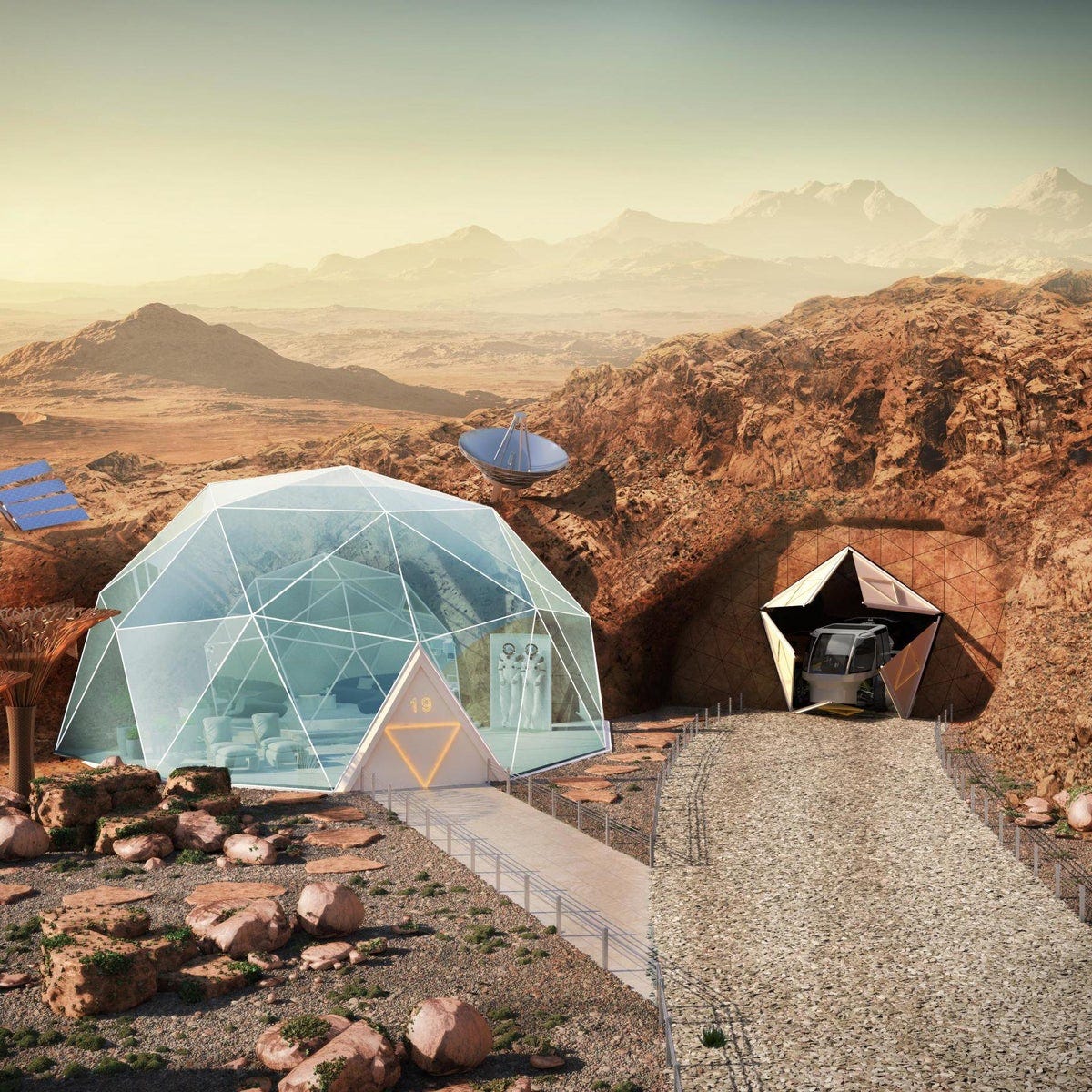
Your day would probably begin inside a carefully designed habitat. Since Mars has an extremely thin atmosphere and temperatures that can drop below -100°C (-148°F), stepping outside without protection would be impossible.
Instead of waking up to birds singing or traffic noises, you might hear the quiet hum of life-support systems that constantly provide oxygen, regulate temperature, and recycle water.
One interesting fact is that a Martian day, known as a "sol," lasts about 24 hours and 39 minutes. That means your daily schedule would be slightly longer than Earth's, giving you an extra 39 minutes every day.
Outside your window, the sky would appear different from Earth's. During the day, it would have a reddish or butterscotch tint due to the fine dust in the atmosphere.
Breakfast on the Red Planet
Food would be one of the biggest differences between life on Earth and Mars.
Fresh groceries from a supermarket would not exist. Most food would be grown inside special greenhouses or hydroponic farms.
A typical breakfast might include:
- Leafy greens grown indoors
- Potatoes cultivated in Martian soil simulations
- Protein produced from lab-grown sources
- Fresh vegetables harvested that morning
Scientists are already experimenting with ways to grow crops in space-like conditions. Future Martian settlers may become part farmer and part astronaut.
Nothing would be wasted. Every drop of water and every piece of food would be carefully managed because supplies would be precious.
Going to Work
Life on Mars would not be a permanent vacation.
People would have jobs just as they do on Earth. Some might be scientists studying geology and climate. Others could be engineers maintaining life-support systems. Doctors, teachers, technicians, and farmers would all play essential roles.
One of the most important jobs would be maintaining the colony itself.
On Earth, if a power outage happens, it is inconvenient. On Mars, a major system failure could threaten the survival of everyone in the settlement.
As a result, regular inspections, repairs, and monitoring would be part of everyday life.
Stepping Outside
Going outdoors would require preparation.
Before leaving the habitat, astronauts would put on specialized spacesuits designed to protect them from:
- Extreme cold
- Radiation
- Low atmospheric pressure
- Dust storms
A simple walk outside would feel extraordinary.
The landscape would feature vast deserts, giant volcanoes, rocky plains, and distant mountains. Mars is home to Olympus Mons, the largest volcano in the Solar System, and Valles Marineris, a canyon system far larger than Earth's Grand Canyon.
Even routine tasks outside would remind settlers that they are living on another world.
Staying Active in Low Gravity
Mars has only about 38% of Earth's gravity.
This means a person weighing 70 kilograms on Earth would feel much lighter on Mars.
Walking, lifting objects, and moving around would feel different. You could jump higher and carry heavier items with less effort.
However, lower gravity also creates challenges.
Long-term exposure can weaken muscles and bones, which means daily exercise would be essential. Colonists might spend several hours each day using specialized equipment to stay healthy.
Exercise would not just be about fitness—it would be a medical necessity.
Communication With Earth
One thing future Martian residents would quickly learn is patience.
Messages sent between Earth and Mars cannot travel instantly. Depending on the planets' positions, communication delays can range from a few minutes to over twenty minutes in one direction.
Imagine sending a text message and waiting nearly an hour for a complete conversation.
Video calls would feel very different from what we experience today.
Despite advanced technology, Mars settlers might feel more isolated than any humans before them.
Leisure and Entertainment
People living on Mars would still need fun, relaxation, and social connections.
After work, colonists might:
- Watch movies
- Play games
- Read books
- Exercise
- Participate in community events
- Explore virtual reality experiences
Virtual reality could become especially important, allowing people to experience forests, beaches, cities, and natural environments that do not exist on Mars.
Simple Earth experiences—walking through a park, listening to rain, or feeling ocean waves—might become treasured memories.
The Challenge of Dust Storms
Mars is famous for its dust storms.
Some storms can grow large enough to cover the entire planet.
During these periods, outdoor activities would be limited. Colonists would stay inside their habitats while monitoring power systems and equipment.
These storms might become a normal part of life, much like hurricanes or snowstorms on Earth.
However, they would also serve as a constant reminder that Mars remains a harsh and unpredictable environment.
Looking Up at the Night Sky
Perhaps the most emotional moment of the day would come at night.
Standing inside a habitat dome and looking upward, settlers would see a sky unlike any on Earth.
The stars would shine brightly through the thin atmosphere.
Most importantly, they would be able to spot Earth itself—a small, bright point of light in the darkness.
That tiny dot would contain every ocean, forest, city, and person they have ever known.
For many settlers, it might become a daily ritual to look toward Earth and remember where humanity's journey began.
A New Kind of Normal
At first, life on Mars would feel extraordinary.
Every sunrise, every meal, and every walk outside would be a reminder that humans had achieved something once considered impossible.
But eventually, something remarkable would happen.
People would adapt.
Children born on Mars might consider it home. They would grow up viewing red deserts and dusty horizons as normal. For them, Earth could become the distant world their parents talked about.
History shows that humans are incredibly adaptable. We have crossed oceans, explored continents, and lived in some of the harshest environments on Earth.
Mars may simply become the next chapter in that story.
Final Thoughts
An ordinary day on Mars would be filled with challenges, responsibility, and careful planning. Yet it would also be filled with wonder.
Future Martian settlers would wake up under an alien sky, grow food in controlled habitats, work to sustain their community, and fall asleep knowing they are helping humanity expand beyond Earth.
What seems like science fiction today could become everyday life tomorrow.
And perhaps one day, someone living on Mars will read an article like this and smile because, for them, it is no longer imagination—it is simply another ordinary day.Meta Description: Imagine waking up on Mars. Discover what an ordinary day on the Red Planet could look like, from growing food and working in space habitats to watching Earth from millions of kilometers away.
메타데이터
- post_id
- fa25567dfc2f
- slug
- life-on-mars-what-would-an-ordinary-day-look-like-fa25567dfc2f
- url
- https://medium.com/@Savleen_kaur/life-on-mars-what-would-an-ordinary-day-look-like-fa25567dfc2f
- canonical_url
- https://medium.com/@Savleen_kaur/life-on-mars-what-would-an-ordinary-day-look-like-fa25567dfc2f
- author_url
- https://medium.com/@Savleen_kaur
- status
- ok
- fetched_at
- 2026-06-09 15:37:30