Dissecting the MAD Landscape OS Space with DBpedia
Okay, so I’ve been deep in the DBpedia trenches for the last four months, and honestly, it’s been a totally wild ride. I’ve been…
Dissecting the MAD Landscape OS Space with DBpedia
Okay, so I’ve been deep in the DBpedia trenches for the last four months, and honestly, it’s been a totally wild ride. I’ve been contributing to a project that basically pioneered end-to-end SPARQL translation back in 2018. Now, after a three-year hiatus, it’s gearing up for its 7th year at Google Summer of Code, and I’m right in the middle of trying to push this vision into the next frontier.
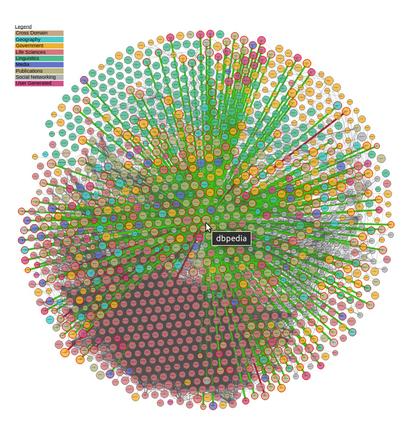
Found From DBpedia Blogs ( Pretty cool, right ! )
The original Neural SPARQL Machine (NSpM) was all about pure sequence to sequence translation but what I am obsessed with right now is a much more sophisticated, autonomous architecture. We’re not just trying to translate anymore, we’re using LLMs as central “planners” to construct an agent that actually thinks. Imagine a system that can autonomously organise its own set of tools (entity linking indexes, strict ontology look-ups, the DBpedia SPARQL endpoint) to navigate through the messy web of RDF data. It observes, plans and adjusts to provide accurate answers.
1. Bridging the Semantic Gap: SPARQL is literally just a Foreign Language
For decades, there’s been this massive digital wall between the 100 billion facts sitting in the Linked Data Cloud and the billions of regular people who actually want to use them. It’s a perpetual tug-of-war: humans speak in messy, fluid, emotional sentences, while formal databases demand this rigid, unforgiving syntax.
My recent deep-dive into the “Neural SPARQL Machine” concept showed me a brilliant way to take a sledgehammer to that wall. Instead of forcing users to learn a machine’s cold logic, we are finally teaching the machine to treat query languages as a living dialect. It’s basically treating SPARQL as a “foreign language” that a model can master through Neural Machine Translation (Soru et al., SPARQL as a Foreign Language, SEMANTiCS 2017).

LSTM architecture for sequence-to-sequence learning of a machine translator from natural language to SPARQL. The left side is the encoder, whereas the right side shows the decoder. The question “Where is Hill 60 located in?” is translated into the sequence of tokens: select var_a where br_open dbr_Hill60(Ypres) dbo_location var_a br_close.
2. Ditching the Hard-Coded Rules : The Seq2Seq Shift
What immediately blew my mind about this research was the shift away from handcrafted templates. Historically, Question Answering (QA) systems relied on statistical models that just instantly broke the second a user phrased something weirdly (the classic “vocabulary mismatch” nightmare).
By using a Sequence-to-Sequence (seq2seq) architecture powered by LSTMs, the machine treats RDF triple patterns like tokens in a normal sentence. It actually learns the semantic “intent” instead of just hunting for keyword matches. It makes you realize how badly we need to move past experimental scripts into robust, neuro-symbolic pipelines that can actually validate ontologies on the fly so the model doesn’t just hallucinate garbage data.

Architecture of a Neural SPARQL Machine at training phase (left) and prediction phase (right).
3. How it Actually Ticks
The way the authors broke down the architecture is so elegant, especially when you think about trying to scale it:
- The Generator: This uses query templates to pump out synthetic training data. It’s huge because the model gets to see how natural language maps to SPARQL without us having to manually annotate millions of rows.
- The Learner: This is the “brain” the LSTM encoder-decoder that translates the English sequence into shortened URI tokens

- The Interpreter: The final stage that reconstructs the machine’s output back into a valid SPARQL query that can actually hit the triple store.

Looking at this pipeline, it immediately gets me thinking about how we can push it further. If we can do this for English, we should absolutely be fine-tuning compact, open-weight models to do this for low-resource languages like Hindi. Imagine pairing this with a lightweight human-in-the-loop feedback UI to catch those weird grammar or translation edge case
4. The “Northernmost” Mind-Bender
This is where the research gets actually interesting. We’re looking at compositionality the model’s ability to stop being a parrot and start “thinking” in logical building blocks.
The researchers tested this on the dbo:Monument class by throwing a curveball: a complex query that was never in the training data:
“Where are the 3 northernmost monuments located in?”
The model didn’t just fail; it hit a 0.8 BLEU score by “stitching” together SPARQL patterns it had learned from separate, simpler templates. It wasn’t just memorizing strings; it was developing a functional grasp of SPARQL grammar, combining “location” logic with “limit/order” logic on the fly.

BLEU accuracy on the test set for the translations on dataset dbo:Monument with 600 examples per query template.
The Efficiency GainsWhat’s wild is the ROI on the training data. Adding more examples per template (moving from n=300 to n=600) gave a +5% jump in accuracy, but check the time difference in the table below it barely cost any extra compute.

The model is a fast learner. Looking at the training curve , it hits a plateau and stabilizes after just 10,000 epochs. That’s only about 16 minutes of runtime to basically “get” the core structure of the language. For anyone into systems or low-level optimization, that kind of convergence speed is peak engineering.
The “Open Challenge” It isn’t a SPARQL ultimate form yet, though. While it nailed the sequence structure, it still struggled with variable assignment like using var_b when it specifically needed to initialize a new var_c. It’s like the machine understands the syntax of the sentence but occasionally stumbles on the specific pronouns. But still, watching a Seq2Seq model “reason” through a zero-shot complex query is genuine true essence of ML to me!
Where we go from here (and my thoughts)
As I keep digging into this space, I’m getting super focused on the limitations the authors pointed out specifically the heavy reliance on manually created templates and the messy variable handling in the Interpreter phase. Treating SPARQL as a foreign language has completely flipped how I view the Semantic Web. It proves we are getting so close to a future where anyone, regardless of whether they can code or what language they speak, can just ask a question and instantly tap into the 100+ billion facts in the Linked Data Cloud.
For my upcoming GSoC ’26 work with DBpedia, this research is the ultimate technical foundation. Whether we are building autonomous agents that can self-correct their own queries, setting up strict ontology validation pipelines to kill hallucinations, or fine-tuning models to bring Hindi into the Linked Data world deep learning is how we democratize structured data.
Until Then Bye🧏🏻♂️Bye🗿
Relevant Sources & Dig-ins:
- Research Paper: Soru, T., Marx, E., Moussallem, D., Publio, G., Valdestilhas, A., Esteves, D., & Neto, C. B. (2017). SPARQL as a Foreign Language. SEMANTiCS 2017. https://arxiv.org/html/1708.07624/
- DBpedia NEF Forum Thread: Towards a Neural Extraction Framework GSoC 2026: https://forum.dbpedia.org/t/towards-a-neural-extraction-framework-gsoc-2026-mentors-needed/4778/14
- https://www.dbpedia.org/blog/dbpedia-global/ (Source for picture 1)
메타데이터
- post_id
- 0abdaaef4c52
- slug
- dissecting-the-mad-landscape-os-space-with-dbpedia-0abdaaef4c52
- url
- https://medium.com/@vm872108/dissecting-the-mad-landscape-os-space-with-dbpedia-0abdaaef4c52
- canonical_url
- https://medium.com/@vm872108/dissecting-the-mad-landscape-os-space-with-dbpedia-0abdaaef4c52
- author_url
- https://medium.com/@vm872108
- status
- ok
- fetched_at
- 2026-07-08 05:22:04