Internalizing Externalities: A Economic Analysis of Law on Indonesia Carbon Pricing Framework
Carbon pricing is based on the idea that climate change continues because markets fail to price the true cost of carbon emissions. Firms…
Internalizing Externalities: A Economic Analysis of Law on Indonesia Carbon Pricing Framework
https://amro-asia.org/cap-first-and-then-tax-carbon-pricing-in-indonesia/
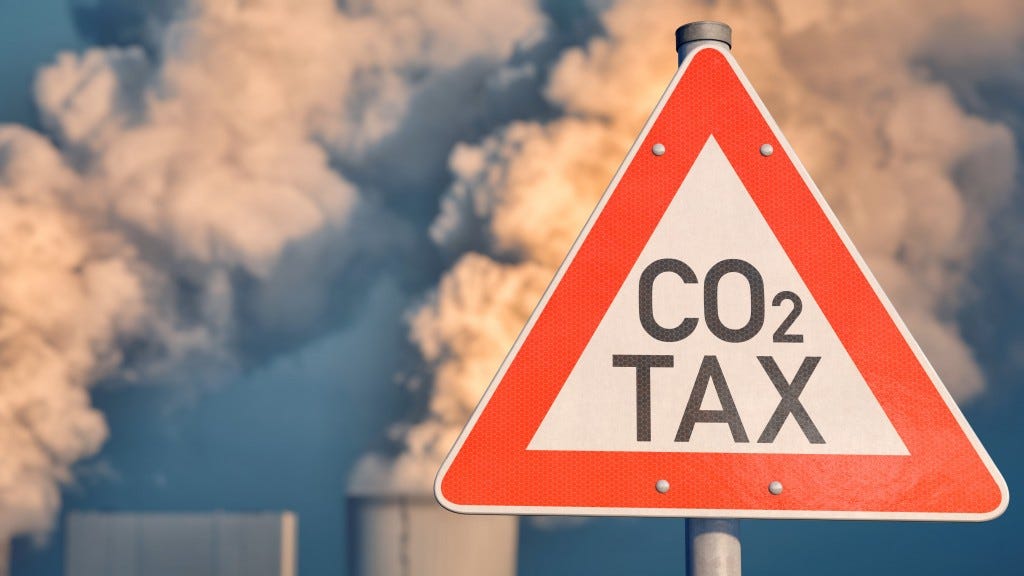
Carbon pricing is based on the idea that climate change continues because markets fail to price the true cost of carbon emissions. Firms benefit from fossil fuel use, while environmental damage, public health risks, and long-term climate impacts are borne by society rather than by the producer of the emissions. This gap between private benefit and social cost leads almost inevitably to excessive emissions. Seen from this perspective, law is not only a tool of prohibition or administrative control, but as a mechanism for shaping economic incentives so that these external costs are taken seriously in business decision-making. As Posner explains from an EAL (Economic Analysis of Law) perspective:
“The task of law in an economic perspective is to alter incentives so as to encourage behavior that is socially desirable.” (Richard A. Posner)
This shows that carbon pricing fits directly into the basic logic of Law & Economics. where legal rules are evaluated by their capacity to influence rational behavior through cost and benefit calculations.
This reasoning follows the Pigouvian approach on his book welfare economics, which treats state intervention as a legitimate response to market failure. As A.C. Pigou famously observed:
“The State may impose taxes or grant bounties in order to bring private and social net products into closer correspondence.” (A.C. Pigou on The Economics of Welfare)
From this perspective, carbon taxes are intended to make emitters face the real cost of carbon. When emissions are priced closer to their social cost, firms are pushed to rethink carbon intensive activities. In theory, this leads to more efficient outcomes as production and consumption decisions move closer to what is socially desirable. However, a Law & Economics approach does not stop at theoretical justification. Its main concern lies in how such rules operate in practice, including problems of implementation, uncertainty in measuring the social cost of carbon, and the risk of economic distortions arising from weak legal design.
Carbon taxes are not the only available instrument. Many jurisdictions (including Indonesia) have also adopted cap and trade systems or emissions trading schemes. Rather than setting a price directly, these systems establish an overall emissions cap and allow the market to determine prices through trading. From a Coase perspective, this approach can reduce total compliance costs by allowing firms with lower abatement costs to sell allowances to those facing higher costs. Yet this efficiency depends heavily on clear legal rules and credible institutions. Without them, carbon markets risk becoming largely symbolic with prices that fail to influence behavior.
Indonesia experience illustrates these concerns. Since the launch of the Indonesian Carbon Exchange in 2023, the government has expected market mechanisms to drive emissions reductions. In practice, trading volumes have remained limited and carbon prices have stayed low. From a Law & Economics standpoint, this reflects weak incentives. If the price of carbon is too low, firms have little reason to alter production processes or invest in cleaner technologies.
This problem is compounded by uncertainty surrounding the carbon tax, particularly after several delays in Indonesia implementation schedule. Although the tax is already regulated under the Harmonized Tax Law (UU No 7/2021), its implementation has been repeatedly delayed. Such delays create legal and economic uncertainty. When firms do not expect carbon costs to be imposed in a consistent and credible manner, long term investment in low carbon technologies becomes less attractive. In deterrence theory, rules that are not enforced consistently lose their ability to shape rational behavior.
In my view, the core problem with carbon pricing in Indonesia is not the choice between a carbon tax and emissions trading. The deeper issue may lie in the lack of credible commitment to impose real economic consequences on carbon intensive activities. A delayed carbon tax combined with a weak carbon market sends mixed signals. As long as carbon pricing remains uncertain and weakly enforced, firms will rationally treat climate regulation as a low-risk concern.
Enforcement therefore becomes central. Carbon pricing only works when the expected cost of non compliance exceeds the benefits of ignoring the rules. In Indonesia, limited capacity for monitoring, reporting, and verification increases the risk of free riding. Firms that comply may end up bearing higher costs than those that do not, distorting competition and undermining the effectiveness of the system.
Carbon pricing also raises distributional concerns. Higher energy prices tend to affect lower income households more severely. However, this does not mean carbon pricing should be abandoned. The real challenge lies in policy design. Revenues from carbon taxes or allowance auctions can be recycled through social compensation schemes, support for clean energy, or reductions in other distortionary taxes. Without such measures, public resistance is likely to grow, increasing the political cost of the policy.
Indonesia carbon pricing framework cannot be assessed in isolation from global developments. Policies such as the European Unions Carbon Border Adjustment Mechanism place external pressure on domestic industries. Differences in carbon prices across countries increase the risk of carbon leakage and affect competitiveness. This underscores the need to design national carbon pricing rules with international trade considerations in mind.
Indonesia cases on carbon pricing is shows that is not only a technical policy choice. Its effectiveness depends on legal certainty, consistent enforcement, and institutional credibility. Without these elements, carbon pricing may end up being symbolic only, instead of actually driving emission reductions. The real question is not whether carbon pricing is necessary, but whether the legal framework is capable of providing credible incentives and ensuring compliance so that the policy can function effectively in practice.
메타데이터
- post_id
- 0b6b1daf685b
- slug
- internalizing-externalities-a-law-and-economics-analysis-of-indonesias-carbon-pricing-framework-0b6b1daf685b
- url
- https://medium.com/@rizqyiqbalnugraha/internalizing-externalities-a-law-and-economics-analysis-of-indonesias-carbon-pricing-framework-0b6b1daf685b
- canonical_url
- https://medium.com/@rizqyiqbalnugraha/internalizing-externalities-a-law-and-economics-analysis-of-indonesias-carbon-pricing-framework-0b6b1daf685b
- author_url
- https://medium.com/@rizqyiqbalnugraha
- status
- ok
- fetched_at
- 2026-07-23 20:15:18



