Faithfulness in the Dry Season
‘In the middle of your longest dry season, faithfulness is what turns prison walls into preparation for the palace’
Faithfulness in the Dry Season
‘In the middle of your longest dry season, faithfulness is what turns prison walls into preparation for the palace’
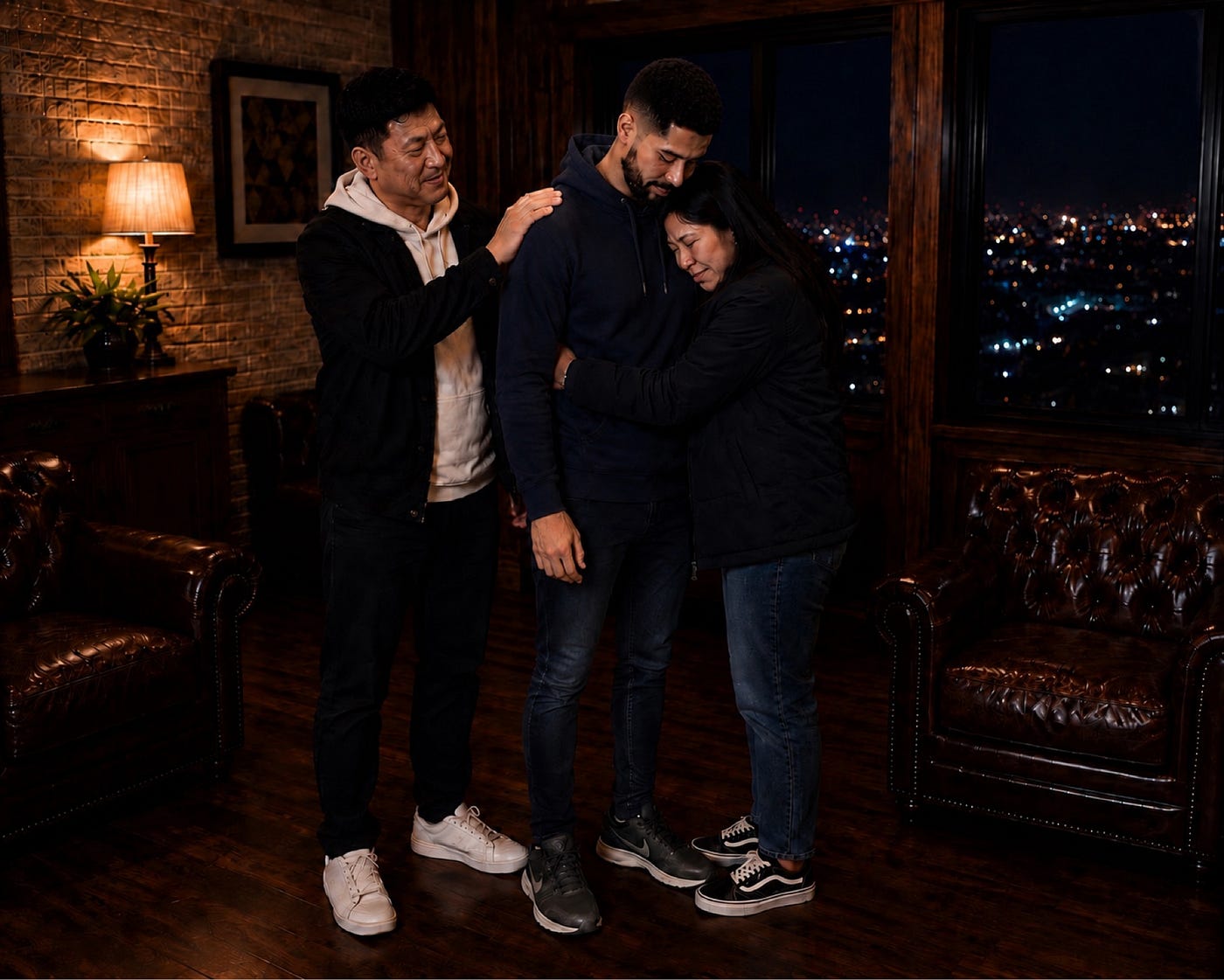
(Disclaimer: This picture is AI-generated for creative purposes. It does not depict any real person)
“I would have despaired and perished if I had not believed that I would see the goodness of the Lord In the land of the living.”
— Psalm 27:13 (AMP)
God gave Joseph a dream that he would one day rise to a position of leadership and influence. The promise was planted deep within his heart, yet for thirteen years his circumstances appeared to contradict everything God had shown him. Instead of promotion, he was sold into slavery in Egypt. Instead of honor, he was falsely accused and imprisoned. To anyone observing from the outside, it would have appeared that God’s promise had failed.
Yet Joseph refused to become bitter.
He continued serving faithfully regardless of his circumstances. Whether he was a servant in a foreign land or a prisoner confined behind walls, he remained committed to excellence and trusted that God was still at work. Then, in a single morning, everything changed. Joseph was summoned to interpret Pharaoh’s dream and went from being a prisoner to one of the most influential leaders in Egypt.
Years later, while serving as a missionary alongside my assigned team at the Dan Jerusalem Hotel in Jerusalem, Israel, I found myself reflecting on Joseph’s story. The conversation was a continuation of a previous reflection I had shared with David and Jasmine entitled “Choosing Peace at the Edge of Bitterness”. We had gathered in one of the hotel’s quiet common areas after a long day of ministry.
The city lights of Jerusalem glowed beyond the windows, and the distant sounds of traffic blended with the quiet conversations of travelers passing through the lobby.
David sat across from me, listening intently. Jasmine remained nearby, her attention fixed on every word. Both encouraged me to continue where I had left off.
So I did.
I explained that after publicly extending forgiveness toward the officers involved in a difficult encounter and leaving the police department peacefully and respectfully, I began walking through Amherst, Massachusetts. I traveled along Amity Street before turning toward downtown Amherst and continuing along East Pleasant Street.
The afternoon air was cool and steady.
Students moved between stores carrying backpacks and coffee cups. Cyclists navigated intersections. Cars rolled past storefronts. The town continued moving forward as though it were just another ordinary day.
Yet inside me, it was anything but ordinary.
Part of me felt relieved. For the first time in a long time, I had consciously chosen forgiveness. I had made the decision not to allow resentment to dictate my future.
Yet another part of me still carried questions.
Forgiveness had not erased the memories.
It had not erased the confusion. It had not erased the years spent wondering why certain events had unfolded the way they had.
As I walked, I found myself reflecting on a quote I would later encounter:
“The life of a mayfly and the life of an elephant are exactly equal — both one life long.”
The wisdom behind the statement struck me deeply. One creature may live for only a brief moment while another may live for decades. Yet both are given a life. Both are given a purpose.
The value of life is not measured merely by its length but by how it is lived. That thought reminded me of Joseph. The years he spent in prison were no less meaningful than the years he spent in the palace. What appeared to be wasted time was actually preparation. God was shaping his character long before He revealed the fulfillment of the promise.
As I continued down East Pleasant Street, I passed The Works Bakery Café. The smell of freshly baked bread and coffee drifted through the air. Through the windows I could see university students gathered around tables with laptops, textbooks, and coffee cups. Conversations blended with the sounds of espresso machines and the rhythm of a busy college town.
While passing by, I overheard three students discussing an incident that had occurred days earlier. What caught my attention was not merely the subject itself but the questions they were asking. One student commented on how quickly assumptions can spread throughout a community. Another remarked that once a narrative takes hold, correcting misinformation becomes difficult. A third questioned whether all the information people had been repeating was actually accurate.
Eventually, one of them recognized me.
For a moment, surprise crossed his face.
“Wait,” he said while looking at his friends. “That’s him.” The other students turned toward me. One of them asked, “I thought you were in jail.”
I smiled slightly.
“No,” I replied calmly. “As you can see I’m not.”
The student appeared genuinely surprised.
“That’s not what cru ministry members were saying.”
“That’s the first time I come to hear this,” I answered.
The conversation continued for several minutes. During that discussion, one of the students showed me a video recording that he said had been taken during the incident. As I watched, I observed footage that appeared to capture portions of the confrontation from a perspective different from many of the accounts I had heard afterward.
The students expressed concern that the recording did not appear to align with several rumors that had circulated throughout the community. They believed the footage provided important context regarding the events that had unfolded. Wanting the information reviewed by the proper authorities, the students later informed me that they intended to bring the recording to the police department so investigators could examine it for themselves.
According to what they later told me, officers accepted the information and indicated that it would be reviewed as part of their investigation.
For me, the significance of that moment extended beyond the video itself.
It was the realization that truth often survives even when temporarily overshadowed by misunderstanding.
After thanking the students for the conversation, I continued my walk toward North Pleasant Street. The closer I came to my destination, the quieter my thoughts became.
I had spent days replaying conversations in my mind. Days wondering what I would say once I found myself face-to-face with certain individuals again.
Now that moment had arrived.
As I approached the building that housed Freedom Café, I paused briefly outside the entrance.
The sign above the door appeared different from what I remembered days earlier. What had once been Chai Alpha Café had been renamed Freedom Café. I later learned the name was changed amid financial struggles and, according to what I understood, because leaders from F.B. Church and Mr. Shane did not want the location to continue being recognized as a problematic place tied to the incident that had taken place against me. Yet the building itself remained familiar. Certain places seem to preserve memories regardless of how much time passes or how much the name on the sign tries to rewrite them.
Taking a deep breath, I stepped inside.
The aroma of freshly brewed coffee filled the room. Soft music played through speakers overhead. Students sat at tables studying, talking quietly, or staring into laptop screens. The atmosphere was peaceful, yet for me every step carried emotional weight.
One of the baristas noticed me immediately.
Her expression changed.
Without hesitation she walked over and greeted me warmly.
“It has been a long time,” she said.
“It has only been a few days,” I replied.
As we spoke, she expressed regret that she had been unable to help more during previous difficulties.
“I wish I could have done more,” she told me quietly.
I thanked her.
Sometimes compassion speaks louder than any speech ever could. While we were talking, I noticed a familiar face from across the room.
Mr. Shane. For a brief moment our eyes met.
The days between us seemed to disappear.
The barista sensed the tension immediately.
“You don’t have to do this,” she said softly.
“I do,” I replied.
As Mr. Shane approached, the barista remained nearby. Not because she wanted conflict. Because she wanted peace. Before either of us spoke, she looked directly at him.
“Do not touch Carlos,” she said firmly.
The room became noticeably quieter.
Several people nearby stopped what they were doing. Others pretended not to listen while clearly paying attention. Mr. Shane and I exchanged words. The conversation was not about winning an argument. It was about expressing truths, frustrations, and perspectives that had remained unresolved for days.
I spoke calmly.
I explained how certain events had affected me.
I exposed the truth of his actions, giving my wear abouts to Mr. Krumrey through via messages and phone calls without my consent, his participation in the false allegations against me, and lying not only to the authorities about the incident that had taken place a few days before but accepting support from cru ministry members to cover him from his wrongs, just because he wanted to feel accepted by the church and ministry communities.
Most importantly, I explained that despite everything, I had chosen not to allow bitterness to define my future. I also told him directly that his time was up — that people now knew the truth, hard evidence had been found, and he would soon face legal consequences for his actions.
The conversation was uncomfortable. At times tense. Yet I remained seated. I remained calm. I remained in control of myself. That, perhaps, was the greatest difference between who I had been and who I was becoming.
Eventually the conversation ended. No dramatic resolution occurred. No grand victory speech followed. Life is rarely that simple. The barista returned with a cup of water and placed it in front of me. I thanked her. For several moments I sat quietly, reflecting. The anger that had once occupied so much space within me felt strangely absent. Not because the past had changed. But because I had changed.
When I finally stood to leave, the atmosphere inside the café felt different. The room was still.
The conversations were quieter. People watched silently as I walked toward the exit. Before leaving, I thanked the barista once more for her kindness. She smiled, though there was concern in her eyes.
“You seem different,” she said.
I paused.
“Maybe I am,” I replied. Then I stepped outside.
The evening air greeted me as I returned to North Pleasant Street. As I walked away from the café, I realized something important.
The real victory was never about defeating another person. The real victory was refusing to become consumed by bitterness. For the first time in a long time, I felt as though I could finally move forward. By the time I finished recounting the experience, the room at the Dan Jerusalem Hotel had grown quiet.
David leaned back thoughtfully before finally speaking.
“That must have been an incredibly lonely season,” he said. “But knowing you, even if you felt spiritually exhausted, I don’t think you ever stopped believing that God was still working.”
His observation caused me to pause.
In many ways, he was right. There were moments of frustration. Moments of disappointment. Moments when questions seemed to outnumber answers. Yet beneath all of it remained a conviction that God had not abandoned the story.
Jasmine listened quietly before wrapping her arms around me in a gentle embrace.
Tears formed in her eyes.
“I can’t imagine how difficult that must have been,” she said softly.
Neither David nor Jasmine attempted to explain away the pain. They simply acknowledged it. Sometimes that is more valuable than any answer. As I looked back on Joseph’s story, my walk through Amherst, the conversations with the students, the encounter at Freedom Café, and the reflections shared in Jerusalem, I realized they were all connected by a common thread.
Dry seasons often convince us that nothing is happening. They whisper that God has forgotten us. They tempt us to measure our future by our current circumstances.
Yet Joseph’s life tells a different story. The prison was not the end. It was preparation.
Likewise, many of the seasons we wish we could erase often become the very seasons that shape us into who we are meant to become.
If you find yourself in a dry season today, do not lose heart. Continue walking faithfully.
Continue choosing peace when bitterness seems easier. Continue trusting when understanding remains out of reach.
-One conversation.
-One opportunity.
-One unexpected door.
-One act of divine favor.
Everything can change. The same God who brought Joseph from the prison to the palace is still writing stories today. What appears to be a delay may simply be preparation for the chapter that has yet to be revealed.
— —
A Prayer for Today:
“Father, thank You that You are their deliverer and vindicator when negative things come against them. Thank You for the confidence they can have that as they keep moving forward in faith, they will see Your goodness. I believe You will amaze them with what You have planned. In Jesus’ Name, Amen.”
메타데이터
- post_id
- 19e7bbdd8517
- slug
- faithfulness-in-the-dry-season-19e7bbdd8517
- url
- https://medium.com/@cjcanales04/faithfulness-in-the-dry-season-19e7bbdd8517
- canonical_url
- https://medium.com/@cjcanales04/faithfulness-in-the-dry-season-19e7bbdd8517
- author_url
- https://medium.com/@cjcanales04
- status
- ok
- fetched_at
- 2026-06-10 18:44:10