Most Americans Moving Abroad Aren’t Expats
Being an immigrant no longer feels safe
Most Americans Moving Abroad Aren’t Expats
Being an immigrant no longer feels safe
Photo by Barbara Burgess on Unsplash
Lately, I’m vibing at work until I see a headline that has “U.S.” and “Expat” in it. Then I read the piece and realize it’s all about American immigrants, and the author is often an immigrant disguised as an expat.
every. single. time.
The one that got me today, and nudged me to write this piece, is titled “5 of the Most Popular Countries for U.S. Expats.”
Let’s get this right
What does each term mean?
- Immigrant is generally the more precise and neutral term for someone who has moved to another country to live there, regardless of origin.
- Expatriate (expat) is useful when emphasizing a temporary overseas assignment or when discussing communities of foreign professionals abroad.
But here’s a comparison of how each term is used in practice:
Immigrant:
- Usually implies long-term or permanent settlement.
- Often associated with people seeking a new life, work, family reunification, or safety.
- More commonly applied to people from lower- or middle-income countries, even in similar circumstances as those from rich countries.
- Often carries more politicized or stigmatized connotations in some countries.
Expat:
- Usually implies they can come and go as they please.
- Often associated with professionals working abroad.
- Carries relatively positive connotations in many contexts.
- More commonly utilized by people from wealthier countries.
But if you need a visual representation, let’s ask ChatGPT to reflect the world back to us in code:
Prompt: Make an image of an immigrant.
Result: Brown man, with some Latin American indigenous features, who seems to want to gain access to a country where many do want and need him, but the ones in power do not like the color of his skin.
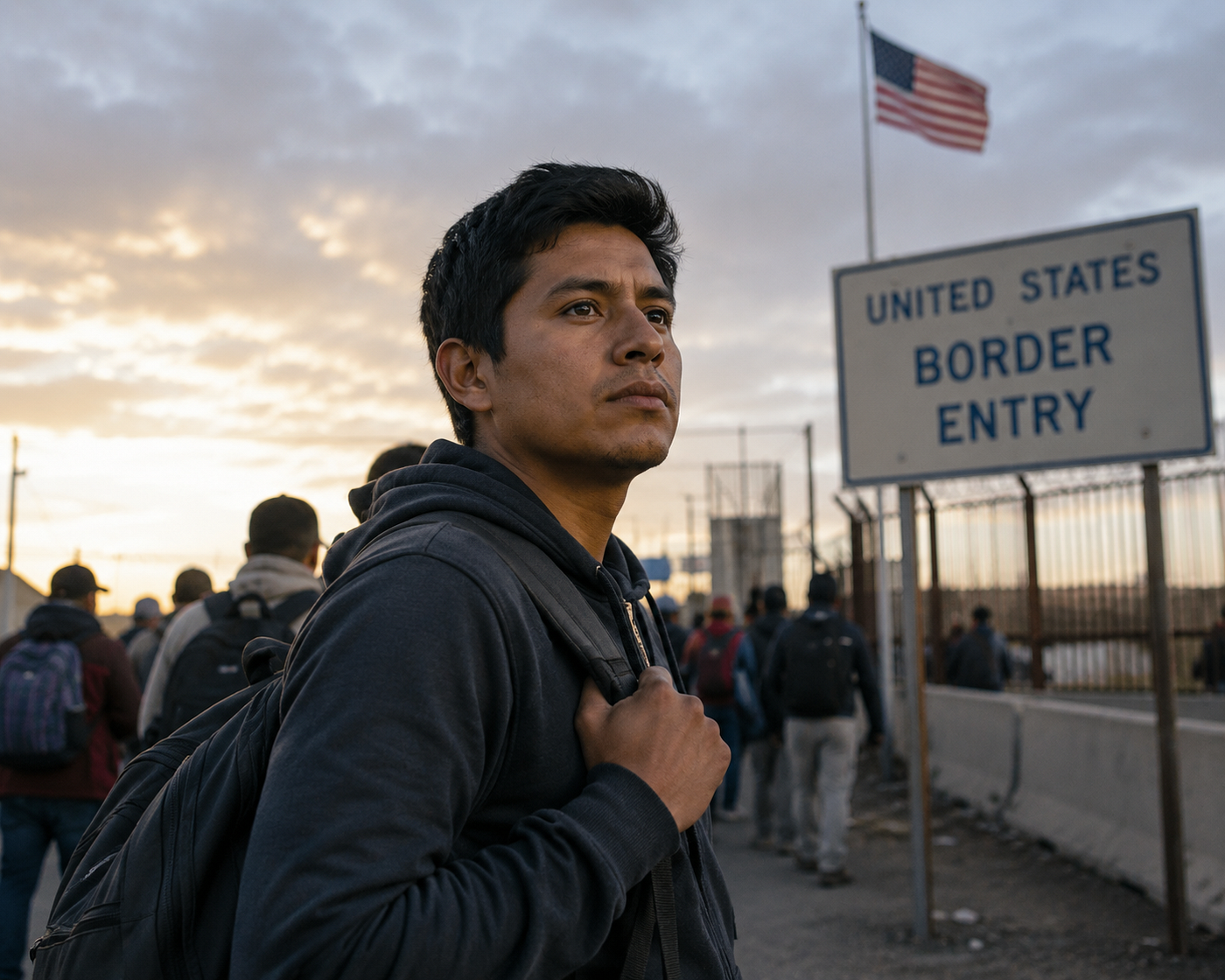
Generated by Chat GPT, prompt by author.
Prompt: Make an image of an expat
Result: A white woman, who clearly had the choice to move to the country of her choice, and is almost literally at the top of the world.
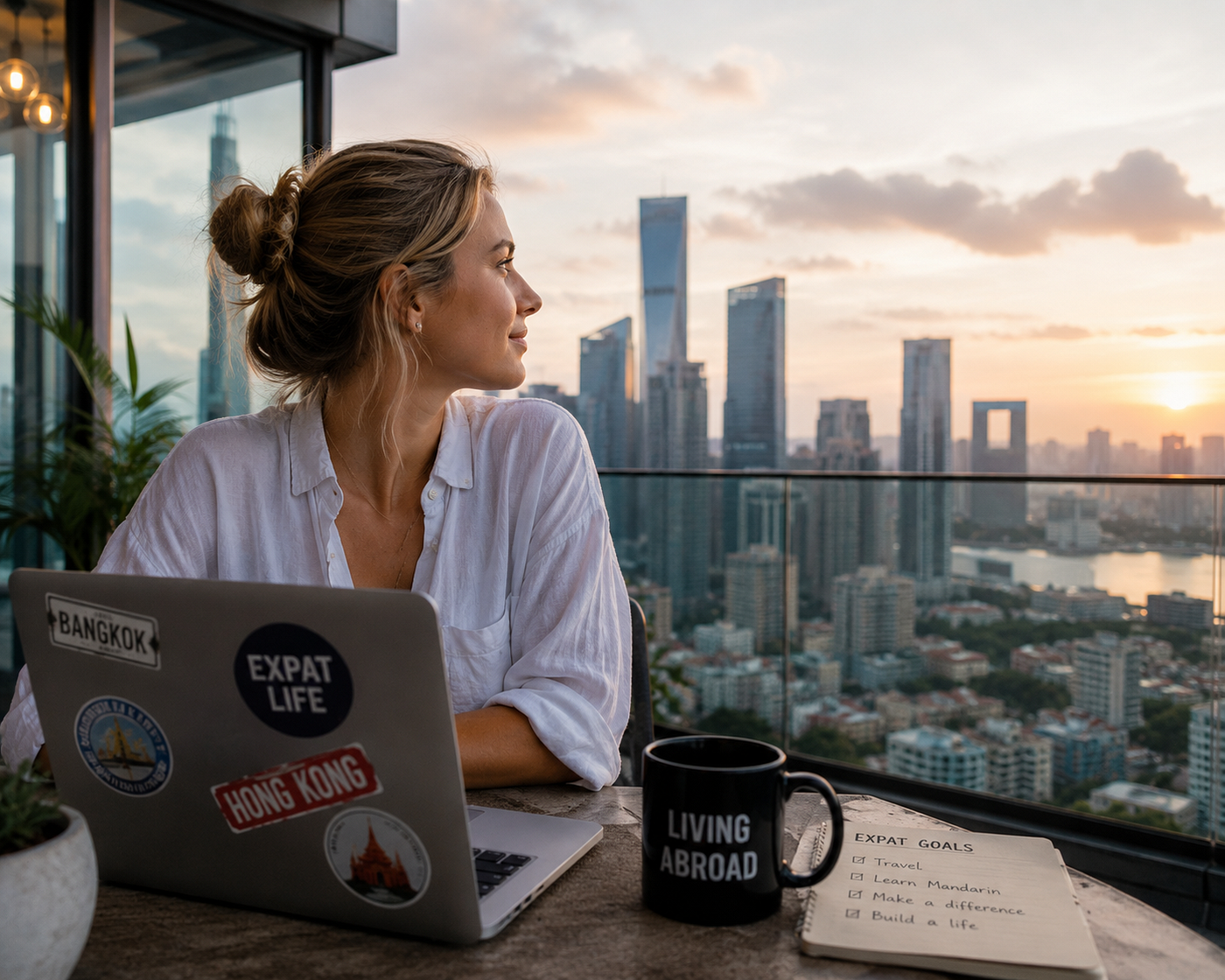
Generated by Chat GPT, prompt by author.
Why American immigrants don’t want to be called immigrants
I wonder if they don’t want people to think they are leaving their country because they need to, but because they want to.
Could it be that they don’t want to be associated with people who have struggled (and who rise to every occasion from having experienced that struggle).
Is it possible they don’t want others to think their parents worked 80+ hours a week to make ends meet (all while still leaving room for giggles and kisses before a good night's sleep).
Maybe they don't want you to think they don't have the documents to be there, even if many who use the “expat” label have overstayed their visas.
Me: I want others to see me as an Expat because being an immigrant no longer feels safe.
I’m a U.S. citizen and an immigrant from Mexico. My mother was born to a U.S. Citizen Native American Veteran father and a Mexican Jewish mother. They moved to Mexico because of the discrimination they faced in the US.
While I wrote about being proud of calling myself an immigrant in another piece, also about expats, the pride has recently morphed into fear, and I understand why so many in the U.S. are afraid of the label.
The “Immigrant” that made the U.S. Great
One of the things that made me fall in love with the United States was the idea of the melting pot.
It made the US like the ancient Mesopotamia, where people came to reach new heights by exposure to the “new” and “different.”
People from every corner of the world could come here, bringing their languages, traditions, experiences, and ways of seeing the world. Those differences weren’t obstacles to overcome, but what made the U.S. exceptional.
Photo by Alessandro Sacchi on Unsplash
History shows that civilizations often flourish when ideas collide.
“The Abbasids consciously built their capital, Baghdad, at what has been described as ‘the crossroads of the universe’ to gain access to the goods, skills, and discoveries of others.”
— Johan Norberg, historian of ideas
Diversity is one of our strategic advantages, not just demographics. The exchange of ideas from people with different histories and lived experiences has fueled scientific breakthroughs, strengthened our economy, enriched our arts, and helped America adapt to challenges few nations have faced on such a scale.
But the “melting pot” seems to have become the problem, not the point of pride. Have I been living in a mirage, or have we all been living in an illusion, and has Trump’s boldness allowed the US to show its true colors? I hope not.
Dehumanization rarely begins with dramatic acts; it often begins with the words we choose and the stories we repeatedly tell.
Besides being an immigrant, I’m an immigration attorney who has worked with hundreds of immigrants from all walks of life and am currently working in federal immigration policy in the U.S.
Part of my job is to read news about immigration from news sources on all sides.
Conservative media outlets have spent years publishing stories that dehumanize and demonize immigrants. Headlines repeatedly spotlight undocumented people who commit horrific crimes, often telling emotionally charged stories recounting graphic details.
I often wonder why the same sustained attention is not given to crimes committed by white Americans. Crime becomes a story about immigration only when the suspect is an immigrant.
And the stories about contributions by immigrants of color are drowned.
But she (image below) is an immigrant. And her willingness to accept a rate you would never accept is why your berries aren’t more expensive.
Photo by Tim Mossholder on Unsplash
The overuse of terms like “illegal alien” and the association of communities with crimes widens the gap between them and us. Referring to people as “aliens” has a long history in immigration law, but outside legal contexts, the word evokes something foreign, unfamiliar, and fundamentally “other.”
**Liam is an immigrant*. And our tax dollars were used to put him and his father in a family detention center run by for-profit companies that have contracts with the US government. An experience that has had lasting psychological consequences for the child. Under Trump’s second term, at least 6,200 children have been detained.*

Extracted from a Ms. Rachel video
When this happens, policies that might once have seemed unthinkable can begin to feel acceptable, because the people affected are no longer perceived as fully part of the same moral community.
I am an immigrant. Attorney and mother working to make the world better. To educate people on how policies affect the immigrant community that has made the US great.

Image of author by author
The narratives mentioned have the effect of dehumanizing by a thousand headlines.
When “Immigrant” Stops Feeling Safe
What I have watched in my line of work over the past two years has been deeply unsettling.
Just this past week, ICE killed two unarmed men, Lorenzo Salgado Araujo, a father of three who had been in the U.S. for 35 years, and Johan Sebastian Guerrero, also a father to a 3-year-old toddler. In just a week, two families lost their father, husband, and financial contributor. Their tears reverberate across communities, whispering to other immigrants, “You are not safe.”
Congress has approved unprecedented levels of funding for immigration enforcement agencies. Last year, lawmakers gave roughly $140 billion in additional funding for immigration enforcement at a time when families are struggling to afford food and healthcare.
This June, Congress approved an additional $70 billion for immigration enforcement. These are extraordinary sums, giving the agencies resources far beyond anything they have previously received.
The problem on top of the problem is the expansion of enforcement powers without equally robust safeguards, oversight, transparency, and accountability.
When agencies grow this quickly, hiring thousands of new officers and dramatically expanding operations, the risks grow too. In recent months, Americans have watched videos of masked federal agents conducting operations in cities across the country. Reports of mistaken detentions, aggressive tactics, and encounters involving U.S. citizens have become increasingly common.
When enforcement becomes more opaque and accountability feels uncertain, public trust begins to erode.
I no longer move through the world the same way.
My husband and I have talked about what we would do if we encountered immigration enforcement officers. We’ve talked about carrying identification. We’ve talked about what happens if one of us is stopped while the children are with us.
Those are not conversations I ever expected to have as an American citizen, and in a “free” country.
And I can’t begin to imagine what it must be like for people who do not have many of the privileges I have, including U.S. Citizenship.
This fear is being inflicted by our government and reaches everyone perceived as “non-white,” turning us into “other.” Even Native Americans have been detained by ICE. History reminds us that once a society begins sorting people into “us” and “them,” the boundaries of who belongs can easily shift.
What you can do:
I know. It sucks when someone paints a bleak picture of the world and leaves you feeling bad about it for the rest of the day. I won’t do that!
Since it’s also part of my job to help people know what they can do to have an impact, here you go.
- Be nice to yourself, because that’s the first step to helping make the world a better place (I know, cheesy and a cliché, but true).
- Notice when dehumanizing narratives get to you, and ensure you are using reason when making decisions about what to believe about an entire group of people.
- Get to know people who are immigrants, if you don’t already.
- Contact your representative and senators to let them know your worries and wishes.
- Send this to a friend who can do the same.
Thanks for reading.
Do you have an intercultural story or experience you want to share? We would love to hear it! Contribute to A-Culturated and join the community!
메타데이터
- post_id
- 1d1d494ae4cc
- slug
- most-americans-moving-abroad-arent-expats-1d1d494ae4cc
- url
- https://medium.com/a-culturated/most-americans-moving-abroad-arent-expats-1d1d494ae4cc
- canonical_url
- https://medium.com/a-culturated/most-americans-moving-abroad-arent-expats-1d1d494ae4cc
- author_url
- https://medium.com/@andreacavazos
- status
- ok
- fetched_at
- 2026-07-18 04:08:09