Kratom: Ancient Herb, Modern Controversy, and What the Science Actually Shows
It’s legal, cheap, and sitting next to the energy drinks. The FDA has been trying to stop it for a decade.
Kratom: Ancient Herb, Modern Controversy, and What the Science Actually Shows
It’s legal, cheap, and sitting next to the energy drinks. The FDA has been trying to stop it for a decade.
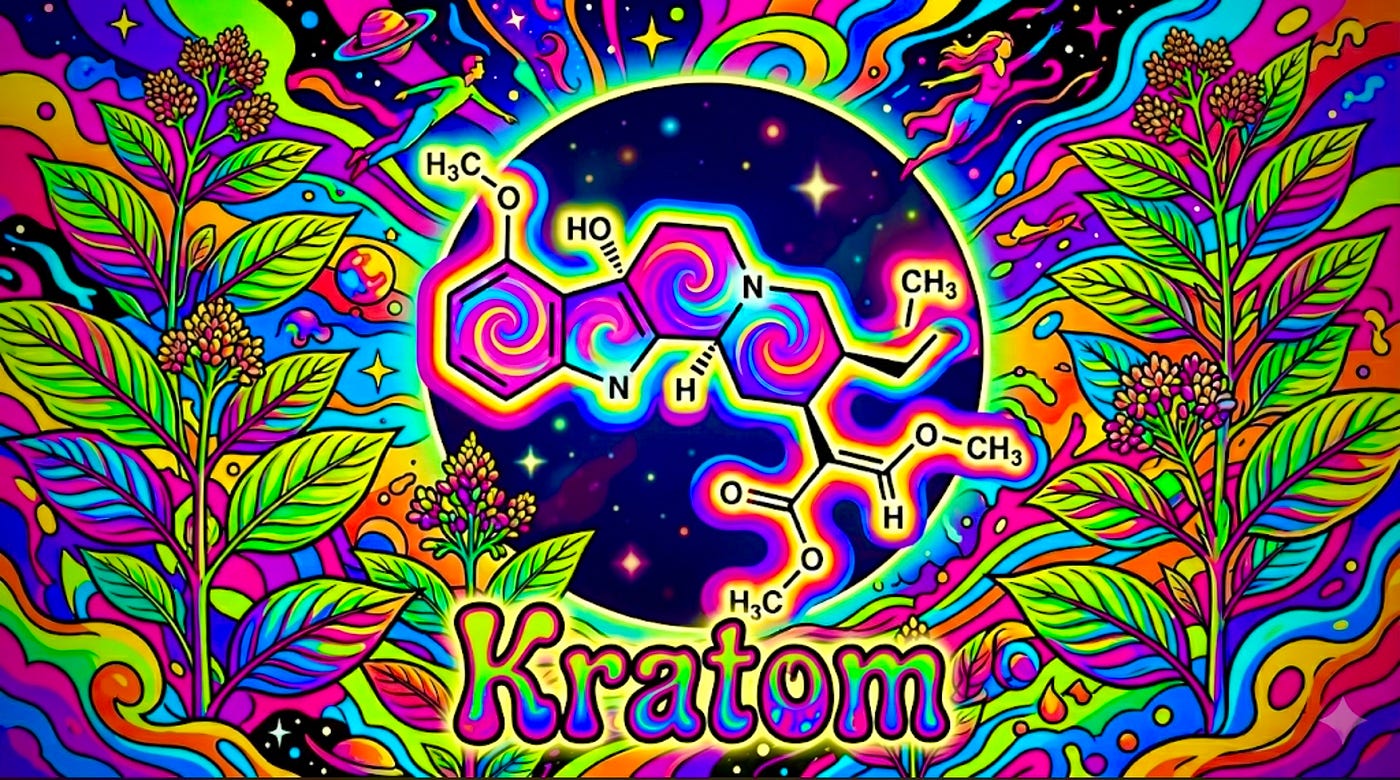
Image via Nano Banana
An estimated 10 to 15 million Americans buy kratom legally at smoke shops, gas stations, and online. The label promises pain relief, energy, and mood support. No prescription required, no doctor needed. Just walk in, grab a bottle, and get on with your day.
The FDA has spent nearly a decade trying to restrict it, and in 2025 took aim at one of its key compounds. That gap between open public access and federal alarm is the story worth understanding.
What Is Kratom?
Kratom comes from Mitragyna speciosa, a tropical tree native to Southeast Asia. It is related to the coffee tree, which hints at its stimulant side. At low doses it boosts energy and focus. At higher doses it acts more like a painkiller, producing sedation and pain relief.
In Thailand and Malaysia, workers chewed kratom leaves or brewed them into tea for centuries to get through long days of physical labor. It was cheap, local, and familiar. What arrived in America is a different product in a very different context, and that gap explains much of the controversy.
What Do People Use Kratom For?
A large Johns Hopkins survey found kratom users were mostly middle-aged, college-educated adults taking it for pain (91%), anxiety (67%), and depression (65%). Usually dosed once to three times a day. The picture that emerges is not a party drug. It looks more like a self-prescribed medicine for people who feel they have run out of other options.
For many of those users, the pain they are treating has a specific origin. The same Johns Hopkins survey found that 41% were using kratom to cut down or quit opioids entirely. Of those, 35% reported going more than a year without prescription opioids or heroin. Those numbers are striking, but the data is self-reported and needs to be read carefully.
How Does It Work in the Brain?
Kratom contains over 40 psychoactive compounds called alkaloids. Two matter most. Mitragynine is the most abundant. 7-hydroxymitragynine (7-OH) is far more potent, binding to the same brain receptors as morphine, oxycodone, and fentanyl. Those receptors, called mu-opioid receptors, control pain, mood, and breathing.
But kratom isn’t a simple opioid copy. Mitragynine also acts on serotonin, dopamine, and norepinephrine receptors. Think of those as the brain’s mood and stress control systems. That wider range of activity is why researchers describe kratom’s pharmacology as complex, not just a simple opioid substitute. It acts in multiple ways, and with that comes more unknowns.
Hidden Risks: Physical Dependence and Withdrawal
In Southeast Asia, people often drink kratom tea or chew the dried leaf. At those traditional doses, it usually doesn’t cause serious health problems.
In the United States, kratom often appears as concentrated extracts, tablets, gummies, and drink shots. These products carry more risk than the traditional tea or dried leaf. Regular use of kratom in any form can lead to physical dependence, meaning the body adapts to the drug and needs it to feel normal.
Stopping after regular use can bring on withdrawal symptoms that feel similar to opioid withdrawal:
- Irritability and aggression
- Muscle and bone aches
- Runny nose and watery eyes
- Jerky, uncontrolled limb movements
- Difficulty sleeping
Kratom and Your Prescriptions: A Risky Mix
Kratom slows down a key liver enzyme called CYP3A4, which the body uses to break down many common medications. When CYP3A4 is blocked, drug levels in the blood can climb to dangerous heights without any change in dose. Medications affected include benzodiazepines, certain antibiotics like clarithromycin, and some statins. Most kratom users have no idea this is happening.
Some combinations go beyond risky into life-threatening territory. Mixing kratom with opioids, sedatives, or MAO inhibitors can slow breathing to a dangerous level. If you take any prescription medication, talk to your doctor or pharmacist before trying kratom. This is not optional advice.
You Don’t Know What’s in That Capsule
The supplement label on a kratom product tells you very little about what is actually inside. In 2024, federal officials seized over five million dollars’ worth of contaminated kratom products, citing heavy metals, synthetic additives, and bacterial contamination. That is not a fringe problem. It reflects a market with no meaningful quality control.
Synthetic 7-OH products, now common online and in stores , carry opioid-level potency with almost no safety testing behind them. Buying kratom from a gas station shelf gives you no reliable information about dose, purity, or form. The leaf brewed into tea in Malaysia and the extract capsule at the corner store are not the same product.
The New Synthetic Threat: 7-OH Products
“7‑OH” products are not kratom. They are lab‑made concentrates of kratom’s strongest compound. Tests show they can be up to 13 times stronger than morphine. Yet they’re sold online and in stores, with almost no safety checks.
These products are rapidly displacing traditional kratom on retail shelves, creating a false sense of safety for consumers. Most buyers have no idea they are not purchasing a plant product. The leaf brewed into tea in Malaysia and the synthetic tablets at the gas station aren’t the same product.
The Regulatory Mess: Synthetic Controlled
In July 2025, the FDA moved to schedule 7-OH under the Controlled Substances Act. This targets the concentrated synthetic isolate, not the kratom leaf itself. The distinction matters because it suggests regulators are starting to treat different kratom products differently, which is what the science supports.
The FDA has also funded its own clinical study of kratom and awarded a grant for a full human abuse potential study. That’s a significant move. An agency that pays for research rather than simply pushing for a ban is signaling that the science is not settled.
Kratom: The Risk Is Real. So Is the Grey Zone.
Legal does not mean safe, and natural does not mean harmless. Kratom occupies a grey zone because the science has not caught up to the use, and the market has outrun both. Millions of Americans are already using it without telling their doctors, and that silence carries real risk.
If kratom is on your shelf, your prescriber needs to know, especially if you take any other medication. The gap between “sold everywhere” and “studied thoroughly” is still wide. Until that closes, going in informed is your best protection.
I’m Dr. Kate Byrd, your friendly neighborhood pharmacist turned health and wellness wordsmith. I specialize in demystifying medical mumbo-jumbo into digestible, relatable nuggets. Ready to elevate your business? Drop me a line at KateByrdPharmD@gmail.com!
메타데이터
- post_id
- 24886ddb05b2
- slug
- kratom-ancient-herb-modern-controversy-and-what-the-science-actually-shows-24886ddb05b2
- url
- https://medium.com/@katebyrdpharmd/kratom-ancient-herb-modern-controversy-and-what-the-science-actually-shows-24886ddb05b2
- canonical_url
- https://medium.com/@katebyrdpharmd/kratom-ancient-herb-modern-controversy-and-what-the-science-actually-shows-24886ddb05b2
- author_url
- https://medium.com/@katebyrdpharmd
- status
- ok
- fetched_at
- 2026-07-17 03:29:00