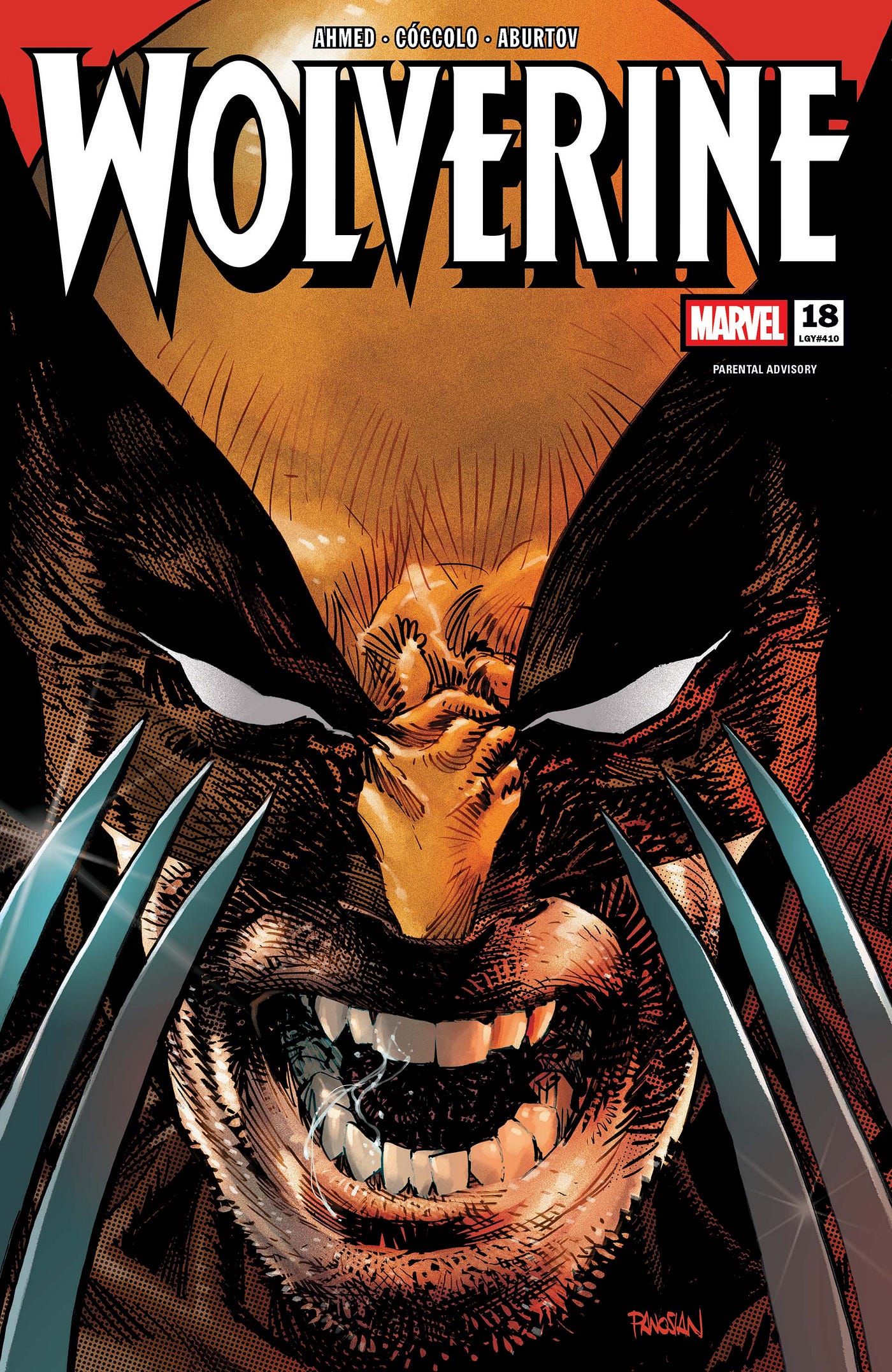
By Any Means Necessary: The Civil Rights Legacy of the X-Men
To me, the X-Men has always been more than just a comic book; it is a story about oppression-a struggle that belongs to you, me, and us…
By Any Means Necessary: The Civil Rights Legacy of the X-Men
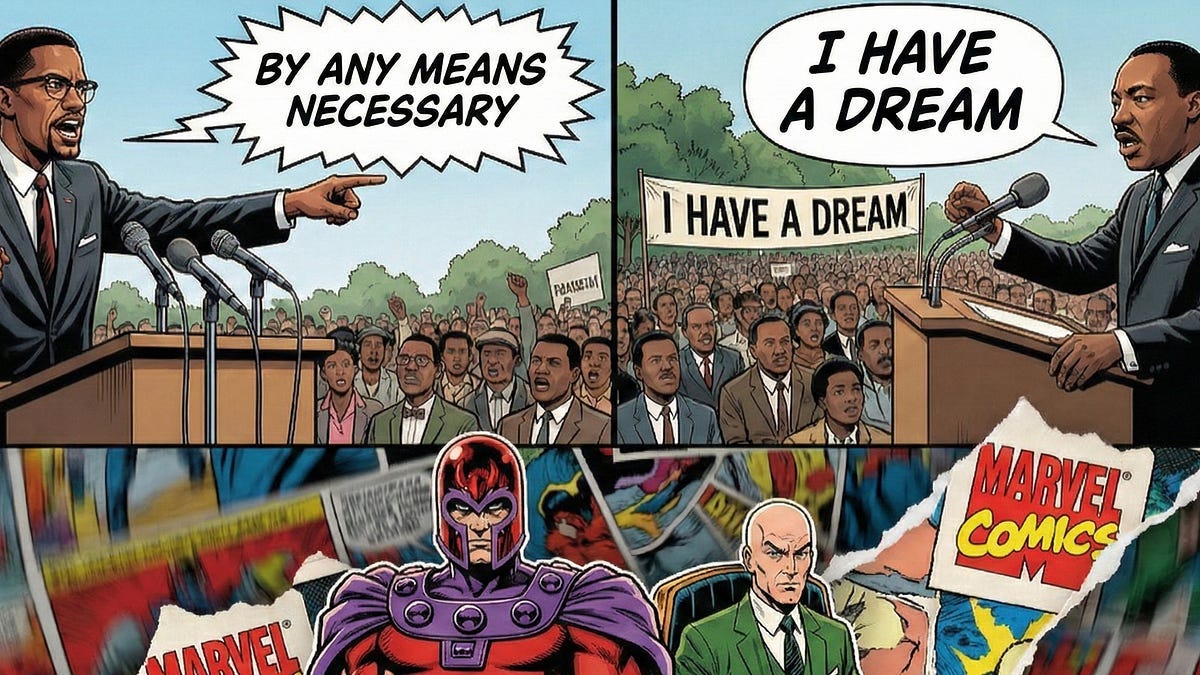
To me, the X-Men has always been more than just a comic book; it is a story about oppression-a struggle that belongs to you, me, and us. The parallels between the page and reality have always struck me as profound, but as I get older, my perspective has shifted. In times like these, I find myself gravitating less toward the dream of Professor X and more toward the reality of Magneto. I have always fantasized about exploring the deep connection between these characters and the legacies of Martin Luther King Jr. and Malcolm X. This is that exploration.
The Real Life Icons
Martin Luther King Jr.: A Baptist minister and activist who became the visible spokesperson and leader in the Civil Rights Movement. He advocated for civil rights through nonviolence and civil disobedience, inspired by his Christian beliefs and the activism of Mahatma Gandhi. He sought integration and the “Beloved Community.”
Malcolm X: A minister, human rights activist, and prominent figure in the Nation of Islam (later Sunni Islam). He famously challenged the mainstream civil rights movement’s nonviolent integrationist approach, advocating for Black empowerment, self-defense, and the separation of Black and White Americans to ensure safety and economic independence.
The Comic Book Legends
Professor Charles Xavier (Professor X): A powerful telepath and wealthy pacifist who founded the X-Men. His goal is “Xavier’s Dream”: a world where mutants and humans live together in peace and harmony. He believes education and protecting humanity (even when they hate him) will eventually win hearts and minds.
Erik Lehnsherr (Magneto): A Holocaust survivor with the power to control magnetism. Having witnessed the genocide of his people (Jewish in WWII) by the “just following orders” majority, he refuses to let it happen again to his new people (mutants). He believes humans will always fear and destroy what they don’t understand, and therefore, mutants must rule or separate to survive.
The core conflict of the X-Men is not Good vs. Evil; it is a philosophical debate on how a minority group should respond to oppression.
The MLK / Xavier Parallel: Both men preached that the minority (Black Americans/Mutants) could integrate into the wider society. They believed that by taking the moral high ground and showing their utility and humanity, the oppressor would eventually shed their prejudice. (Real Life: MLK’s march on Washington. / Comics: Xavier’s school, where mutants are trained to save a world that fears them.)
The Malcolm X / Magneto Parallel:
Both men argued that the system was inherently rigged against them. They believed that integration was a fantasy that left their people vulnerable. Malcolm X advocated for Black Nationalism; Magneto founded the Brotherhood of Mutants (and later the nation of Genosha) to create a safe haven away from human bigotry.
Non-Violence: MLK argued that “darkness cannot drive out darkness; only light can do that.” Xavier strictly forbids his X-Men from using lethal force, even against those trying to kill them.
Self-Defense: Malcolm X famously stated, “I don’t call it violence when it’s in self-defense; I call it intelligence.” Magneto’s philosophy is identical. He does not view his actions as terrorism, but as a preemptive strike against a species that has already proven it wants him dead.
On Coexistence
MLK: “I have a dream that my four little children will one day live in a nation where they will not be judged by the color of their skin but by the content of their character.”
Xavier: “When I was young, I dreamed of a world where humans and mutants lived together in peace.”
Malcolm X: “We declare our right on this earth… to be a human being, to be respected as a human being, to be given the rights of a human being in this society, on this earth, in this day, which we intend to bring into existence by any means necessary.”
Magneto (Uncanny X-Men #150): “I have denied my heritage… ignored the lessons of my own life. I believed that I could simply force the world to be what I wished it. But the world is what it is. And I will not let it destroy my people again.”
MLK: “Injustice anywhere is a threat to justice everywhere.”
Xavier: “Any time an act of aggression occurs, we must be there to stop it.”
Malcolm X: “If you stick a knife in my back nine inches and pull it out six inches, there’s no progress.”
Magneto (God Loves, Man Kills): “The humans will never accept us, Charles! We are the next stage of evolution. We are the future! They should be fighting to save themselves from us!”
The Foundation (The 1960s): Created by Stan Lee and Jack Kirby in 1963, the X-Men were originally a broad allegory for anyone who felt “different.” While Stan Lee later acknowledged the Civil Rights parallel, the original intent was also heavily influenced by the general fear of the “Atomic Age.” The tagline “Feared and Hated by the world they have sworn to protect” set the stage.
The Refinement (The Claremont Era — 1975–1991): It was writer Chris Claremont who truly deepened the Civil Rights connection. He gave Magneto his Holocaust backstory (in Uncanny X-Men #150 and God Loves, Man Kills), transforming him from a generic villain into a tragic revolutionary. Claremont realized that for Magneto’s motivation to hold weight, he needed to have seen the absolute worst of humanity-making his comparison to Malcolm X (and sometimes militant Zionist figures like Menachem Begin) much more potent.
The Mutant Registration Act: In the comics, the government forces mutants to register their identities in a national database. This directly parallels Jim Crow laws, Nuremberg Laws, and even modern debates regarding surveillance of minority groups. It asks: Why must the oppressed give up their privacy to make the majority feel safe?
The Mutant Massacre: A storyline where the Marauders slaughter the Morlocks (mutants living in sewers). This parallels historical atrocities like the Tulsa Race Massacre or the pogroms, where marginalized communities were wiped out while the authorities looked the other Way.
Why Marvel Comics Matters: Marvel uses the “World Outside Your Window” style. Unlike DC’s Gotham or Metropolis, the X-Men live in New York, Westchester, and San Francisco. By placing fantastic characters in real settings, the oppression feels grounded. When a Sentinel steps on a mutant skull, it is a visceral stand-in for police brutality and state-sanctioned violence.
The X-Men are not just a story; they are a financial and cultural juggernaut.
Comic Sales: X-Men #1 (1991), written by Chris Claremont and drawn by Jim Lee, holds the Guinness World Record for the best-selling single-issue comic of all time, selling approximately 8.1 million copies.
Box Office: The X-Men film franchise (including Deadpool and Logan) has grossed over $6 billion worldwide. Deadpool & Wolverine (2024) recently shattered records, becoming the highest-grossing R-rated film in history.
Fanbase: While impossible to count exactly, the X-Men fanbase is estimated in the hundreds of millions globally, spanning generations from the 1963 comics to the 1992 animated series and the 2000s films.
Annual Value: As a premier intellectual property, the X-Men generate hundreds of millions annually for Disney/Marvel through merchandise, licensing, and media.
Jack Kirby (The King): For the visual language of the outsider. He gave the X-Men their distinct look-no uniforms, but individual personalities bursting through the page. He co-created the very concept that biology could be a superpower, and that those powers could make you an outcast.
Stan Lee (The Man): For the spark. He planted the seed of the “Marvel Mutant”-the idea that you didn’t need a radioactive spider; you just had to be born this way. This simple change allowed the X-Men to become the ultimate metaphor for race, sexuality, and puberty.
Chris Claremont (The Soul): For the depth. He took a canceled book and turned it into a soap opera of prejudice and redemption. He is the father of the modern Magneto; he gave the “villain” a soul, a history, and a valid point. Without Claremont, Magneto is just a guy in a helmet; with him, he is a revolutionary.
Movies (Legitimate Recommendations):
X-Men: First Class (2011): This is the essential Magneto/Xavier origin story. It perfectly captures their ideological divergence during the 1960s Civil Rights era backdrop.
Logan (2017): A deconstruction of the myth. It shows the tragic end of the fight, where the “Dream” has failed, and survival is the only option left.
Animated Episodes (X-Men: TAS & X-Men ‘97):
“One Man’s Worth” (TAS, Season 4): A time-travel story where Xavier is killed before forming the X-Men, showing a dystopian reality where Magneto leads the resistance.
“Sanctuary” (TAS, Season 4): Magneto builds Asteroid M. A perfect display of his separatist ideology.
“Family Ties” (TAS, Season 4): Explores Magneto’s children and his tragic past.
“Remember It” (X-Men ‘97): A modern masterpiece showing the brutal reality of a mutant massacre (Genosha) and the failure of peace.
“Tolerance is Extinction” (X-Men ’97, Three-Part Finale): Magneto’s ultimatum to the world.
Graphic Novels:
X-Men: God Loves, Man Kills: The definitive graphic novel on prejudice. The X-Men and Magneto team up against a religious zealot. It is the most potent Civil Rights allegory in Marvel history.
Magneto: Testament: A harrowing, strictly historical account of Magneto’s childhood in Nazi Germany. No capes, just survival.
Comic Storylines:
The Mutant Massacre (1986): The dark turning point where the X-Men realize protecting humanity might get them killed.
Age of Apocalypse (1995): A reality where Xavier died and Magneto leads the X-Men. It proves Magneto can be a hero.
House of X / Powers of X (2019): The modern era where Xavier and Magneto finally agree: “You have new gods now.” They build a nation together.
There is a reason we, as minorities, look at the page and see our own faces reflected in the masks of mutants. The X-Men are not just superheroes; they are a promise. They validate the feeling of being “other” in a world that demands conformity.
When I look at Magneto, I do not see a villain. I see a man who looked into the abyss of human hatred and refused to blink. I see a man who loves his people so fiercely that he is willing to become the monster the world says he is, just to ensure they survive. In a world that constantly tries to legislate our existence, silence our voices, and erase our history, the defiant hand of Magneto reaching out to stop the missile is not an act of war-it is an act of love.
The tragedy of the X-Men is that Xavier is right about what the world should be, but Magneto is right about what the world is.
Originally published at https://jonathancardona1.substack.com.
메타데이터
- post_id
- 2cdae862f8a9
- slug
- by-any-means-necessary-the-civil-rights-legacy-of-the-x-men-2cdae862f8a9
- url
- https://medium.com/@jonexile93/by-any-means-necessary-the-civil-rights-legacy-of-the-x-men-2cdae862f8a9
- canonical_url
- https://medium.com/@jonexile93/by-any-means-necessary-the-civil-rights-legacy-of-the-x-men-2cdae862f8a9
- author_url
- https://medium.com/@jonexile93
- status
- ok
- fetched_at
- 2026-07-11 06:17:06