What Doesn’t Happen Is Still a Choice
On my 15th week of writing here, I wrote about six distinct topics. Here is my summation/synthesis! I picked Kurosawa because I’d been…
What Doesn’t Happen Is Still a Choice
On my 15th week of writing here, I wrote about six distinct topics. Here is my summation/synthesis! I picked Kurosawa because I’d been rewatching Ran at 2am for the third time and wanted an excuse to write about it. I picked the bikini because it seemed fun. Every development argues that the visible surface of any situation tends to present itself as the complete account, but the actual forces driving it operate one layer underneath, and that gap is where the real explanation lives.
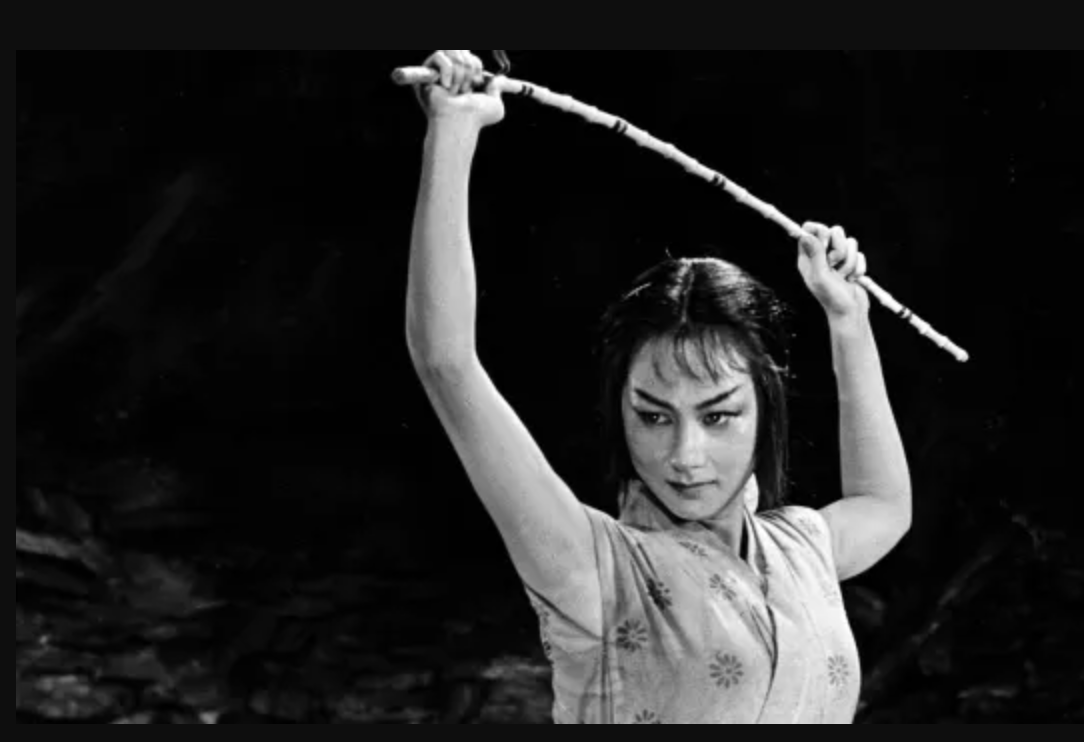
A Kurosawa Film (Indie Wire)
Kurosawa makes this most plain. The received story goes something like this: a great director peaked in the 1950s with Rashomon and Seven Samurai, grew difficult to work with, and spent his final decades producing quieter films that confirmed his diminishment. It’s a clean arc. It’s also wrong from essentially every angle. Ran, which he released in 1985 at 75 years old, involves the coordination of hundreds of extras across precisely choreographed battle sequences with elaborate period costuming, and it’s the kind of production that would challenge any director at any career stage. His capacity to make large, complex films remained fully intact. What collapsed was the financing infrastructure that had made those films possible. The Japanese studio system contracted dramatically as television pulled audiences away from cinemas, so producers shifted toward faster, cheaper productions, and Kurosawa’s methods stopped fitting the available economics. His removal from Tora! Tora! Tora! came down to a genuine incompatibility: he required extended preparation time, and the production required strict schedule adherence. Those two things don’t coexist. Every description of that period as a personal decline mistakes the symptom for the cause, and I think we call it decline because “the financing system changed” makes for a less satisfying story than “the genius faded.”
In the Mood for Love runs the same logic as deliberate artistic strategy. Wong Kar-wai constructed the entire film around the distance between what’s visibly occurring and what’s actually driving the characters. Chow and Su discover their spouses are having an affair, declare their intention to behave differently, and then proceed to meet privately, rehearse imagined confrontations, and build scenarios that reproduce the very dynamic they claim to be transcending. The film holds all of that simultaneously without resolving it. Tony Leung’s presence encourages you to read every pause as sincerity, but Wong has acknowledged that identical behavior performed by a less sympathetic actor would read as manipulation entirely. My own read, after three viewings, is that the film is genuinely uninterested in telling you which interpretation is correct, and that refusal is the point. The visual design sustains this by dividing every frame through doorways, mirrors, and window frames, so the camera consistently occupies a partial viewpoint. Even the ending, in which Chow whispers a secret into a hollow in a wall at Angkor Wat and seals it, formalizes the relationship’s unresolved state rather than concluding it. What the two characters chose to leave undone becomes the film’s defining event.
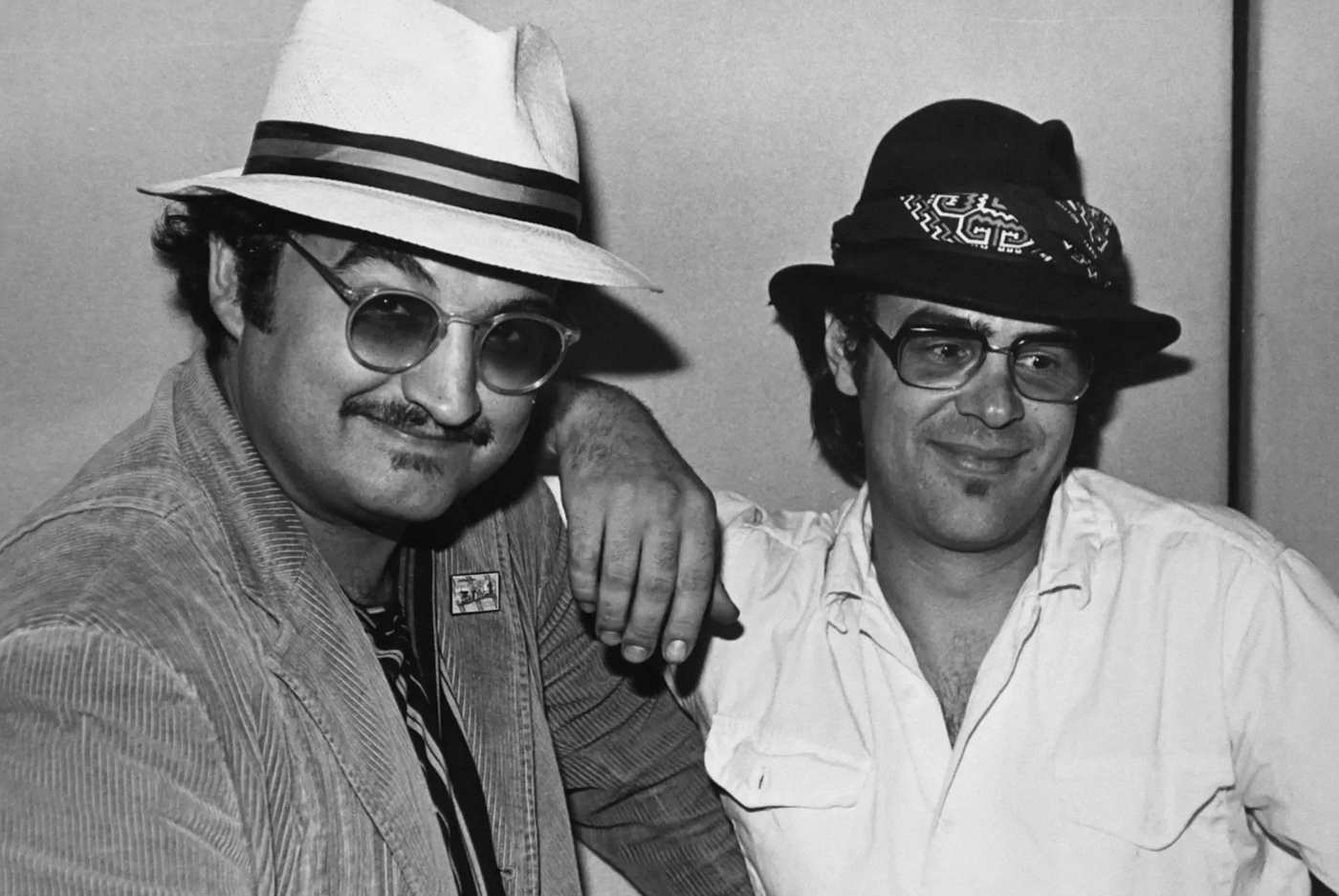
The Blues Brothers bar on Hudson Street is the week’s most enjoyable version of the argument. The romantic account places the Holland Tunnel Blues Bar at 282 Hudson Street as the origin point of the Blues Brothers, the place where Aykroyd and Belushi showed up, some music happened near a jukebox, and American comedy shifted accordingly. That story is wrong, and the accurate version is more interesting. Jake and Elwood Blues already existed as SNL sketches before the bar became a regular gathering point. Aykroyd had been systematically feeding Belushi blues records for months. The SNL production network provided consistent access to professional musicians. The bar’s real contribution was environmental rather than causal; it gave a half-formed set of ideas enough low-stakes repetitions in front of an engaged audience to stabilize into something repeatable. Most creative ideas require exactly that kind of pressure chamber to survive, because repetition is where a joke stops being hypothetical and starts becoming a thing people can book. The bar didn’t create the Blues Brothers. It changed the probability that they’d survive long enough to become real.
Neuroaesthetics makes the gap explicit at the most fundamental level possible. The experience of looking at a painting and feeling immediately moved by it involves several neural systems operating in parallel without coordinating with each other, so what arrives in consciousness as a unified aesthetic response is actually a constructed outcome assembled from multiple competing interpretations. The amygdala flags emotional salience before conscious interpretation begins. Early sensory regions process form and contrast on their own timeline. Higher cortical areas attempt integration while working slightly behind everything else, and this produces the consistent subjective impression that understanding follows feeling rather than occurring alongside it. Color runs the same way. It’s a contextual interpretation that neural systems produce in response to wavelength information filtered through prior experience, so the same blue genuinely appears different depending on what surrounds it. The experience of simply seeing something directly is the gap; the biological process generating that experience operates at a level of complexity that the experience itself completely conceals.
The hospital piece carries the heaviest human cost. Pennsylvania Hospital in 1751 presented itself as a charitable institution, and it simultaneously served as a site of medical education and professional prestige for the physicians whose support made it possible. The population it served was defined primarily by poverty because paying patients were still recovering at home. When middle-class patients began choosing hospitals in the early twentieth century, the driving forces were industrial mobility dissolving extended family networks and surgical complexity outpacing what a household could manage. Medicare costs projected at $3.1 billion for 1965 reached $5.8 billion by 1970, with two-thirds of that gap attributable to hospital payroll and non-payroll expansion rather than expanded utilization. The government created an open-ended payment commitment without a cost control mechanism, and hospitals expanded directly into the available space. The 75-year-old woman with osteoporosis, hypertension, diabetes, and heart failure who moved through 20 providers in a single month and returned to the emergency room within days of discharge represents the system performing according to its actual design. That design was built around acute care episodes with clear endpoints, and it’s been applied to a patient population living with conditions that have no endpoints at all. That’s the gap, and people fall into it every day.
The bikini carries the same argument in considerably lighter packaging. Réard receives consistent credit for inventing it, but identical garments appear on Minoan women in 1600 BC and in Roman mosaics from 300 AD at the Villa Romana del Casale in Sicily. His actual contribution was a marketing strategy and a name. The name came from a nuclear test that had occurred four days earlier, because Réard believed his swimsuit would generate reactions comparable to those generated by the atomic bomb in Japan. That’s either the most ambitious branding instinct in fashion history or a genuinely alarming way to think about a two-piece swimsuit, and I think it’s both. The cultural debut that appeared explosive actually required fifteen years of negotiation to complete. Brigitte Bardot appeared in St. Tropez in 1956. Ursula Andress emerged from the Caribbean in Dr. No in 1962. Sports Illustrated put the bikini on its cover in 1964. Brian Hyland sang about a polka-dot version in 1960. All of that scaffolding accumulated before American women could wear it to the beach without meaningful social friction. The story of the bikini as a sudden detonation persists because it’s satisfying; the accurate version is a 3,500-year-old garment receiving a memorable name and then requiring another decade and a half of cultural permission-seeking before it could be worn in New Jersey without incident.
All six articles arrive at the same place from different directions. Kurosawa’s career looks like a personal arc and runs on financing infrastructure. The film’s restraint looks like virtue and functions as something deliberately more ambiguous. The bar looks like a birthplace and works as a probability machine. Aesthetic experience looks like immediate perception and consists of constructed biological outputs. The hospital looks like a healing institution and serves whoever the incentive structure points it toward at any given moment. The bikini looks like a 1946 invention and carries 3,500 years of prior history. The gap between the surface and what’s underneath is where the explanation actually lives. Everything sitting on top of it is the version of events we’ve agreed to tell because it makes the outcome feel inevitable, and I’m increasingly convinced that noticing the gap is the most useful habit a writer can develop.
메타데이터
- post_id
- 2d38f7b60fd2
- slug
- what-doesnt-happen-is-still-a-choice-2d38f7b60fd2
- url
- https://medium.com/@maya.l.hazarika/what-doesnt-happen-is-still-a-choice-2d38f7b60fd2
- canonical_url
- https://medium.com/@maya.l.hazarika/what-doesnt-happen-is-still-a-choice-2d38f7b60fd2
- author_url
- https://medium.com/@maya.l.hazarika
- status
- ok
- fetched_at
- 2026-06-23 17:05:31