Stop inventing new work
To avoid the important
Stop inventing new work
To avoid the important
Photo by Jason Strull on Unsplash
If you are not a member, read here for free: Friends Link
We all dream of getting as much work done as possible, but at the same time we create more work instead of focusing on one thing that actually moves us forward.
Let’s take me writing this article for example:
I sat down to write the article, and then I remembered that I wanted to message a friend who was having a birthday yesterday — 15 minutes gone scrolling and checking other people’s lives.
I came back to write again, but I couldn’t get any ideas, so I opened Gmail to clean up the inbox (because: why not?) — 30 minutes gone reading some random newsletter about AI advice.
I see I got an email from LinkedIn, saying I have 9+ notifications. My post got some 989 impressions, so I hopped in to scroll and suck more productive advice about how to stop wasting time and actually do the thing (Irony, lol) — 30 minutes flew by, and I did absolutely nothing.
Shamelessly, I again came back and realized it was already 1 hour passed and actually couldn’t even write a single word, so I think let’s try tomorrow and convince myself that today is just not the day.
We all have some version of the above scenario waiting to come as a flashback. Even after knowing what we need to focus on to succeed, we continue following the same pattern.
This cannot be a coincidence; there has to be some reason for us to follow those exact footsteps again and again.
And there is.
I wanted to spot the pattern and stop going into that rabbit hole for good.
The Reframe
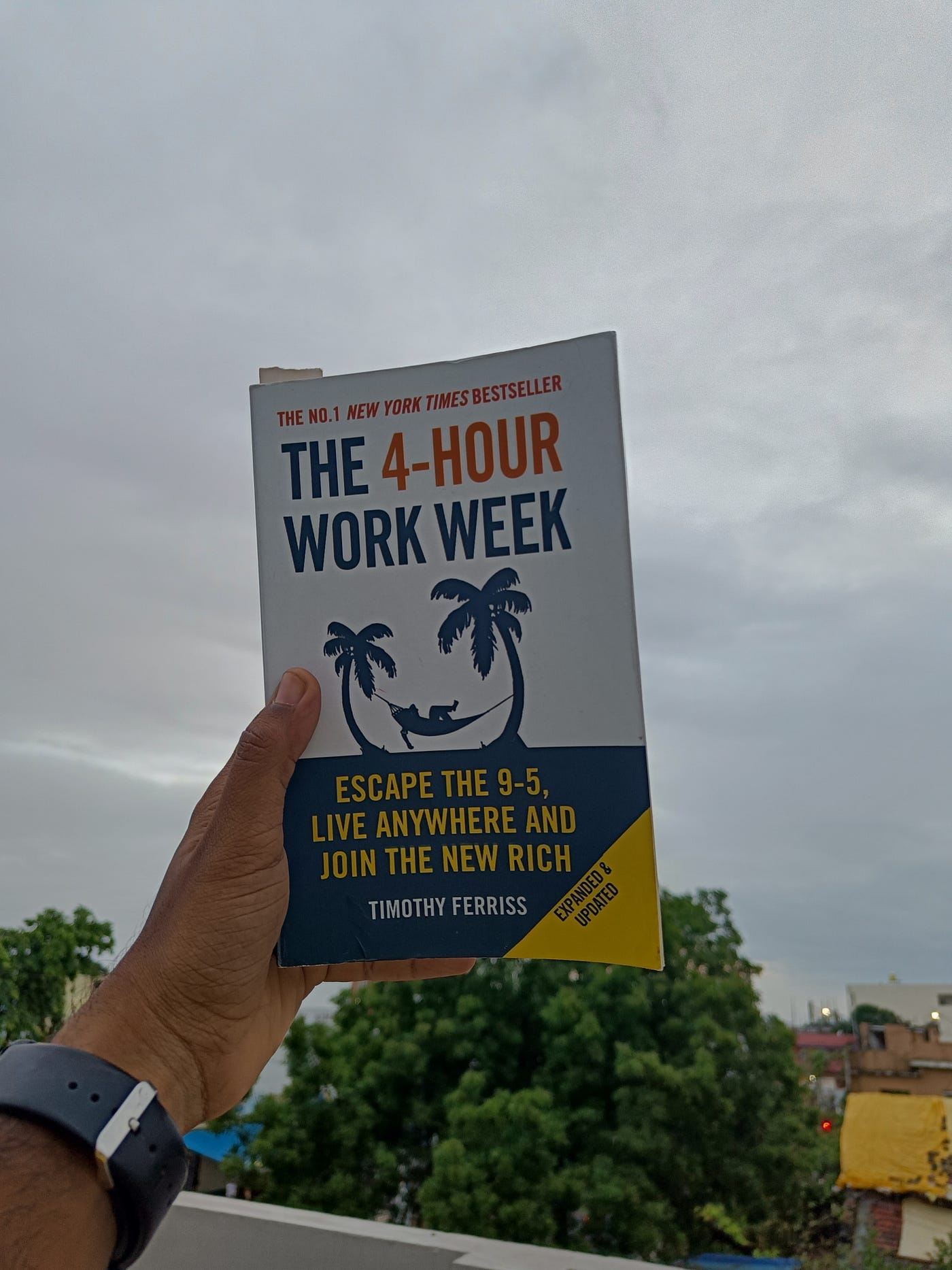
Photo captured by author
I came across this question while reading The 4-Hour Workweek by Tim Ferriss that actually changed my perspective:
Am I inventing things to do to avoid the important?
This question is different from generic “stop procrastinating” advice. Because you are doing something. But the question arises when you realize that what you are doing is not allowing you to go … anywhere.
Just like the rocking horse. You move — but don’t go anywhere.
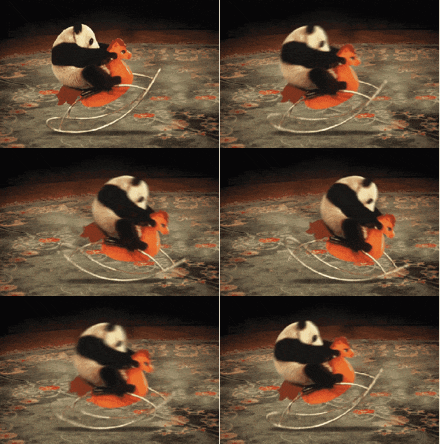
Source: Tenor.com
When you check your phone or clean your inbox, you think you are being productive. But the harsh reality is that you are just beating around the bush. You are doing something but not making any real progress towards your goals.
Because doing work is NOT important unless it is moving the needle.
For me, when I sat down to write this article, I got so many distracting tasks. I texted a friend, checked LinkedIn stats, and checked emails, but none of it helped me achieve anything at that moment.
For those few minutes, I got the cheap dopamine hit by doing the invented work, nodding along with it, but that “information gathering” is misleading and dangerous.
The core action item for me for that particular moment was not any of that distracting work; it was only writing.
I know that writing consistently will help me write better and achieve my goal, but somehow I was avoiding the very thing that mattered to me.
After some thought and research, I found out the psychology behind it and how to actually prevent it.
The Psychology
Photo by Wiki Sinaloa on Unsplash
The human mind is an interesting organ; it can help us do unimaginable stuff like running ultramarathons, swimming in freezing water in Antarctica, and building trillion-dollar businesses.
And at the same time, it can make you struggle to walk 1k steps, read a page, even get out of your bed.
It is fascinating and terrifying at the same time.
There are plenty of deeper reasons why we settle for low-value tasks rather than high-value ones. The following are the main ones, and I felt personally attacked by them.
Fear Of Starting
We plan so many things in our imagination, but don’t implement any of it. We want to do it, but then think about other people.
What will they think about me if I do it? Would they judge me? Would they hate me? Would they laugh at me?
So, we don’t even start. We stay paralyzed by the thought of it, staring at the starting line. Never making any effort to move through that line.
But, here’s the thing: Nobody cares.
Nobody cares about what you do; they have their own stuff to handle, their own life to untangle, their own problems to deal with. Even if you start with the feeling that they will criticize you, maybe they will, but it won’t last. They will find something else to focus on within the hour.
Photo by Johannes Steuding on Unsplash
That’s one kind of fear. Another one, and you might feel this too, is the huge pile of work staring back at you. That task feels very overwhelming to take the first step.
I dread whether I'll be able to complete it, and fall back on other cheap dopamine activities instead.
Asking this question helps me:
What is the one thing that I can do that actually moves me forward?
And then do it for 20 minutes. That’s it. No pressure. More often than not, momentum kicks in, and I keep going.
Perfectionism
We have a deep desire to complete any task with perfection. Not just done. Perfect.
We get dopamine as we do anything and mark it done as perfect. Whether it is a flawless painting or an article with no ideas left behind and no mistakes. We feel great after finishing things perfectly.
With the rise of Artificial Intelligence, it is easier to keep polishing things endlessly until they feel “perfect”.
But perfect is not natural. There is some beauty in imperfection.
Japanese art form Kintsugi explains this very neatly. It is the traditional Japanese art of repairing broken pottery with tree-sap lacquer dusted with powdered gold, silver, or platinum.
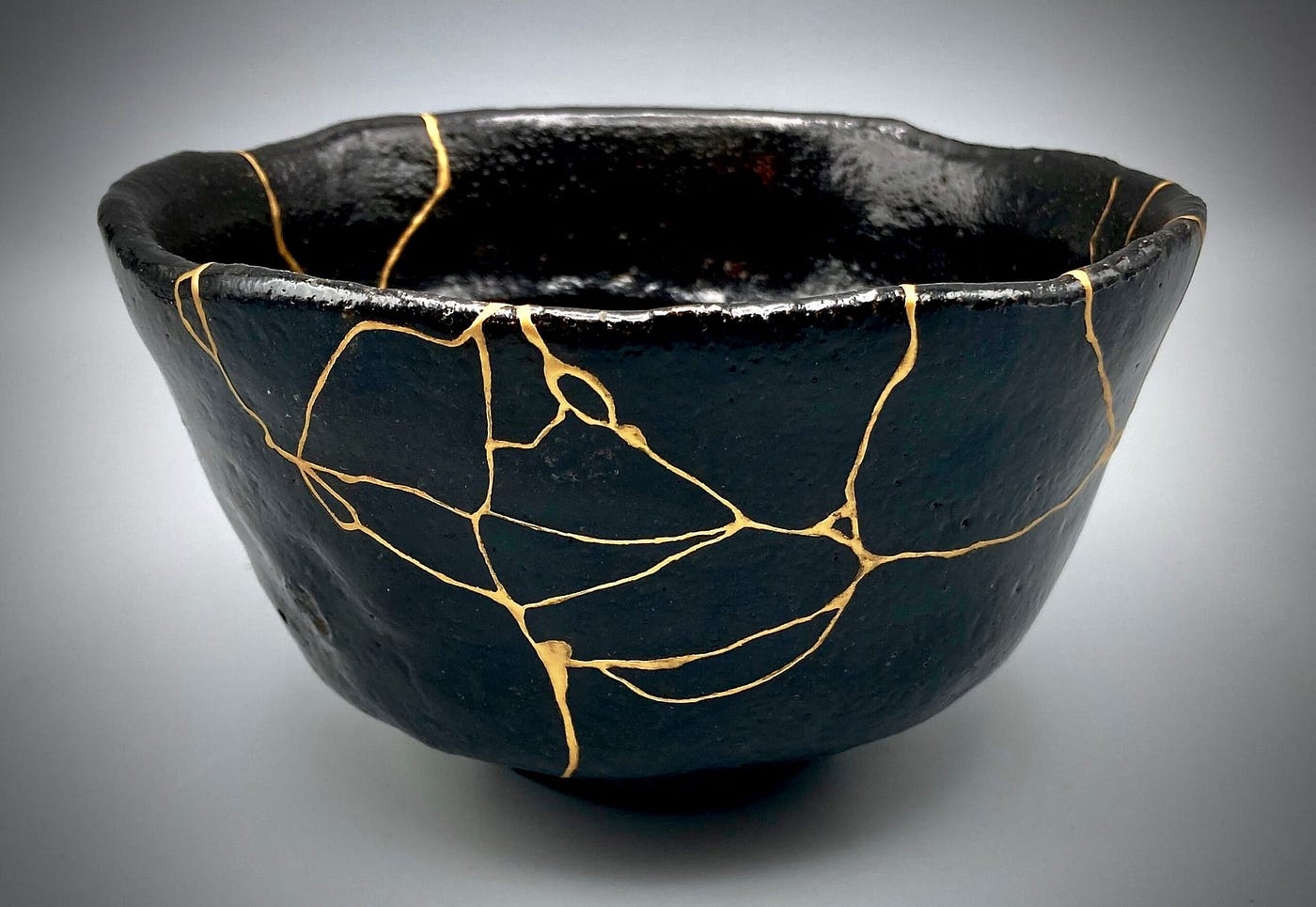
Kintsugi: A Japanese art form
And that imperfection becomes its beauty.
Kintsugi offers powerful lessons in resilience and healing. It suggests that:
- Scars are beautiful: Our emotional wounds and imperfections are not things to be ashamed of. They are part of our story and contribute to our character.
- Strength in brokenness: We can endure hardships, heal, and emerge stronger and more valuable.
- Embracing change: Instead of striving for unattainable perfection, we accept the flaws in ourselves and others, which leads to deeper authenticity.
So, whenever I find myself struggling to achieve perfection, I remind myself of Kintsugi and allow my articles (or anything for that matter) to stay imperfect.
After all, Done >>>> Perfect.
How do I do it differently now?
Sometimes, I still get into the low-value tasks. Because I am not yet a master of thoughts.
But the difference now is that I am aware of it whenever I do.
So, next time I find myself engaged in low-value tasks, I pause, strip away the professional label, and ask: Would I still be doing this?
Cleaning my inbox becomes reading random newsletters. Checking my LinkedIn engagement becomes scrolling an app.
If the honest version sounds like a waste of time, it probably was one.
메타데이터
- post_id
- 32fd87a2237f
- slug
- stop-inventing-new-work-32fd87a2237f
- url
- https://medium.com/never-stop-writing/stop-inventing-new-work-32fd87a2237f
- canonical_url
- https://medium.com/never-stop-writing/stop-inventing-new-work-32fd87a2237f
- author_url
- https://medium.com/@vedantraut49
- status
- ok
- fetched_at
- 2026-07-09 18:09:57