Is blended learning better for your child? Here’s what to know
Many schools today have access to technology, but parents often wonder how it is actually being used in their child’s learning. Interactive…
Is blended learning better for your child? Here’s what to know
Many schools today have access to technology, but parents often wonder how it is actually being used in their child’s learning. Interactive boards are sometimes used only as projectors. Devices are opened and closed without clear purpose. Platforms that teachers were once trained on are rarely used again.
The tools are there. What is often missing is a clear plan for how digital and in-person learning should work together in a way that benefits students.
That is what blended learning is: a thoughtful combination of classroom teaching and online learning, where each supports your child in ways the other cannot.
This guide explains what blended learning means, how it works in schools, what it offers your child, and the challenges to be aware of.
What does blended learning actually mean?
In simple terms, blended learning is a structured mix of classroom teaching and online learning, designed to work together.
It is not just about showing videos in class or submitting homework online. In a well-designed system, both parts play a clear role. The online component helps your child learn at their own pace, revisit concepts, and practise independently. The classroom focuses on discussion, guidance, and deeper understanding.
While this approach existed before 2020, it became more common during the pandemic. Today, many schools continue to use it because of the flexibility and depth it offers students across all age groups.
The main ways schools use blended learning
There is no single way to implement blended learning. Schools choose different approaches based on what works best for students.
- Rotation model: Your child moves between different types of learning during the day. Some activities are online, while others happen in the classroom. This could include watching lessons at home and using class time for practice.
- Flex model: Most learning happens online, but teachers are always available to guide and support your child when needed. This works well for students who are comfortable learning independently.
- A la carte model: Your child may take some subjects online while attending school for others. This allows more flexibility, especially in higher grades.
- Enriched virtual model: Learning is mostly online, with scheduled in-person sessions for discussion, clarification, and interaction.
The right approach depends on the school, the age of the students, and how comfortable they are with technology.
What blended learning means for your child
For children, the biggest advantage is flexibility and control.
Your child can learn at a pace that suits them. If they need more time on a topic, they can revisit it. If they are ready to move ahead, they can do that too. This sense of control often leads to better understanding and higher engagement.
Learning also becomes more varied. Instead of only listening in class, your child experiences a mix of formats like videos, interactive activities, discussions, and hands-on work. This keeps learning more engaging and less repetitive.
What it allows teachers to do differently
Blended learning also changes how teachers support your child.
When basic explanations are handled online, classroom time can be used more effectively. Teachers can spend more time addressing individual doubts, guiding small groups, and helping students who need extra support.
Digital platforms also give teachers better visibility into your child’s progress. This means they can identify gaps early and respond quickly.
For schools, it also ensures continuity. If classes are disrupted for any reason, learning does not come to a complete stop.
The challenges parents should be aware of
While blended learning has clear benefits, it is important to understand the challenges as well.
- Access to devices and internet: Not all students have reliable access at home. Schools often address this through shared resources or offline options, but it requires planning.
- Adjusting to a new way of learning: Blended learning is different from traditional classrooms. Students may need time and guidance to adapt, especially when it comes to managing their time and staying focused.
- Screen time concerns: Parents often worry about increased screen time. In a well-designed system, online learning is balanced with in-person interaction and does not replace it.
- Building trust: Some parents may initially feel unsure about reduced face-to-face instruction. Clear communication from schools and visible outcomes help build confidence over time.
What this looks like in your child’s daily learning
In a blended classroom, your child might begin by learning a concept online, then practise it in class, and finally discuss it with their teacher and peers.
For example, in a flipped classroom approach, your child may watch a short lesson at home before coming to school. Classroom time is then used for solving problems, asking questions, and applying what they have learned.
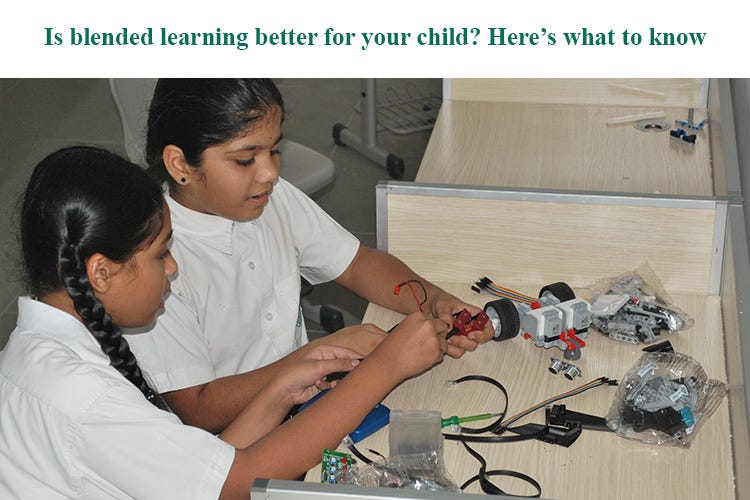
In science, simulations might happen online, while experiments take place in the lab. In mathematics, digital tools can help your child practise at their level, while teachers focus on building deeper understanding. In language subjects, reading and writing may happen independently, followed by discussions in class.
Where blended learning is headed
Blended learning is continuing to evolve with new technologies.
Many platforms now adapt to your child’s performance, offering personalised learning paths. This means each student can progress based on their understanding, not just the pace of the class.
There is also a growing focus on mastery. Instead of moving forward based only on the academic calendar, students advance when they are ready.
Schools that build strong blended learning systems today are better prepared to support students in the future.
Conclusion
Blended learning works because it combines the strengths of both classroom and digital learning.
The classroom builds relationships, discussion, and real-time support. The digital side provides flexibility, practice, and personalised learning.
Together, they create a more balanced and effective learning experience for your child.
Schools that focus on how your child learns, rather than how things have always been done, are better equipped to help them grow with confidence.
FAQs
1. What should I do if my child is getting distracted when attending their online classes?
It is natural for children to get distracted when doing work that requires internet usage, so try different techniques such as rewarding them for attending their classes or completing their coursework without getting distracted, setting a schedule that allows them both time on the internet for coursework as well as play. This sets a routine for your child to follow without getting easily distracted.
2. How will my child get personal feedback or personalized interaction if they are lagging behind?
Blended learning tracks your child’s progress and notices if your child has any difficulty understanding a particular concept. This way the teachers can be notified of areas your child might need improvement so that lessons can be planned and adjusted accordingly to match the academic needs of your child. This way the classroom mode of learning is not disrupted and your child can get the help they need online without falling behind.
3. What skills does blended learning teach?
Blended learning combines in-person instruction with digital technology, including self-direction, time management, digital literacy, critical thinking, independent research, and enhanced collaboration. The idea of blended learning is to empower students to take ownership of their learning while mastering both academic content and modern digital tools through a flexible and well adjusted learning environment.
메타데이터
- post_id
- 3a2e63f6dfa3
- slug
- is-blended-learning-better-for-your-child-heres-what-to-know-3a2e63f6dfa3
- url
- https://medium.com/@social_78551/is-blended-learning-better-for-your-child-heres-what-to-know-3a2e63f6dfa3
- canonical_url
- https://medium.com/@social_78551/is-blended-learning-better-for-your-child-heres-what-to-know-3a2e63f6dfa3
- author_url
- https://medium.com/@social_78551
- status
- ok
- fetched_at
- 2026-07-26 14:24:40




