Claude 4.6 Sonnet vs OpenAI Codex 5.3—Benchmark Scores vs Developer Reality
Benchmarks look close. Real-world behavior tells a different story. For non members
Claude 4.6 Sonnet vs OpenAI Codex 5.3—Benchmark Scores vs Developer Reality
Benchmarks look close. Real-world behavior tells a different story. For non members

Model comparison for your use
In the ever-evolving world of AI language models, there is huge chaos. Everyone wants to capture the market; two of them, Anthropic’s Claude Sonnet 4.6 and OpenAI’s GPT 5.3 Codex, are competing to be the best amongst them. Both have shown promising advancements in coding, reasoning, and task automation. However, on paper, their benchmark shows neck-and-neck competition between both. But being a user, when I deep dive and talk to other developers or researchers, I could understand a more nuanced story with practical usability and cost efficiency and real-world reliability.
In this post I break down the key aspects of this matchup based on recent benchmarks, my personal experience, external reports, and expert analyses. I’ll try to explore the stats and may try to uncover the hidden costs that could impact your workflows and budgeting. I would try to highlight what truly matters when choosing between these models. Whether you’re building apps, automating tasks, or just curious about the AI frontier, let’s dissect what sets Sonnet 4.6 and GPT 5.3 Codex apart.
The Benchmark Breakdown: Where the Numbers Stand
Benchmarks are the go-to metric in any realm, so let’s try them on AI models. We tried offering standardized tests across coding, reasoning, and agentic tasks for comparison. Sonnet 4.6 and GPT 5.3 Codex have been pitted against each other on several prominent evaluations, including OSWorld, Terminal Bench, SWEBench, and BridgeBench. Here’s a snapshot of how they stack up:
[embed]Table imported from Datawrapper
These scores suggest we are moving towards a right competition, which would help us in evolution in every manner.
GPT 5.3 Codex is often ahead in speed-focused benchmarks like Terminal Bench, where it scored 77.3% compared to Sonnet’s 65.4%.
However, Sonnet 4.6 keeps dominating in agentic and depth-oriented tests. Personally, I have tried Sonnet 4.6 for some deep analytics, and it was helping me with spot-on analysis. OSWorld has also shown significant result-driven success (73% for Opus variant, with Sonnet close behind at 72.5%), while Codex was able to give 65%. Here is one thing that I would prefer to highlight: while Codex claims benchmark leadership with scores like 74.5% on coding evals, Sonnet’s performance feels more “polished” and result-driven in integrated workflows. Since integrated workflows are representations of a system with real-world scenarios, I would prefer to have something that can help real-world scenarios.
To some extent benchmarks aren’t everything. These benchmarks are for 48 hours or so with a limited data set and approach, without having real-world scenarios of user behavior. Benchmarking numbers do not lie, but real-world tests reveal gaps that standardized metrics overlook and enhance the capability of models based on need.
Hidden Costs: Beyond the Sticker Price
Pricing is straightforward on the surface, and these days pricing is not an issue; it meets business needs, but if we talk about hidden costs like token limitation, latency, and workflow insufficiency, these make a difference based on language locality and use cases. If you see most of the foundational models are based on Western needs and language support, and their token support for non-Western languages like Hindi or Mandarin impacts their performance a lot,
Let’s compare the economics:
- Input/Output Pricing:
- Claude Sonnet 4.6: $3.00 per million input tokens / $15.00 per million output tokens.
- GPT 5.3 Codex: $6.00 per million input tokens / $30.00 per million output tokens.
Since Sonnet 4.6 is roughly 50% cheaper overall, it makes it a budget-friendly option for high-volume users. In long-context queries, however, Sonnet’s 1M token beta support (on the other hand, Codex has a standard limit) could increase costs for expansive repo analysis.
- Latency and Speed:
- Codex is 25% faster than its predecessors and excels in rapid prototyping, taking just 2 minutes for tasks that Sonnet handles in 7 minutes. But Sonnet’s average task time on BridgeBench is 924.8 seconds—half of Codex’s 2245.2 seconds on similar evals—thanks to its efficiency in refactoring and completion.
- Other Hidden Factors:
- Error Rates and Reliability: Codex’s haste leads to more bugs; it prioritizes speed over thorough planning, which results in lower quality code in complex scenarios. However, Sonnet always invests in adaptive thinking planning, which yields fewer errors, and the trade-off is speed.
- Integration Overhead: Claude Code has a polished interface, which gives it an edge in usability, which reduces end-to-end setup time.
- Preference in Blind Tests: Users prefer Sonnet 4.6 over its predecessor 70% of the time in Claude Code, and even over Opus in some cas—despitete Codex’s benchmark wins.
In a five-day test shipping 44 PRs in an autonomous run, Sonnets stands tall with a balanced outcome. Which shows how fast developers can adapt it without wasting hours to debug Codex output. As per my opinion, Sonet is more reliable now.
Architectural Foundations: Hybrid Reasoning vs. Unified Router + Thinking Modes
Claude Sonnet 4.6 inherits Anthropic’s hybrid reasoning architecture (evolved from the Sonnet 4.5 / Opus 4.x lineage):
- Dual-mode system: The Sonnet setup uses a dual-mode system; for straightforward queries, it delivers near-instant inference. However, for complex scenarios and logic, it shifts to extended mode with chain-of-thought (CoT) reasoning.
- Developers can explicitly control effort (low/medium/high) via API params, which balances latency vs. depth without router guesswork.
- Adaptive thinking: the model dynamically adjusts reasoning steps based on perceived complexity.
- Context compaction: The model gives automatic summarization of older context to fight rot in the 1M-token beta window → qualitative leap in usable long-horizon planning (e.g., 76% MRCR v2 at 1M vs. ~18% for prior Sonnet).

GPT-5.3 Codex uses OpenAI’s unified system with a real-time router and configurable thinking tiers:
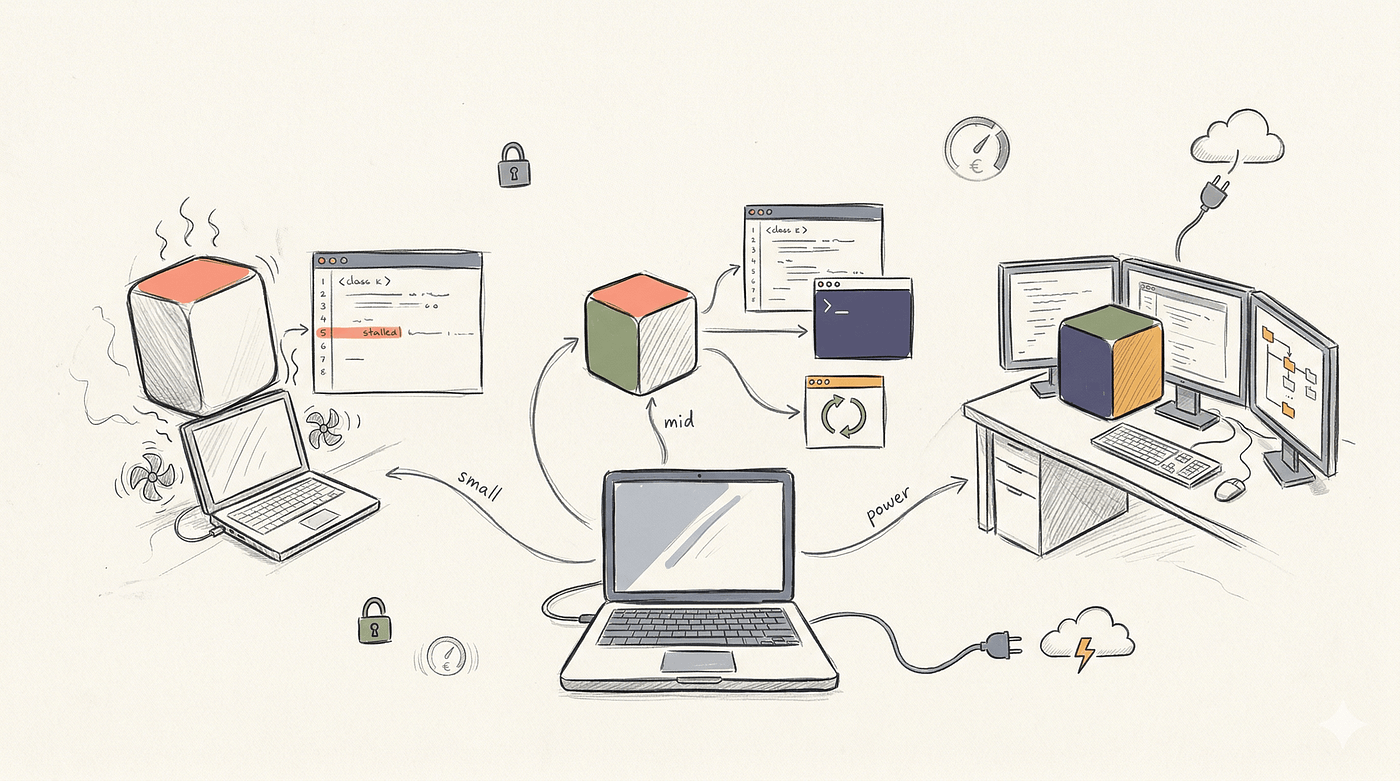
- The router auto-selects between fast base, medium "thinking," and heavy Pro modes, or you can override it based on your need.
- Emphasis on test-time compute scaling: longer internal CoT + parallel sampling in heavy modes.
- Strong token efficiency per checkpoint (fewer tokens burned on verbose planning).
Real-World Behavior: Where the Rubber Meets the Road
In most of the benchmarking measurements isolated tasks are being used, but in real-world scenarios of service-driven worlds with hit-and-try learning mechanisms, performance mostly hinges on how these models handle messy, iterative workflows. Here’s what users are saying:
- Coding and Debugging: Sonnet 4.6 is hailed for depth—reading entire repos in one go and delivering "solid tech stack" results with aesthetic polish. I have tried several small as well as enterprise projects, and results were promising. However, Codex gets the job done faster with the tradeoff of missing features or production issues. In one experiment, Sonnet scored a perfect 100% on a custom test where Codex faltered at 77.3%.
- Agentic Tasks: Sonnet leads in adaptive reasoning for complex systems, making it ideal for full-system understanding. Codex shines in quick bug fixes and iterations but struggles with chained steps.
The consensus? If you need speed for prototyping, go Codex. For depth in production, Sonnet is winning the race.

What Actually Matters: Choosing the Right Tool for Your Needs
Mostly people go through benchmarks, compare the tools, and adapt them. However, without knowing your real use case, Selection of the model would become a nightmare; Sonnet 4.6 offers flagship performance at one-fifth the cost of premium models, making it a sweet spot for most users. Codex, with its real-time steering, suits fast-paced environments but at a premium price and with potential reliability trade-offs.
Ultimately, test both in your workflow. As one expert advised, "Use both strategically.”
What are your experiences with Sonnet 4.6 or GPT 5.3 Codex? Share in the common—let's’s discuss what matters most to you.
References
메타데이터
- post_id
- 4331a2ea5646
- slug
- claude-4-6-sonnet-vs-openai-codex-5-3-benchmark-scores-vs-developer-reality-4331a2ea5646
- url
- https://medium.com/write-your-world/claude-4-6-sonnet-vs-openai-codex-5-3-benchmark-scores-vs-developer-reality-4331a2ea5646
- canonical_url
- https://medium.com/write-your-world/claude-4-6-sonnet-vs-openai-codex-5-3-benchmark-scores-vs-developer-reality-4331a2ea5646
- author_url
- https://medium.com/@SwapDilettante
- status
- ok
- fetched_at
- 2026-08-31 04:28:38