LangGraph, CrewAI, AutoGen: What They Give You and What They Don’t
This is Part 3 of 4 in the Enterprise AI Orchestration series by Prasanna Vaidya, Co-founder & CEO, Gyde.
LangGraph, CrewAI, AutoGen: What They Give You and What They Don’t
This is Part 3 of 4 in the Enterprise AI Orchestration series by Prasanna Vaidya, Co-founder & CEO, Gyde.
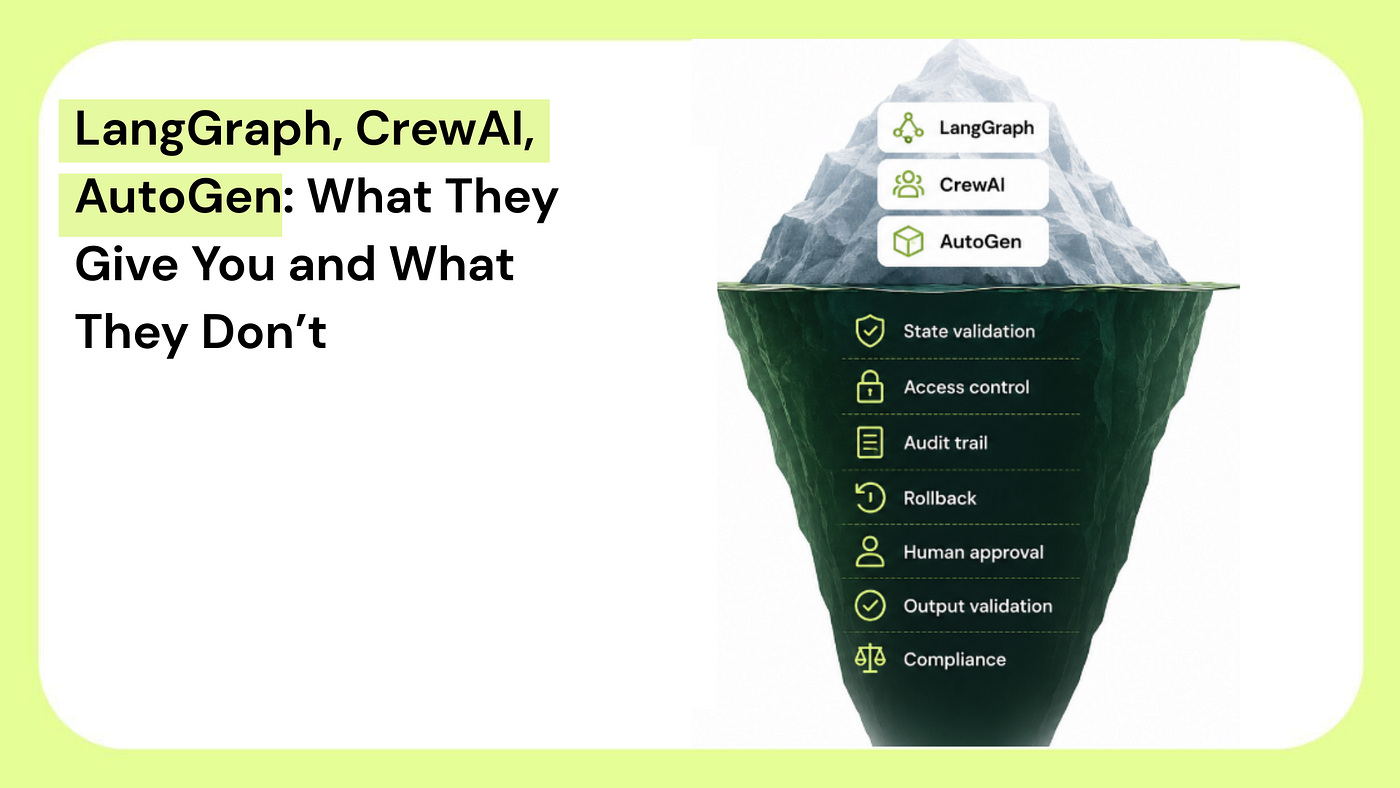
Whenever I ask enterprise teams which AI orchestration framework they’re using, I get a confident answer. LangGraph. CrewAI. AutoGen. Sometimes a custom build on top of LangChain.
When I ask why they chose it, the answers are a lot less confident.
- “The docs were good.”
- “We found good examples on GitHub.”
- “The team was already familiar with it.”
These are actual reasons. They’re also the wrong criteria.
Orchestration frameworks are selected (almost universally, in my experience) based on how they look in documentation.
❌Not how they behave when upstream data is incomplete.
❌Not how they perform when a sub-agent returns something plausible but wrong.
❌Not what the audit trail looks like when a compliance team asks for a decision reconstruction six months later.
That gap between “framework-ready” and “production-ready” is where most enterprise AI orchestration problems actually live. And it’s worth being specific about what that gap contains.
What Frameworks Actually Provide
Let me give frameworks their due first, because they do solve real problems.
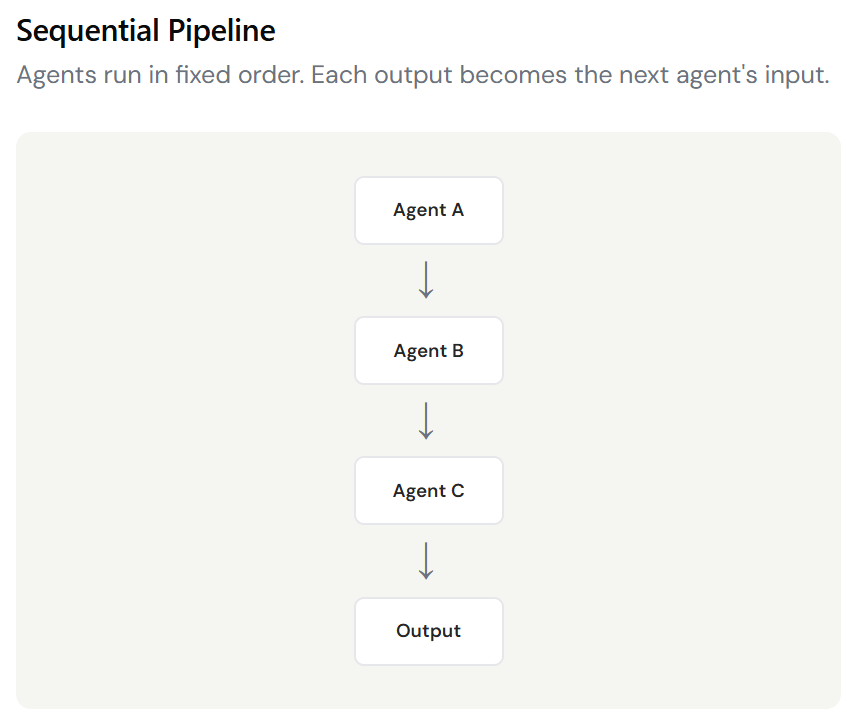
- Sequential pipelines structure workflows in which the output of one agent must feed into the next. LangChain handles this cleanly. For workflows with hard step dependencies (where Agent B cannot meaningfully start without Agent A’s output), sequential pipelines are easy to build, easy to reason about, and easy to audit because failures surface at exactly one step. The limitation is that they cannot adapt to incomplete upstream data. They pass the problem downstream.
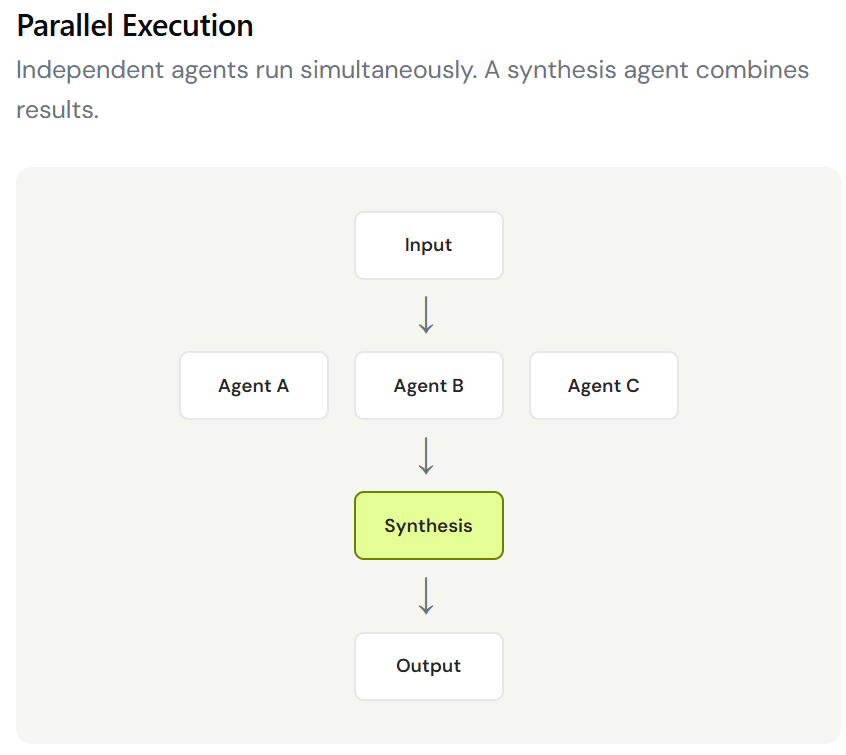
- Parallel execution lets independent agents run simultaneously, reducing total processing time where sub-tasks genuinely don’t share state. Good frameworks support this well. The catch: when teams force parallelism onto tasks that actually share context, agents produce outputs built on inconsistent states. The synthesis agent that assembles those outputs is working with results that were never meant to coexist.
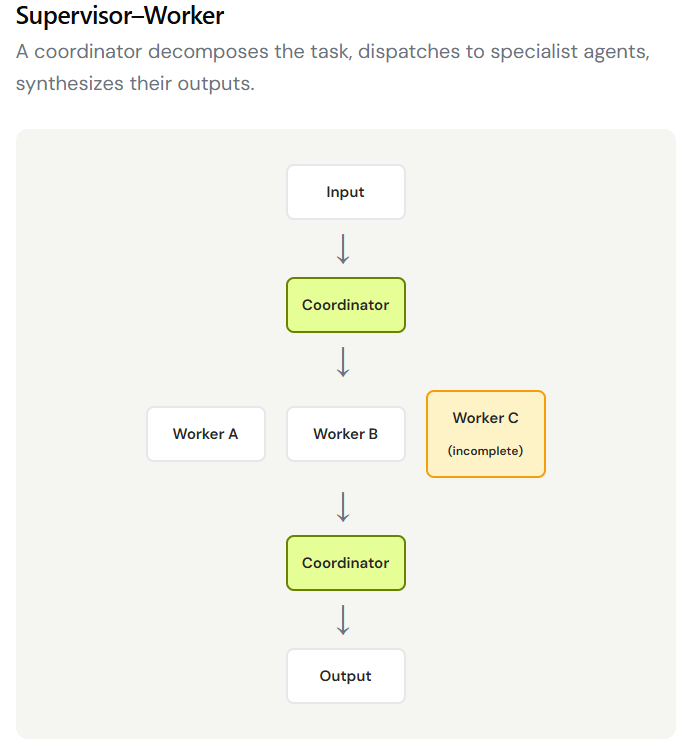
- Supervisor-worker patterns are the most common enterprise architecture for a reason. A coordinator decomposes the goal, dispatches to specialist agents, and synthesizes their outputs. LangGraph and CrewAI handle this reasonably well at the workflow level. But (and this is the critical point) most orchestration failures in production don’t originate with the worker agents. They originate with a coordinator that made a decomposition decision the system had no mechanism to catch.
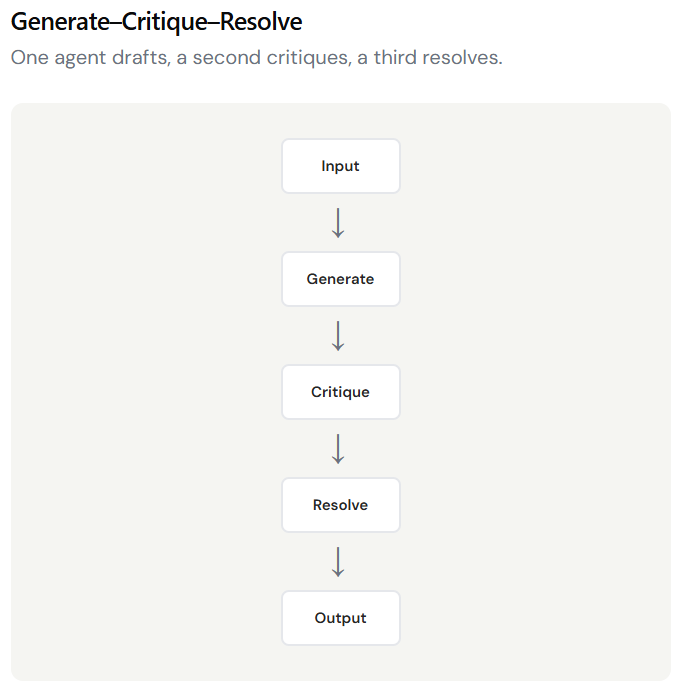
- Generate-critique-resolve runs one agent to draft, a second to critique, a third to resolve. This adds cost and latency, but in regulated environments where the cost of an undetected error is high, those trade-offs are often worth it. Insurance claims, clinical documentation, and loan underwriting memos are contexts where an incorrect confident output is operationally worse than a slower, correct one.
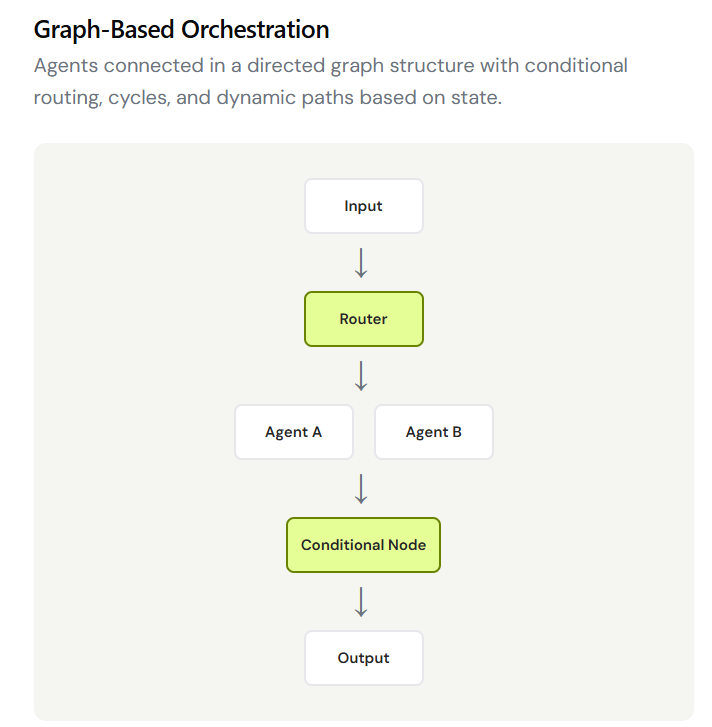
- Graph-based orchestration: LangGraph is the primary framework here, which handles dynamic routing, conditional branching, retry logic, and cycles. This is powerful for workflows where the path can’t be predetermined. It’s also where the audit problem gets most acute. Execution paths can vary significantly between runs. Without explicit state validation at every node, errors travel through unexpected routes, and reproducing a failure requires knowing which path the graph took, information that’s often not captured by default.
These patterns are genuinely useful. They solve the workflow structure problem. What they don’t solve is everything else.
What frameworks do not provide?
Each of the patterns above can be implemented using open-source frameworks. What they do not provide is what makes the flow trustworthy in production, like:
- output validation at each handoff,
- coordinator logic that catches incomplete outputs before they cascade,
- audit trails in a format a compliance team can use,
- and operational accountability after deployment.
The pattern handles the flow. The pattern alone does not handle the trust.
With an AI transformation partner like Gyde, trust is woven into the AI system from day one. They select patterns based on use case risk profile:
- supervisor–worker with sequential sub-pipelines for most BFSI and healthcare workflows,
- parallel execution where latency justifies the overhead,
- generate–critique–resolve where the cost of a wrong answer is highest.
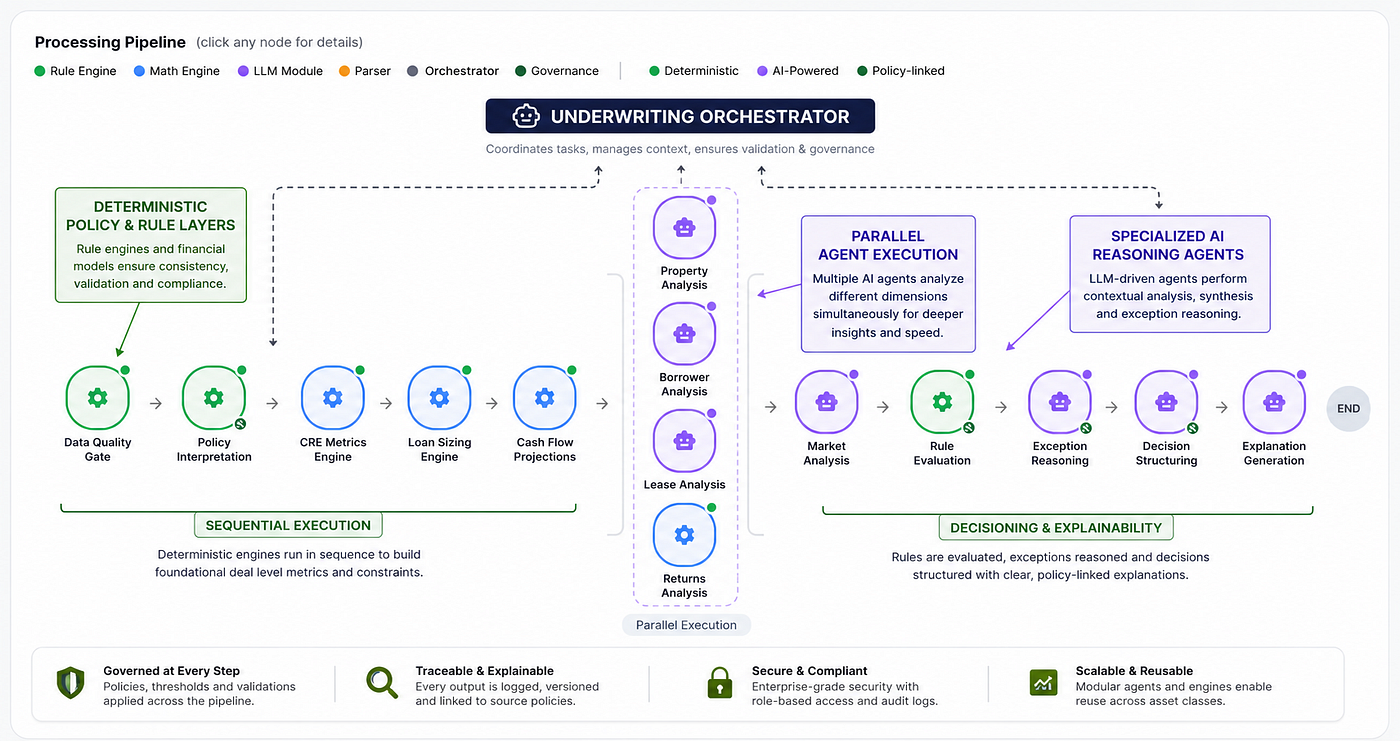
Gyde’s CRE underwriting SIS combines AI agents with rule engines, financial computation modules, and orchestration controls to create explainable and production-ready underwriting workflows.
At every layer, the LLM Sandwich applies: pre-LLM rules that validate inputs before each agent processes them, and post-LLM rules that check outputs before they pass downstream. The pattern determines the flow. The sandwich determines whether that flow can be trusted.
What Production-Ready Actually Means
When I talk with enterprise teams about whether their orchestration architecture is production-ready, I’m not asking whether the framework is configured correctly. I’m asking seven specific questions:
- Does the coordinator validate output before passing it downstream, or does it route whatever it receives? A plausible-looking output that’s out of range should stop the chain, not continue it.
- Are completeness checks built in before sequential steps, so that partial upstream data doesn’t silently propagate into downstream processing?
- Is access scoped per sub-agent, so that each agent accesses only what its specific task requires? Least-privilege at the agent level reduces the surface area through which a probabilistic error can reach data it shouldn’t.
- Can the coordinator explain its routing decisions in a format a compliance team can reconstruct, not just a developer debugging a failure?
- Are human escalation paths predefined so that when an output falls outside the parameters, the escalation route exists and the reviewer has the right context?
- Has the system been tested for the compounding failure case in which each individual sub-agent returns a plausible result, but the combined output is incorrect? This test case almost never appears in standard QA.
- Is a rollback possible mid-workflow so that, when a problem is detected, further processing stops and the right people are notified? A system that detects an anomaly and continues anyway is not production-ready.
Frameworks don’t answer these questions. Architecture does. The difference between a promising pilot and a reliable production system is almost always in this layer — the governance between agents.
Part 4 (the final piece) puts this into practice by showing what multi-agent orchestration looks like in BFSI and healthcare environments, and outlining the specific questions to ask before choosing any orchestration approach.
Disclaimer: This is Part 3 of an ongoing series on enterprise AI orchestration. The original guide (including interactive framework pattern visualizations and a full evaluation checklist) is published on the Gyde blog.
메타데이터
- post_id
- 5601deb55482
- slug
- langgraph-crewai-autogen-what-they-give-you-and-what-they-dont-5601deb55482
- url
- https://medium.com/@prasannavaidya/langgraph-crewai-autogen-what-they-give-you-and-what-they-dont-5601deb55482
- canonical_url
- https://medium.com/@prasannavaidya/langgraph-crewai-autogen-what-they-give-you-and-what-they-dont-5601deb55482
- author_url
- https://medium.com/@prasannavaidya
- status
- ok
- fetched_at
- 2026-07-08 18:29:56