Herero Genocide: War and Extermination
The Herero uprising in January 1904 sparked a brutal response from the German Empire. What started as a colonial revolt soon exploded into…
Herero Genocide: War and Extermination
The Herero uprising in January 1904 sparked a brutal response from the German Empire. What started as a colonial revolt soon exploded into all-out war, with reinforcements rushing to German South West Africa. German troops poured in, turning scattered attacks and reprisals into full-scale military campaigns. The aim shifted, no longer just restoring order but crushing Herero resistance for good. A key turning point came with General Lothar von Trotha’s arrival. He took command with a ruthless mindset, seeing the fight not as a minor rebellion but a battle demanding total force. His plan? Encircle and destroy the Herero as a fighting force, no holds barred.
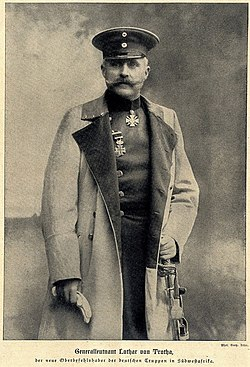
Lieutenant General Lothar Von Trotha
In August 1904, German troops clashed with Herero fighters at the Battle of Waterberg, one of the war’s biggest showdowns. The Herero, with their families and livestock, had gathered there, hoping to stand their ground or talk terms. But the Germans struck hard with better weapons and smart positioning, shattering their defenses. Many Herero slipped away from the battlefield, but they had no choice: flee east into the brutal Omaheke Desert. That desperate retreat turned into a nightmare. Germans cut off water holes and chased down escapees, driving them deeper into one of the region’s deadliest wastelands. Without water, food, or cover, countless Herero, men, women, children, succumbed to thirst, hunger, and exhaustion.
In October 1904, Trotha made it official with his infamous extermination order. It bluntly stated: every Herero in German territory would be shot, armed or not. Try to come back? You’d be gunned down too. This wasn’t warfare anymore, it was a deliberate push to wipe out an entire people. The toll was heartbreaking. Thousands perished in the desert’s grip. Surrenders often meant rejection or a shove back into hell. The goal wasn’t just victory; it was erasing the Herero as a community from the colony. Eventually, some survivors were rounded up or gave themselves in. They ended up in camps, forced into grueling labor amid squalor. Disease, starvation, and exhaustion claimed more lives. The Nama faced similar horrors when they rebelled later.
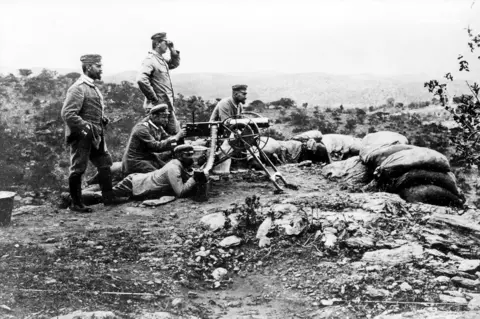
The Battle of Waterberg (1904)
By the war’s end, the Herero population had been decimated, slaughtered, starved, or worked to death. A colonial crackdown had morphed into a calculated campaign of annihilation. These events show how fast colonial “pacification” could spiral into something monstrous. What began as suppressing a revolt became a drive to erase a people from their homeland. Today, it’s seen as one of the 20th century’s first genocides, fueled by empire-building, racial hatred, and unchecked violence.”
메타데이터
- post_id
- 567dc171ddd5
- slug
- herero-genocide-war-and-extermination-567dc171ddd5
- url
- https://medium.com/@evanjoshuajoseph/herero-genocide-war-and-extermination-567dc171ddd5
- canonical_url
- https://medium.com/@evanjoshuajoseph/herero-genocide-war-and-extermination-567dc171ddd5
- author_url
- https://medium.com/@evanjoshuajoseph
- status
- ok
- fetched_at
- 2026-07-11 22:16:18