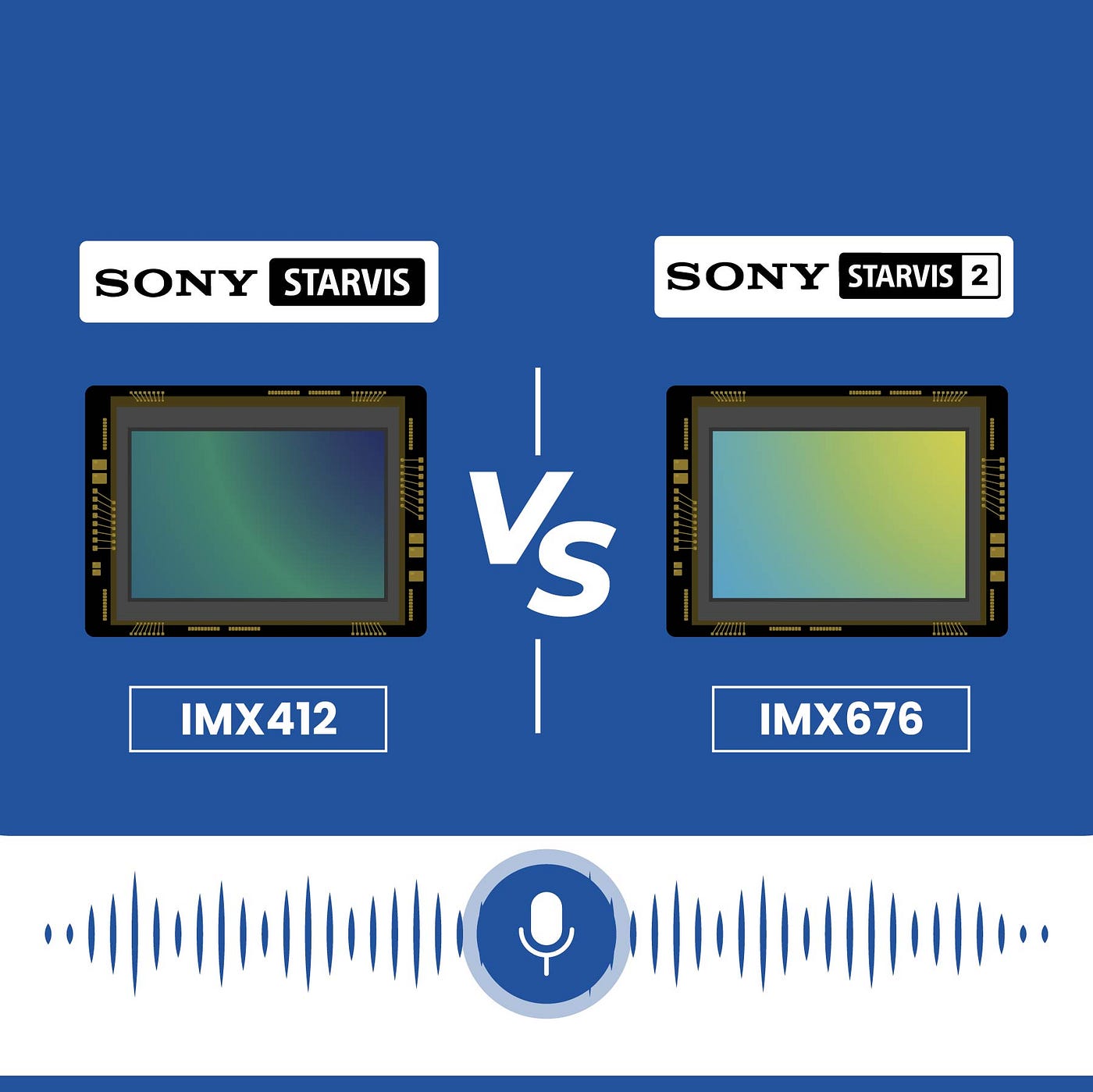
Sony IMX412 vs Sony IMX676: Which STARVIS Sensor Should You Choose for Embedded Vision?
Selecting the right image sensor can make or break an embedded vision system.
Sony IMX412 vs Sony IMX676: Which STARVIS Sensor Should You Choose for Embedded Vision?
Selecting the right image sensor can make or break an embedded vision system.
While resolution often gets the most attention, experienced system designers know that real-world performance depends on much more than megapixels. Low-light sensitivity, HDR capabilities, NIR performance, frame rates, lens compatibility, and synchronization features all play a critical role in determining whether a camera system succeeds in deployment.
This is particularly true when comparing Sony’s IMX412 and IMX676 sensors.
At first glance, both sensors appear to target similar high-resolution embedded vision applications. However, the introduction of Sony STARVIS 2 technology in the IMX676 brings significant improvements in low-light imaging, HDR performance, and near-infrared sensitivity that can dramatically impact system performance.
The question is: Does that automatically make IMX676 the right choice for every application?
Not necessarily.
Why This Comparison Matters
Many vision system architects assume that newer sensors always replace older ones. In reality, sensor selection is about matching imaging characteristics to application requirements.
For example:
- Do you need superior low-light performance?
- Is NIR imaging critical to your deployment?
- Are you building a high-speed vision system requiring 240fps operation?
- Do you have lens constraints that influence sensor selection?
- Is HDR performance important for challenging lighting conditions?
- Will your application require synchronized multi-camera operation?
The answers to these questions can significantly influence which sensor is the better fit.
Key Topics Covered in the Podcast
In this episode of Vision Vitals, e-con Systems’ embedded vision experts compare the Sony IMX412 and Sony IMX676 across the parameters that matter most in real-world deployments:
STARVIS vs STARVIS 2 Architecture
Understanding the technology improvements behind Sony’s latest sensor generation and how they affect image quality.
Pixel Size Comparison
- IMX412: 1.55μm pixels
- IMX676: 2.0μm pixels
Learn how pixel architecture influences low-light sensitivity, noise characteristics, and image clarity.
HDR Technologies Compared
Explore the differences between:
- 2-frame DOL HDR
- 3-frame DOL HDR
- Clear HDR
and understand which approach performs best under challenging lighting conditions.
NIR Performance
Discover why the IMX676 offers significantly stronger near-infrared sensitivity and what that means for surveillance, ITS, robotics, and industrial applications.
High-Speed Imaging
While IMX676 introduces major imaging improvements, IMX412 still offers advantages in certain high-frame-rate scenarios, including up to 240fps operation at Full HD resolution.
Lens Compatibility Considerations
Learn how optical format differences influence lens selection, field of view, and system design decisions.
Multi-Camera Synchronization
Understand the synchronization capabilities available on both sensors and why they matter in robotics, autonomous systems, and industrial automation.
Applications Discussed
This comparison is particularly relevant for:
- Embedded Vision Systems
- Industrial Automation
- Robotics
- Smart Surveillance
- Intelligent Transportation Systems (ITS)
- Medical Imaging
- Autonomous Platforms
- AI Vision Systems
Listen to the Full Discussion
If you’re evaluating Sony image sensors for your next embedded vision design, this episode provides a practical framework for selecting the right sensor based on deployment requirements — not just specifications.
🎧 Watch the full Vision Vitals podcast episode:
[embed]
Explore Sony STARVIS camera solutions
*Vision Vitals is e-con Systems’ podcast series focused on embedded vision technologies, camera innovations, sensor architectures, and real-world deployment challenges across robotics, industrial automation, smart mobility, healthcare, retail, agriculture, and more.*
메타데이터
- post_id
- 57f7a2d2e40f
- slug
- sony-imx412-vs-sony-imx676-which-starvis-sensor-should-you-choose-for-embedded-vision-57f7a2d2e40f
- url
- https://medium.com/@info-kevinjackson/sony-imx412-vs-sony-imx676-which-starvis-sensor-should-you-choose-for-embedded-vision-57f7a2d2e40f
- canonical_url
- https://medium.com/@info-kevinjackson/sony-imx412-vs-sony-imx676-which-starvis-sensor-should-you-choose-for-embedded-vision-57f7a2d2e40f
- author_url
- https://medium.com/@info-kevinjackson
- status
- ok
- fetched_at
- 2026-06-21 15:33:18