Opinion: OVO Yee-Haw?
Alright, alright, alright. Let me first give a disclaimer:
Opinion: OVO Yee-Haw? Drake’s Nashville Stroll with Morgan Wallen Sparks the Expected Twitter Meltdown (and Maybe a Tiny Bit of Thought)
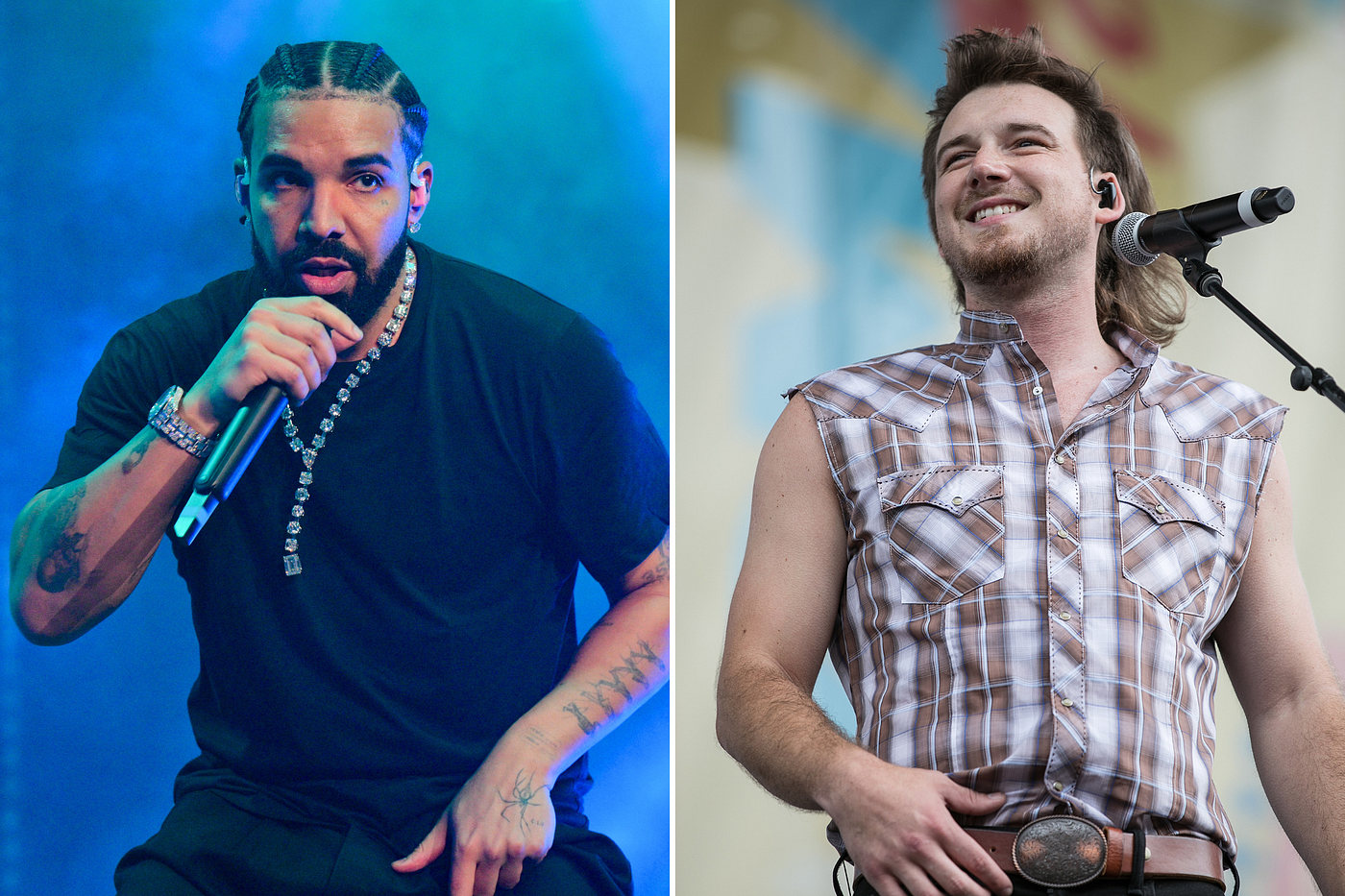
Prince Williams/Danielle Del Valle/Stringer/WireImage/Getty Images Entertainment
Alright, alright, alright. Let me first give a disclaimer:
I’m not really into celebrity gossip or other spicy news. And my venture into entertainment media is first solely for the glory of Christ. With that being said, I don’t lack experience being the salt, light, and redeemer of an industry I’ve often avoided. What makes it even more complicated is navigating the industry with rapidly changing norms, possessing what some would call “The Finisher’s Annointing.” IYKYK.
But let’s talk about the cowboy in the room, or rather, the country star walking beside Drake. Over the weekend, the internet nearly short-circuited when Drake, of perennial sensitivity and strategic alliances, was spotted chumming it up — and even walking out on stage — with none other than Morgan Wallen. Morgan Wallen, the one who, according to the reputable folks over at XXL and seemingly every hip-hop media outlet, was caught using the N-word multiple times. The outrage, as you can imagine, was swift and plentiful. How could Drake, champion of inclusivity and dropper of the most carefully curated Instagram captions, align himself with someone who has demonstrably used such offensive language?
Cue the think pieces, the fiery tweets, and the inevitable “cancel culture is coming for Drake (again)” hot takes. But amidst the digital pitchforks, a slightly less amplified, yet arguably more nuanced, question starts to bubble up: where does Hip-Hop, as a culture, draw the line with language, particularly within the often self-referential world of hip-hop?
_ N One
Let’s be real. The N-word, a term with a deeply painful and oppressive history, is undeniably present within hip-hop culture. Its usage, often among Black artists and communities, is a complex issue tangled in reclamation, brotherhood, and a twisted sort of linguistic evolution. Yet, the moment a white artist utters the same word, the reaction is <rightfully > one of condemnation, highlighting the vast chasm of historical context and power dynamics.
This brings us to the wobbly tightrope of language relativity. The idea that the meaning and impact of language are relative to the culture and context in which they are used is a fascinating one. In some spaces, the N-word carries a different weight; connotation. Except among examination, the declaration crumbles the moment that language crosses cultural boundaries and enters spaces where its historical venom remains potent and undeniable. Hip-hop is supposed to change the world? Not if it continues to gatekeep until it becomes unprofitable. Wallen’s usage wasn’t within a closed cultural circle; it was a stark reminder of the racial insensitivity that persists in broader society.
Hip-hop is supposed to change the world? Not if it continues to gatekeep until it becomes unprofitable.
So, is Drake’s association hypocritical? On the surface, absolutely. To criticize societal racism while seemingly embracing someone with a documented history of using racial slurs feels like a jarring disconnect. But perhaps this uncomfortable moment offers an opportunity to reflect on the power of language itself.
New Word Order
Imagine a world where artists, influential figures who shape our cultural lexicon, consciously chose to wield language that exclusively fostered positivity, equity, and understanding. What if our narratives, our lyrics, our everyday conversations were deliberately devoid of terms carrying the baggage of hate and division? This isn’t about sanitizing language entirely, but about recognizing the profound influence words have on shaping our perceptions and ultimately, our reality. Artists, with their massive platforms, have the potential to be architects of this linguistic shift, building a new world through the connotations they choose to amplify.
Maybe Drake’s Nashville crossover is just a tone-deaf grab for a different audience. Or maybe, buried beneath the layers of celebrity maneuvering, there’s a sliver of a conversation to be had about the complexities of language, the boundaries of cultural context, and the potential for artists to lead us toward a more linguistically conscientious future. From my perspective, this can’t be done without God leading the way, < — but hey → a blogger can dream, right? Now, if you’ll excuse me, I’m going to go pray, meditate, and listen to some conscious and Christian hip-hop while pondering the etymology of “woke.” Dee — 1 I’m looking at you.
Scriptural Resources
Psalms Qur’an 2:83, Qur’an 3:104, Qur’an 41:34,
Additional Resources on Language and Perception:
- “Language and Thought” by George Lakoff: Explores the cognitive science perspective on how metaphors and language structures shape our understanding of the world.
- “The Power of Language: How Words Influence Thoughts and Shape Society” by Anne Harrington: Discusses the sociological and psychological impact of language.
- “Through the Language Glass: Why the World Looks Different in Other Languages” by Guy Deutscher: Examines how different languages can influence our perception of color, time, and other concepts.
- The Sapir-Whorf Hypothesis (Linguistic Relativity): While debated in its strongest form, this theory posits that the structure of a language affects its speakers’ world view or cognition. Numerous articles and academic papers explore this concept.
메타데이터
- post_id
- 59894f91e90e
- slug
- opinion-ovo-yee-haw-59894f91e90e
- url
- https://medium.com/@the-prototype/opinion-ovo-yee-haw-59894f91e90e
- canonical_url
- https://medium.com/@the-prototype/opinion-ovo-yee-haw-59894f91e90e
- author_url
- https://medium.com/@the-prototype
- status
- ok
- fetched_at
- 2026-07-19 02:17:21