Behind the scenes, in their own words
How building in the open builds community. (Issue #436)
Behind the scenes, in their own words
How building in the open builds community. (Issue #436)
Australian cartoonist James S. Baker has been working in animation since the early 1980s — first with Hanna-Barbera’s Australian studio, where he worked on cartoons based on *Popeye and Mork & Mindy, before moving to the United States and eventually ending up on the team designing the visuals for some classic Pixar films, like [Finding Nemo](https://j4m3s-b4k3r.medium.com/finding-nemo-visual-development-7812168a677c) and [WALL-E](https://j4m3s-b4k3r.medium.com/wall-e-visdev-136df3493701)*.
Over the last ten years, Baker has been chronicling the behind-the-scenes stories on his Medium account. He’s one of the many writers and companies that use Medium to share how they built something. In this issue, let’s explore these retrospectives, and the motivations behind them.
The point is that a favicon — the most overlooked file on the internet — is a fully functional storage container hiding in plain sight. And the most interesting security questions almost always live in the places nobody bothered to look.
— David Lee, I Hid an Entire Website Inside a Favicon, So Now I’m Worried About Your Browser
A life in cartoons
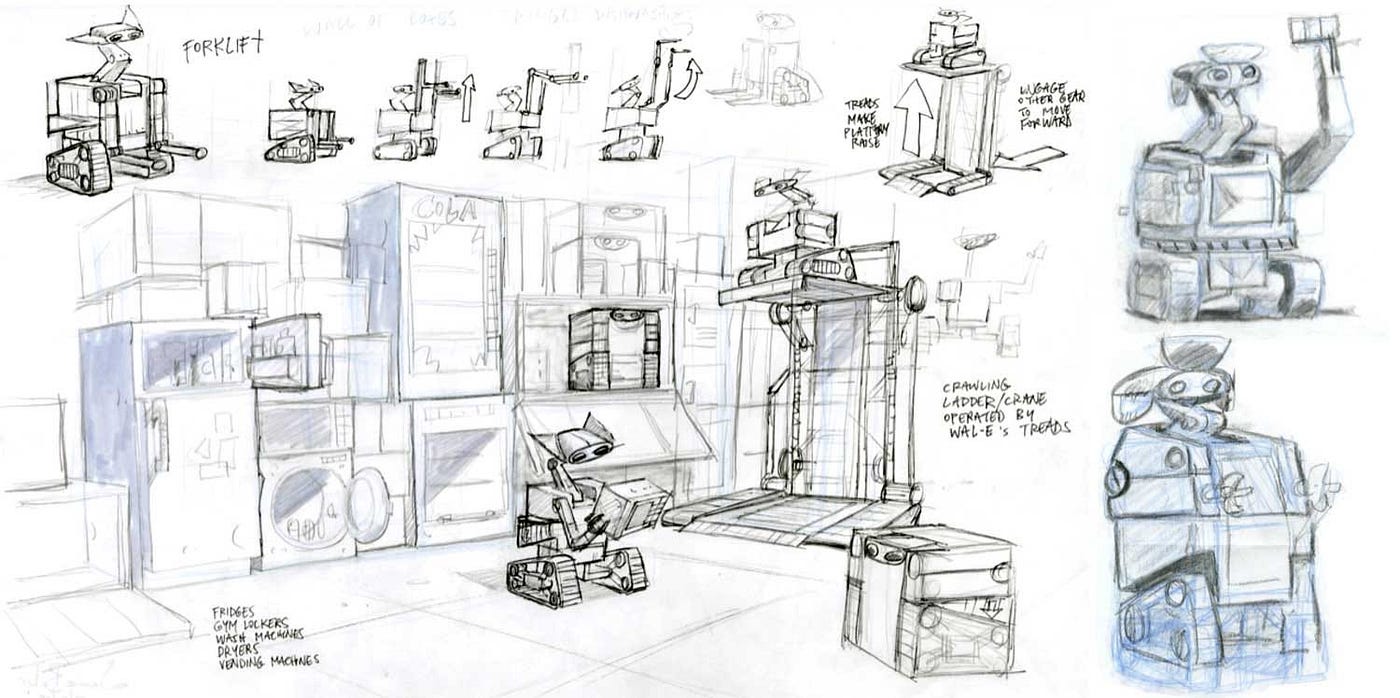
Image originally posted by James S. Baker in WALL-E: VisDev
Baker’s pieces are full of nitty gritty industry details, like an explanation of what an “inbetweener” is (a role often given to early-career cartoonists that draws the movement of a character in between two poses) and the early design of Jacques the shrimp in Finding Nemo (originally pitched as a sea slug!). But between the technical notes on how a cartoon is put together, Baker often includes personal details and anecdotes.
His time at Hanna-Barbera “had a bigger influence on my life than a mere 4 years should do,” he writes: he moved out on his own; his colleagues predicted the end of animation; his mother passed away. At Startoons in Chicago during the 1990s, his stories are colored by hijinks with his friendly coworkers. And at Pixar, he was using his personal life as the seed for visual development:
In the early days working on Nemo, I was allowed to play around with anything at all in the script that interested me and for a day or two I drew kids who might be waiting to see the dentist (who has Nemo in a tank in his surgery). Personally, I absolutely loathed the dentist as a child, so the scaredy cat you see [below] is me.
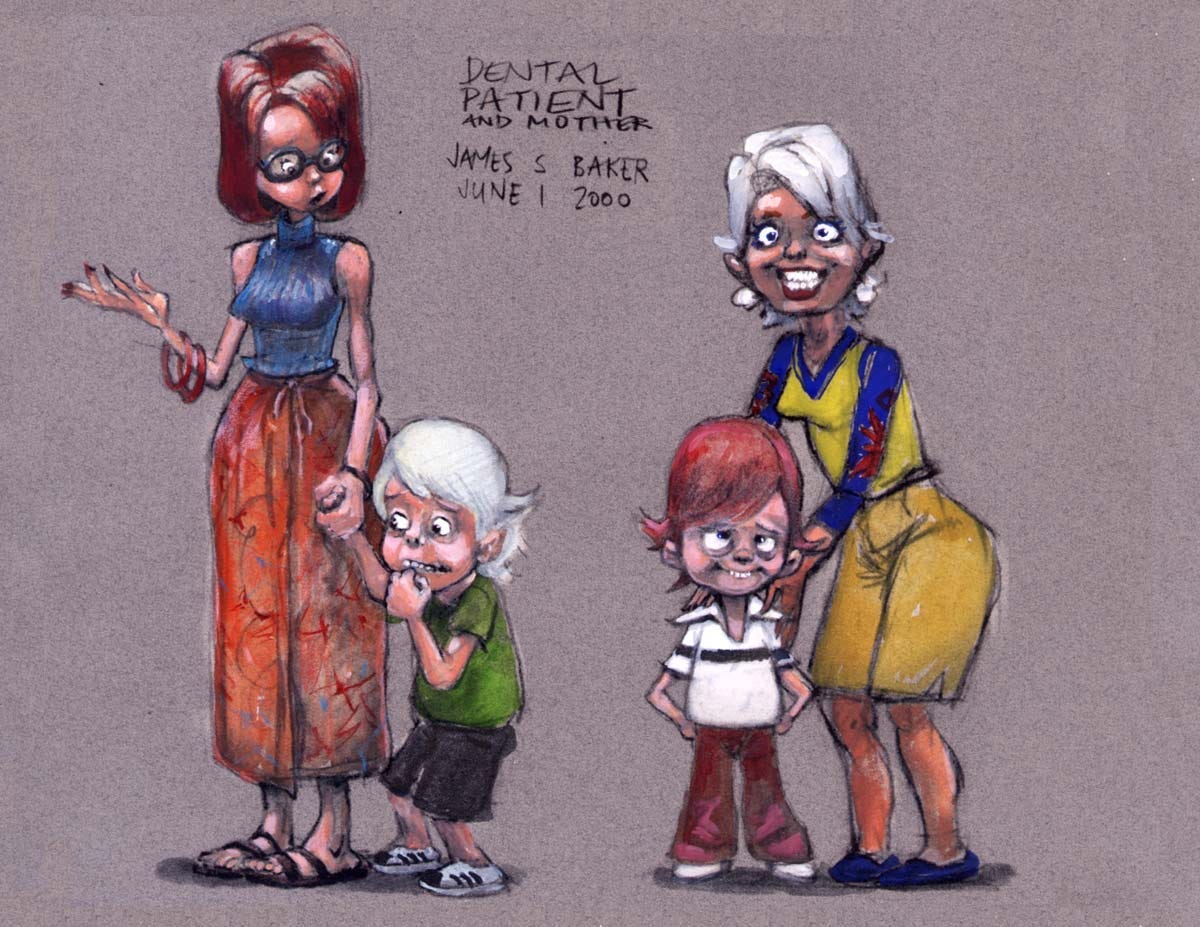
Image originally posted by James S. Baker in FINDING NEMO visual development
In 2012, Baker suffered from a stroke that caused him to lose the use of his drawing arm. After a long journey of learning to draw with his non-dominant arm, he booked a gig working on the animation sequences for the 2016 Disney film *Mary Poppins Returns. *The sequence, a mixture of live action and cartoon, brought together experts in animation, music, and choreography, and as Baker writes, “This was perhaps the most marvellous meeting of its kind I’ve ever attended.” But the real marvel was the impact of the work on his life:
The awkwardness of re-learning to draw with my left hand was offset with the JOY of being back in the industry that I love, working with lovely people on an utterly SUPERCALIFRAGILISTIC project.
Find the problem whose solution is the behavior you want to encourage, then get out of the way and let people play. If you do that well enough, learning, curiosity, and cultural understanding become inevitable side effects of having fun.
— Shahriar Shahrabi in Realities.io, Gamification of Cultural Heritage: What we Learned from Puzzling Places
Looking back — and forward
In June, game developer System Era released an Early Access version of their game STARSEEKER: Astroneer Expeditions. The moment was seven years in the making. To mark the occasion, developer Adam Bromell looked back at how it went from a pitch in a coffee shop to full game.
It’s these moments — a launch, a milestone, or the start of something bigger — that counterintuitively inspire builders to reflect on the journey to get there and a roadmap to the future. Tech founder Mike Carson purchased the rights to the domain Friendster.com, one of the earliest social media sites, for $30,000. While his plans for the new Friendster are only beginning, his retrospective covers how he was able to get access to the domain (it involved a deal with the current rights holder “where I gave him $20k in Bitcoin and a domain that was making about $9k/year in ad revenue”), how he renewed the Friendster copyright, and his open call on HackerNews for suggestions on what to do with the domain.
“I remembered Friendster as being a really positive and enjoyable experience (except when the site would not load, which was really frustrating),” he writes, laying out his vision. “I wanted to create something positive — something that people would enjoy and find useful.”
For Bromell and Systems Era, the Early Access launch of STARSEEKER: Astroneer Expeditions was a moment to lay out their inspiration (Star Trek: Voyager and Deep Space Nine) and how that encouraged them to design the game around cooperation, instead of competition:
We want to incorporate features that help build that connection between players and the sense of accomplishment they feel when others on the crew complete a big feat. Their success should feel like your success and vice versa. The space we build should serve and foster that sense of community amongst all players, whether you play directly with them or not.
With their retrospectives, Bromell and Carson are doing the same thing. Building in the open is building community.
A final thought
In 2021, Faye Seidler (who you may remember from last week’s newsletter) decided to kick off a project where she would critically analyze all 41 books in Terry Pratchett’s Discworld series. But, she writes, “Life got busy.” Seidler’s output slowed and eventually stopped after a handful of books.
Now, five years later, she’s coming back to her dream project with a new perspective:
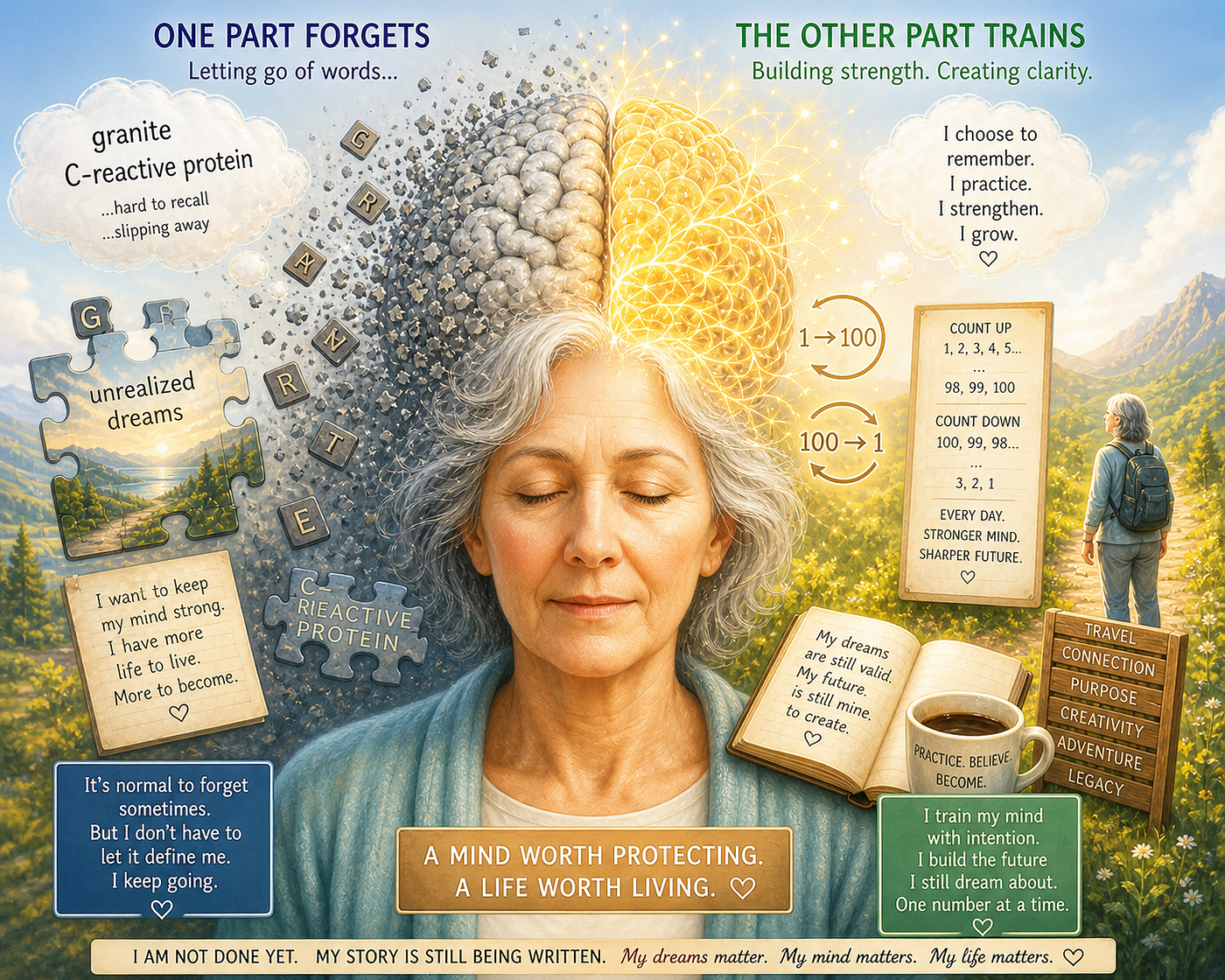
I think we do better in life when we try to honor our dreams, rather than achieve them. Because we can only really guarantee the former.
Your dreams, whatever they are, aren’t dead. They’re waiting to be rekindled with whatever version of your life you’re living now.
While there’s no specific tag for behind-the-scenes stories, you can often find them in How To or Technology topics. Or, for similar stories to James S. Baker’s writing, check out the Memoir topic.
Deepen your understanding every week with the Medium Newsletter. Sign up here.
Edited and produced by brandon echter, Scott Lamb, Carly Rose Gillis, and Amy Widdowson.
Like what you see in this newsletter but not already a Medium member? Read without limits or ads, fund great writers, and join a community that believes in human storytelling.

메타데이터
- post_id
- 5eeb3f048c38
- slug
- behind-the-scenes-in-their-own-words-5eeb3f048c38
- url
- https://medium.com/blog/behind-the-scenes-in-their-own-words-5eeb3f048c38
- canonical_url
- https://medium.com/blog/behind-the-scenes-in-their-own-words-5eeb3f048c38
- author_url
- https://medium.com/@dailynewsletter
- status
- ok
- fetched_at
- 2026-07-10 10:46:47