Oregon State’s 2025 Copilot Test Broke Junior Hiring Proof
Ten students finished 34.9% faster with Copilot, showing why green tests can mask comprehension debt before review backlog starts.
Proof Gate
Oregon State’s 2025 Copilot Test Broke Junior Hiring Proof
Ten students finished 34.9% faster with Copilot, showing why green tests can mask comprehension debt before review backlog starts.
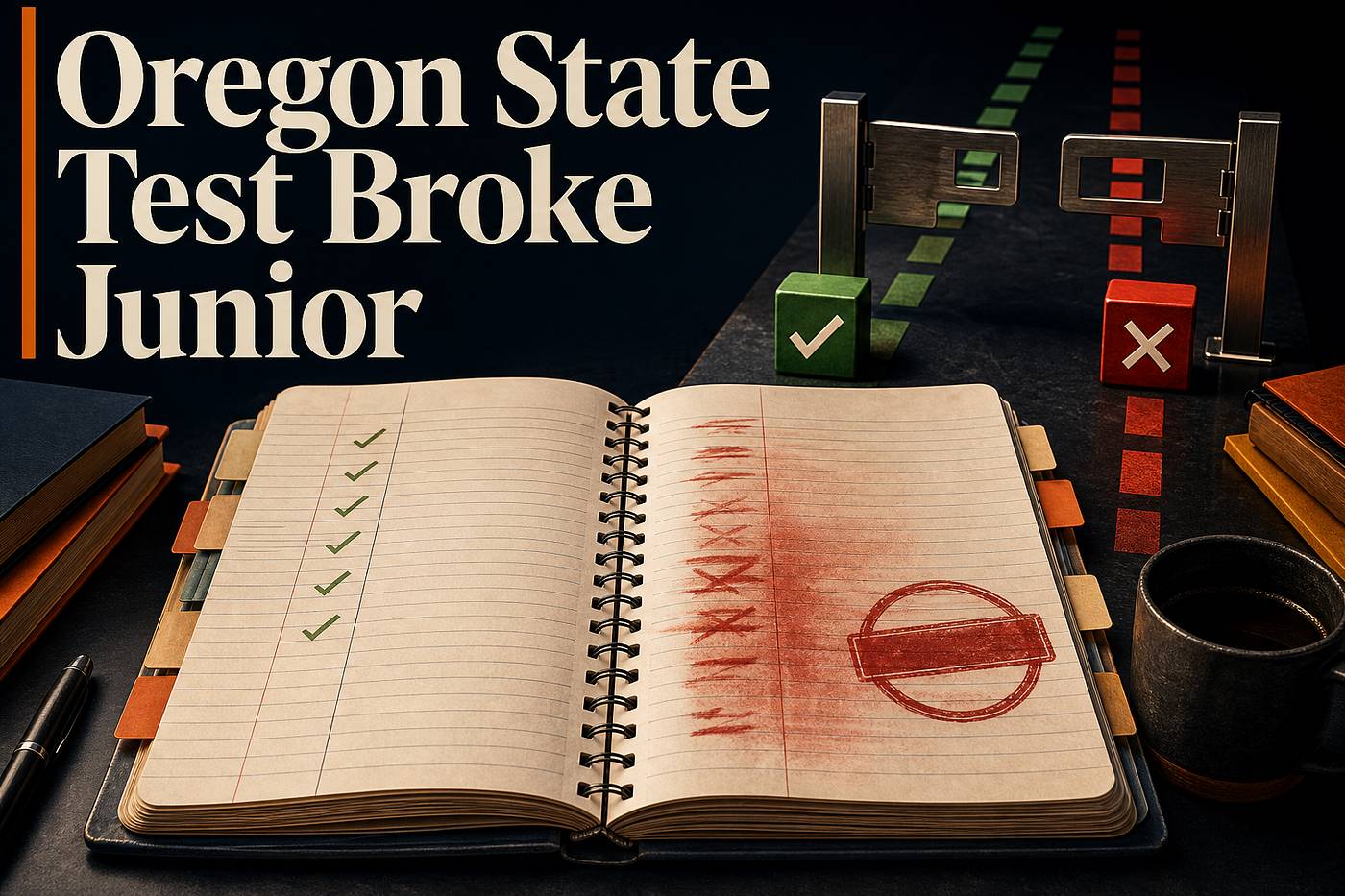
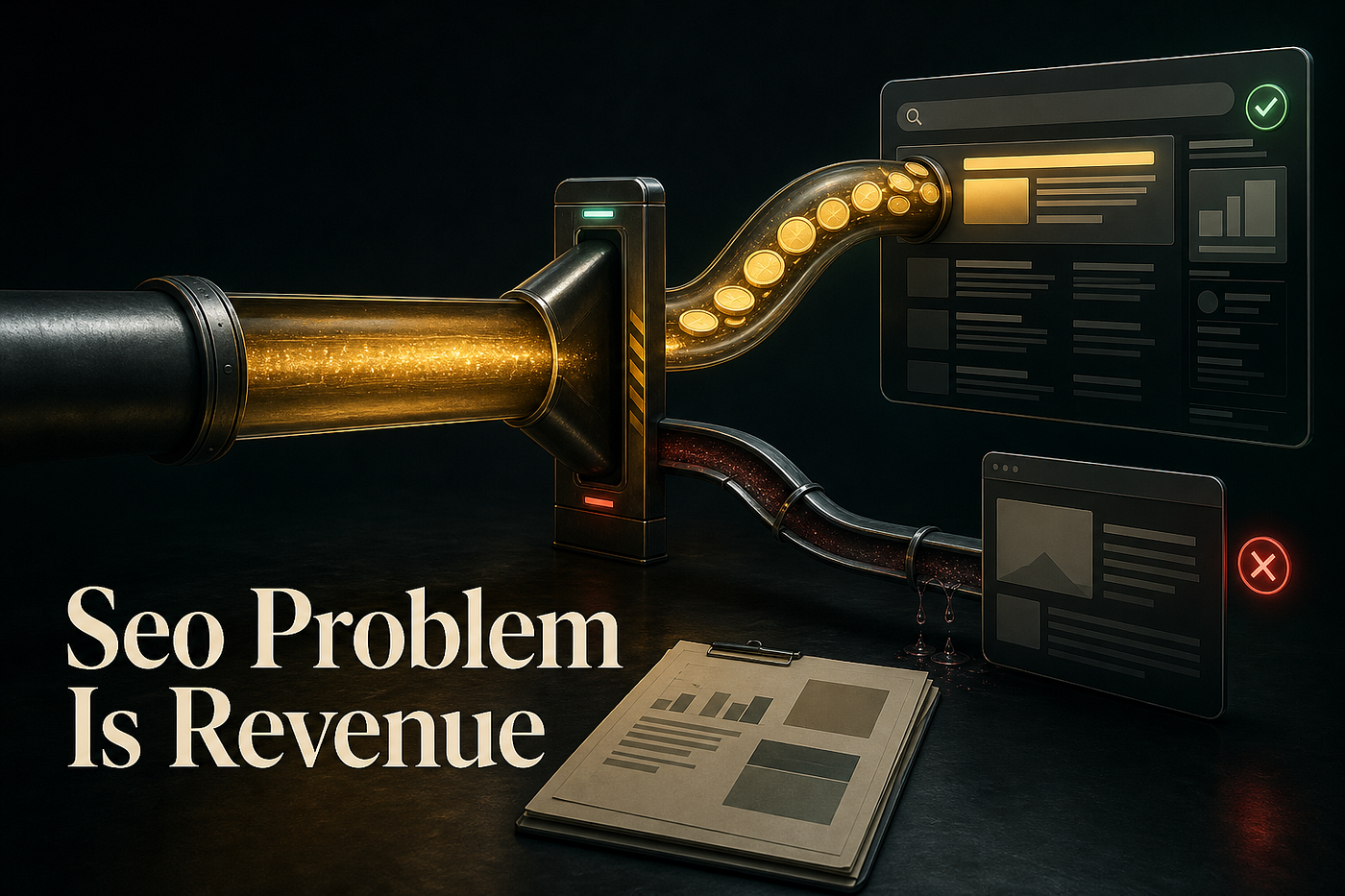
Oregon State’s 2025 Copilot Test Broke Junior Hiring Proof. Image created by the author with diffusion-synthesis and Python post-processing.
On an Oregon State University AWS Workspace, a student opens a 3,818-line legacy web app, asks GitHub Copilot for help, and reaches a green test result before the old habit of reading, tracing, and coding by hand would have gotten warmed up. If a hiring screen treats that check mark as proof of readiness, the team may be buying a junior signal that turns into review backlog on day one.
That is not a classroom morality tale, but a measurement problem with payroll attached. In a 2025 ICER paper from Oregon State University, 10 undergraduate computer science students worked through brownfield programming tasks in the same legacy web application, both with and without Copilot. With Copilot, they finished 34.9% faster and made 50% more solution progress.
The green check arrived looking employable before the job had actually been learned.
The Green Test That Lost Its Alibi
The Oregon State experiment matters because it did not ask students to solve a clean toy problem on a blank page. It put them inside inherited code, the place where junior developers actually land after the offer letter clears. The study used paired tasks, including features like adding distance and adding pictures, with comparable implementation size and control structure.
That detail changes the stakes. In greenfield work, speed can hide plenty, but the surface is still yours. In brownfield work, every change is a negotiation with code someone else already wrote.
A candidate has to find the shape of the system before touching it, or the team pays for every missed assumption in review.
Copilot improved the visible score. Students spent 10.63% less time manually writing code and 11.6% less time searching the web, according to the project page. The process shifted from reading, understanding, and implementing toward prompting, viewing a response, and applying it.
That is a useful tool gain and a dangerous assessment trap.
The serious risk is not that the assistant makes students lazy. The sharper risk is that the assessor keeps using the old ruler. A passing test used to imply more about the route taken to reach it.
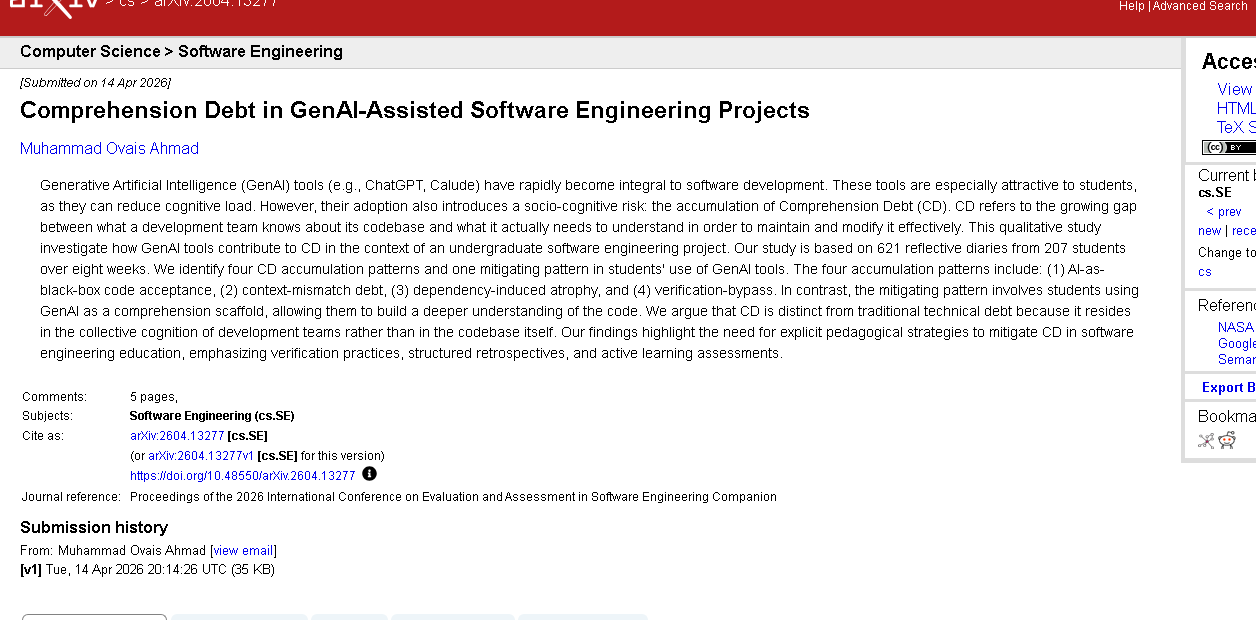
Figure 2. Proof of source-backed strategy: The cited source, Comprehension Debt in GenAI-Assisted Software Engineering Projects, gives the article a primary source readers can inspect. Source: Arxiv
With AI assistance, the same test can mean the student understood the system, or that the assistant guessed a narrow path through it.
The test passed, but the map stayed blank.
The Faster Path Left Fewer Fingerprints
Every actor in this system has a rational reason to accept the shortcut. Students want the assignment finished. Courses reward working submissions.
Hiring screens reward visible output under time pressure. Founders and engineering leaders want junior talent who can ship sooner without months of expensive hand-holding.
That bargain looks efficient until the handoff. The Oregon State paper reports that students voiced concerns in exit interviews about not understanding how or why Copilot suggestions worked. That sentence should bother anyone hiring AI-native juniors.
The student can pass the task while the team still lacks the one thing onboarding needs most: a durable explanation of the code under change.
This is where the cost moves. It does not always show up as broken code on day one. It shows up as slow review, brittle fixes, nervous approvals, and senior engineers asking basic tracing questions after the candidate has already been hired.
The invoice is not generated by Copilot. It is generated by the missing verification step that the organization forgot to price.
A good AI-assisted course can still produce strong developers. A bad one can produce fast passers. The difference is whether the learner has to show the path, reject bad suggestions, and explain the inherited code after the green check appears.
That distinction matters in 2026 because coding assistants are no longer just autocomplete boxes in classrooms. GitHub’s May 2025 announcement of the Copilot coding agent moved the interface closer to production work: assign an issue, let the agent push commits to a draft pull request, then review the result. The same weak signal that once lived in a homework grade now resembles the surface area of work.
Ahmad’s Diaries Put A Name On The Bill
Muhammad Ovais Ahmad’s 2026 paper, Comprehension Debt in GenAI-Assisted Software Engineering Projects, gives the hidden cost a useful name. The study draws on 621 reflective diaries from 207 students across eight weeks. Its central claim is plain enough to carry into a hiring meeting: comprehension debt lives in what the team does not understand, not just in what the code contains.
Ahmad identifies four accumulation patterns: black-box acceptance of AI code, context mismatch, dependency-induced atrophy, and verification bypass. These are not exotic research phrases once translated into the office. They are the daily failures that make a senior reviewer stop trusting a patch.
Black-box acceptance is the pasted function nobody can defend. Context mismatch is the suggestion that fits the prompt but not the codebase. Dependency-induced atrophy is the muscle loss that appears when the assistant handles the hard middle too often.
Verification bypass is the most expensive one: the moment a working answer replaces proof of understanding.
The overlooked twist is that AI assistance can reduce cognitive load and still create a heavier team burden later. That is not hypocrisy. It is a timing mismatch.
The student saves effort during the task, then the organization spends effort after the task reconstructing whether the change is safe.
Traditional technical debt leaves tracks in the code. Comprehension debt leaves gaps in the room. It appears when the only person approving the change can explain it less clearly than the tool that produced it.
Hire For Rejection, Not Just Delivery
The correction is not to ban AI from coursework, interviews, or onboarding. That would train people for a workplace that no longer exists. The correction is to stop treating output velocity as the whole signal.
For founders and engineering leaders, the better question is not “Can this junior use Copilot?” The better question is “Can this junior stay in command while Copilot is useful?” That means the assessment has to include resistance. A candidate should have to reject a plausible suggestion, trace the inherited code that made it wrong, and repair the test with a reason the reviewer can follow.
Use the assistant in the room. Let it generate something. Then watch what the person does next.
-
Ask the candidate to trace one changed function back through the call path and explain which existing behavior could break.
-
Ask them to accept one AI suggestion, then name the assumption it makes about the codebase.
-
Ask them to reject one convincing suggestion and write the smallest test that proves why.
-
Ask them to explain the fix twice: once to a senior engineer and once to a product owner who only cares about risk.
These moves convert AI from a solution vending machine into a comprehension scaffold. They also change the incentive. The fastest candidate no longer wins by merely reaching green.
The strongest candidate wins by showing why green is trustworthy.
Courses can make the same shift. Grade the pull request, but also grade the trace. Grade the finished feature, but also grade the rejected suggestion.
Grade the test, but also grade the student’s explanation of why that test would have failed before the fix. That is how a program proves learning instead of just measuring assisted throughput.
The same logic applies to issue-to-PR handoffs, where weak prompts and shallow review can turn speed into debt. When an AI-native junior enters that loop, the cost of fuzzy understanding compounds quickly. The team does not need theater about purity.
It needs evidence that the person can verify, adapt, and explain under real codebase constraints.
The Oregon State study shows why the green check is tempting. Ahmad’s diaries show where the missing understanding goes. Together, they make the hiring decision simpler and harder: let juniors use the tools, but stop buying output without comprehension.
Thanks for reading, and measure the next cohort by the code it can explain before your team pays the bill.
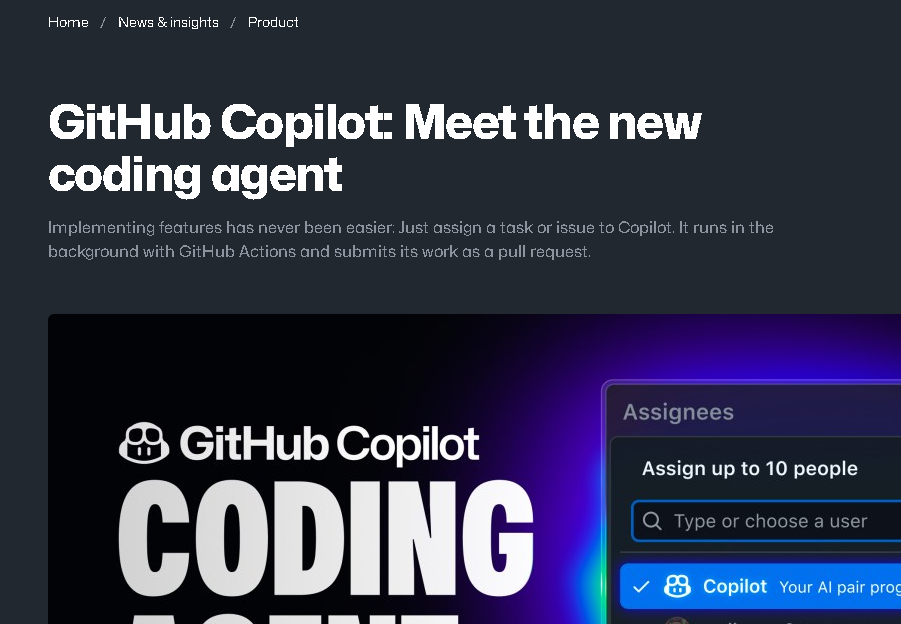
Figure 3. Proof of operating detail: The cited source, Copilot coding agent, gives the article the implementation surface teams must design around. Source: GitHub
Related reading
메타데이터
- post_id
- 702c1d4e9024
- slug
- oregon-states-2025-copilot-test-broke-junior-hiring-proof-702c1d4e9024
- url
- https://medium.com/kairi-ai/oregon-states-2025-copilot-test-broke-junior-hiring-proof-702c1d4e9024
- canonical_url
- https://medium.com/kairi-ai/oregon-states-2025-copilot-test-broke-junior-hiring-proof-702c1d4e9024
- author_url
- https://medium.com/@james.kuhman
- status
- ok
- fetched_at
- 2026-07-09 05:26:43